Who is the best astronomer in the world?
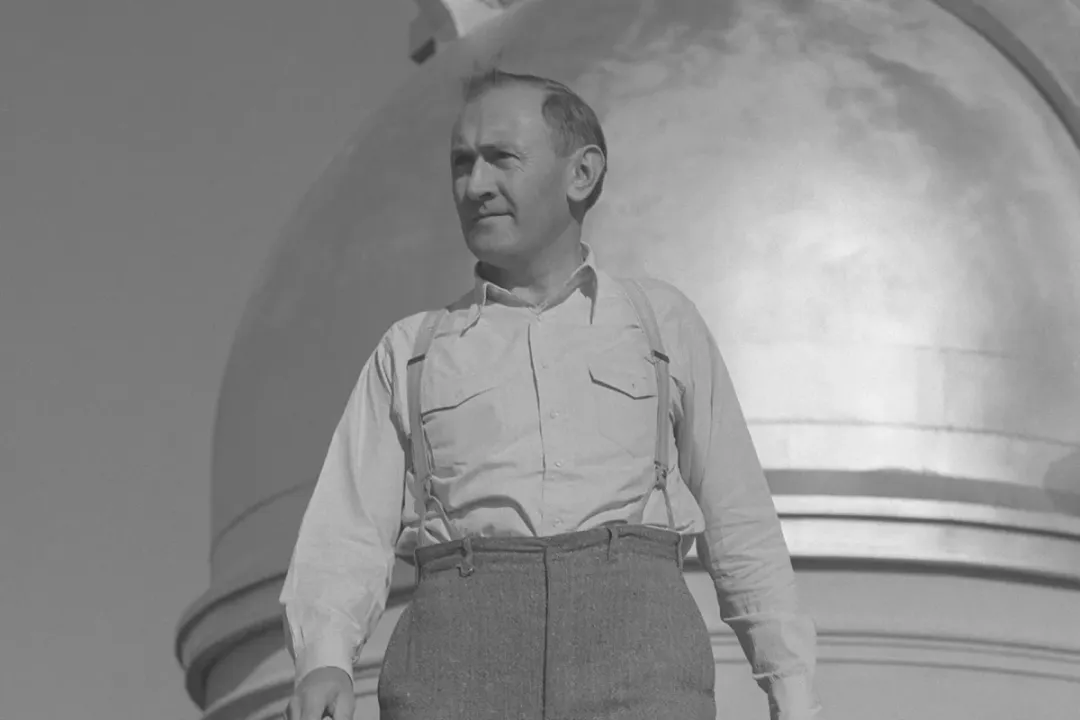
Naming the single "best" astronomer in the world is a nearly impossible task, as the definition of "best" shifts drastically depending on whether one prioritizes groundbreaking historical theory, modern observational capability, or public communication skills. Astronomy is a field built on the shoulders of giants, making any contemporary ranking feel incomplete without acknowledging those who mapped the cosmos before us. Instead of seeking one definitive answer, it is more illuminating to examine the towering figures whose influence has shaped our understanding of the universe across different eras.
# Foundational Figures

The history of astronomy is marked by individuals whose revolutionary observations or mathematical models fundamentally changed humanity’s place in the cosmos. Figures like Nicolaus Copernicus, who proposed a heliocentric model, and Galileo Galilei, whose telescopic observations provided critical evidence supporting that model, are cornerstones of the discipline. Their work forced a paradigm shift away from Earth-centric views.
Johannes Kepler followed, establishing the laws of planetary motion, describing how planets move in elliptical, not perfectly circular, orbits. This was a crucial mathematical step forward. Isaac Newton later synthesized these observations, providing the underlying physics—universal gravitation—that explained why planets moved as Kepler described. These achievements, centuries old, form the bedrock upon which all modern astrophysics rests.
We can categorize the immediate impact of these historical titans, recognizing that their areas of expertise often overlapped but centered on distinct breakthroughs:
| Astronomer | Primary Contribution Area | Significance |
|---|---|---|
| Copernicus | Celestial Mechanics | Heliocentric Model Formulation |
| Kepler | Planetary Kinematics | Laws of Elliptical Motion |
| Galileo | Observational Astronomy | Early Telescopic Evidence |
| Newton | Theoretical Physics | Universal Gravitation |
When reviewing who is celebrated today, many lists naturally include these figures alongside others who expanded the map of the sky. William Herschel, for instance, is celebrated for his systematic sky surveys and the discovery of Uranus, pushing the boundaries of the known solar system. Henrietta Swan Leavitt’s work on Cepheid variables provided the crucial method for measuring extragalactic distances, effectively establishing the scale of the universe. Her contribution, often overshadowed by others, is precisely the kind of quiet, essential discovery that defines astronomical progress.
# Public Science Voices
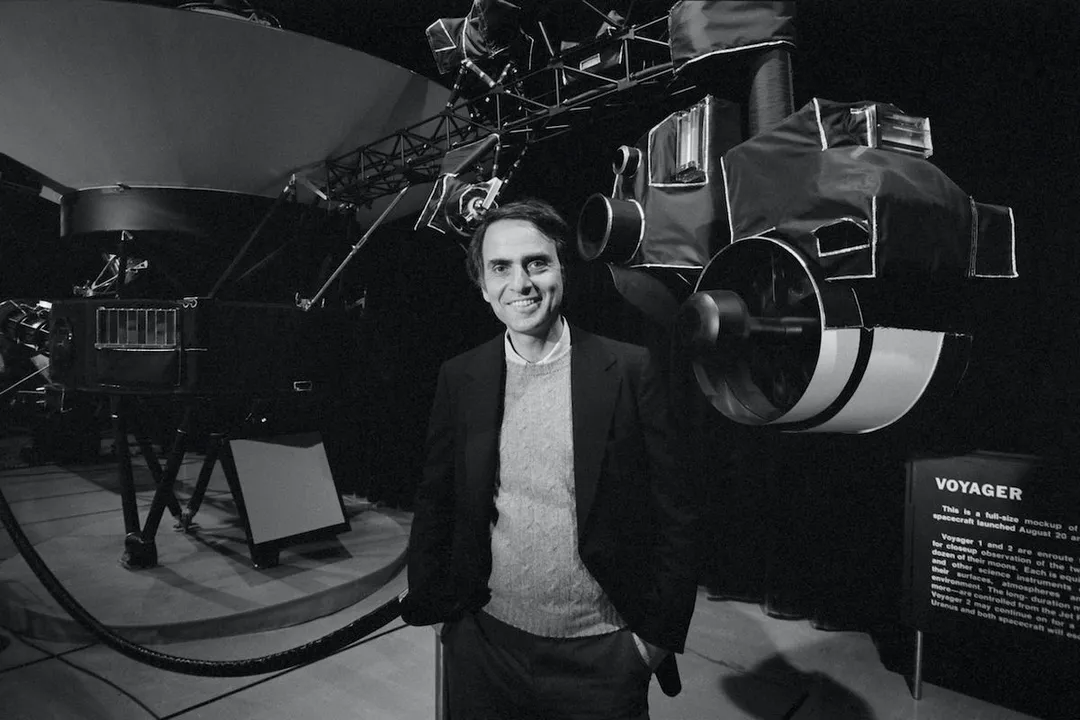
In the 20th century, the role of the astronomer began to blend theory and discovery with public education. The ability to translate complex mathematical models and baffling astronomical data into accessible concepts became a measure of influence in itself. Carl Sagan stands as perhaps the most famous exemplar of this intersection. Sagan, a leading researcher in planetary science and the search for extraterrestrial intelligence (SETI), became a household name through his television series Cosmos.
Sagan’s greatness, as many commentators note, wasn't solely derived from his scientific publications, though they were substantial, but from his unparalleled ability to inspire awe and critical thinking in the general public. He championed the scientific method and scientific skepticism, making him an authoritative, trusted voice far outside academic circles. In modern discussions, Sagan is often cited as the gold standard for science communicators, blending rigorous science with profound philosophical considerations about humanity's place among the stars.
When people discuss contemporary "greats," they are often thinking of scientists who command public attention or have recently won major accolades, such as Nobel Prizes, for defining work. While the Nobel often rewards theoretical breakthroughs, the public often celebrates those who appear on television or in widely read books.
# Current Researchers

Identifying the "best" living astronomer requires filtering through the massive output of modern research across hundreds of fields, from exoplanet atmospheres to black hole dynamics. Contemporary astronomy is heavily reliant on massive international collaborations and space-based instruments, meaning breakthroughs are often the product of large teams rather than solitary geniuses.
One way to gauge modern impact is to look at those leading the charge on cutting-edge facilities. For example, the scientists guiding the research output from the James Webb Space Telescope (JWST) or the Event Horizon Telescope (EHT) are undoubtedly at the forefront of discovery today. While specific individual names in these massive collaborations might fluctuate in public recognition, the nature of their contribution represents the current peak of human capability in astronomy.
The field has seen a significant shift: whereas historical astronomers excelled by making singular, paradigm-breaking observations or deriving universal laws, today's leading lights often excel at interpreting petabytes of data or designing the instruments that collect that data. The ability to manage and interpret the sheer volume of information from missions like Gaia or JWST is a highly specialized skill set that defines modern expertise. In fact, one could argue that the current "best" astronomer is not necessarily the one discovering the most, but the one whose unique computational modeling or theoretical insight manages to correctly interpret the most confusing new data set first. This requires an almost mathematical intuition applied at an unprecedented scale.
# Influence Metrics
The title of "best" is inherently subjective, and how different communities view astronomers reveals this variance. Academic citation counts, public popularity, and sheer impact on technological capability all serve as different metrics.
For a purely academic metric, one might look at citation indices or H-indexes, which quantify how often a researcher’s papers are referenced by their peers. This approach favors those who develop lasting theoretical models or fundamental observational techniques. However, this metric often overlooks brilliant communicators like Sagan, whose primary impact was outside the direct peer-to-peer scientific paper exchange.
Public opinion, often polled on discussion forums or social media, tends to favor figures who have either achieved a major, easily graspable discovery (like mapping a black hole shadow) or who have a strong public persona. This is why figures who bridge the gap—like the late Stephen Hawking, whose work on black holes was popularized in A Brief History of Time—often score highly in popular rankings, even if their primary scientific contributions were theoretical developments debated mainly among physicists.
A key difference between historical figures and contemporary astronomers is the sheer breadth of accessible knowledge now available. A dedicated amateur today has access to data and basic telescopes that were once reserved for national observatories. This democratization means that the "best" modern astronomer must not only be ahead of their peers but also be capable of working within a system where much foundational knowledge is already widespread knowledge. The challenge is no longer seeing the moons of Jupiter, but interpreting the atmospheric composition of an exoplanet 500 light-years away.
This evolution suggests that if we were to define the most important contemporary astronomer, we might look not at a single person, but at the leaders of instrumentation and data science teams whose work enables discoveries that might take years to filter down to the public consciousness. The best might be the quiet data scientist responsible for cleaning the noise from the next generation of gravitational wave detection data, a contribution whose impact will only be clear a decade from now.
Ultimately, the search for the singular "best" is a human tendency applied to a field that thrives on cumulative, collaborative effort. The legacy of astronomy is built not on a single star, but on the constellation of dedicated researchers, from Galileo peering through his early lens to the teams operating the JWST today, all building a clearer picture of reality one observation and one equation at a time.
#Videos
The 6 Most Famous Astronomers and Their Impact | History | ClickView
Related Questions
#Citations
20 great astronomers, ranked - Astronomy Magazine
who are the best astronomers/astrophysicists to follow , as in keep ...
50 of the greatest, most famous astronomers of all time
The ten greatest astronomers - NASA ADS
Top 10 astronomers in the world? - 10 scene image - Quora
Carl Sagan - Wikipedia
Who is the greatest astronomer of the 20th century? - Facebook
Famous astronomers: How these scientists shaped astronomy | Space
The 6 Most Famous Astronomers and Their Impact | History | ClickView