Which statement best describes the limitations of the geocentric model?
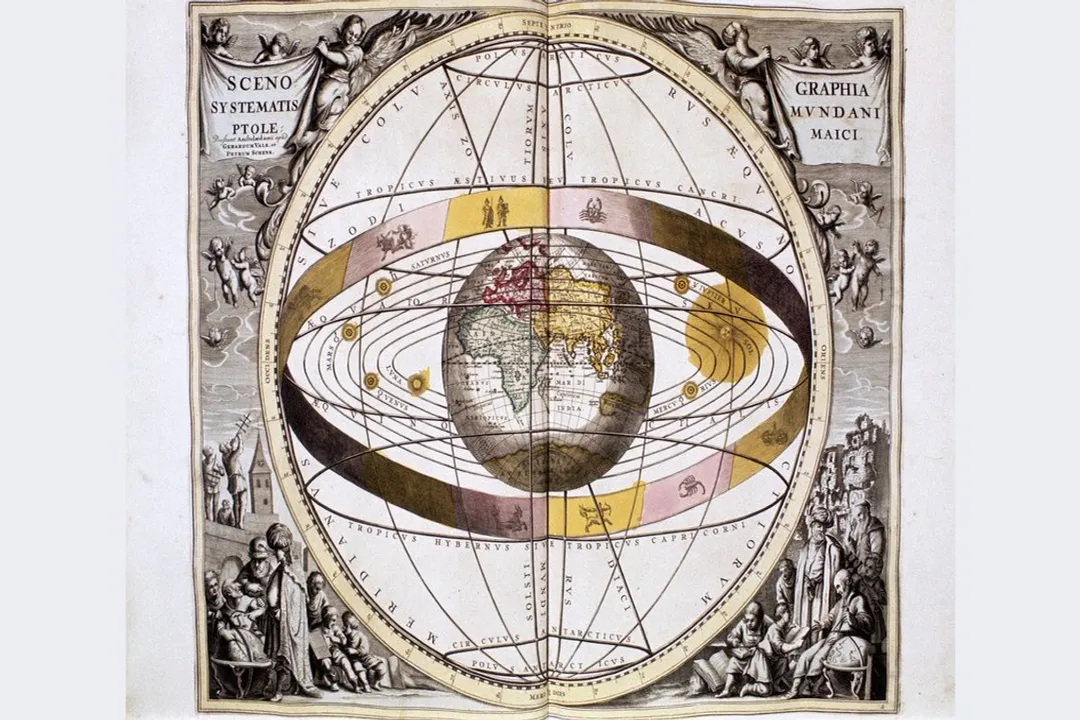
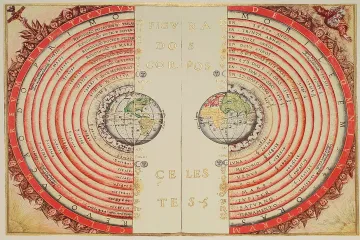
The most significant limitation of the geocentric model lies in its inability to naturally and simply account for the observed motions of the other celestial bodies, particularly the apparent retrograde motion of the planets. [1][5] This Earth-centered view, which held sway for centuries, posited that the Sun, Moon, and all known planets revolved around a stationary Earth. [8] While it successfully explained the daily rising and setting of the Sun and stars due to Earth's supposed rotation, the paths of the planets introduced a major, persistent problem. [6]
# Retrograde Problem
Planets like Mars, Jupiter, and Saturn do not move smoothly across the night sky at a constant speed relative to the background stars; instead, they periodically slow down, appear to move backward (or "retrograde") for a time, and then resume their normal forward (prograde) motion. [2] For a system where everything circles a central, stationary Earth, this backward loop is an astronomical nuisance. It suggests that the planets are somehow changing direction relative to the Earth, which contradicts the simple notion of uniform circular motion around a single central point. [9]
The core statement summarizing this limitation is that the model cannot explain the retrograde motion of planets like Mars without introducing complex, often unphysical, additions to the mathematical description. [1][5] In the purest philosophical sense, the geocentric model failed because it could not maintain simplicity while accurately mapping reality.
# Complexity Required
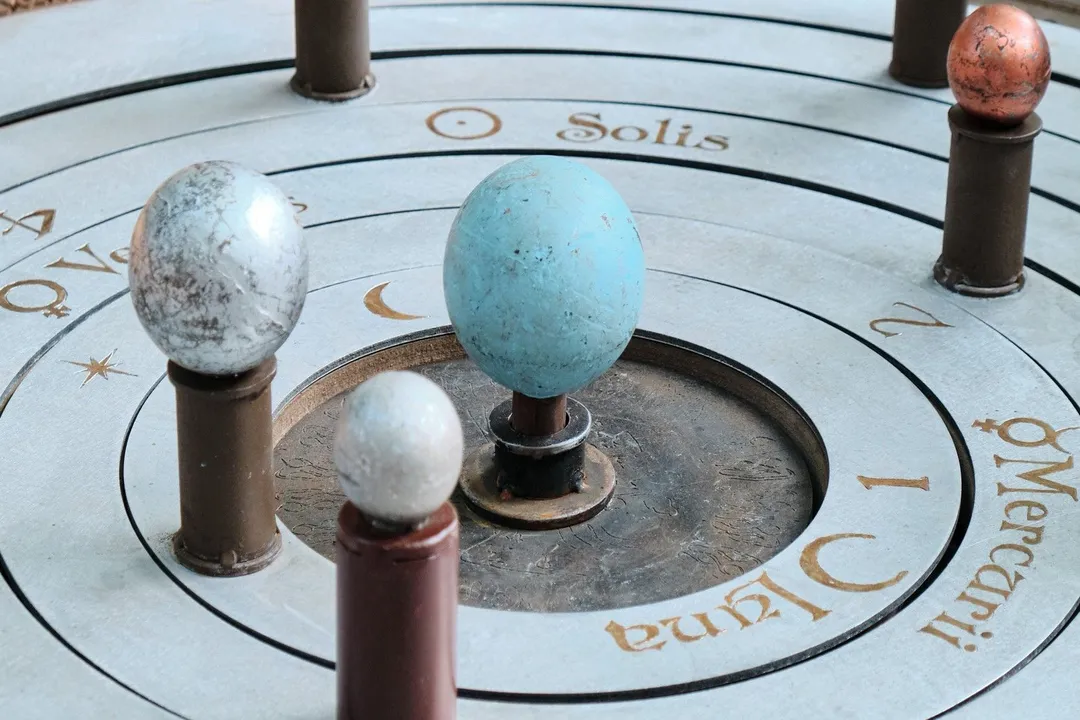
To preserve the Earth at the center while mathematically tracking the observed paths, ancient astronomers, most notably Ptolemy, had to devise incredibly intricate geometric constructs. [6] The primary tool developed to address retrograde motion was the epicycle. [8]
In this system, a planet didn't just orbit the Earth directly; it moved in a small circle (the epicycle), and the center of that small circle moved around the Earth on a larger circle called the deferent. [6] When the planet was on the part of its epicycle moving opposite the direction of the deferent's travel, it appeared to loop backward from an Earth-bound perspective. [2]
This concept of the epicycle was a necessary mathematical patch. It allowed predictions to be made that aligned reasonably well with observations made without advanced telescopes. [8] However, the very need for this complex arrangement—a circle moving upon another circle—is the limitation made manifest. It required the introduction of multiple new, unobserved entities (the epicycles) just to explain one observable phenomenon (retrograde motion). [6]
The necessity of these ad hoc additions highlights a weakness that the later heliocentric model, proposed by Copernicus, successfully addressed. Consider the difference in conceptual overhead. In a heliocentric view, retrograde motion is an illusion caused by the Earth overtaking a slower-moving outer planet (like Mars) in its orbit around the Sun, or an inner planet moving faster than Earth. [2] It requires no special mechanism; it is a natural consequence of observing one moving reference frame (Earth) from another moving reference frame. [9]
If we were to compare the initial required parameters: Ptolemy's system needed deferents, epicycles, and later refinements like equants and eccentrics to match observations to the required precision. [6] The equant, for example, was a point from which the angular motion of the epicycle's center appeared uniform, even though the planet itself was not moving uniformly around the deferent's center—a clear deviation from the ideal of perfect uniform circular motion. [6] The Earth was not even the center of the deferent circle, but rather offset, further complicating the initial premise of a perfectly centered system. [6]
# Precision Failure
While the Ptolemaic system was highly successful for its time, its limitations eventually became more apparent as observational techniques slowly improved, even before Galileo's telescope. [6] The system was so burdened with corrective mechanisms—epicycles upon epicycles, and the addition of equants—that it became mathematically cumbersome and lacked predictive consistency over long periods without further, ever-more-specific adjustments. [6]
This trend toward increasing complexity to maintain the Earth-centered premise represents a fundamental limitation in scientific modeling. When a model requires an ever-increasing number of exceptions, corrections, or unseen components to explain new data, it signals that the underlying assumption—that Earth is the central fixed point—is likely flawed. The model starts predicting how things move based on constructed geometry rather than why they move based on fundamental mechanics. [7]
For example, imagine tracking Mars over several years using only the basic Earth-centered geometry without the full Ptolemaic machinery. The errors in prediction would rapidly accumulate. The model essentially became a sophisticated calculator based on an incorrect spatial arrangement, rather than a true description of orbital mechanics.
The reliance on the equant provides a superb example of this failing. If the initial premise of perfect circular motion around the central body (Earth) was held strictly, the equant—a point other than the center from which motion appears uniform—would not be needed. Its introduction signals that the model had to break its own initial elegant rules (uniform motion in perfect circles) just to keep the Earth centered and account for the observed planetary wanderings. [6] This messy workaround is a direct statement about the model's inability to handle observation cleanly.
# Planetary Status
Another subtle limitation, though less mathematical and more structural, stems from how the model treated the Sun. In the geocentric view, the Sun was treated as one of the wandering celestial bodies, orbiting the Earth along with the Moon and the five known planets (Mercury, Venus, Mars, Jupiter, Saturn). [8]
This structural similarity between the Sun and the planets—all being treated as orbiting satellites of Earth—obscured the fundamental physical differences between a star and a planet. The Earth was unique; everything else was subordinate to its motion. [6] The fact that the Sun, despite its brightness and dominant effect on our terrestrial experience, was placed on the same mathematical footing as the slower-moving outer planets shows a limitation in physical understanding rooted in the observational bias of being stationary on the ground. [8]
If we were to attempt to build a truly comprehensive geocentric system today, one that incorporated, say, the knowledge of planetary size or composition, the mathematical apparatus required to force these bodies into orbits around Earth—while simultaneously accounting for observed phenomena like stellar parallax (which is absent in the model but should be present if Earth orbits the Sun)—would become impossibly convoluted. [6][9] The lack of stellar parallax was often used as evidence for the geocentric model, but this was merely an acknowledgment of the limitations of pre-telescopic instruments, not a feature of the model itself. If a perfect instrument were available, the prediction of no parallax would become the ultimate, visible failure of the Earth-centered premise. [6]
# Comparing Explanatory Power
The starkest way to describe the limitation is to compare the cause of the retrograde motion in the two competing models.
| Feature | Geocentric Model (Ptolemaic) | Heliocentric Model (Copernican/Keplerian) |
|---|---|---|
| Cause of Retrograde Motion | An artificially constructed orbital path using epicycles and deferents. [2][6] | A natural optical effect arising from Earth overtaking an outer planet in its orbit around the Sun. [2][9] |
| Governing Geometry | Complex nested circles, requiring equants to maintain observational fit. [6] | Elliptical (later Kepler) or circular orbits (early Copernicus) around a single central body (the Sun). [6] |
| Simplicity/Elegance | Low; required constant mathematical patches to match observations. [6] | High; retrograde motion is an emergent property, not a separate mechanism. [2] |
When we consider the predictive power, the early Copernican system, though still using perfect circles, immediately provided a simpler explanation for the pattern of retrograde motion—it happens when the Earth passes Mars, Jupiter, etc., in their orbits. The geocentric model had to invent a mechanism for every retrograde event independently within its complex geometry.
It’s interesting to note that many historical discussions frame the limitation as merely "inaccuracy" or "failure to predict." But a more profound limitation was its philosophical rigidity. The model prioritized the Earth's central position over observational parsimony. It was a success story of math overriding physics for a time. If a scientist in the 15th century had been asked to describe the most efficient way to calculate Mars' position, they would have had a highly optimized, albeit cumbersome, algorithm. But if asked, "Which statement best describes the limitations," the answer must focus on what the model could not achieve naturally: a simple, unified description of planetary kinematics based on a single reference point. [7] The limitation wasn't that it couldn't calculate the position, but that the calculation required breaking the elegant simplicity of the initial premise.
# The Reference Frame Dilemma
From a purely relativistic perspective, as touched upon in modern physics discussions, any reference frame can be considered "valid" for describing motion mathematically. [9] If one insists on using the Earth as the origin, one can describe everything, but the resulting equations become unwieldy precisely because the true accelerations and orbital centers are elsewhere. The limitation, therefore, is less about possibility and more about physical truth and explanatory economy.
The statement that best describes the limitation is that the geocentric model required an ever-increasing number of arbitrary geometrical constructs—epicycles, equants, and deferents—to force the observed, non-uniform, and looping motions of the planets into a system centered on the Earth. [6] It became a triumph of specialized arithmetic over intuitive celestial mechanics. [8] The introduction of the concept of epicycles demonstrates that the model was incapable of absorbing the most obvious anomaly—retrograde motion—without fundamentally complicating its initial, intuitive premise. [1]
#Videos
Believe it, Geocentric Model is TRUE - YouTube
Related Questions
#Citations
Which statement describes the limitations of the geocentric model ...
What are the flaws//limitations of the geocentric model? - Quora
PHY 101 - Chapter 1 HW Flashcards - Quizlet
Scientific models are representations of objects, systems, or ... - Brainly
Geocentrism - Wikipedia
The Biggest Problem In Science Isn't Groupthink - Forbes
Geocentric model: The Earth-centered view of the universe | Space
If reference frames are equally valid, then why do teachers say the ...
Believe it, Geocentric Model is TRUE - YouTube