What are the limitations of the geocentric model?
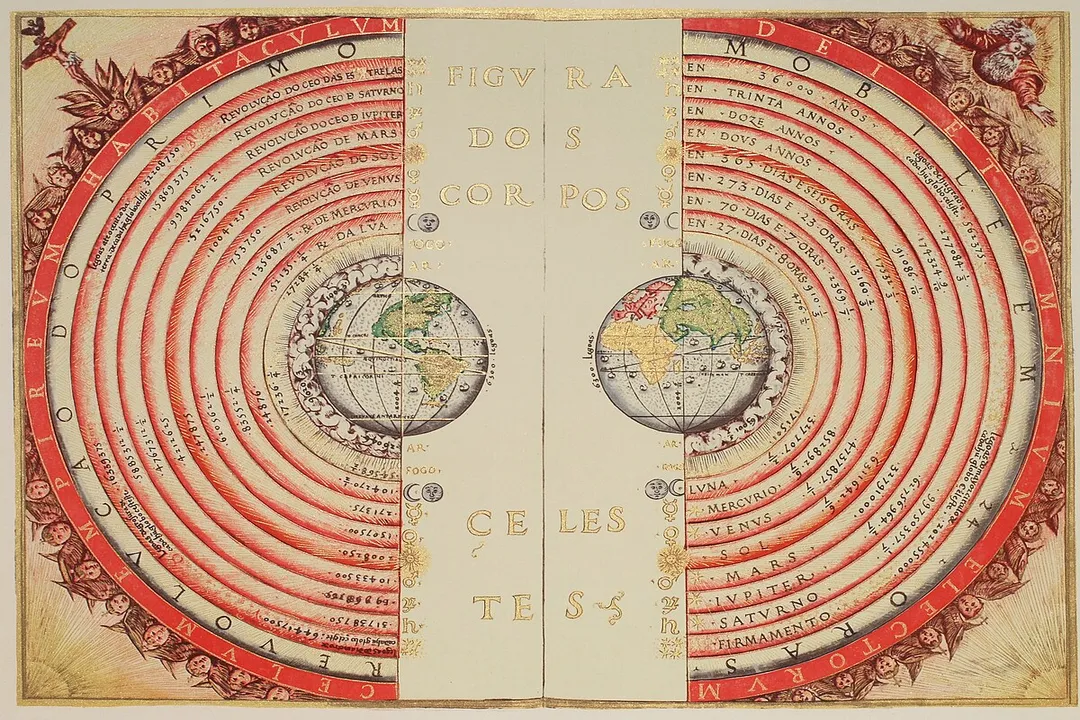
The idea that Earth sits motionless at the center of the cosmos, with the Sun, Moon, and wandering stars tracing perfect circles around us, held sway for millennia. This geocentric model, epitomized by thinkers like Ptolemy, provided a framework that matched our daily, intuitive experience: the ground beneath our feet feels fixed, and the sky appears to move around us. [5][9] However, despite its intuitive appeal and the mathematical ingenuity used to support it for so long, this model eventually crumbled under the weight of observational evidence. Its limitations weren't just minor errors; they represented fundamental failures in describing the observable reality of the heavens. [1]
# Perceived Simplicity
At its genesis, the geocentric perspective seemed straightforward and logical. If you stand on Earth, everything appears to move. The Sun rises and sets, the Moon waxes and wanes, and the stars rotate overhead. [5] To account for the observed motions, early models, like that proposed by Eudoxus, involved nested spheres carrying the celestial bodies, a beautiful mechanical concept. [5] Even after refinements, the core assumption remained: Earth was the stationary anchor point. [6] The success of this model, which could predict positions reasonably well for a time, stemmed from its ability to incorporate observed data—even if the underlying mechanism was increasingly artificial. [1]
# Retrograde Motion
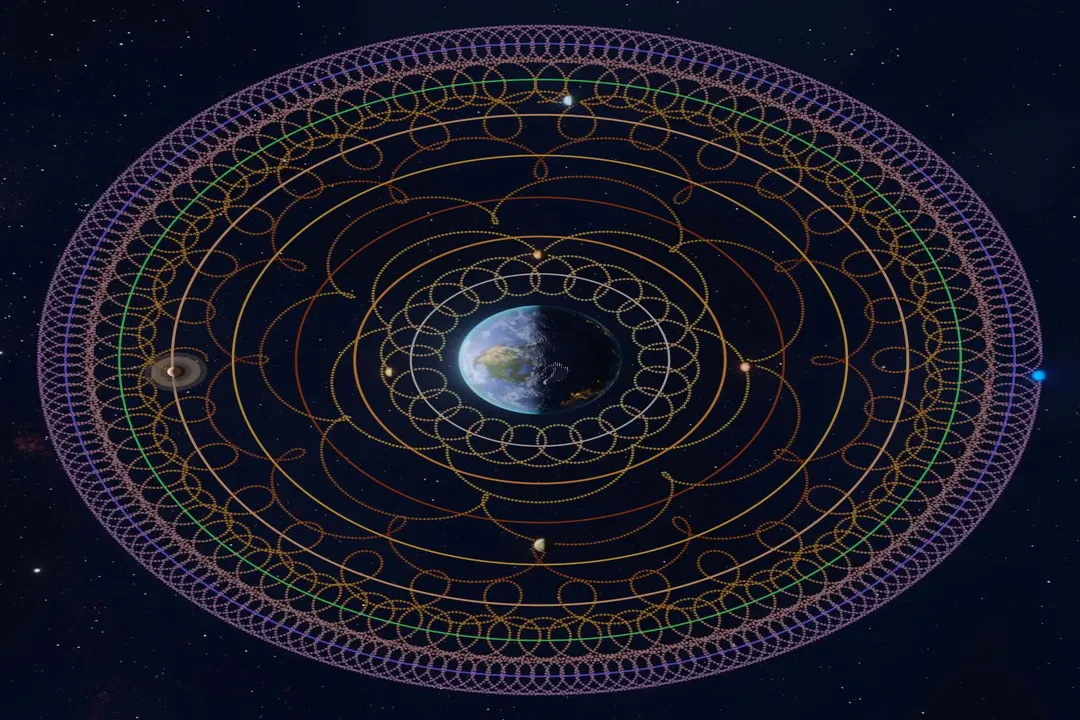
The most significant observational hurdle the geocentric model faced involved the retrograde motion of the planets. Most of the time, planets like Mars move slowly across the sky in one direction (prograde motion) relative to the background stars. However, at certain points in their orbits relative to Earth, they appear to stop, reverse direction for a time, and then continue forward again. [1][4]
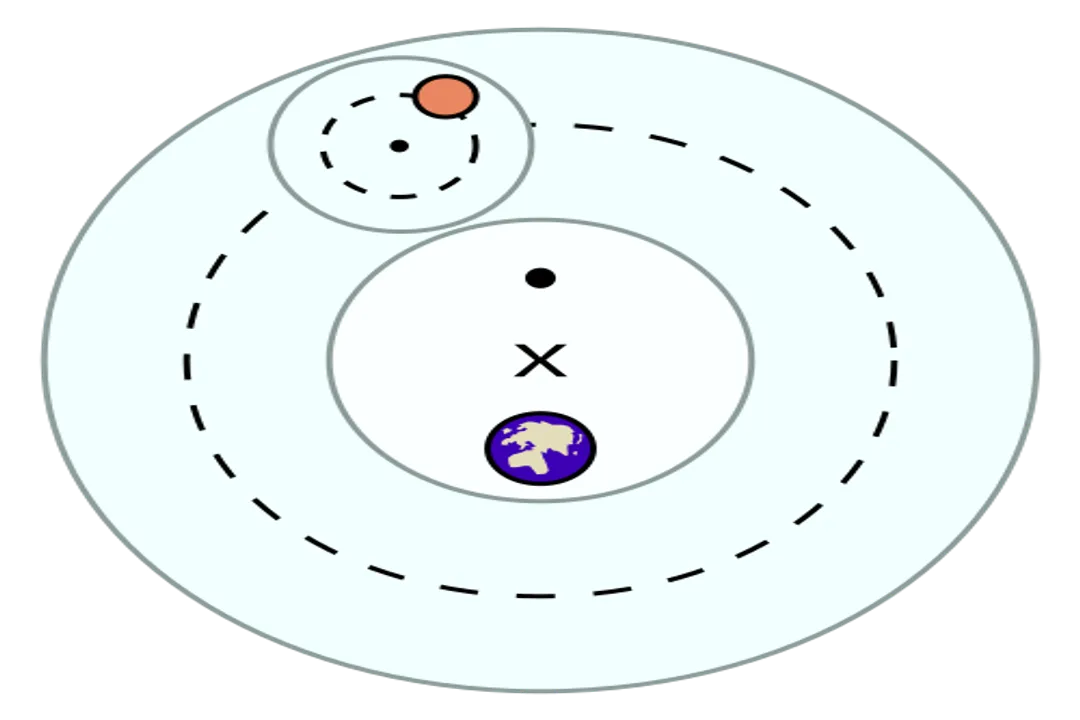
To force this observed "looping" behavior into a system where everything orbited a central Earth, ancient astronomers had to introduce increasingly complex mathematical machinery. The solution, famously developed by Ptolemy, involved epicycles and deferents. [5] A planet didn't just orbit the Earth directly; it orbited a point (the center of the epicycle), and that point itself orbited the Earth on a larger circle (the deferent). [1][5]
This was an elegant fix for the data at the time, but it was inherently clumsy. Imagine trying to explain the path of a car by saying the car is attached to a smaller motorized cart, and the smaller cart is attached to a giant rotating arm fixed to the city center—and you have to adjust the speeds and sizes of the carts and arms constantly to match where the car is actually seen. [1] The complexity grew as observations became more precise; to account for variations in speed and brightness, astronomers had to layer more epicycles upon epicycles, a process that led to an astronomical machine of incredible, unwieldy intricacy. [1]
When Copernicus proposed the heliocentric model, the explanation for retrograde motion became dramatically simpler. The planets simply orbit the Sun at different speeds; when the faster-moving Earth overtakes a slower outer planet, the outer planet appears to move backward from our perspective—much like passing a slower car on the highway makes it look like the car is momentarily moving in reverse relative to you. [1] This conceptual simplicity is a major failing of the geocentric approach: its explanations became fundamentally less parsimonious than the alternative.
# Missing Observations
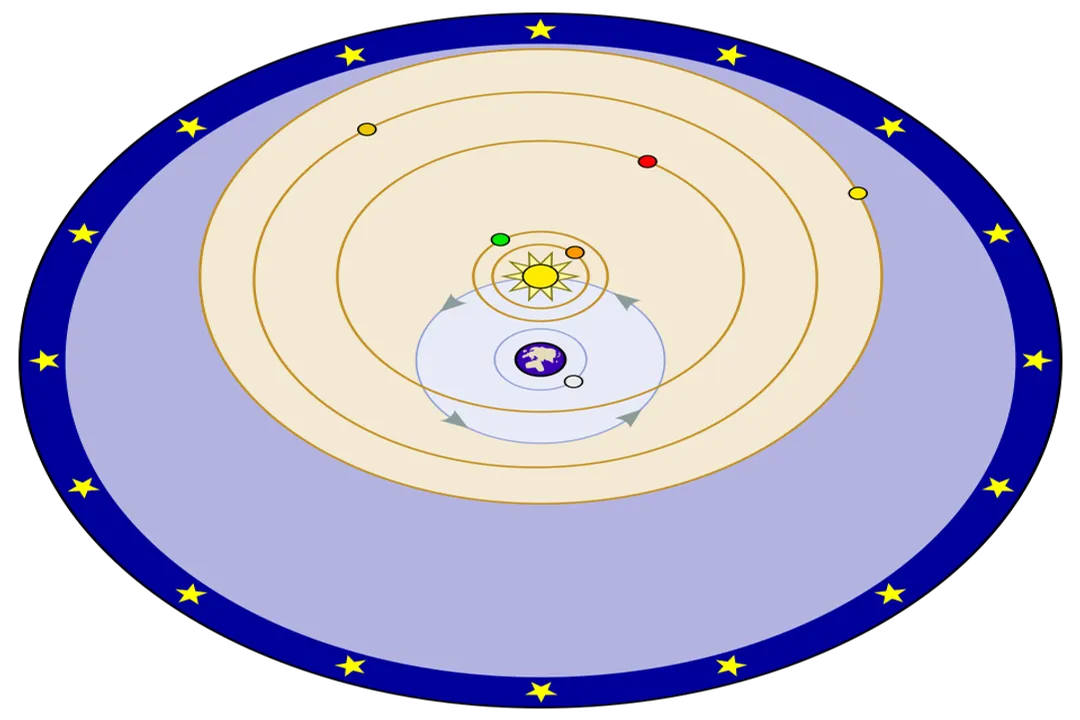
Beyond the need for endless epicycles, the geocentric model failed to account for several key phenomena that became apparent with better telescopes and measurement techniques. [4]
# Phases of Venus
One major empirical test involved observing the planet Venus. If Venus orbited the Earth, as the geocentric model suggested, we should only ever see it as a crescent or a full disk, depending on its position relative to the Earth and Sun—it would never appear fully illuminated from our perspective unless it orbited outside the Sun's path, which observations clearly contradicted. [1] When Galileo observed Venus through a telescope, he saw that it exhibited a full set of phases, just like the Moon. [5] This observation is only possible if Venus orbits the Sun, placing it sometimes between the Earth and the Sun, and sometimes on the far side of the Sun relative to Earth. [1] This single observation effectively broke the Ptolemaic system. [5]
# Stellar Parallax
A second crucial limitation relates to stellar parallax. If the Earth truly orbits the Sun, as the heliocentric model claims, our viewpoint in the sky should shift over the course of a year. [4] When we look at nearby stars against the background of more distant stars, the nearby stars should appear to shift their positions slightly over six months as Earth moves from one side of its orbit to the other. This apparent shift is called stellar parallax. [4]
Early geocentrists often argued that the lack of observable stellar parallax meant the Earth must be stationary. [6] However, the actual limitation wasn't in the geocentric prediction, but in the technology of the time. Stars are incredibly distant, making the parallax shift minuscule. When the first reliable measurements of stellar parallax were made in the 1830s, it provided powerful confirmation of Earth’s orbital motion, a confirmation impossible under a strictly fixed-Earth model without resorting to incredibly large and unproven assumptions about star distances. [4] The geocentric model required that the stars were affixed to an impossibly distant, perhaps infinite, sphere, an explanation that felt like an ad hoc patch rather than a natural consequence of a physical theory. [1]
# The Physics of a Stationary Earth
Even if we set aside the direct observational evidence like Venus's phases, the geocentric model presents profound difficulties when viewed through the lens of physics, a limitation that was truly realized once Newtonian mechanics provided a coherent description of motion. [8]
If the Earth is absolutely stationary, as often implied by its role as the cosmic center, it requires a special, privileged status in the universe, a concept that modern physics largely abandons. [6] One of the major sticking points for any strict, non-rotating geocentric view is the behavior of objects in motion. If the Earth were not spinning, the Coriolis effect—the apparent deflection of moving objects when viewed in a rotating frame of reference—would not exist. [8] Yet, we observe the Coriolis effect in large-scale atmospheric and oceanic patterns. [8]
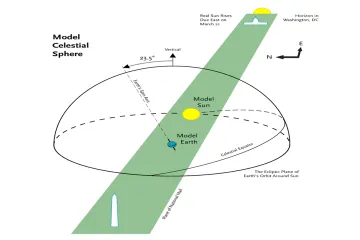
Furthermore, a stationary Earth requires that the entire celestial sphere—the Sun, Moon, planets, and stars—must move around us every day. [3] This demands that the atmosphere, and perhaps the entire universe, is somehow dragged along by this grand, daily rotation, or that a colossal, unmoving sphere presses the stars along. [8] If we consider the immense distances involved, the sheer kinetic energy required to move the entire celestial sphere daily, rather than the Earth merely spinning on its axis, is staggering and violates known conservation principles. [8]
In systems where the Earth does move (like our solar system), the physics is self-consistent. Objects maintain their momentum, and gravity dictates the orbits based on mass distribution. In contrast, the geocentric model requires an external, constant imposition of force to keep the entire outer universe revolving around us, or it requires the physics we observe locally (like inertia) to somehow not apply to the rest of the cosmos. [1] This inconsistency between local mechanics and the required cosmic mechanics is a deep, structural limitation of the model.
# Model Comparison and Elegance
The historical shift from geocentrism to heliocentrism wasn't just about one planet being in the right place; it was about a massive gain in explanatory power and mathematical elegance. [2] The geocentric system, even with its epicycles, deferred circles, and equants (points from which uniform motion was measured, often not the Earth), represented a set of highly specific, ad hoc adjustments tacked onto the basic premise. [5] Each new observation required a new patch or a refinement of an existing mathematical gear in the cosmic clockwork. [1]
The heliocentric system, even in its initial Copernican form (which still used perfect circles), offered a cleaner, more unified account. As science progressed, the shift to elliptical orbits under Kepler, followed by the gravitational explanations of Newton, demonstrated the power of a model that prioritized physical law over perceived observational frames. [2] While the philosophical argument for science isn't always about simplicity—sometimes the truth is complicated—the geocentric system's complexity arose from forcing observations into a predetermined, incorrect frame, whereas the complexity in the heliocentric model arose from describing a fundamentally more complex reality (ellipses, variable speeds) using simpler underlying laws. [2]
One interesting analytical thought experiment is to consider what a "successful" geocentric model would need today. If we insisted on Earth as the center for all purposes, the math would look nearly identical to the heliocentric math, but every variable would be transformed into a convoluted expression relating to Earth's position. For instance, calculating the position of Jupiter would involve the apparent distance of the Sun, the actual orbital paths of Jupiter and Earth around the Sun, and then a massive transformation to express that position as an angle relative to a stationary Earth. [8] The sheer computational burden of translating the real physics into a "geocentric view" highlights that the underlying physical reality does not adhere to the geocentric perspective, making it an artificial constraint for calculation rather than a true description of nature. [1]
# The Illusion of Stability
Ultimately, the greatest limitation of the geocentric model was its insistence on an absolute reference frame—the idea that Earth was uniquely privileged and fixed in space. [6] Modern understanding confirms that concepts like motion and rest are relative. While we can use the Sun as a convenient reference point for the solar system, we could equally well use the Earth for many local calculations, provided we apply the correct laws of physics (like incorporating rotational forces). [8]
The historical failure of geocentrism was not that it was impossible to calculate things with it, but that it was computationally and physically cumbersome because it fundamentally misrepresented the hierarchy of motion in the solar system. [1][5] The limitations boil down to this: a geocentric model requires inventing increasingly baroque mathematical constructs (epicycles) to explain simple, observed phenomena (like retrograde motion), while failing crucial observational tests (like Venus's phases), and demanding a physics for the cosmos that contradicts the physics observed on Earth. [1][4]
If we look at the historical record, the failure wasn't a single, sudden discovery, but a slow accumulation of inconsistencies that made the model scientifically unsatisfying. [2] When scientists observe a model that requires constantly adding complexity just to match reality, while a competing model explains the same reality with simpler, underlying principles, the former cannot stand as an accurate depiction of the physical world. [1][2] The geocentric model, for all its historical importance, became the ultimate example of a paradigm that stopped predicting and started requiring justification for its own complexity.
#Videos
Why Did The Geocentric Model Fail? - Physics Frontier - YouTube
How Did Errors Make The Geocentric Model Unwieldy? - YouTube
Related Questions
#Citations
What are the flaws//limitations of the geocentric model? - Quora
The Biggest Problem In Science Isn't Groupthink - Forbes
Why Did The Geocentric Model Fail? - Physics Frontier - YouTube
Why doesn't a geocentric model of the universe explain redshift?
Geocentrism - Wikipedia
Why the Universe does not revolve around the Earth · Creation.com
What happens if a geocentric model of the world were correct?
planets orbiting the Earth The geocentric model is a superseded ...