What are the strengths and weaknesses of the geocentric model?
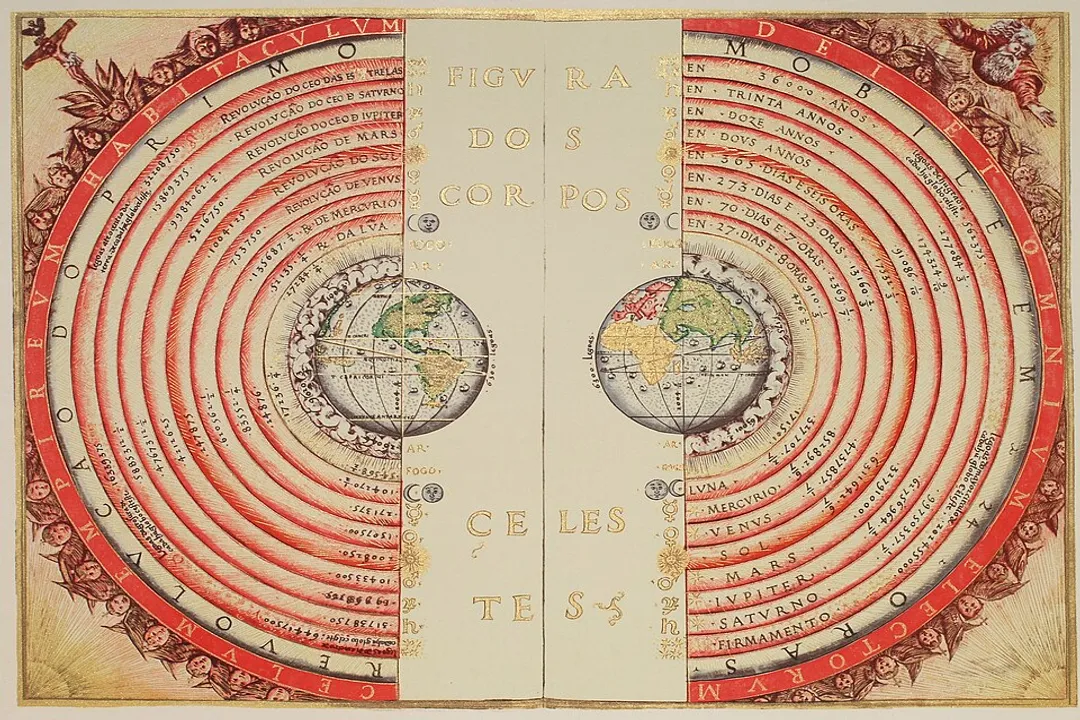
The notion that Earth stands still at the center of the universe, with the Sun, Moon, planets, and all the stars circling it, defined human cosmology for millennia. This geocentric model, often called the Ptolemaic system after the influential Greek astronomer Claudius Ptolemy, was not simply a guess; it was a highly sophisticated mathematical construction based on immediate sensory experience and deep-seated philosophical convictions. Before the advent of modern telescopes and the acceptance of vast cosmic distances, this model offered the most complete, albeit ultimately flawed, explanation for the celestial motions observed nightly. To understand why such a seemingly flawed system held sway for so long, we must examine the strengths that kept it intact and the mathematical compromises that eventually betrayed its weaknesses.
# Intuitive Fit

The most immediate and compelling strength of the geocentric view lies in its sheer intuitive appeal. From our vantage point on the ground, the evidence seems overwhelming: the Sun rises in the east, travels across the sky, and sets in the west. The Moon does the same, as do the familiar constellations. We feel no motion beneath our feet, leading to the logical conclusion that we must be stationary. This apparent simplicity made it easy to accept and readily align with human experience.
This model was also deeply rooted in the prevailing philosophical and theological thought of its time. For many historical thinkers, placing humanity—the supposed pinnacle of creation—at the physical center of the cosmos conferred a special, central importance to our world. In this structure, the heavens were seen as perfect, unchanging spheres, and Earth, being the center, was necessarily imperfect and terrestrial. The mechanics, while eventually becoming complex, still centered on perfect circles, which aligned with the aesthetic and philosophical preference for simple, perfect geometric forms. For routine, short-term astronomical tasks, such as predicting the time of sunrise or the next full moon, the geocentric structure, once calibrated, performed adequately for naked-eye observation.
# Mathematical Baggage
However, the initial intuitive appeal quickly gave way to significant mathematical hurdles when astronomers tried to accurately map the motions of the wandering stars—the planets. The observed paths of planets like Mars, Jupiter, and Saturn were not simple, steady arcs across the sky relative to the background stars. Periodically, they would slow down, appear to move backward for a time (a phenomenon called retrograde motion), and then resume their forward course.
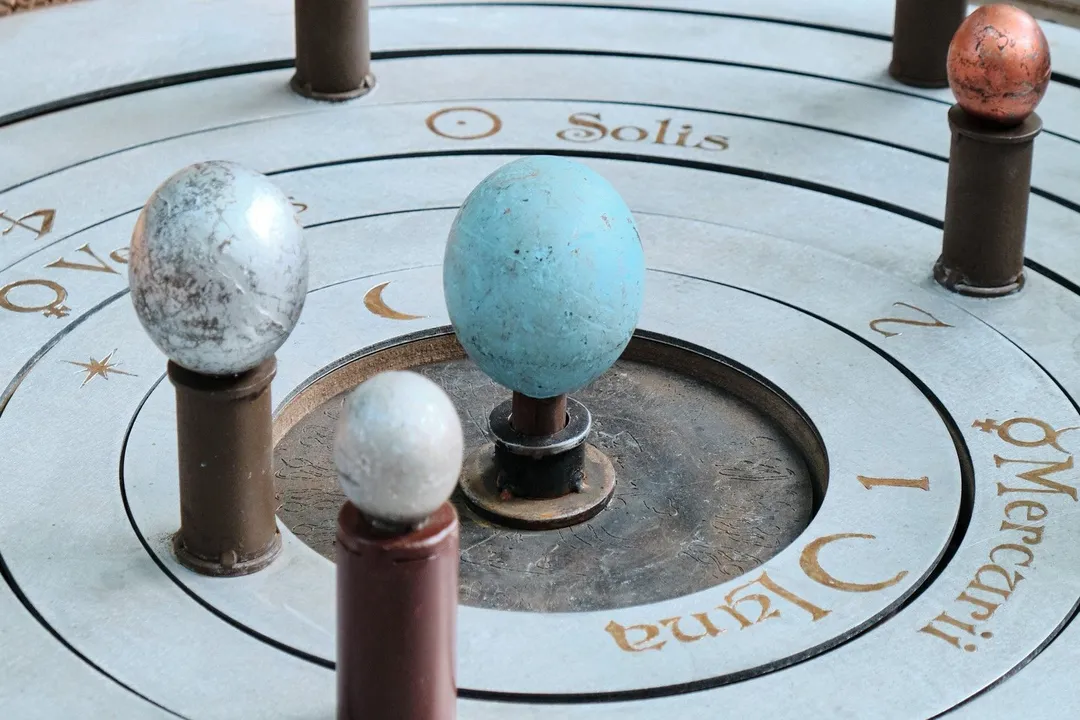
To account for this erratic behavior while maintaining the central, unmoving Earth, ancient astronomers had to invent increasingly elaborate computational tools. The primary solution, championed by Ptolemy, involved layering circles upon circles. The planets were not thought to orbit Earth directly; instead, they moved in small circles called epicycles, the centers of which moved along larger circles called deferents that were centered near, but not exactly on, the Earth.
This machinery of epicycles, equants (points used to make the speed of the deferent circle appear uniform), and eccentrics allowed the model to fit the data, but at a severe cost to elegance. As observational accuracy improved slightly over the centuries, more and more epicycles—sometimes dozens—had to be added to keep the model synchronized with reality. This process demonstrates a critical weakness inherent in the geocentric premise: the need to continuously patch a fundamentally incorrect geometrical assumption led to a model that was mathematically cumbersome and logically tortured.
Consider the challenge of retrograde motion in the two competing paradigms. In the geocentric view, the planet must perform a complex loop (the epicycle) while its host circle (the deferent) moves around Earth. This layering suggests a kind of cosmic puppetry designed solely to save the Earth’s central position.
| Feature Explained | Geocentric Mechanism | Heliocentric Mechanism | Complexity Cost |
|---|---|---|---|
| Daily Motion | Celestial spheres rotate daily | Earth rotates daily | Low (Single motion) |
| Retrograde Motion | Epicycles on Deferents | Earth passes the slower outer planet | High (Nested circles) |
This comparison clearly shows where the geocentric model accumulated its weakness: it prioritized philosophical placement over mathematical parsimony.
# Observational Conflicts

While the model could mimic planetary positions via its convoluted geometry, it failed dramatically when faced with other key observations, some of which were well-known even in antiquity. One of the most significant failings concerned the phases of Venus. If Venus orbited the Sun, which in turn orbited the Earth, Venus would exhibit a full range of phases, much like our Moon. However, under the Ptolemaic system, Venus was constrained to orbit between the Earth and the Sun, meaning observers on Earth should only ever see crescent or new phases of Venus, never a fully illuminated disk. When Galileo later observed the full phases of Venus with his telescope, it served as powerful, direct evidence against the long-held geocentric structure.
Another major issue related to the apparent lack of stellar parallax. If the Earth orbited the Sun, our viewing angle of the fixed stars should change significantly over the course of a year—a nearby star would appear to shift slightly against the background of more distant stars. The ancient Greeks, and many proponents well into the Renaissance, could not detect this shift. They concluded, logically within their framework, that the Earth must not be moving.
This brings us to an interesting historical point about model testing. The inability to observe parallax wasn't necessarily a strength of the model; rather, it was a failure in measuring the vast scale of the universe. Early proponents could argue that the stars were simply so far away that the parallax was too small to measure with available instruments—an argument that turned a null result into a supporting observation. However, the necessary distance required for the stars to appear fixed was truly immense, straining credulity even for supporters of the model. It took advances in telescope technology in the 19th century to finally measure parallax and confirm Earth’s orbital motion empirically.
# Persistence and Authority
The primary "strength" that allowed the geocentric model to dominate for over a thousand years was its authority and its integration into the established worldview. It was the consensus model, codified by respected figures like Aristotle and Ptolemy, and later adopted and sanctified by powerful religious institutions. This institutional backing meant that questioning the model was not merely a scientific disagreement; it often involved challenging deeply entrenched cultural and philosophical assumptions.
For the average person, and even for many professional scholars for centuries, the system was good enough for its practical applications, such as timekeeping, calendar creation, and astrology. In science, a model remains dominant until an alternative model can provide both better predictive accuracy and a more satisfying explanation for known anomalies. The heliocentric model, initially proposed by Aristarchus but later championed by Copernicus, took centuries to fully mature and gain predictive superiority, particularly because Copernicus’s early mathematical structure was not initially much simpler than Ptolemy's.
# Comparative Limitations
When evaluating the merits and limitations of any scientific model, we assess its internal consistency, its ability to explain observations, and its economy of explanation. The geocentric model excelled in internal consistency only when allowed to grow arbitrarily complex; its ability to explain observations degraded as precision increased; and its economy of explanation was poor due to the necessity of epicycles.
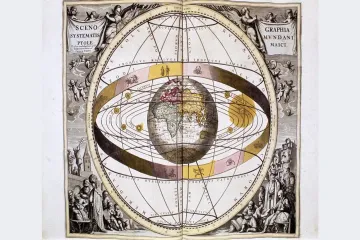
The Turito perspective highlights that the model required a set of concentric, rotating spheres for the Sun, Moon, and stars, plus the separate, more complicated arrangements for the planets. The sheer number of moving parts needed to maintain Earth’s stability as the stationary anchor is a massive limiting factor. By contrast, moving the Sun to the center—the heliocentric model—immediately simplified the explanation for retrograde motion, transforming it from a planetary action into an observational artifact of Earth overtaking an outer planet in its own orbit.
This shift in perspective—from an absolute center to a relative motion—is difficult to overstate. In the geocentric view, the problem is what the planets are doing relative to Earth; in the heliocentric view, the problem is how our observation point (Earth) is moving relative to the Sun. The geocentric path was always reactive, trying to map observed deviations, whereas the heliocentric path was proactive, explaining the deviations as consequences of a simpler, underlying mechanical arrangement.
# The Failure of Simplicity
It is important to note that the geocentric model’s supposed strength—its intuitive simplicity—was ultimately a trap. While the idea of a stationary Earth is simple, the execution required to match reality was anything but. A genuinely strong scientific model should be both simple (parsimonious) and accurate. The geocentric system became accurate only by sacrificing simplicity. The need for epicycles introduced an artificial complexity that obscured the true mechanics of the Solar System. An experienced astronomer looking at the required equations might have recognized that the model was becoming less descriptive of the physical universe and more akin to an elaborate accounting trick, designed purely to balance the cosmic books to zero—with Earth remaining at the origin point.
The move away from the geocentric view illustrates a key principle in the evaluation of scientific models: often, the most powerful argument against a long-held theory is not that it is entirely wrong, but that an alternative hypothesis explains the same data and new data more elegantly, demanding fewer ad hoc assumptions. The geocentric model failed this test by requiring an ever-increasing number of assumptions (epicycles) to account for the very motions it was designed to explain simply. It represents a monumental achievement in early mathematical astronomy but also stands as a powerful case study in how intellectual attachment to a foundational assumption can impede scientific progress, even in the face of growing observational contradiction.
Related Questions
#Citations
What are the pros and cons of the geocentric and homocentric ...
Geocentric model: The Earth-centered view of the universe | Space
Chapter 1, Problem 1RD - bartleby
Evaluating the Merits & Limitations of Models Practice - Study.com
Geocentric vs Heliocentric Models - Doug Gawne - Prezi
Geocentrism - Wikipedia
Models of the Solar System and Their Limitations - Turito
Advantages And Disadvantages Of The Geocentric Approach - Cram
Difference Between Geocentric And Heliocentric Models