What are the models of the universe?
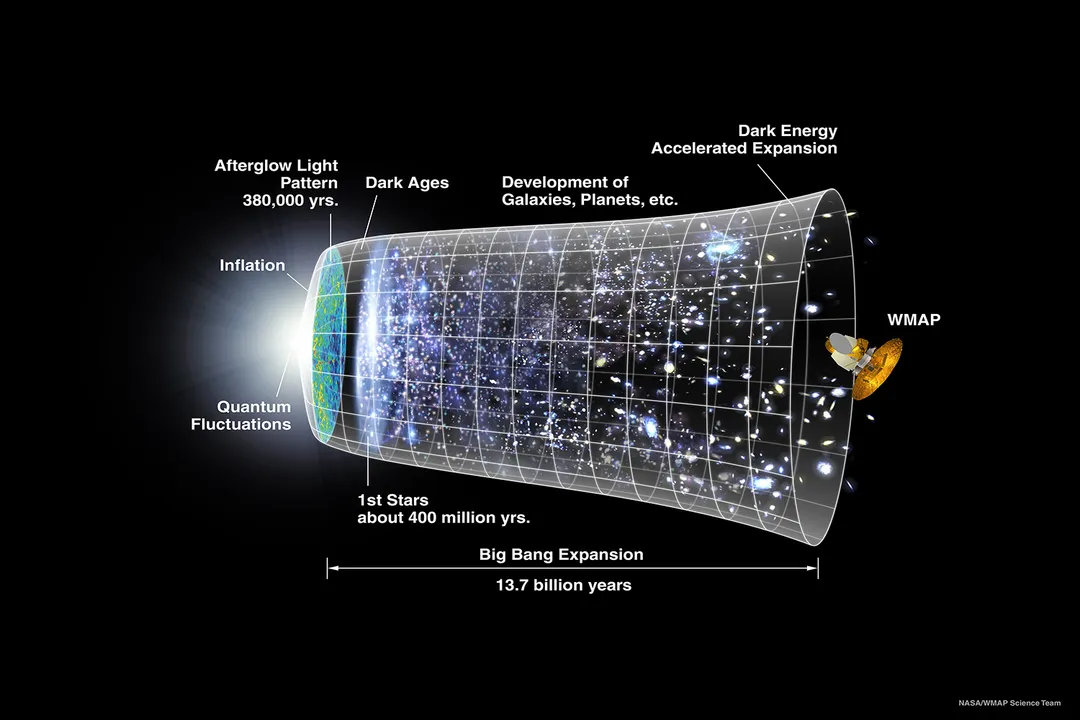
The human impulse to chart the night sky and assign a structure to existence has driven centuries of inquiry, leading to distinct models of the universe. These models are not just static pictures; they are evolving conceptual tools—mathematical and physical descriptions—that attempt to organize our observations of the cosmos into a coherent picture. [5] What one generation accepted as absolute truth about our place in creation, the next often replaced with a far more elegant or accurate description. [6]
# Earth Center
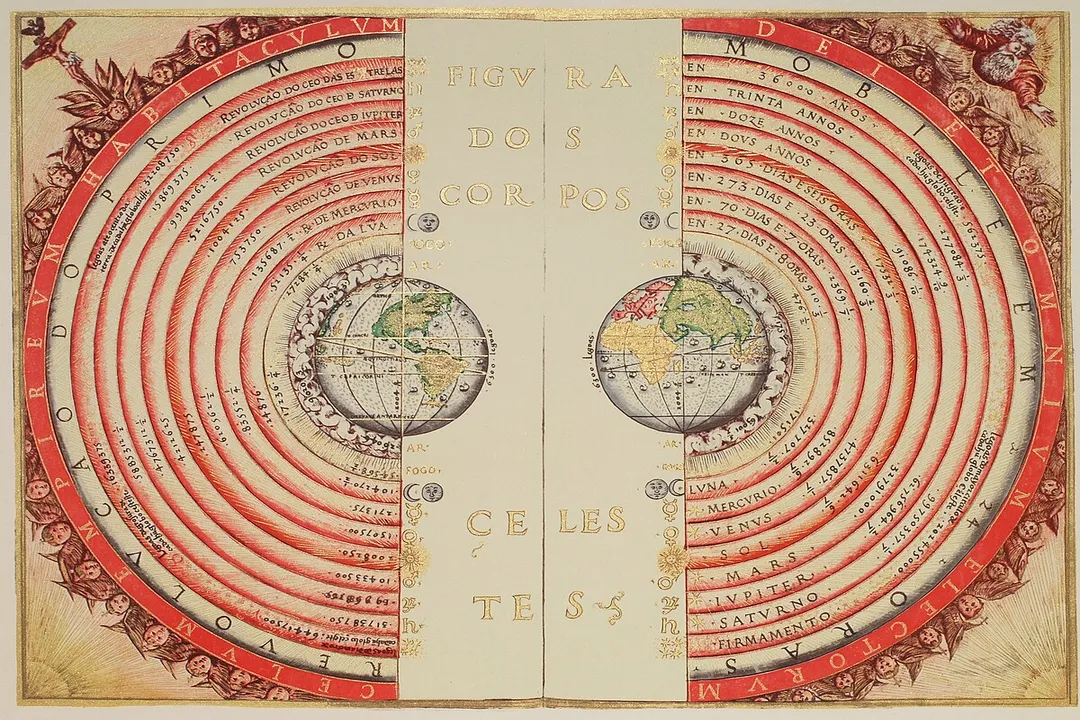
For a very long time, the prevailing view placed Earth firmly at the center of everything. This geocentric perspective was intuitively appealing; we see the Sun, Moon, and stars rise and set around us every day. [3] Ancient philosophies and early cosmological structures often anchored the world at the immobile core of the universe. [6] Even references within religious texts, such as the account of creation in Exodus, have been interpreted by some to support a static, Earth-centered arrangement. [8] This fundamental assumption meant that all celestial movements had to be explained as motions around our planet. [2]
# Ptolemy's System
The most sophisticated and enduring articulation of the geocentric view came from the Greco-Egyptian astronomer Claudius Ptolemy in the second century AD. [6] His model was not a simple one; it was an immensely complex mathematical achievement designed to accurately predict the observed paths of the planets, which often seemed to loop backward in the night sky—a phenomenon called retrograde motion. [2] Ptolemy maintained the Earth at the center but introduced specialized motions within the celestial spheres to account for these irregularities. [2] He employed epicycles (smaller circles whose centers move along larger circles called deferents) to map out the observed paths. [6] This system worked well enough for making predictions for over a millennium, demonstrating that a model can be mathematically successful even if its underlying physical premise is incorrect. [2][6]

# Aristarchus Pioneer
Long before Ptolemy, however, alternatives were already being proposed. Around the third century BC, an ancient Greek astronomer named Aristarchus of Samos suggested a different arrangement. [6] While Ptolemy’s system was mathematically intricate, Aristarchus proposed that the Sun, not the Earth, occupied the center of the known celestial bodies. [6][7] This heliocentric notion was radical, but it did not gain widespread acceptance at the time, largely due to philosophical weight and the lack of perceived stellar parallax—the apparent shift in star positions as Earth moved, which ancient observers could not detect. [6]
# Copernican Shift
The true revolution in cosmic mapping began in the 16th century with Nicolaus Copernicus. [6] He developed a full mathematical model that placed the Sun at the center of the Solar System, arguing that the apparent daily motion of the heavens was due to the Earth rotating on its axis, and the apparent looping of the planets was due to the Earth overtaking the outer planets in its own orbit. [7] The Copernican system dramatically simplified the required mathematics compared to Ptolemy’s method, removing the necessity for complex epicycles just to explain retrograde motion. [7]
The shift from an Earth-centered universe to a Sun-centered one was more than a simple swap of positions; it was a fundamental re-evaluation of humanity’s physical significance in the cosmos. [6] While Aristarchus proposed the idea centuries prior, Copernicus provided the detailed, published structure that eventually spurred further astronomical observation and validation. [6]
# Modern Cosmography
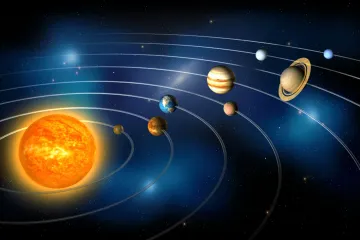
The models evolved rapidly after Copernicus, particularly with the advent of the telescope and the application of physical laws, like gravity, to celestial mechanics. [5] Early heliocentrism focused primarily on the Solar System, detailing the orbits of the planets around the Sun. [7] However, modern cosmology seeks to model the entire universe, dealing with concepts vastly larger than the motions of just the Sun and its immediate planetary family. [1]
Cosmological modeling now encompasses the distribution of matter, the geometry of spacetime, and the overall evolution of the cosmos, from its initial moments to its potential fate. [5][8] Current scientific understanding leans toward a model where the universe is expanding from an initial hot, dense state, often referred to as the Big Bang theory, which serves as the dominant model for the universe's origin. [8] This contrasts with concepts that propose a universe that is static or one that cycles eternally. [8]
A key element in contemporary understanding is the geometry of the universe itself. Models suggest that based on the density of matter and energy, the universe could be geometrically flat, open (negatively curved), or closed (positively curved). [1] Current observations overwhelmingly favor the flat model, suggesting that the universe extends infinitely, though this conclusion is contingent on precise measurements of dark energy and dark matter. [1] When we talk about the structure today, we are generally discussing the Lambda-CDM model, which incorporates dark energy () and cold dark matter (CDM) to explain observed large-scale structure and expansion. [5]
# Comparing Model Philosophies
It is instructive to compare the underlying motivations of these historical models. The Earth-centered models, such as those attributed to Aristotle and refined by Ptolemy, were often deeply intertwined with physics and theology as understood at the time; they suggested a perfect, ordered, and static cosmos with Earth holding the most significant, central place. [3][6]
The later models, starting with Aristarchus and solidified by Copernicus, were driven more by mathematical elegance and predictive accuracy. [7] The heliocentric shift made the math simpler, which is often a strong indicator in physical modeling that one is moving closer to a fundamental truth. The fact that Ptolemy needed dozens of complex circles (epicycles and equants) to make his Earth-at-the-center model work, while Copernicus could achieve similar or better results with simpler circular orbits around the Sun, highlights a subtle truth about scientific modeling: sometimes the simplest explanation that fits the data is the better representation of reality. [2][6]
To appreciate this, consider the sheer computational commitment required to maintain the Ptolemaic structure. Every observation required recalibrating the epicycles, creating a system prone to accumulating errors over centuries. [2] When we look at the modern Lambda-CDM model, its success is measured not just by predicting galaxy distribution today, but by accurately modeling the cosmic microwave background radiation—the faint echo from the universe's early hot phase—a piece of data entirely absent from ancient considerations. [8]
# Charting Cosmic Scales
To visualize the incredible scope of these changing models, we can contrast the primary subjects:
| Model Era | Center Point | Primary Focus | Key Mechanism for Errors |
|---|---|---|---|
| Geocentric (Ptolemy) | Earth | Planets, Sun, Moon relative to Earth | Epicycles and Deferents [2][6] |
| Heliocentric (Copernicus) | Sun | Planets relative to the Sun | Initial reliance on perfect circles [7] |
| Modern Cosmology | Spacetime Expansion | Large-scale structure, Dark Energy/Matter | Measuring density parameters () [1][5] |
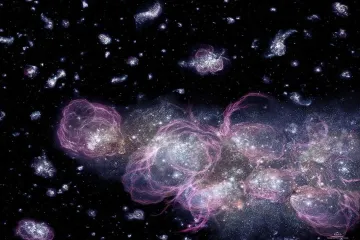
What strikes an observer reviewing this progression is the continuous movement away from anthropocentrism. The universe ceased to revolve around us; rather, we found ourselves revolving around a star, which itself became one of countless stars within a galaxy, which is itself one speck in a vast structure of galaxy clusters. [1] This descent in status, from the immovable center to a planet orbiting an average star on the outskirts of a galaxy, is perhaps the most profound philosophical outcome of refining our cosmic models. [6] The challenge now is less about where we are, and more about what the entire structure is made of and how it behaves over billions of years. [5]
#Videos
Models of the Universe [Geocentric to Heliocentric] - YouTube
Related Questions
#Citations
Models of the Universe - The University of Texas at Arlington
Models of the Universe | Definition & Types - Lesson - Study.com
Geocentrism - Wikipedia
Models of the Universe [Geocentric to Heliocentric] - YouTube
Cosmological Models of the Universe- Overview - Cosmotography
The Models of the Universe: Exodus, Aristotle, Aristarchus, Ptolemy ...
Chapter 3. Models of the Universe - The Star Garden
Models of the Origin of the Universe | Answers in Genesis
Models of the Universe - Sutori