Is the universe expanding too fast?
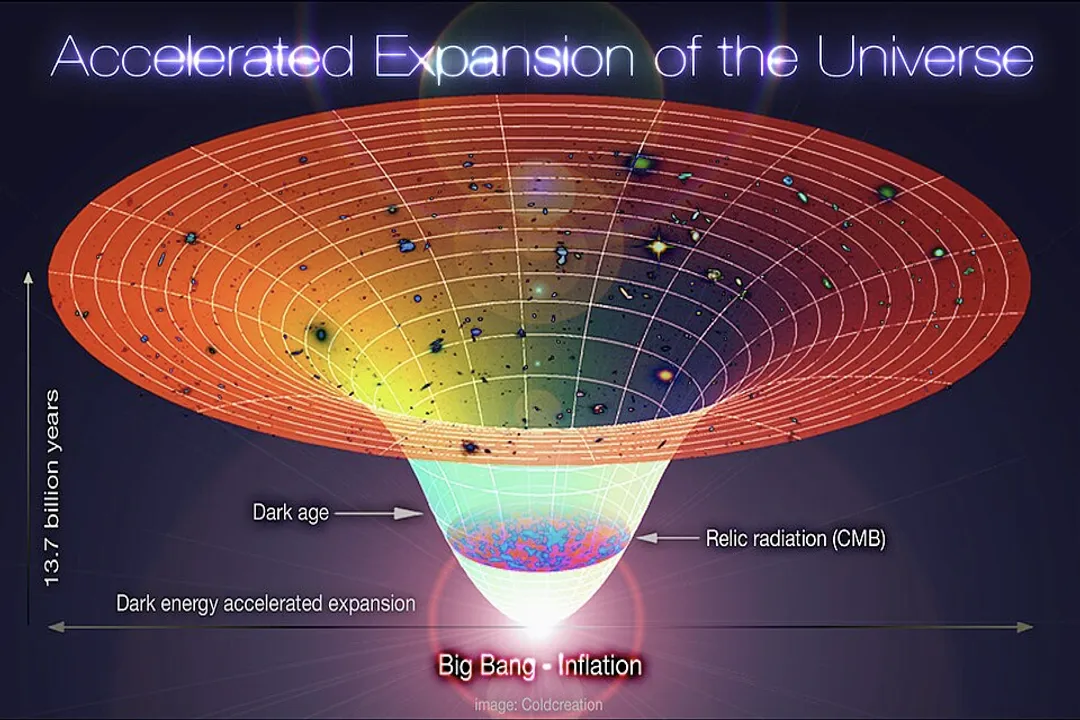
The expansion of the cosmos is a well-established fact, with distant galaxies perpetually receding from one another as the very fabric of space stretches over time. However, recent, highly precise measurements have introduced a significant puzzle: the universe appears to be inflating at a rate that is alarmingly faster than our current best cosmological models predict. This isn't just a small rounding error; it represents a fundamental tension between how fast the universe seems to be expanding today compared to how fast it should be expanding based on observations from the early universe.
# Cosmic Stretch
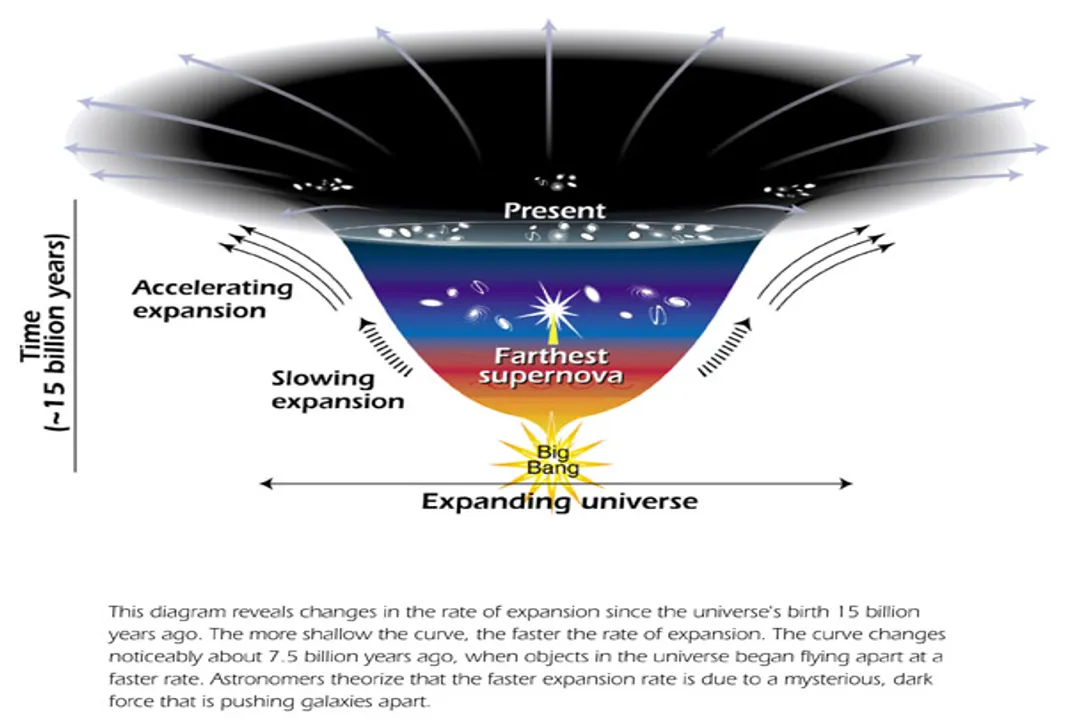
To understand the problem, one must first grasp the nature of cosmic expansion. It is not like an explosion where galaxies are simply flying outward through static space. Instead, the space between gravitationally unbound objects is increasing, causing the distances to grow over time. If you imagine dots painted on a balloon being inflated, the dots move apart not because they are walking, but because the rubber surface between them is stretching.
The rate of this stretching is quantified by the Hubble Constant, often denoted as , measured in kilometers per second per megaparsec (). A higher value for the Hubble Constant means the universe is expanding more quickly at any given distance. The debate centers on what the precise value of actually is, or rather, what two different reliable methods tell us the value should be.
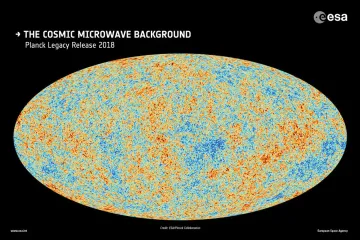
When we look at the universe today, using nearby objects as "standard candles" like Cepheid variable stars or Type Ia supernovae to measure distances and recession speeds, we arrive at a higher rate of expansion. Conversely, when cosmologists look at the remnants of the very early universe—specifically the patterns imprinted in the Cosmic Microwave Background (CMB) radiation, assuming the standard model of cosmology () is correct—they predict a lower rate of expansion.
The difference between these two measurements is what scientists call the Hubble Tension.
# The Speed Discrepancy
The concept of an accelerating expansion has been known for some time, pointing toward a mysterious repulsive force dubbed dark energy. Dark energy acts against gravity, causing the expansion to speed up rather than slow down due to gravity's pull. The prevailing cosmological model, (Lambda Cold Dark Matter), incorporates this dark energy (represented by Lambda, ) and predicts the expansion history of the universe based on its initial conditions seen in the CMB.
The trouble is that the expansion rate observed locally does not match the rate predicted by plugging the ingredients of the model (like the density of matter, dark energy, and dark matter) into the physics that governed the early universe.
The measurements derived from the early universe, relying on the Planck satellite data of the CMB, generally suggest a Hubble Constant around . In contrast, measurements using the "cosmic distance ladder"—a sequence of techniques calibrated by observing nearby objects—yield values clustering closer to .
This gap, which is now statistically significant, suggests a potential issue: either there are unknown systematic errors in one or both sets of measurements, or the model itself needs revision. Given the precision of modern instruments, the possibility of flawed measurements is diminishing, leading many scientists to focus on the latter: the need for new physics.
# New Light on the Tension
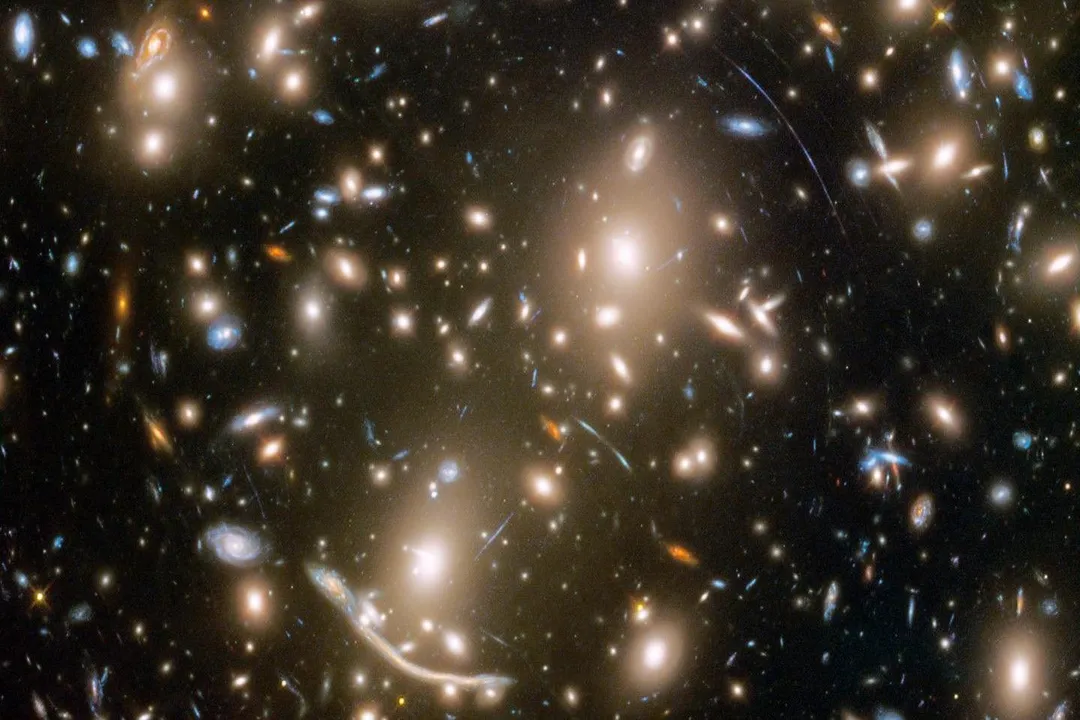
The introduction of newer, more powerful instruments has only served to solidify the reality of this discrepancy rather than resolve it. The James Webb Space Telescope (JWST) has provided exceptionally sharp images of the distant universe, allowing astronomers to better calibrate their standard candles, such as Cepheid variables, in closer galaxies.
The expectation might have been that using JWST's superior infrared capabilities would clean up the measurement noise from older telescopes and perhaps pull the local measurement closer to the CMB prediction. Instead, observations confirmed the high expansion rate, effectively confirming the tension. This is a significant moment because it places heavy constraint on the possibility that the local measurements are simply riddled with unaccounted-for errors. The data derived from JWST appears to confirm the universe is expanding faster than we thought based on early universe physics.
We can illustrate this tension by looking at the typical values cited:
| Measurement Method | Era Observed | Approximate () | Implication |
|---|---|---|---|
| Early Universe (CMB) | years post-Big Bang | Lower expansion rate predicted for today | |
| Local Universe (Distance Ladder) | Present Day | Higher expansion rate currently observed |
This disparity implies that the expansion rate of the universe has increased more steeply since the early cosmos than the standard physics predicts, perhaps due to the properties of dark energy changing over time, or an entirely new component entering the cosmic inventory.
# The Speed Limit Question
It is worth noting that while the expansion is accelerating, it does not violate the universal speed limit established by Einstein's relativity: nothing can travel through space faster than the speed of light (). The expansion of space itself is not bound by this limit; distant galaxies can recede from us at speeds greater than because the space between us is growing, not because the galaxies possess that velocity relative to their local patch of spacetime. This fact is important context, but it doesn't solve the question of why the rate is what it is.
# Reassessing Cosmological Constants
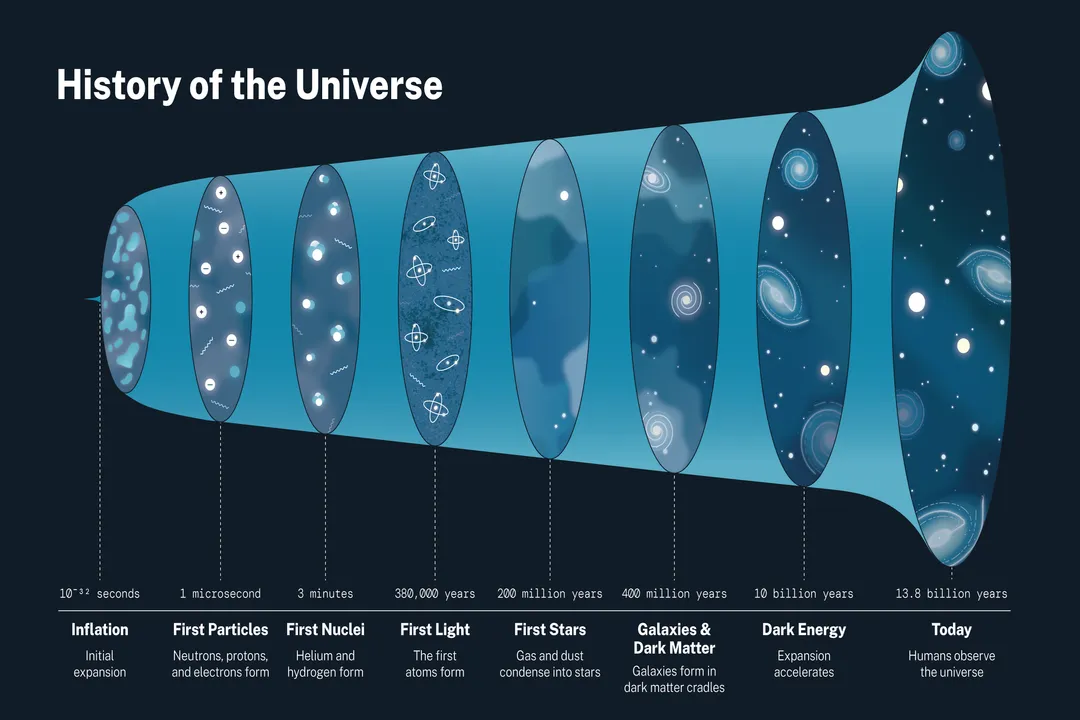
The discovery that the universe is expanding "too fast" is, from a physicist’s perspective, one of the most exciting situations in modern science. It suggests a fundamental crack in our most successful, yet incomplete, model of the universe.
If we assume the local measurements are correct, we must ask what changed between the early universe (when the CMB formed) and the universe today to cause this acceleration discrepancy. One possibility lies in adjusting the parameters of the model itself. Perhaps the dark energy density () is not constant, but evolves over time. Another avenue considers new types of particles or fields that might have been present in the early universe but have since decayed or faded from influence, effectively altering the expansion history without being directly detectable now.
Think of it this way: The CMB measurement is like looking at a blueprint created when the house was just framed—it tells you what the final structure should look like based on the initial plans. The local measurement is like taking a tape measure to the finished room today. If the room is unexpectedly large, it means either the blueprint was wrong about the materials, or something unforeseen happened during construction that caused an extra layer of insulation (or perhaps some other exotic matter) to be added later in the process. The high precision from instruments like JWST strengthens the case for an issue in the "blueprint" or the "construction materials" assumptions.
# The Cosmological Context
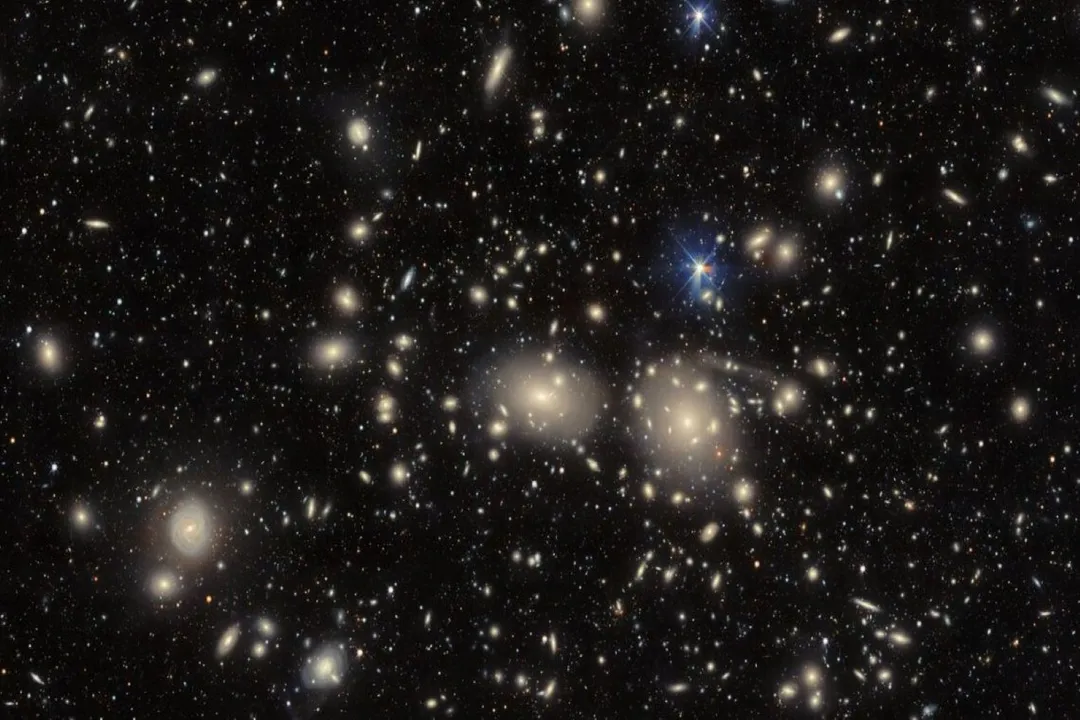
The mystery highlights the difference between two distinct measurement paradigms. The early universe measurements are a testament to our understanding of physics over vast timescales—how gravity, radiation, and the initial density fluctuations evolved—all encoded in the CMB data. These measurements rely on the assumption that the laws of physics we know held true universally and unchanged since the universe was only a few hundred thousand years old.
The local measurements, on the other hand, are a direct probe of the current state, using astronomical objects whose intrinsic brightness we believe we understand well. The refinement in these local measurements, driven by advances like JWST, makes the tension more acute. It suggests a breakdown in one of the fundamental assumptions linking the two eras.
For instance, if the density of dark energy was slightly different in the early universe than we assume, or if there was a new, unknown form of early dark energy that dissipated, it would change the predicted expansion rate today, potentially reconciling the two values. Exploring these possibilities involves moving beyond the standard model into extensions that introduce new physics.
It is an extraordinary moment in cosmology. For decades, the model has been remarkably successful at describing nearly everything we see, from galaxy formation to the background radiation. Yet, this single, measurable parameter—the Hubble Constant—is showing that the model might be incomplete or require modification to account for the present reality. The fact that different teams using completely independent physical assumptions and observational techniques consistently arrive at different answers provides compelling evidence that we are either seeing a failure in our assumptions or witnessing a genuine new cosmic phenomenon.

# Scientific Direction
The immediate path forward involves two simultaneous efforts. First, scientists are meticulously re-examining every assumption behind the local measurements, looking for subtle, unaccounted-for environmental effects or calibration errors within the distance ladder, despite the excellent data from JWST. Second, theoretical physicists are actively developing and testing alternative cosmological models that could naturally produce the higher local expansion rate while still respecting the CMB data.
If the tension persists after all systematic errors are ruled out, it will signal a major shift in our understanding of the universe's fundamental composition or dynamics. It opens the door to concepts like "early dark energy," modified gravity theories, or even an entirely new particle interaction we have not yet conceived. The universe, it seems, is performing an experiment on us, showing that the rules governing its expansion might be slightly different than the book we currently use predicts. This is not a crisis of science, but rather a fantastic opportunity for discovery, pushing observational and theoretical limits in equal measure.
Related Questions
#Citations
ELI5 how fast is the universe expanding : r/explainlikeimfive - Reddit
Accelerating expansion of the universe - Wikipedia
Scientists Confirm The Universe Is Expanding Too Fast - Science Alert
Why is the universe expanding faster than predicted? A cosmologist ...
What is Dark Energy? Inside Our Accelerating, Expanding Universe
The Universe seems to be expanding fast. Too fast, even
At what speed is the universe expanding? Is it faster or slower than ...
'Our model of cosmology might be broken': New study reveals the ...
James Webb Telescope Confirms the Universe Is Expanding Faster ...