Was there anything before our universe?
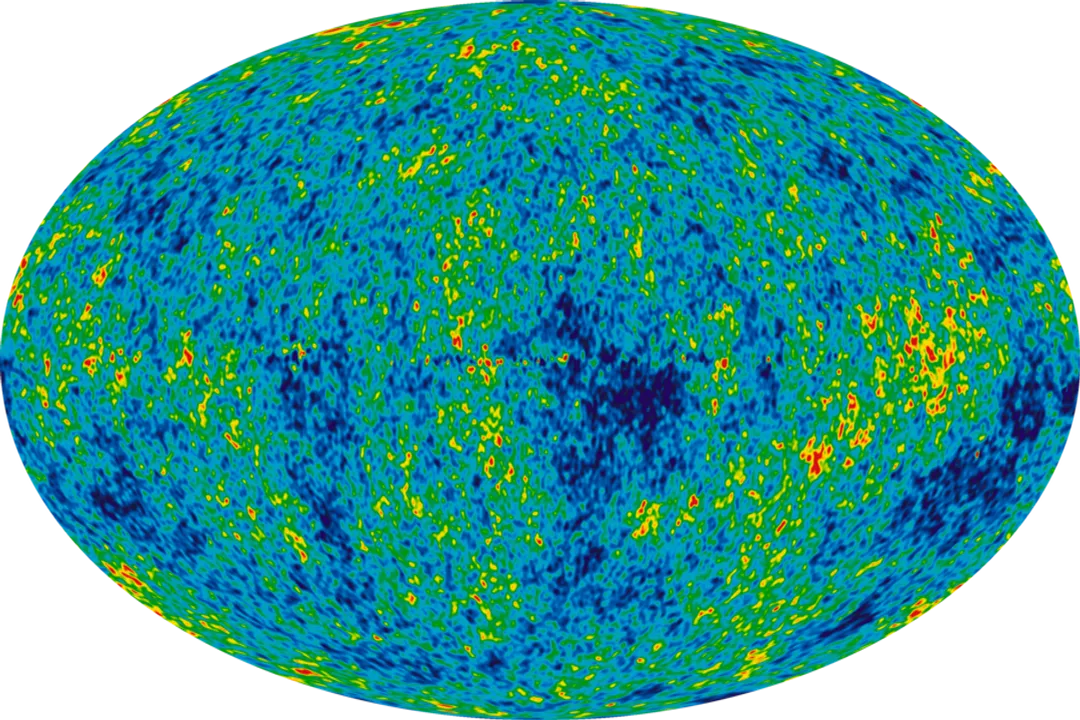
Trying to conceptualize what existed before the beginning of our universe—the moment cosmologists refer to as the Big Bang—pushes the very limits of human intuition and scientific language. [2] We are conditioned to think of time as a continuous line stretching infinitely backward, but the reigning cosmological model suggests otherwise: time itself, along with space and all matter and energy, sprang into existence at a specific point about 13.8 billion years ago. [7][9] Therefore, asking what was before the Big Bang can feel akin to asking what is north of the North Pole; the framework within which we understand "before" might cease to apply at that boundary. [7]
# Physics Boundary
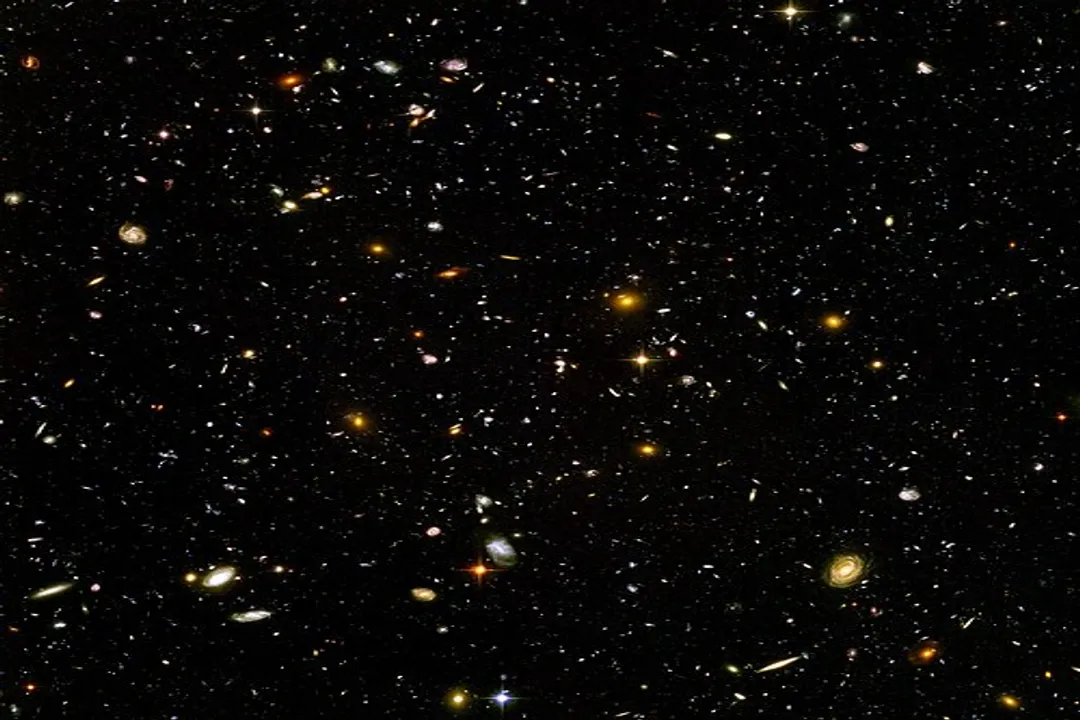
The standard model of cosmology, which accurately describes the universe from about a second after the initial expansion, paints a picture of an incredibly hot, dense state. [9] This expansion, which we call the Big Bang, is not an explosion in space, but the rapid expansion of space itself. [7] However, when we rewind the clock using General Relativity, the math eventually breaks down into a singularity—a point of infinite density and temperature. [7][8] At this point, which we label , General Relativity fails to describe reality, and we lack a verified theory of quantum gravity to take over. [8] This failure signifies that our current physical laws cannot definitively tell us how the singularity formed or what, if anything, preceded the spacetime it defined. [7]
The Planck Epoch, the first seconds, remains shrouded in mystery because the required physics—a unification of gravity with quantum mechanics—is still under development. [7][8]
If we accept the standard model as the whole story, then by definition, there was nothing before the Big Bang, as time itself began then. [7] However, many active areas of theoretical physics reject this definitive "nothing," proposing instead that the Big Bang was merely a local event or a transition point within a grander, pre-existing structure. [2][6]
# Cyclic Theories
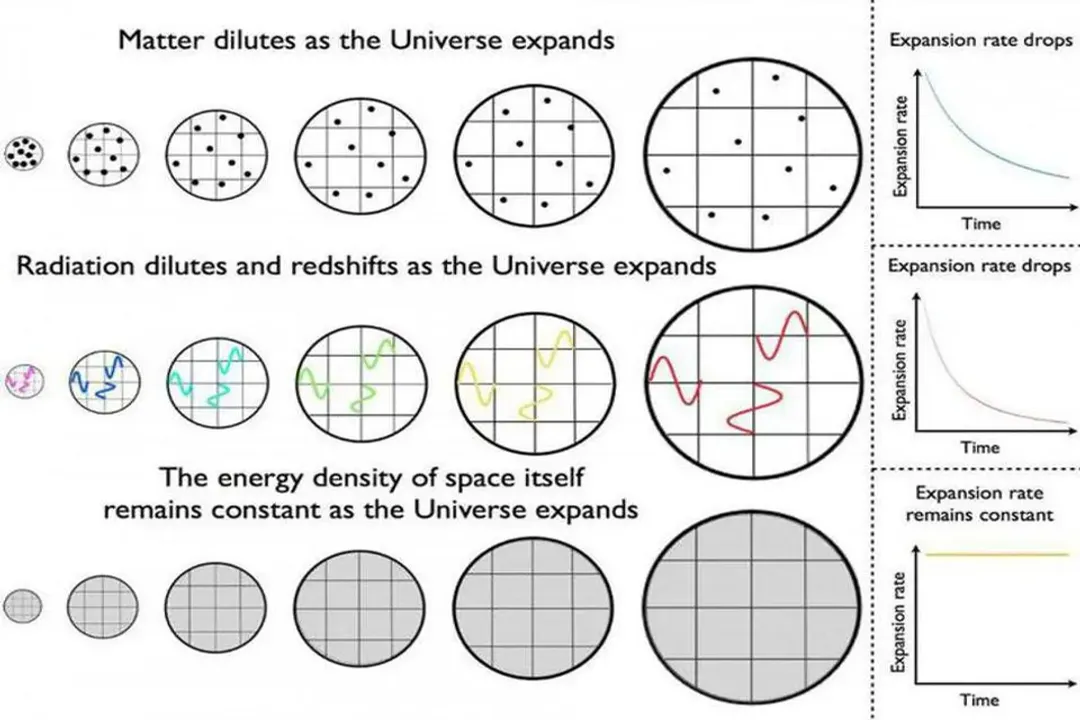
One compelling set of ideas suggests the universe undergoes cycles of expansion and contraction, often referred to as the Big Bounce scenario. [2] In these models, the singularity is avoided. Instead of collapsing into infinite density, the universe reaches a point of maximum contraction and then rebounds, beginning the expansion phase we observe today. [2]
In a Big Bounce scenario, the "before" would be an older, previous iteration of the cosmos—perhaps one that was contracting rather than expanding. [2] This offers a neat answer: what was before was simply another universe. The scientific challenge here lies in finding evidence of this previous cycle. Some theorists explore whether the geometry or residual gravitational waves from the prior collapse could have imprinted themselves on the Cosmic Microwave Background (CMB), the faint afterglow of our own Big Bang. [5] If remnants of the contraction phase could be detected in the subtle patterns of the CMB, it would offer powerful, albeit indirect, proof that our universe was born from something else, rather than from absolute nothingness. [5]
Contrast this with the standard Big Bang, where the initial state is a true beginning of time and space. A cyclic model, conversely, suggests a continuity, where spacetime is potentially eternal, fluctuating between phases of contraction and expansion. [2] Thinking about the physical states involved, an ancient, contracting universe would have been incredibly complex, perhaps already possessing structured forms of energy, though its overall metric would be collapsing inward, fundamentally different from our current metric that is expanding outward. [2]
# Eternal Inflation
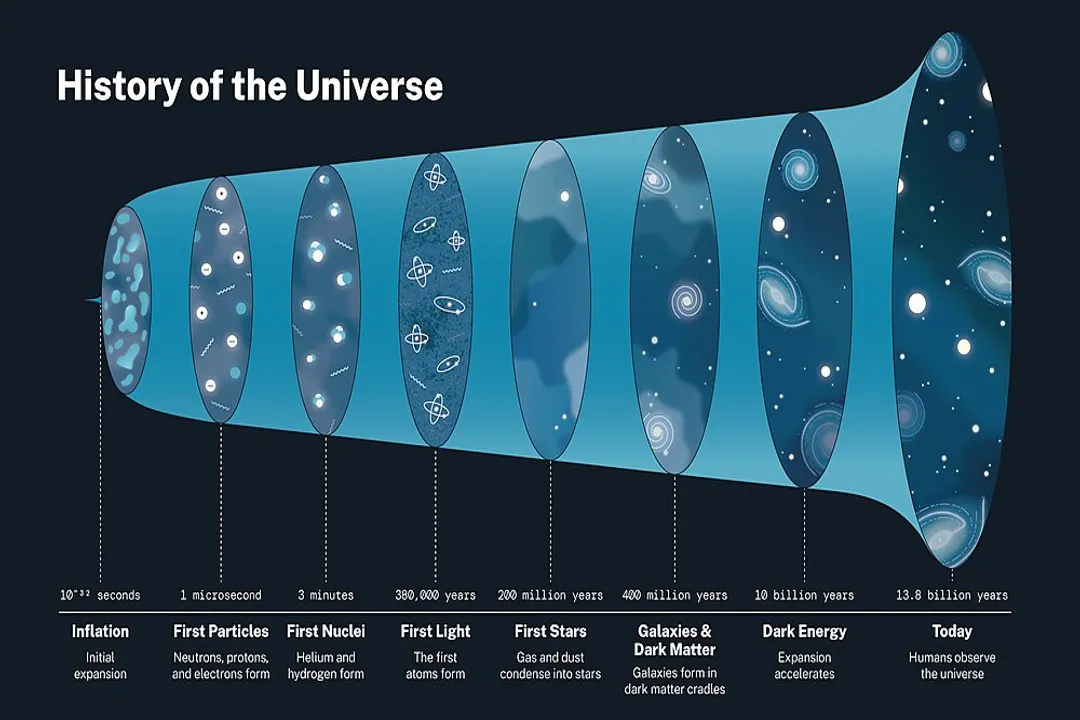
Another major alternative involves the concept of eternal inflation, which suggests that the rapid expansion phase (inflation) that occurred fractions of a second after our Big Bang never truly stopped everywhere in the cosmos. [6] This leads to the idea of a Multiverse, where our observable universe is just one "bubble" or pocket universe among countless others. [2]
In this picture, the "before" our Big Bang was a vast, rapidly inflating meta-space, often called the inflaton field or the false vacuum state. [6] This meta-space is not empty; it is teeming with potential energy driving exponential expansion. [6] Our Big Bang happened when the energy density in our local region dropped, causing inflation to stop locally, releasing the energy that became the matter and radiation we see today. [2][6]
This perspective reframes the question significantly. Instead of asking what was before time, we ask what was the environment outside our bubble when it formed. The answer, according to eternal inflation, is a much larger, older, still-inflating existence. [6] Imagine pouring hot syrup into a rapidly expanding, cold container; the Big Bang is the moment the syrup cools locally enough to form a stable droplet (our universe), while the rest of the container continues expanding rapidly. [6] The "before" is the state of the container and the surrounding, unsettled syrup.
# Pre-Beginning Structures
The idea that something existed before our universe is also explored in theories that attempt to replace the singularity entirely with a continuous physical description, such as certain versions of String Theory or Loop Quantum Gravity. [6][8] The Big Think article explicitly mentions that the universe wasn't necessarily empty before the Big Bang, suggesting some kind of structure or field was present. [6]
In one interpretation arising from these advanced theories, the pre-Big Bang state was an era of contraction where the universe was governed by quantum gravitational effects, perhaps approaching a state of minimum volume rather than zero volume. [8] This state wouldn't resemble our current, low-entropy, expanding universe. It might have been characterized by intense quantum foam or fluctuating spacetime geometry. [6]
This is where the distinction between time and spacetime becomes critical for understanding. If time began with the Big Bang, then the prior state existed outside of our temporal dimension. It is a state of existence that governed the parameters that led to the initiation of our spacetime, energy, and matter. If we consider the structure of existence as a sequence of physical regimes, our universe is simply the latest regime following a prior, causally connected (or disconnected) one. [2][8]
- Insight Integration: To grasp the sheer conceptual leap required, consider the difference in information content. A contracting universe, as theorized in cyclic models, would be accumulating entropy, running backward toward a maximum density state. Our expanding universe, on the other hand, is characterized by increasing spatial volume, which dilutes the energy density but increases the potential for future configurations. The transition—the Big Bang event—could thus be interpreted less as an explosion of stuff and more as a sudden, extreme phase transition in the fundamental information content of reality, shifting from a highly compressed, high-entropy (though spatially small) state to a low-density, rapidly growing, low-entropy (in terms of matter distribution) state. [2][7]
# Proving the Unprovable
The main hurdle for all these pre-Big Bang theories—whether cyclic or eternal inflation—is verification. If the Big Bang represents a true horizon beyond which no information from the prior state could survive due to the extreme physics involved, then science may never move past hypothesis. [5] The ability to prove something existed before hinges entirely on finding a signature embedded in our current reality. [5]
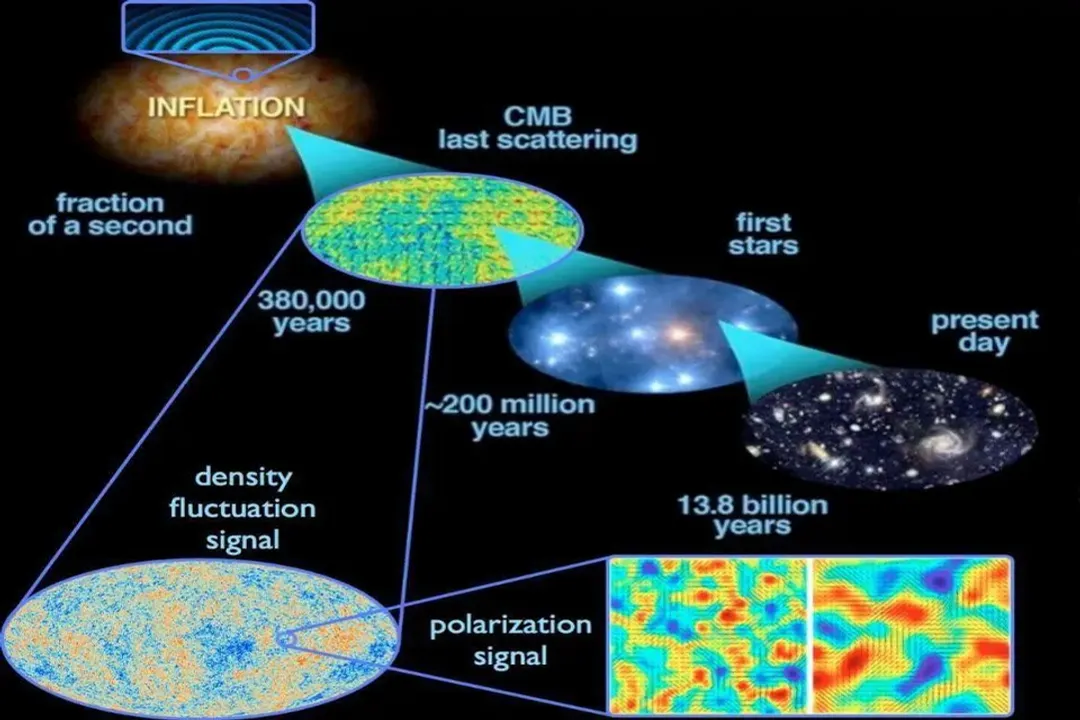
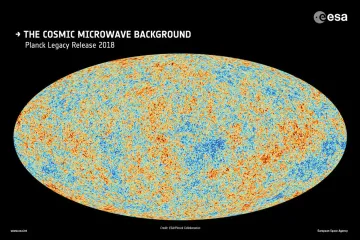
Physicists look for subtle irregularities in the CMB, the oldest light we can detect. [5] If the universe is cyclical, the patterns of polarization or temperature fluctuations might hint at the dynamics of the prior collapse. If it's part of a larger Multiverse, subtle gravitational interactions between our bubble and others might leave behind features that defy purely local Big Bang predictions. [2]
For the general observer, this scientific quest highlights a humbling reality: the most profound questions about cosmic origins often lead to areas where our most successful theories—like General Relativity—hit their conceptual wall. [7]
- Insight Integration: When grappling with the concept of "before," it can be helpful to shift focus from time measurement to causal structure. If you imagine the Big Bang as the point where (time) becomes a real, measurable variable describing the expansion of space, then the state "before" is not a point further back on the -axis, but rather the set of physical laws or fields that determined the initial conditions for to occur. It's less about counting seconds backward and more about identifying the ultimate set of parameters that permitted our spacetime to ignite, a situation analogous to a critical temperature being reached in a phase transition, where the critical state itself is what precedes the new structure. [6][7]
# Cosmic Chronology Context
While speculation abounds regarding what preceded the Big Bang, the established chronology of the universe after that event is relatively well-mapped, providing a timescale against which any prior existence must be contrasted. [9] The Wikipedia entry on the chronology of the universe details events starting from the Planck Epoch onward, mapping out the universe's evolution through key eras: the Grand Unification Epoch, the Inflationary Epoch, the Electroweak Epoch, and so forth. [9]
This established timeline serves as the baseline:
| Time After Big Bang | Epoch Name | Key Physical State/Event |
|---|---|---|
| seconds | Planck Epoch | Quantum gravity dominates; current physics breaks down. [7][9] |
| seconds | Inflationary Epoch | Rapid, exponential expansion of space begins. [6][9] |
| seconds | Electroweak Epoch | Separation of the electromagnetic and weak nuclear forces. [9] |
| years | Recombination | Universe cools enough for stable atoms to form; CMB is released. [9] |
The theoretical scenarios about before all this suggest that the conditions leading up to the Planck Epoch were vastly different from anything we see today—perhaps governed by strings, higher dimensions, or an enormous, uniform field energy. [2][6] What is clear is that the current, observable universe, characterized by its expansion and the distribution of matter, is not the only possibility for existence, even if it is the only one accessible to direct observation from this moment in time. [8] The ongoing work in theoretical physics suggests a profound continuity, even if the mechanism connecting the previous existence to ours remains the deepest mystery in modern science. [1]
#Videos
What Was There Before The Universe? - YouTube
Brian Cox - What Was There Before The Big Bang? - YouTube
Related Questions
#Citations
What was there "before" the Big Bang? : r/astrophysics - Reddit
What existed before the Big Bang? - BBC
What Was There Before The Universe? - YouTube
Is there anything that existed before our universe came into ... - Quora
Even before the Big Bang, space wasn't truly empty
What Existed Before the Big Bang? - Science | HowStuffWorks
What was before the Big Bang? Everything you need to know
Chronology of the universe - Wikipedia