What theory best explains the origins of the universe?
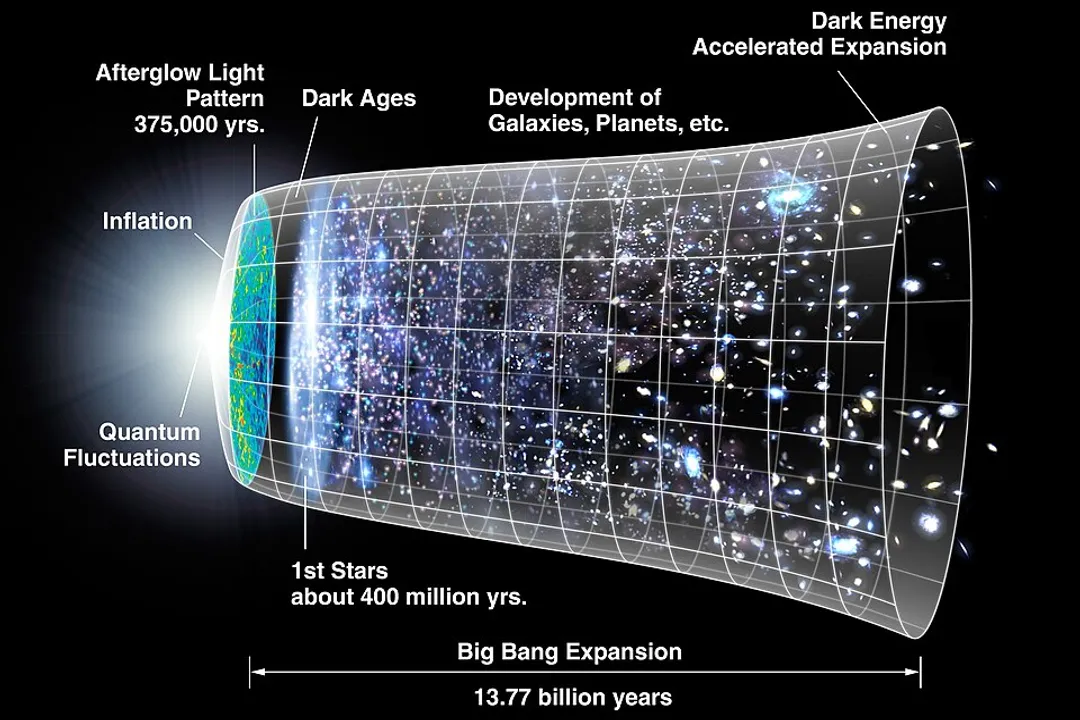
The search for how everything began often centers on a single, profoundly successful scientific model: the Big Bang Theory. While it is the reigning explanation for the evolution of our universe from its earliest known moments, it is important to understand that this theory doesn't necessarily describe the absolute beginning but rather the rapid expansion and cooling that followed an initial, extremely hot and dense state. [1][2][5] When considering what theory best explains the origin, we are usually discussing the theory that has the most substantial physical evidence supporting its description of the universe's history after that initial moment. [5][7]
# Dominant Model
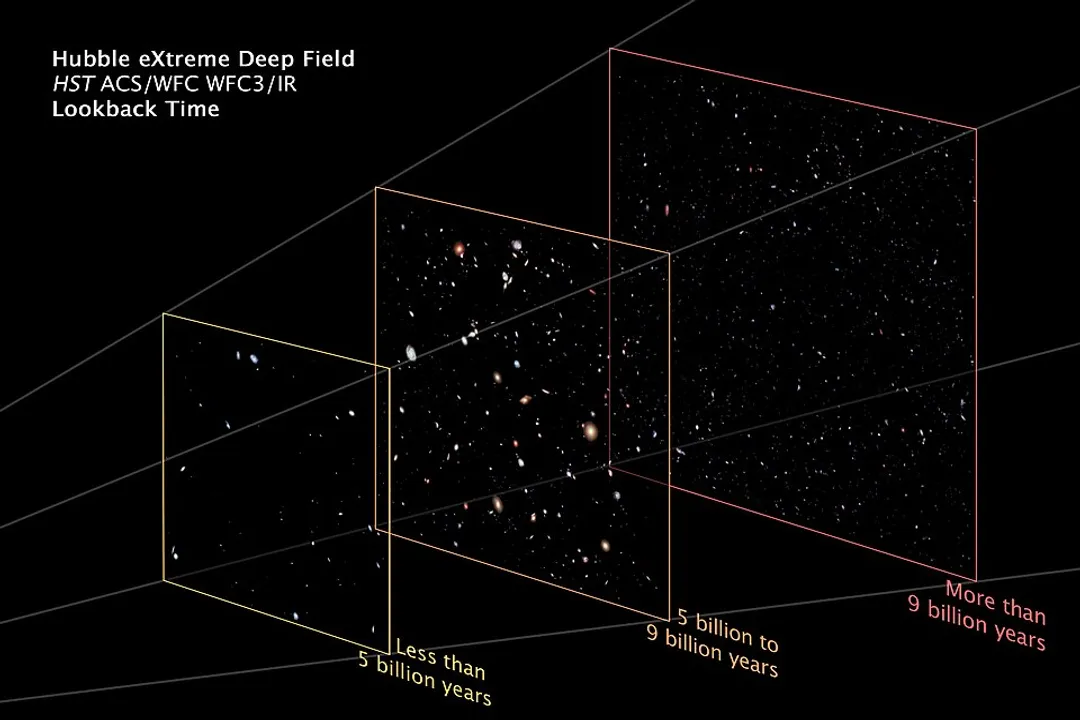
The Big Bang Theory posits that the universe began approximately $13.8$ billion years ago. [1] This conception is not of an explosion happening within a pre-existing space, but rather the rapid expansion of space itself, carrying matter and energy along with it. [2][5] In the earliest moments, the entire observable universe was compressed into an incredibly small, hot, dense state—a singularity—though what exactly this singularity was remains a subject of intense theoretical work. [1][5] As space expanded, the universe cooled, allowing the fundamental forces and particles to form, eventually leading to the structures we observe today. [5][9]
Before the widespread acceptance of the Big Bang, the Steady State theory was a significant contender. This model suggested that the universe was eternal and unchanging on the grandest scales; as space expanded, new matter was continuously created to maintain a constant density. [3][8] The evidence gathered over the latter half of the twentieth century, however, decisively favored the dynamic, evolving picture presented by the Big Bang. [7]
# Observational Proof
A theory explaining cosmic origins must make specific, testable predictions. The Big Bang Theory succeeds because it predicted phenomena that were later confirmed through observation, establishing its authority in cosmology. [7] There are three primary pillars of evidence supporting this model over its rivals:
- Cosmic Microwave Background (CMB): This is faint background radiation permeating the entire sky. [1][2][5] The theory predicted that when the universe was about 380,000 years old, it had cooled enough for protons and electrons to combine into neutral hydrogen atoms. This event, called recombination, made the universe transparent, allowing light to travel freely for the first time. This "first light" has been stretched by the expansion of the universe into microwave radiation, which we detect today as the CMB. [1][5][9]
- Expansion of the Universe (Hubble's Law): Edwin Hubble observed that nearly all galaxies are moving away from us, and the farther away they are, the faster they recede—a clear indicator of an expanding cosmos. [1][2] This observation directly implies that the universe was smaller in the past. [8]
- Abundance of Light Elements: The Big Bang model accurately predicts the observed cosmic ratio of light elements, primarily hydrogen and helium, created in the first few minutes of the universe's existence. [1][2]
To put the evidential weight into perspective, one can contrast the predictions of the leading models:
| Feature | Big Bang Theory Prediction | Steady State Theory Prediction |
|---|---|---|
| Background Temperature | Predicts a low-temperature relic radiation (CMB) [1] | Predicts no universal background radiation [3] |
| Element Abundance | Predicts specific ratios of light elements created early on [2] | Matter is eternal; creation is continuous and uniform |
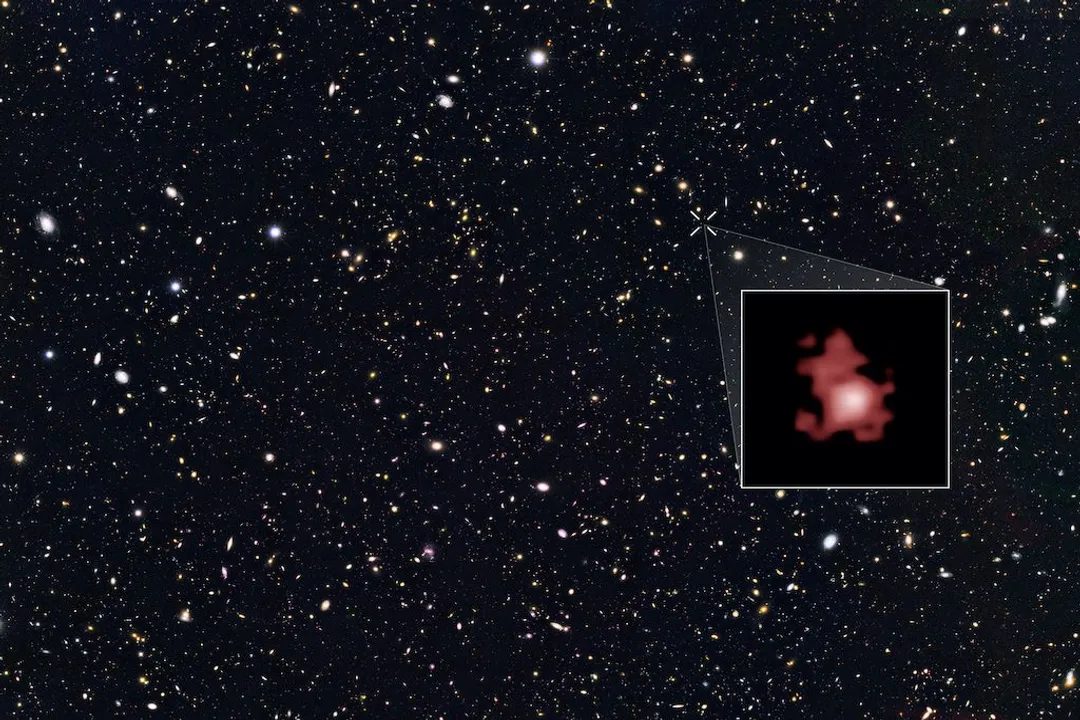
| Galactic Evolution | Predicts that distant (older) galaxies should look different from nearby (younger) ones [8] | Predicts uniformity across all observable distances |
The discovery of the CMB in the mid-1960s was a powerful confirmation that strongly favored the Big Bang perspective. [7]
# Early Expansion Details
Understanding the timeline immediately following the initial expansion provides crucial context for why the theory is so robust. Immediately after the initial expansion, the universe underwent a period called inflation, a phase of extremely rapid, exponential growth that smoothed out the early cosmos, solving several theoretical problems inherent in simpler expansion models. [5]
Following inflation, the universe remained a superheated, dense soup of fundamental particles—quarks, leptons, and their antiparticles—existing for fractions of a second. [9] As cooling continued, quarks combined to form protons and neutrons. During the first few minutes, these particles fused to form the nuclei of light elements, which is the process constrained by the observed elemental abundances. [1] It took hundreds of thousands of years, however, for the temperature to drop sufficiently for electrons to bind with these nuclei, leading to the transparency marked by the CMB. [9] The universe transitioned from being opaque, like a dense fog, to transparent, allowing light to propagate freely—the moment captured by the CMB observations. [5]
# Past Alternatives
While the Steady State model served as the primary scientific opponent for decades, the development of cosmology has explored other possibilities, many of which borrow elements from the Big Bang concept but propose different fates or starting conditions. [3]
One interesting alternative is the Oscillating or Cyclic Universe theory. This concept suggests that the expansion of the Big Bang will eventually slow down, reverse, and collapse in a "Big Crunch," which then triggers another Big Bang, resulting in an infinite cycle of expansion and contraction. [3] While mathematically intriguing, these models often struggle to account for the observed accelerated expansion driven by dark energy, which suggests the universe might expand forever rather than collapse. [5] Other theoretical extensions, such as ekpyrotic models, propose that the universe originates from a collision between higher-dimensional "branes," offering a potential start mechanism without a singularity, though these remain purely theoretical constructs currently lacking direct observation. [7]
# Unanswered Questions
Despite its success in describing the history of the universe from the first second onward, the Big Bang Theory is not a complete narrative of origin. It is a description of evolution from an initial state, and this is where current physics hits a conceptual wall. [5] The theory itself does not explain what initiated the expansion or what existed before the Planck epoch, the first seconds. [1]
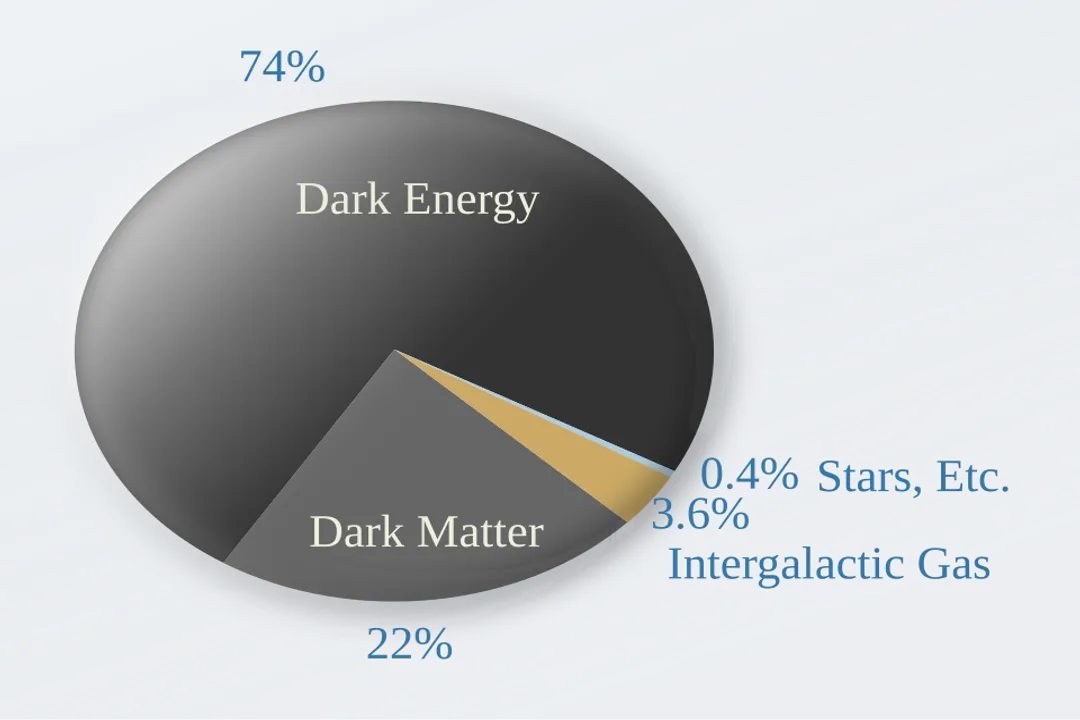
The extreme conditions of the initial singularity are beyond the reliable reach of our two best physical descriptions: General Relativity (which describes gravity and the large-scale structure) and Quantum Mechanics (which describes the very small). [5] When attempting to merge these two theories to describe the moment of creation, the mathematics often breaks down, resulting in infinities. [1] The quest to find a successful theory of Quantum Gravity is essentially the search for the successor to the Big Bang that can truly explain the origin event itself. For instance, some researchers suggest that the universe might be the result of quantum fluctuations in a pre-existing state or field, a concept that tries to bridge the gap between the very large and the very small using quantum principles. The most significant unknowns currently fueling research remain the nature of dark matter and dark energy, which together constitute about 95% of the universe's energy density, yet whose fundamental identities remain obscure. [5]
Therefore, the theory that best explains the origins of the universe today is the Big Bang, but only because it is the most thoroughly verified description of its aftermath. The true, primordial cause remains the most profound mystery in modern science, lying at the intersection of what we can measure and what we can only calculate. [7]
Related Questions
#Citations
Big Bang - Wikipedia
What is the Big Bang Theory? - Space
What were some popular theories about the origin of the Universe ...
The origins of the universe facts and information | National Geographic
It all started with a Big Bang – the quest to unravel the mystery ...
From your own perspective, what theory best describes the origin of ...
Big Bang Theory: Overview | Research Starters - EBSCO
KGS--A Kansan's Guide to Science--History
The early universe | CERN