What is the new theory about the origin of the universe?
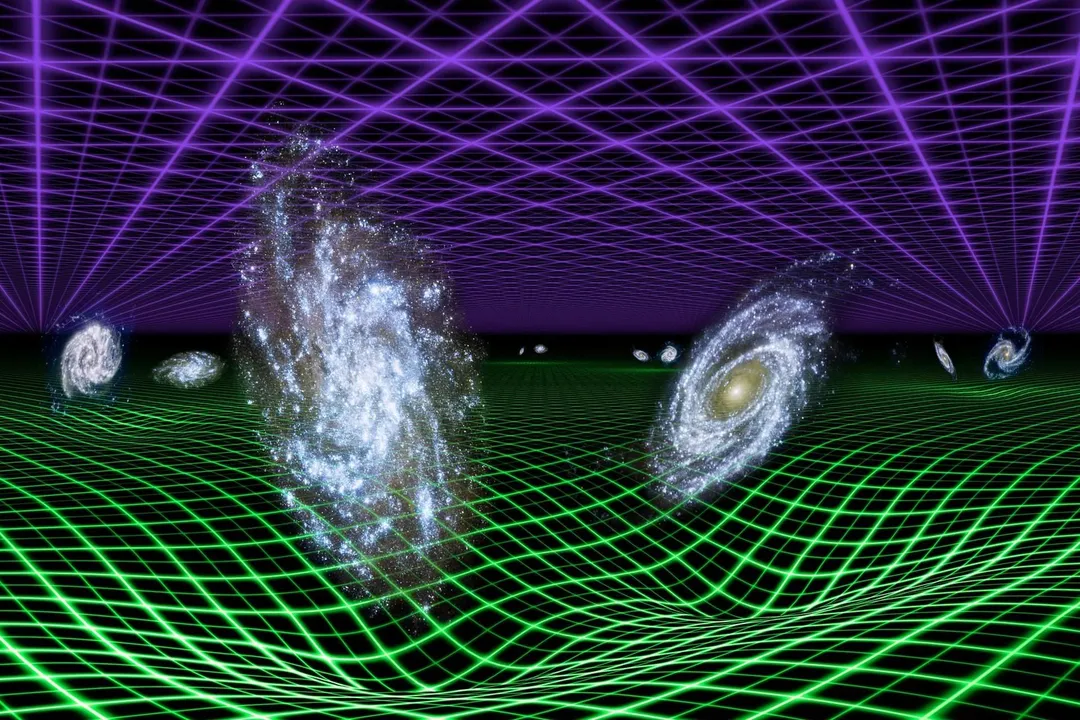
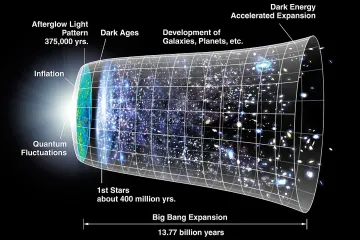
The question of how everything began has long been the domain of philosophy and religion, but in modern science, it rests on the bedrock of physics—a bedrock that some researchers now suggest might need significant reinforcement, or perhaps, a complete replacement. For decades, the prevailing story of our universe’s birth has been intrinsically linked to the Big Bang, followed by a period of impossibly fast expansion called cosmic inflation. This established model has successfully explained much of what we observe, from the faint echo of the Big Bang—the Cosmic Microwave Background (CMB)—to the distribution of matter today. However, recent theoretical work proposes a radical departure, suggesting that the universe might not have needed that inflationary phase at all. Instead, the seeds of every structure we see—from the smallest star to the largest galaxy cluster—may have been sown by something far more primal and powerful: gravitational waves.
# Inflation Replacement
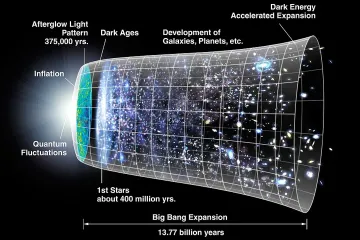
The standard cosmological model relies on inflation to solve several deep problems. For instance, inflation explains why the universe appears so uniform (the horizon problem) and why spacetime is flat (the flatness problem). This rapid, exponential expansion, thought to have occurred fractions of a second after the Big Bang, smoothed out initial irregularities and stretched microscopic quantum fluctuations into the seeds of the structure we observe today.
Yet, inflation remains a theory that, despite its explanatory power, lacks direct observational proof of the underlying mechanism or the hypothesized inflaton field. Critics argue that introducing inflation complicates the picture, adding an unproven field and a series of arbitrary parameters to make the math work. Some of the proposed solutions stemming from inflation, such as the existence of an infinite multiverse, are often criticized as being outside the realm of falsifiable science. This theoretical discomfort has motivated physicists, including those from institutions like the University of Barcelona, to seek simpler, more elegant explanations for the universe's initial conditions.
# Wave Origins

The new theoretical proposal bypasses the need for inflation entirely by suggesting that the initial density fluctuations—the tiny variations in the early universe that eventually grew into stars and galaxies—were not created by quantum fluctuations stretched by inflation, but rather by primordial gravitational waves. These gravitational waves, ripples in the fabric of spacetime itself, would have been present immediately following the Big Bang.
The concept posits that these waves themselves carried the necessary fluctuations. When the universe was extremely dense and hot, these spacetime ripples propagated, creating the initial contrast in matter density across space. This stands in stark contrast to the inflationary model, where a hypothesized field does the heavy lifting of generating those fluctuations. If this alternative theory holds true, it rewrites fundamental aspects of physics and cosmology. Instead of a two-step process (inflation followed by structure growth), the structure growth is initiated directly by gravitational dynamics inherent to the Big Bang event itself.
# Structure Seeding
The real ingenuity of this alternative theory lies in how it accounts for the large-scale structure of the cosmos. If primordial gravitational waves set the stage, how did that translate into the galaxies, stars, and even planets we see today? The theory suggests a direct pathway.
Imagine the early universe as a nearly uniform fluid. The passing gravitational waves would create slight, persistent distortions in this fluid. Over vast stretches of cosmic time, these distortions—the slight over-densities and under-densities caused by the wave distortions—acted as the gravitational scaffolding upon which normal matter could collapse. Essentially, the gravitational waves provided the lumps required for gravity to take over and assemble larger structures like galaxies and clusters of galaxies.
The model implies a physical mechanism tied directly to gravity’s propagation, which might be inherently simpler than invoking a separate, temporary inflationary field. While the standard model requires inflation to explain the observed structure, this new approach claims the structure arises naturally from the Big Bang dynamics mediated by gravitational waves, potentially resolving the need for the more speculative aspects of the inflationary paradigm.
# A Comparison of Initial Mechanisms
To better appreciate the difference between the prevailing idea and this emerging concept, it helps to lay them side-by-side, focusing only on the origin of structure:
| Feature | Standard Model (Inflationary) | New Proposal (Gravitational Wave) |
|---|---|---|
| Mechanism Source | Quantum fluctuations stretched by an inflating field | Primordial gravitational waves rippling spacetime |
| Timing of Seeding | During the brief, ultra-fast inflationary epoch | Immediately following the Big Bang via wave propagation |
| Resulting Structures | Fluctuations stretched to cosmological scales | Wave distortions provide initial density contrasts |
| Theoretical Need | Requires an extra, unproven field (inflaton) | Relies on known physics (general relativity/waves) |
It is fascinating to consider that if this gravitational wave scenario is correct, the same phenomena detected by ground-based observatories like LIGO and Virgo—spacetime vibrations caused by merging black holes—are echoing a far grander, universal mechanism that shaped everything billions of years prior. The physics that bends spacetime from a cataclysmic stellar collision is the same physics hypothesized to have set the stage for our existence.
# Theoretical Underpinnings
The researchers advancing this alternative view are working to ensure their model aligns with existing, well-verified observations, particularly the precise patterns seen in the CMB. A successful new theory must not just discard the old; it must explain everything the old theory explained, but with fewer assumptions. The fact that the theory is emerging from theoretical exploration by university researchers underscores the academic drive to find the most parsimonious explanation—the one that uses the fewest ad hoc elements.
Furthermore, some cosmological discussions venture into the ultimate fate of the universe, a topic sometimes linked to the nature of its beginning. One line of cosmological thought, potentially related to the constraints placed by initial conditions, suggests that the universe might possess an inherent "cosmic off-switch". This specific idea explores whether the current accelerating expansion could reverse, leading to a contraction phase. While this concept of a reversal deals with the end rather than the beginning, any comprehensive new theory of origins must necessarily place constraints on the universe’s geometry and energy content, which dictates its long-term destiny. The search for a simpler origin story is intrinsically linked to understanding the fundamental energy budget that drives cosmic evolution, both forward and backward in time.
# Challenges to Confirmation
Proving whether the universe inflated or was shaped by primordial gravitational waves presents a monumental observational challenge. Both scenarios predict the existence of gravitational waves, though the spectrum and intensity of those waves would differ significantly between the two models.
The key difference often boils down to the polarization patterns left in the CMB—specifically, the B-mode polarization. Inflationary theory predicts a certain signature in these B-modes generated by the rapid stretching of spacetime. The gravitational wave alternative would predict a different, likely stronger, or at least distinct, gravitational wave signature imprinted on the CMB. Identifying this specific signature would be the smoking gun, confirming the new theory or ruling it out entirely.
Testing such fundamental claims requires instruments of extraordinary sensitivity capable of detecting incredibly faint relics from the very early cosmos. The sheer difficulty in obtaining clean data, separating the primordial signal from foreground noise generated by dust and other astrophysical phenomena, means that definitive confirmation might still be many years away. However, the theoretical groundwork being laid now informs the next generation of experimental design, pointing scientists toward the specific observable quantities that will ultimately settle the debate. The intellectual competition between these models serves a vital purpose in science: it forces practitioners to make their predictions sharper and their observational targets clearer. If the gravitational wave theory is proven correct, it would require rewriting physics textbooks across the globe, as it suggests a more direct, gravity-driven formation of structure right out of the initial singularity or near-singularity state.
# Cosmic Simplicity
When examining these theoretical developments, one might note a recurring theme in physics: the preference for simplicity, often summarized as Occam’s Razor. The inflationary paradigm, while powerful, requires introducing a new fundamental field and an epoch of expansion that lasted for a fleeting moment, a mechanism that seems tacked onto the end of the standard Big Bang description. The gravitational wave proposal, conversely, attempts to account for structure formation using only the dynamics of spacetime itself, something already central to general relativity. This elegance is intellectually appealing. It suggests that the universe built its structures using the tools it already possessed immediately upon beginning, rather than requiring a special, brief phase of accelerated expansion to get things started. This pursuit of explanatory economy is often what drives major paradigm shifts in science, suggesting that sometimes the most profound answers are hidden in the most foundational principles already known, rather than in the introduction of new, exotic components. The move away from inflation feels like a collective scientific sigh of relief, hoping to return to a slightly more Newtonian or Einsteinian elegance at the very beginning of time.
The ongoing investigation into cosmic origins, now featuring a serious contender to the inflationary standard, demonstrates the dynamic nature of cosmology. It’s not a static set of facts but a constantly refined narrative built on the best available evidence and theoretical coherence. The potential paradigm shift centered on gravitational waves offers a thrilling new path for understanding how the structured universe emerged from the primordial chaos, shifting the focus from an unknown quantum field to the very geometry of spacetime itself.
#Videos
The Universe Creates Itself? New Theory Says Big Bang ... - YouTube
Related Questions
#Citations
New theory challenges how our Universe was born
A New Theory of the Universe's Origins Without Inflation
New theory to understand the origins of the Universe - Current events
The Universe Creates Itself? New Theory Says Big Bang ... - YouTube
Rewriting Physics Textbooks: Scientists Propose a Bold New Theory ...
Radical new Big Bang theory says gravitational waves ... - Space
Wild New Theory Suggests Gravitational Waves Shaped The Universe
A Radical New Theory Has Scientists Rethinking the Origins of the ...
Could the universe ever stop expanding? New theory proposes a ...