What theory best explains the origin of the universe?

The question of which model best describes the universe's genesis is one of science's most profound inquiries, yet the answer, based on current observation and physics, points strongly toward one specific contender: the Big Bang Theory. [1][3] This model is the prevailing cosmological description of the observable universe, detailing its evolution from an extremely hot, dense initial state roughly 13.8 billion years ago. [3] It does not attempt to explain what caused the initial state, but rather how the universe has changed and expanded since that moment. [4]
# Leading Model
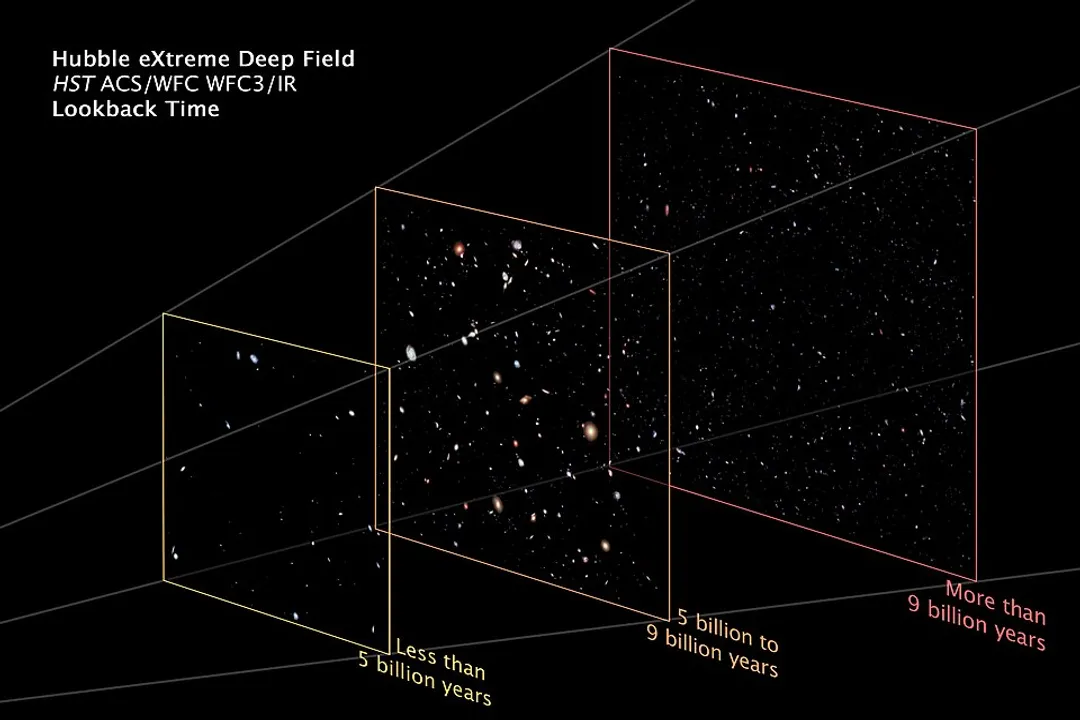
The Big Bang Theory posits that all the matter and energy in the cosmos today originated from an infinitesimally small, incredibly hot, and dense point called a singularity. [1] Following this near-instantaneous start, the universe underwent rapid expansion, a process that continues even now. [3] This expansion is fundamental; it's not that galaxies are flying outward through space, but rather that the fabric of spacetime itself is stretching, carrying the galaxies along with it. [1] This framework is currently the most accepted and well-supported explanation for the observed structure and history of our cosmos. [8]
# Past Ideas
For much of the 20th century, the Big Bang Theory was not the only possibility being seriously considered. Before strong evidence emerged, some scientists favored the Steady State Theory. [2] This alternative suggested that the universe was eternal and unchanging on the largest scales; as it expanded, new matter was continuously created in the empty space to maintain a constant average density. [2] However, observational findings, particularly the discovery of the Cosmic Microwave Background, provided compelling evidence against this idea, leading to the Big Bang model becoming the consensus view. [2][3] Another idea, the Oscillating Universe model, proposed an infinite cycle of Big Bangs followed by Big Crunches, though current observations of accelerating expansion make this less likely under current physical understanding. [2]
# Key Evidence

The confidence scientists place in the Big Bang stems from several key lines of evidence, often called the "three pillars" of the theory. [8]
First is the Hubble-Lemaître Law, or the observation of the universe's expansion. [1] Astronomer Edwin Hubble noted that galaxies are moving away from us, and the farther away they are, the faster they recede—a direct prediction of an expanding universe originating from a single point. [1] This is observed through redshift, where light from distant galaxies is stretched toward the red end of the spectrum as the space between us and the source expands. [1]
Second, and perhaps most compelling, is the Cosmic Microwave Background (CMB) radiation. [1][8] This is faint, uniform radiation detected coming from every direction in the sky. [3] It is interpreted as the thermal echo, or relic heat, left over from the epoch when the universe cooled enough—about 380,000 years after the Big Bang—for electrons and protons to combine into neutral atoms, allowing photons to travel freely for the first time. [1][8] Think of the CMB as the universe's baby picture; redshift has cooled this initial searing heat down to a mere 2.7 Kelvin today. [8] While redshift tells us about the current state of expansion, the CMB provides a direct, measurable snapshot of the early universe’s thermal conditions. [1]
The third pillar involves the abundance of light elements. [1] The Big Bang model accurately predicts the observed cosmic ratios of the lightest elements, primarily hydrogen and helium, which were synthesized in the first few minutes of the universe's existence. [1] The observed amount of these light elements matches the theoretical calculations based on the early, hot conditions of the Big Bang. [1]
# Gaps Remain
Despite its success, the Big Bang Theory is incomplete. One major conceptual difficulty lies in the initial moment itself, the singularity. [1] The theory describes the evolution after this point, but the physics breaks down when trying to describe the first instant or what might have preceded it. [4] General Relativity, the theory underpinning the expansion description, cannot accurately model conditions at infinitely high density and temperature. [1] This suggests that a more fundamental theory, like a successful theory of quantum gravity, is required to truly understand the absolute beginning. [4]
Another area where the standard model falls short relates to observed structures. Cosmological simulations based purely on the standard Big Bang model often fail to produce the large-scale structure of galaxies and clusters we see today quickly enough, unless some missing ingredient is introduced. [4]
# Extensions Added
To reconcile the predictions of the Big Bang Theory with detailed observations, physicists have added several crucial concepts that are now considered essential parts of the modern cosmological model, moving beyond just the core expansion narrative. [4]
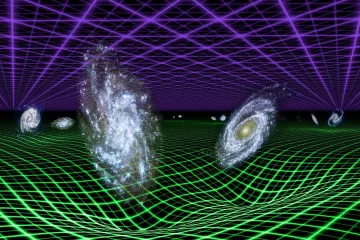
One major addition is the theory of Cosmic Inflation. [4] This proposes a period of extremely rapid, exponential expansion that occurred in a tiny fraction of a second immediately following the Big Bang. [4] Inflation helps solve several theoretical puzzles, such as why the universe appears so remarkably flat and why the CMB temperature is nearly uniform across the entire sky—it suggests that regions now vastly separated were once in causal contact. [4]
Furthermore, observations concerning the universe's current rate of expansion have necessitated the inclusion of two mysterious components: dark matter and dark energy. [4] Dark matter is required to explain how galaxies hold together and form large-scale structures, as there isn't enough visible matter to account for the observed gravitational effects. [4] Dark energy, on the other hand, is the mysterious repulsive force causing the universe's expansion to accelerate, rather than slow down due to gravity. [4] The Big Bang describes the birth; dark energy describes the current, accelerating trajectory of the expansion itself. [4]
It is worth noting that the incorporation of inflation, dark matter, and dark energy transforms the core Big Bang model into the Lambda-CDM model (CDM), which is the current standard, highly successful, but incomplete description of the cosmos. [4] Understanding the nature of the dark sector—which together constitutes about 95% of the total mass-energy content of the universe—is the next great frontier in cosmology. [4] For instance, while the CMB temperature seems impossibly low today at just a few degrees above absolute zero, recognizing that this temperature is the result of nearly 14 billion years of expansion stretching the initial thermal energy across an ever-increasing volume provides a profound appreciation for the sheer magnitude of cosmological time and scale involved in this process. The universe's energy density has plummeted dramatically since its inception, a change that requires these complex extensions to the initial explosion idea.
# Scientific Consensus
When evaluating "what theory best explains," the answer rests on predictive power and empirical confirmation. While the Big Bang Theory doesn't explain the very first instant, it successfully predicts the three verifiable phenomena mentioned: expansion, CMB, and elemental ratios. [1][3] No other model currently in contention accounts for all these observations as accurately as the BBT, even when supplemented with inflation and dark energy. [8] For the general reader seeking the most scientifically supported explanation for cosmic history since its fiery start, the Big Bang Theory remains the undisputed champion among current scientific explanations. [1][8]
Related Questions
#Citations
Big Bang - Wikipedia
What were some popular theories about the origin of the Universe ...
What is the Big Bang Theory? - Space
The origins of the universe facts and information | National Geographic
The Origin of the Universe: Understanding the Big Bang Theory
From your own perspective, what theory best describes the origin of ...
Origin of the Universe: How Did It Begin and How Will It End?
Big Bang Theory: Overview | Research Starters - EBSCO
KGS--A Kansan's Guide to Science--History