What best describes the transit method?

The transit method represents one of the most successful techniques for finding worlds orbiting stars beyond our solar system, often referred to as exoplanets. At its heart, this process involves astronomers carefully monitoring the light output of a distant star, watching for telltale signs of a celestial body crossing in front of it. This specific event, where the orbiting body moves between the observer (Earth/telescope) and the star, is precisely what defines a transit.
# Core Mechanism
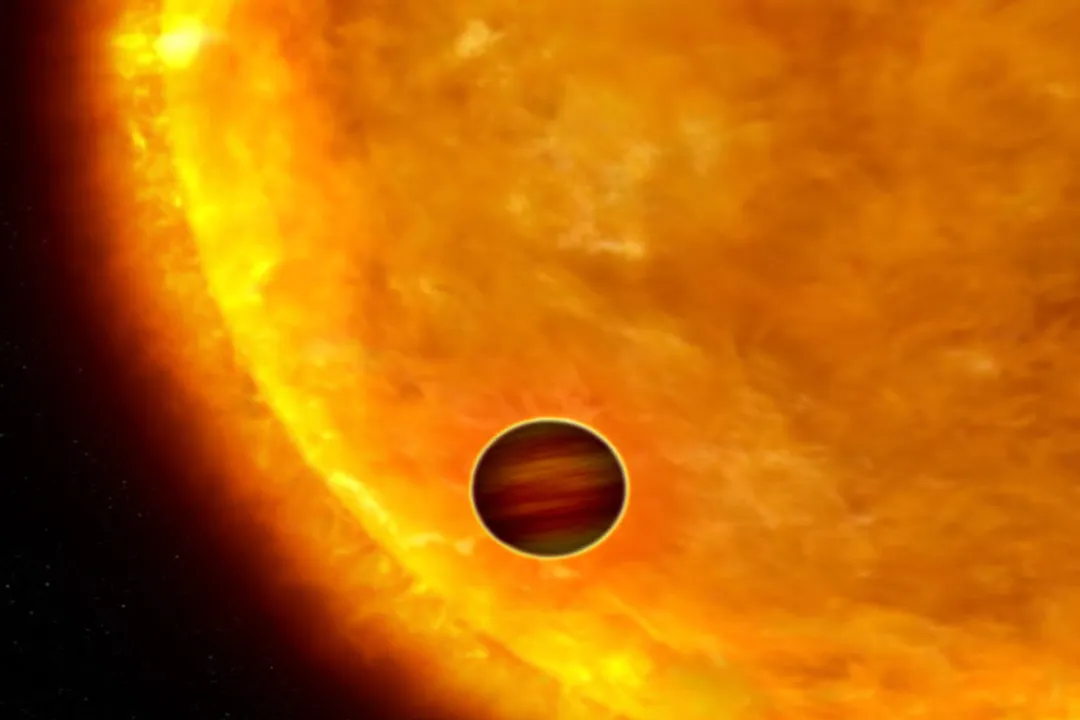
What best describes this technique is the precise observation of changes in a star's apparent brightness. When an exoplanet moves across the face of its host star relative to our vantage point, it temporarily blocks a fraction of that star's light, causing a measurable, albeit minuscule, dip in luminosity. Because this phenomenon relies on observing the blockage of light, the scientific name often associated with this work is transit photometry.
The key requirement for detection is timing and alignment. For the transit method to work, the orbital plane of the exoplanet must be oriented nearly edge-on from Earth's perspective. If the orbit is highly inclined or significantly tilted, the planet will pass above or below the star from our view, and no dip in light will ever be observed. This geometric constraint is fundamental to the method’s operation and is a major factor in why it finds certain types of systems but misses others.
# Measuring the Dip
The dimming that occurs during a transit is extremely subtle, especially when looking at systems similar to our own. For example, if Jupiter were orbiting our Sun and viewed from a distant location, the amount of light blocked would typically be less than one percent. Detecting signals this faint requires instruments with incredible precision and stability.
The amount of light blocked during the transit event provides direct insight into the planet's physical dimensions. Scientists can calculate the ratio between the area of the planet and the area of the star based on how deep the light curve dips. By knowing or estimating the size of the star, astronomers can then accurately determine the radius of the orbiting planet. This ability to size the planet makes the transit method invaluable for building a census of planetary sizes across the galaxy.
# Orbital Insights
While the depth of the dip reveals the planet’s size, the timing of the transits reveals its orbital characteristics. The time interval measured between one transit event and the next successive transit is used to precisely calculate the planet's orbital period. Since the orbital period is intrinsically linked to the planet’s average distance from its star (its semi-major axis, according to Kepler’s Laws), the transit method yields both the planet's size and its orbital distance.
The recurring nature of the signal is what gives astronomers confidence in their discovery. A single, isolated dip might be caused by a passing asteroid, stellar flare activity, or instrumental error. However, when a star's brightness exhibits a periodic and repeatable drop at the exact same interval, it strongly suggests the presence of a stable, orbiting body—an exoplanet.
If we consider the data gathered from sequential transits, we can begin to construct a basic model of the planetary system's architecture. For a planet orbiting a star much larger than our Sun, the time between transits might be quite long, potentially spanning years. Conversely, a planet in a very tight, close-in orbit around a small star could transit multiple times within a single year, allowing scientists to confirm its existence and orbital period much faster.
# Practicality and Data Interpretation
The methodology relies on long-term monitoring, often necessitating specialized observatories dedicated to this kind of work, frequently scanning thousands of stars simultaneously for these tiny variations.
It is interesting to note the differential effect of star size on signal detection. While the amount of light blocked is a direct ratio of areas, this ratio becomes much more significant, and thus easier to measure, when the star itself is small. For a planet with a radius of, say, one Earth radius, the transit signal observed around a small M-dwarf star (a common type of star) will be considerably deeper and more easily distinguished from background noise than the transit signal from an identical planet orbiting a large, bright G-type star like our Sun. Astronomers often prioritize searching around these smaller stars because the resulting data provides much higher confidence in the detection of Earth-sized worlds.
If an observer were to attempt this study from their own backyard using only basic photometers, they would quickly learn that the stability of their equipment over many nights is almost as important as the light gathering power. Any slight drift in the detector's baseline sensitivity, even without a planet present, can mimic the subtle dimming signature required for a confirmed transit detection. This highlights why professional transit surveys must maintain extremely consistent measurement conditions to distinguish genuine planetary signals from instrumental artifacts.
The primary outputs from transit observations are the depth of the dip (planet size) and the timing (orbital period). Crucially, the transit method by itself does not directly measure the planet's mass. That piece of information usually requires combining transit data with another technique, such as the radial velocity method, to fully characterize the exoplanet's density. The transit measurement provides the volume (via radius), and the mass measurement provides the amount of stuff within that volume, allowing scientists to infer what the planet is made of—rock, gas, or ice.
#Videos
How to Detect EXOPLANETS - The Transit Method - YouTube
Related Questions
#Citations
AST-A100 HW 5 Flashcards - Quizlet
Transit Method - Las Cumbres Observatory
Which best describes the transit method? A. Observing the ... - Brainly
Solved Which best describes the transit method? a. observing - Chegg
The Transit Method of Exoplanet Detection - LabXchange
How exoplanets are found using the transit method by NASA. - Reddit
Down in Front!: The Transit Photometry Method | The Planetary Society
How to Detect EXOPLANETS - The Transit Method - YouTube