What are the pros and cons of telescopes?
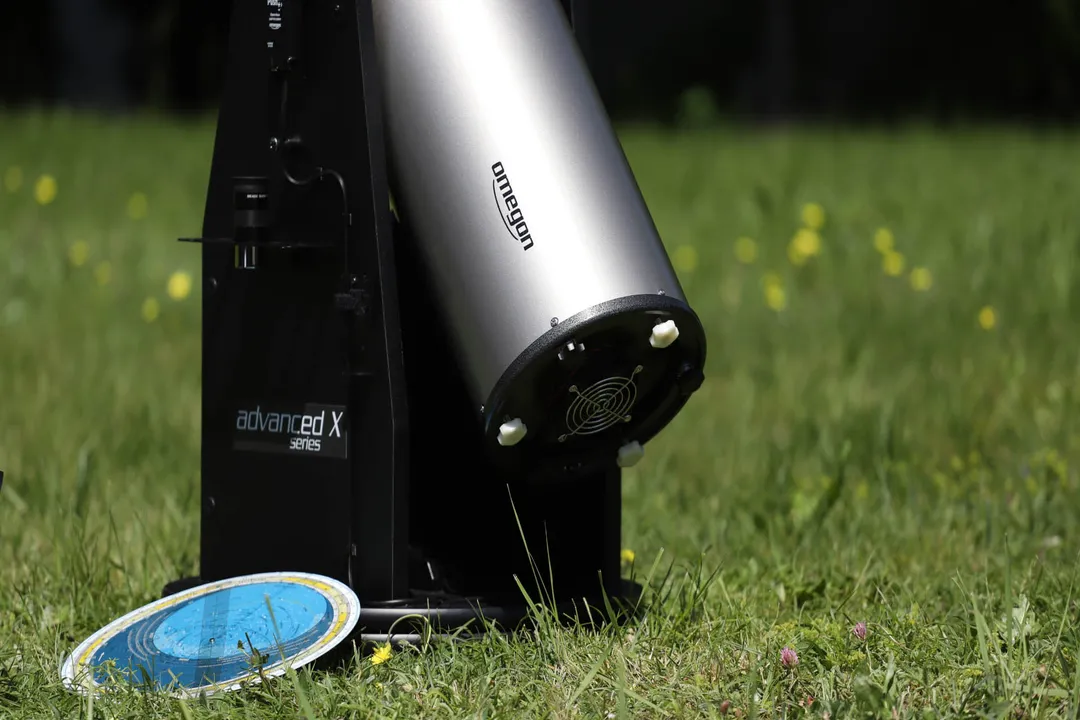
Stepping up to a telescope is often the first tangible connection an amateur astronomer makes with the vastness of the cosmos, moving beyond simple naked-eye observations to reveal details previously hidden. The decision to purchase an instrument, however, is rarely straightforward, as every design presents a unique balance sheet of strengths and weaknesses that heavily influence the viewing experience. Understanding these trade-offs, which often boil down to aperture, cost, portability, and maintenance, is key to long-term satisfaction in the hobby.
# Universal Gains
The fundamental advantage of any functional astronomical telescope lies in its ability to gather more light than the unaided human eye. This light-gathering power is directly related to the instrument’s aperture, allowing fainter objects, such as distant galaxies and nebulae, to become visible. Furthermore, telescopes magnify the image, which is essential for resolving details on brighter, closer targets like the Moon and planets. Seeing the rings of Saturn or the cloud bands of Jupiter for the first time provides an immediate, profound reward that drives many enthusiasts forward.
Telescopes also offer a significant advantage over cameras or binoculars by providing a direct, real-time visual experience. This immediacy allows the brain to process visual data without the time-delay inherent in long-exposure photography, which can sometimes introduce artifacts or alter the true color balance of a celestial object. The stability offered by a good mount, when properly set up, allows for steady views that are difficult to achieve even with high-power binoculars held by hand. For beginners, selecting a telescope that is easy to set up and use is critical; an instrument that is too complex often ends up gathering dust, regardless of its optical quality.
# Inherent Limitations

Despite their power, telescopes share several inherent disadvantages that potential buyers must consider. Chief among these is the influence of the atmosphere. Even the largest ground-based instruments are subject to turbulence, often called "seeing," which distorts the image, especially at high magnifications. This atmospheric interference places a practical upper limit on usable magnification, regardless of how powerful the telescope lens or mirror system is.
Cost and complexity scale rapidly with performance. While a small telescope can be inexpensive, achieving truly significant observational breakthroughs—say, viewing dimmer galaxies or small planetary features—requires substantially larger apertures, which in turn demand more robust and expensive mounts and accessories. Portability is another common trade-off; the best light-gathering instruments are often the largest, making transportation to dark sky locations a logistical challenge involving heavy equipment and complicated assembly/disassembly processes. Furthermore, many designs require periodic alignment of their optical components, known as collimation, which can be intimidating for a novice user.
Another often-overlooked drawback is that telescopes generally offer a very narrow field of view compared to the naked eye or a standard camera lens. This makes "star-hopping"—the process of navigating the sky using star charts—much harder, as it is easy to lose sight of a faint object once you look away from the eyepiece. Many first-time buyers are surprised that, even with a powerful telescope, the resulting image is significantly dimmer and smaller than the colorful, wide-field images seen in books or on websites, which are usually long-exposure photographs.
# Refractor Optics

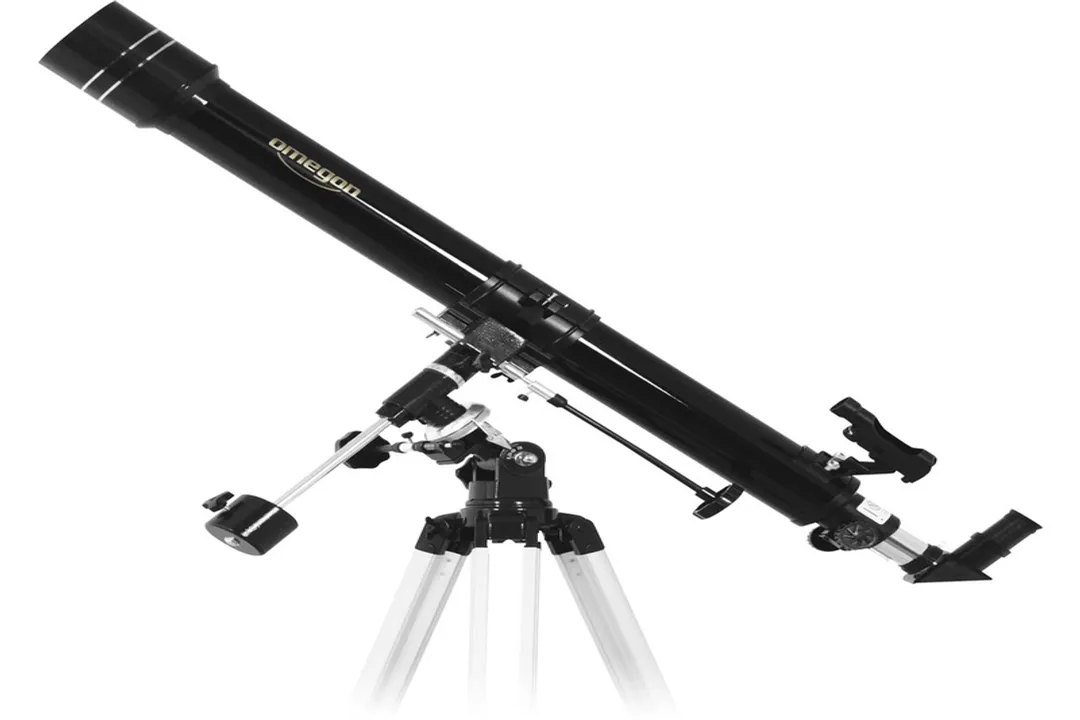
Refracting telescopes, or refractors, operate using only lenses to gather and focus light, much like a traditional pair of binoculars.
# Refractor Strengths
The primary advantages of a refractor stem from its sealed, fixed optical path. Since the lenses remain permanently aligned, refractors are incredibly low maintenance; they rarely, if ever, need adjustment, making them excellent "grab-and-go" options for quick views. They offer sharp, high-contrast images, particularly on bright objects like the Moon and Jupiter, because the light path contains no obstructions. This design also minimizes light loss and typically produces views free of diffraction spikes that plague mirror systems.
# Refractor Weaknesses
The main optical issue with simpler refractors is chromatic aberration, often called color fringing. This occurs because lenses focus different colors of light at slightly different points, resulting in a violet or blue halo around bright objects. While this can be mitigated by using specialized, expensive glass elements like apochromats (APOs), standard achromatic lens designs still suffer from this effect. Another physical limitation is that very large apertures are difficult and prohibitively expensive to manufacture for lenses, as they require flawless glass surfaces free of internal flaws, making very large refractors rare. A smaller, secondary issue is that the objective lens is exposed to the elements and can collect dust or dew, though this is generally less of an issue than with reflectors.
# Reflector Optics

Reflecting telescopes, pioneered by Isaac Newton, use mirrors instead of lenses to collect and focus light. The primary mirror gathers the light, directing it to a smaller secondary mirror which then redirects the focused beam to the eyepiece, usually through a hole in the primary mirror or via a side-mounted diagonal.
# Reflector Strengths
The most compelling argument for a reflector is its performance per dollar. Mirrors are significantly cheaper to manufacture than large, perfect lenses, allowing reflectors to achieve much larger apertures for the same price point. This large aperture translates directly to superior light-gathering capability for viewing deep-sky objects. Furthermore, mirrors do not suffer from chromatic aberration, as all wavelengths of light reflect off the surface at the same point. This makes reflectors the standard choice for serious deep-sky observers on a budget.
# Reflector Weaknesses
The main optical drawback is the introduction of the secondary mirror, which must be held in the light path by thin vanes called spider vanes. These vanes cause a faint diffraction pattern—the familiar cross or "starburst" pattern visible around bright stars. More significantly, the alignment of the primary and secondary mirrors (collimation) can shift due to temperature changes or rough handling. While usually manageable, this requires the user to learn how to correctly align the optics, a necessary skill for maximizing performance. They are also typically open to the air, meaning the mirrors can accumulate dust and require occasional cleaning, and the optics can shift focus as they cool down to match the ambient night temperature.
# Catadioptric Designs
Catadioptric systems, like Schmidt-Cassegrains (SCTs) and Maksutov-Cassegrains, combine both lenses (correcting plates) and mirrors to create a compact, folded light path.
# Catadioptric Strengths
These designs excel at portability and versatility. By folding the light path, they achieve long focal lengths—great for high planetary magnification—within a very short and manageable tube length. This makes them highly popular for amateur astronomers who need to transport their gear regularly. They also feature a sealed tube, offering protection against dust and minimizing air currents inside the tube, though they still need time to thermally acclimate. They offer a good compromise between the sharp views of a refractor and the large aperture of a reflector.
# Catadioptric Weaknesses
The primary downsides relate to image quality compromises and cost. While they are generally well-corrected, they can suffer from coma (off-axis astigmatism) depending on the specific design, which stretches stars near the edge of the field of view. They are generally the most expensive option for a given aperture size when compared to a Newtonian reflector. Finally, the complex optical path means they gather slightly less light than a pure reflector of the same aperture, and their internal components require careful periodic alignment, often more so than a Newtonian.
# Synthesizing Design Trade-offs
To bring these design characteristics into clearer focus, it helps to compare how the fundamental trade-offs manifest across the three main optical types.
| Feature | Refractor (Lens) | Reflector (Mirror) | Catadioptric (Hybrid) |
|---|---|---|---|
| Maintenance | Very Low (Sealed) | High (Collimation needed) | Moderate (Collimation needed) |
| Light Gathering vs. Cost | Poor (Expensive for aperture) | Excellent (Best value per inch) | Good (Compact, mid-range price) |
| Chromatic Aberration | Yes (Unless APO) | No | Minimal/Corrected |
| Obstruction | None | Secondary Mirror Vanes | Secondary Mirror (Internal) |
| Tube Length | Long (for focal length) | Moderate | Short (Folded path) |
It is interesting to note that while refractors are lauded for their sharpness, the difference between an APO refractor and a well-collimated, high-quality reflector (especially a Dobsonian mount reflector) often becomes negligible once observing conditions—like atmospheric seeing—come into play. For a beginner struggling with setup and alignment, the inherent stability of a fixed-optics refractor usually wins on user experience, even if it means sacrificing a few millimeters of aperture.
# Aperture vs. Magnification Myth
A crucial piece of insight for any new telescope owner involves separating the concept of light-gathering power (aperture) from magnification. Many novice buyers focus almost exclusively on magnification claims, often advertised on boxes, assuming higher magnification equals a better view. In reality, magnification is determined by the ratio of the telescope's focal length divided by the eyepiece's focal length. A 60x magnification is achieved on a 600mm focal length scope with a 10mm eyepiece, or a 1200mm scope with a 20mm eyepiece.
The real star of the show is always the aperture, as it dictates the maximum resolving power and light grasp. If you push magnification too high—say, beyond two times the aperture in millimeters (or about 50x per inch of aperture)—the image will become larger but drastically dimmer and fuzzier, effectively showing you a large, blurry patch of sky instead of a detailed target. For instance, trying to use a small 70mm aperture telescope at 300x magnification will invariably lead to disappointment because the atmosphere and the scope's limited light collection cannot support that level of detail, irrespective of the eyepiece used. Successful observation relies first on the quality of the light collected by the primary optic, not the number etched on the eyepiece barrel. A good rule of thumb I've often seen experienced observers suggest is to budget for two to three times the cost of the telescope tube for a decent, stable mount, as a poor mount will ruin the view from even the most expensive optics.
# Telescope Alternatives
While the discussion focuses on optical instruments, it is worth briefly noting the trade-offs when comparing a telescope directly against alternatives like cameras. Cameras excel at capturing faint light over long periods, revealing colors and details completely invisible to the naked eye through any optical tube. This long integration time is a huge pro for astrophotography. However, the con is that the resulting image is a processed file, not a direct experience. Telescopes provide that immediate, emotional connection, but they cannot collect the faint light necessary for deep-sky color images without the aid of sophisticated, long-exposure setups. Similarly, binoculars are excellent for wide-field surveys and portability, but they inherently lack the aperture needed to resolve fine planetary details or the faintest galaxies that a dedicated telescope can reveal.
Ultimately, the pros and cons of any telescope are specific to the user's goals. Someone interested in easy backyard observation of the Moon and Saturn will find a short, high-quality refractor an advantage, while someone obsessed with tracking down faint Messier objects from a dark rural site will likely prioritize the large light-gathering aperture of a reflector, accepting the minor maintenance overhead that comes with it. The best instrument is the one that matches the astronomer's viewing environment and willingness to engage with the necessary setup and care.
Related Questions
#Citations
The advantages and disadvantages of the different designs at a ...
The pros and cons of different telescope designs in a nutshell
Which Telescope To Buy? Pros & Cons of 12 Popular Telescopes
pros and cons with the diffrent kinds? : r/telescopes - Reddit
Types of Telescopes | High Point Scientific
What are the Pros and Cons of Different Telescope Designs for ...
Advantages and Disadvantages of Refracting Telescopes - UBC Math
Refractor Vs Reflector Telescopes – Pros & Cons Explained - RYDA
What are some disadvantages and advantages of using telescopes ...