Where is the largest telescope in America?
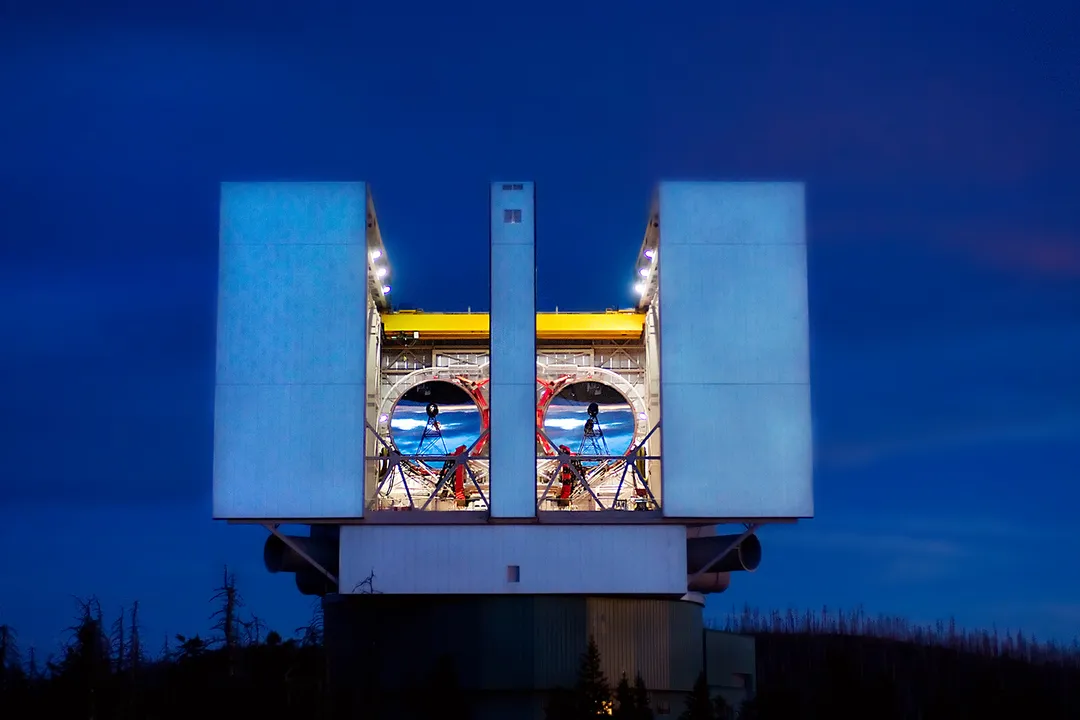
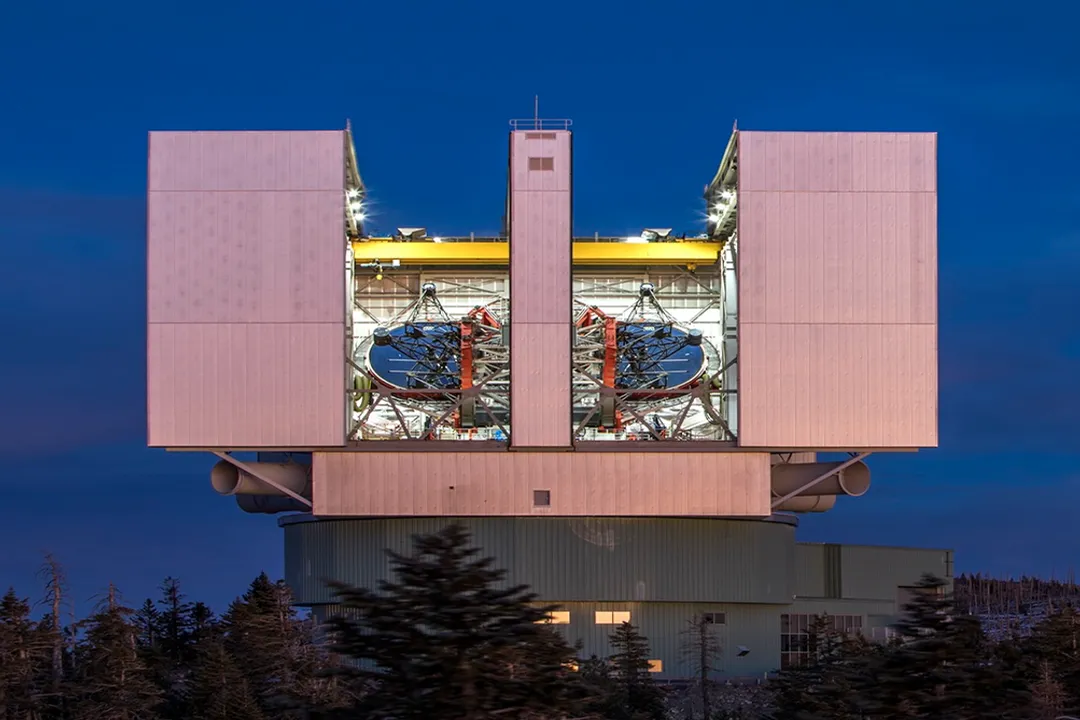
The title of the largest telescope in America depends entirely on how you categorize the instrument—whether by the sheer size of its primary light collector, its total effective collecting area, or by whether you are looking for an optical or a radio wave observatory. However, when astronomers discuss the leading edge of ground-based light-gathering power in the United States, the conversation often centers on a twin-mirror marvel tucked away in the mountains of Arizona: the Large Binocular Telescope (LBT). [2][3]
# Optical Colossus
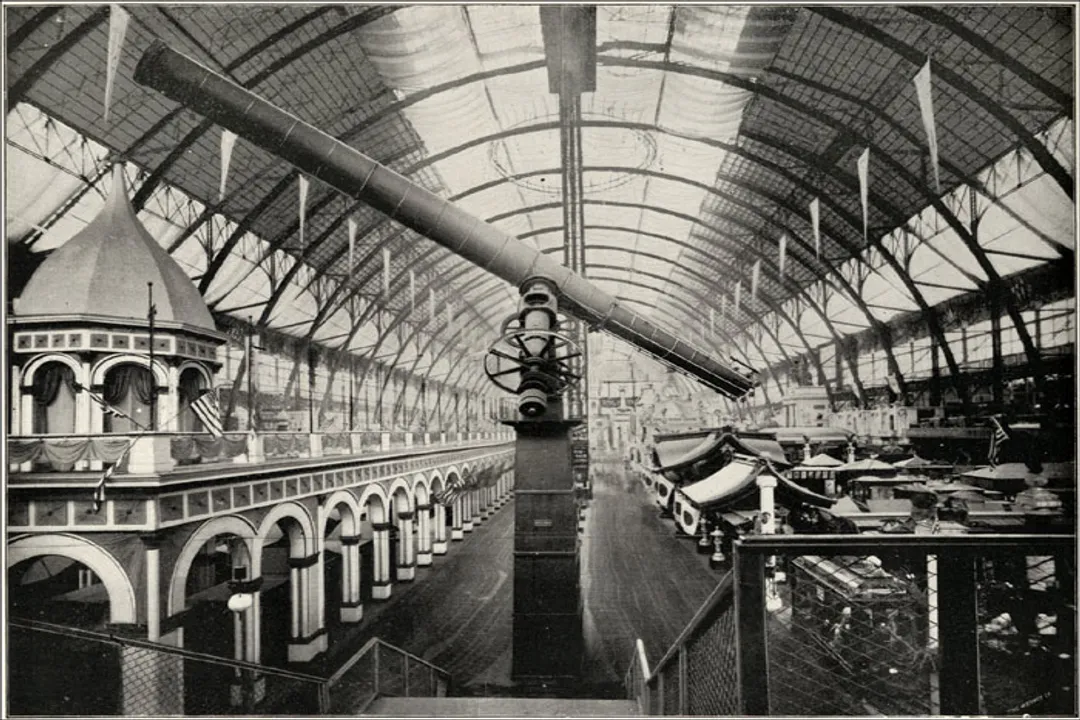
For those seeking the largest optical telescope, the LBT holds the top spot in North America based on its combined light-gathering capability. [1] Located atop Mount Graham in southeast Arizona, the LBT is situated at an elevation of about 3,200 meters. [3] What makes this instrument unique is its configuration: it consists of two independent 8.4-meter diameter primary mirrors mounted on a single structure. [3] This setup delivers the light-collecting area equivalent to a single, colossal mirror measuring 11.8 meters across, placing it at the forefront of the Extremely Large Telescope class. [1][3] This effective area is greater than any other operational optical telescope in the region. [1] To grasp the scale of that light-gathering power, the combined effective area is equivalent to a single mirror nearly 12 meters wide—a physical dimension that illustrates the challenge and achievement of modern mirror technology. [3]
The LBT is the result of an international partnership involving institutions from the United States, Germany, and Italy. [3] This collaboration is essential for funding and running such a complex instrument, which pushes the boundaries of what ground-based astronomy can achieve. [3]
# Segmented Giants
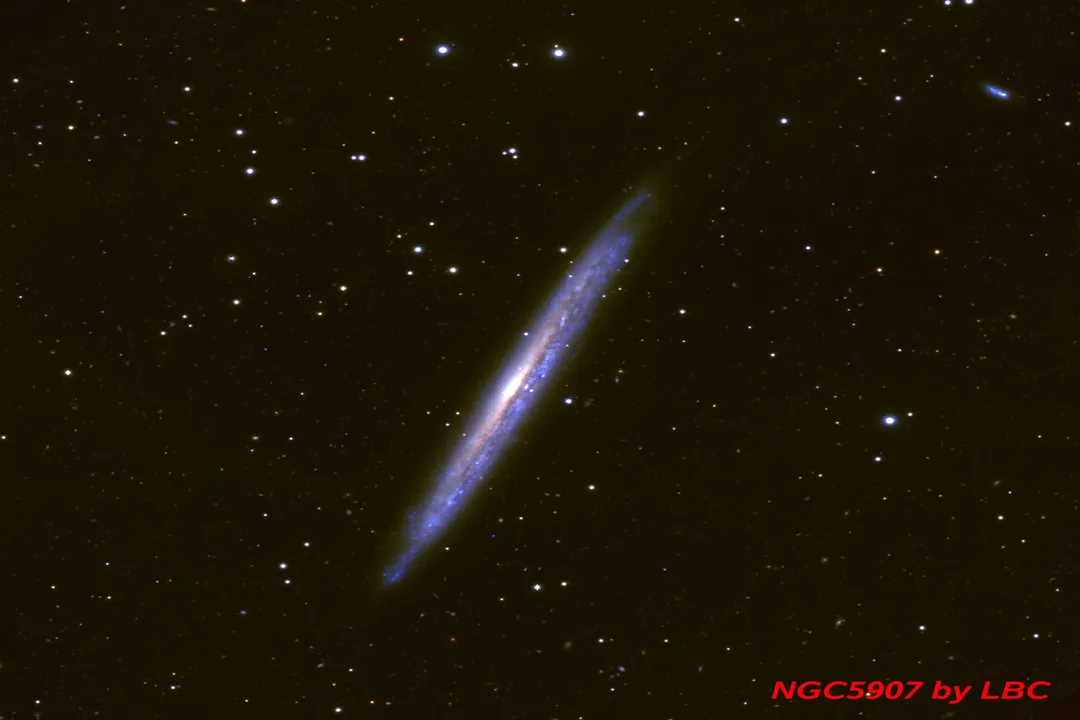
While the LBT leads on effective aperture, the title of "largest mirror" when speaking of single monolithic or segmented mirrors is shared among a few titans operating slightly further west and north. The twin telescopes of the W. M. Keck Observatory on Mauna Kea in Hawaii each boast primary mirrors that are 10 meters in diameter. [1][4] The Keck system represents a revolutionary design, utilizing 36 precisely aligned hexagonal segments to form each 10-meter surface. [4] This segmented approach allowed engineers to create mirrors far larger than could be cast and polished as a single piece at the time of their construction. [4] Keck I was completed in 1992, and Keck II in 1996, operating as the largest optical telescope system on Mauna Kea. [4]
Texas also hosts a massive light collector: the Hobby-Eberly Telescope (HET), located at the McDonald Observatory in Fort Davis. [2][5] The HET employs an 11-meter by 9.8-meter mirror, giving it an effective aperture of 10 meters, comparable to the Keck telescopes. [1] Unlike the LBT, which functions like two separate telescopes that can work together, or Keck, which uses adaptive optics and interferometry to link its twin 10-meter beams, the HET is an entirely different machine. It is optimized for spectroscopy and operates at a fixed tilt angle, often observing large sections of the sky in one pointing, making it ideal for studies like probing dark energy. [5]
# Comparing Optical Strategies
The LBT’s design, using two physically separate 8.4m mirrors on a common mount, allows it to perform specialized observations known as interferometry with a baseline of 22.8 meters, essentially giving it the sharpness of a single, much larger virtual mirror. [3] In contrast, the Keck and HET systems, with their massive individual primary mirrors, focus on raw light collection, using advanced techniques like adaptive optics to correct for atmospheric blurring and maximize image clarity. [4] It is an interesting divergence in engineering philosophy: does the future belong to the massive segmented light bucket, or the highly capable paired instruments capable of synthetic aperture imaging? Both configurations are essential for driving forward the science of the next generation of astronomy. [3]
# Radio Dominion
When the term "telescope" is used without the optical qualifier, the sheer physical scale of the largest structure in the United States belongs to radio astronomy. The Green Bank Telescope (GBT), situated in West Virginia, dwarfs every optical mirror in the country. [2] The GBT is not just large; it holds the title of the world's largest fully steerable radio telescope, featuring a dish 100 meters across. [7]
The GBT’s extreme sensitivity means that without significant protection, it could easily detect the radio noise from common electronic devices, like a cell phone operating even on Mars. [7] To safeguard its observations of faint cosmic signals billions of light-years away, the observatory is protected by two radio quiet zones, the largest of which covers about 13,000 square miles. [7] This necessity for absolute quiet highlights a fundamental difference in operation: while optical sites battle light pollution, the GBT battles electromagnetic pollution. Although the quiet zone is often misunderstood as meaning "no internet," the observatory does rely on connectivity for controlling the telescope and sharing data, though staff actively advocate for improvements in this rural setting. [7]
The GBT’s sheer size—100 meters in diameter—puts it in a class far beyond any American optical instrument. For context, the largest optical mirror surface discussed earlier is effectively about 11.8 meters wide. [3] The GBT, by comparison, is over eight times wider physically. [7]
# Historic Centers
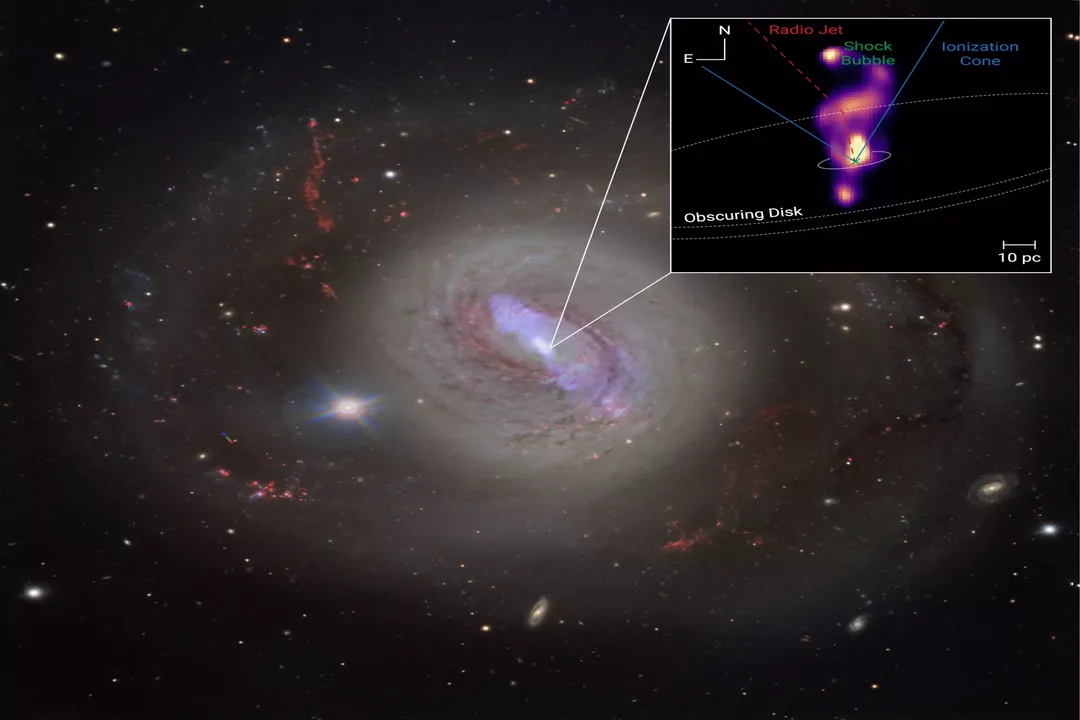
Beyond the current record-holders, America’s tradition of large-scale astronomy is anchored by historic observatories that paved the way for the modern giants.
# The California Legacy
The Mount Wilson Observatory in Pasadena, California, carries immense historical weight, as its telescopes were instrumental in proving the expansion of the universe through the work of Edwin Hubble. [8] Visitors today can still observe through the historic 100-inch telescope (the Hooker Telescope) and the 60-inch telescope, which together were among the largest in the world during the early 20th century. [8] These instruments are notable because they remain accessible for public viewing, allowing amateur astronomers a chance to use equipment with such profound scientific heritage. [8] This availability for the general public contrasts sharply with the LBT, Keck, and HET, which are dedicated research facilities. [3][5][4]
# Texas and the West
The McDonald Observatory in West Texas, home to the HET, is a major research hub operated by The University of Texas at Austin. [5] Besides the massive HET, McDonald hosts other important telescopes, including the 2.7-meter Harlan J. Smith Telescope and the 2.1-meter Otto Struve Telescope, both of which were once among the largest in the world when constructed. [5] Furthermore, McDonald is involved in building the Giant Magellan Telescope (GMT) in Chile, which will feature seven 8.4-meter mirrors spanning 25 meters when completed, setting the stage for the next frontier beyond current US-based capacity. [5]
# The Naval Presence
The United States Naval Observatory (USNO), primarily focused on timekeeping and Earth orientation data, also maintains significant instruments. [6] While the historic 26-inch "Great Equatorial" refractor in Washington D.C. is famous for being used by Professor Asaph Hall to discover Mars’ moons, Phobos and Deimos, in 1877, it is no longer the largest telescope operated by the organization. [6] The USNO's most capable optical scope is now the 1.55-meter Kaj Aa. Strand astrometric reflector, located at its Flagstaff Station in Arizona, which was used to discover Charon, Pluto's largest moon, in 1978. [6]

# Size vs. Altitude
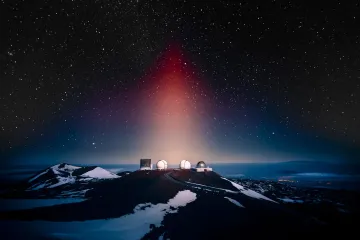
The choice of location is as critical as the mirror size. The LBT, Keck, and Subaru telescopes all benefit from being situated on Mauna Kea in Hawaii, or the high desert peaks of Arizona. [3][4] Mauna Kea, reaching over 4,200 meters, is frequently above 40% of Earth's atmosphere, offering exceptionally clear, dry, and calm conditions that are perfect for infrared observations and minimizing atmospheric distortion. [4] While the LBT is located on Mount Graham in Arizona, its elevation of 3,200 meters still provides superior viewing conditions compared to most populated regions. [3] This geographic advantage explains why so many of the world's largest and most powerful telescopes are concentrated in the American Southwest and Hawaii—the quest for the largest telescope is always a partnership between engineering scale and optimal atmospheric placement. [2][4]
Related Questions
#Citations
List of the largest optical telescopes in North America - Wikipedia
15 Largest Telescopes in the US - Go-Astronomy.com
Large Binocular Telescope Observatory
Keck Observatory | Mauna Kea, Hawaii, Telescopes, Astronomy
About McDonald Observatory
USNO's Telescopes - CNMOC
What is the Green Bank Observatory?
2025 Telescope Reservations - Mount Wilson Observatory