What are the three types of reflector telescopes?
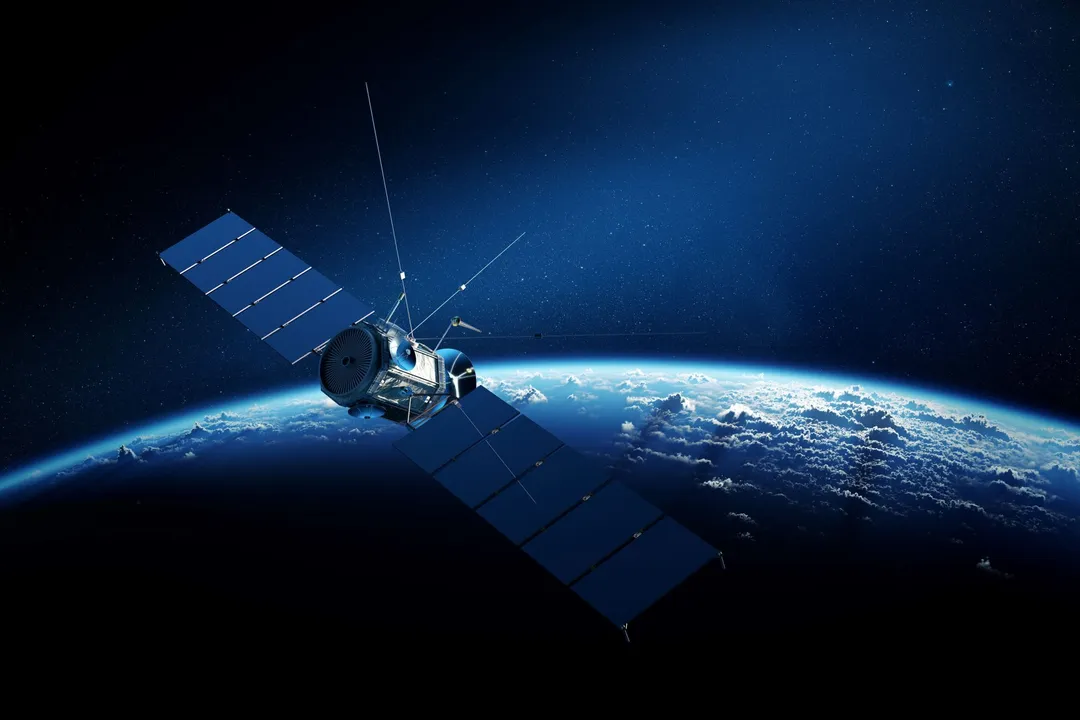
The world of amateur and professional astronomy is largely built upon light-gathering instruments that rely on mirrors rather than lenses to form an image, known broadly as reflector telescopes. These instruments often provide superior performance for their aperture size compared to their purely lens-based counterparts, largely due to the elimination of chromatic aberration—the color fringing that plagues simple refractors. While countless modifications and hybrid designs exist, the core concepts of reflective optics boil down to a few fundamental configurations, usually categorized by how the primary mirror focuses the light and where the final image is viewed. Identifying the specific three types generally involves looking at the distinct path the light takes after hitting the primary mirror, most famously categorized as the Newtonian, the Cassegrain, and a significant variation within that family, like the Ritchey-Chrétien, or sometimes contrasting these with specific secondary mirror arrangements that create a distinct third class.[1][2][4]
# Newtonian Design
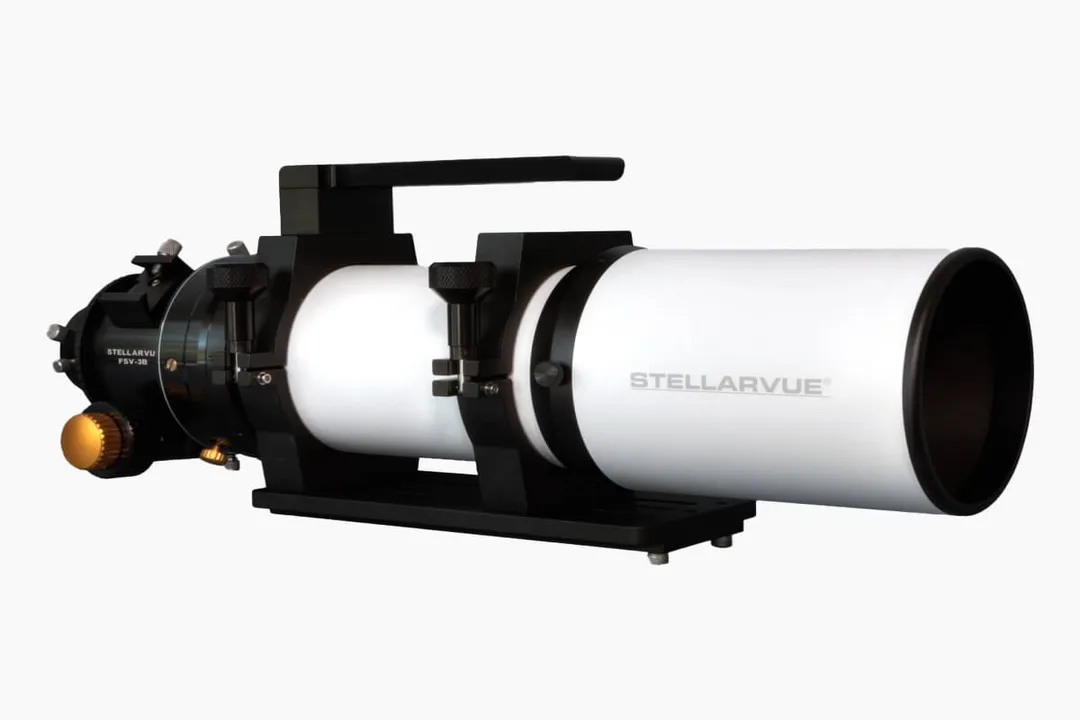
The design attributed to Sir Isaac Newton remains arguably the most iconic and historically significant form of reflector telescope still widely used by amateurs today.[1][4] In this setup, light enters the open tube and travels to the bottom where the large primary mirror resides, which is typically parabolic in shape to bring incoming parallel light rays to a focus point near the center of the tube.[2] Before the light reaches this focus, it is intercepted by a small, flat, elliptical secondary mirror positioned near the top of the tube, at a 45-degree angle to the optical axis.[1][4] This secondary mirror redirects the converging light cone out the side of the telescope tube, where the eyepiece or camera is placed.[1][2][4]
One of the most appealing aspects of the Newtonian design is its simplicity and resulting cost-effectiveness. Because the secondary mirror is flat, it only needs to correct for spherical aberration in the primary mirror, and it does not introduce significant optical distortions like coma (off-axis blurring) as easily as some other designs, especially when the ratio between the focal length and the primary mirror diameter (the f-ratio) is sufficiently large, such as an f/8 or f/10 system.[1] Furthermore, the eyepiece placement at the side, while sometimes requiring the observer to kneel or stand on a platform, means the observer is looking through a relatively undistorted section of the light path.[4] The open tube design also allows for very fast focal ratios—meaning a short tube length for a given aperture—which helps keep the instrument physically compact for its light-gathering power.[2]
However, this open structure presents its own challenges. Dust and moisture can easily settle on the primary mirror, necessitating periodic cleaning and, more importantly, requiring frequent collimation—the precise alignment of the mirrors.[4][5] Since the secondary mirror obstructs a small portion of the incoming light path, Newtonian reflectors can suffer from a very slight loss of contrast compared to unobstructed systems, though for most visual observation, this effect is negligible.[2] A common recommendation for first-time telescope buyers interested in deep-sky viewing is often a Dobsonian-mounted Newtonian because this mounting style is simple, sturdy, and inexpensive to manufacture, maximizing aperture for the budget.[6][7] For instance, a well-corrected 10-inch Newtonian on a Dobsonian mount offers tremendous light-gathering capability for viewing faint nebulae and galaxies at a price point far lower than a comparable refractor.
# Cassegrain Focus
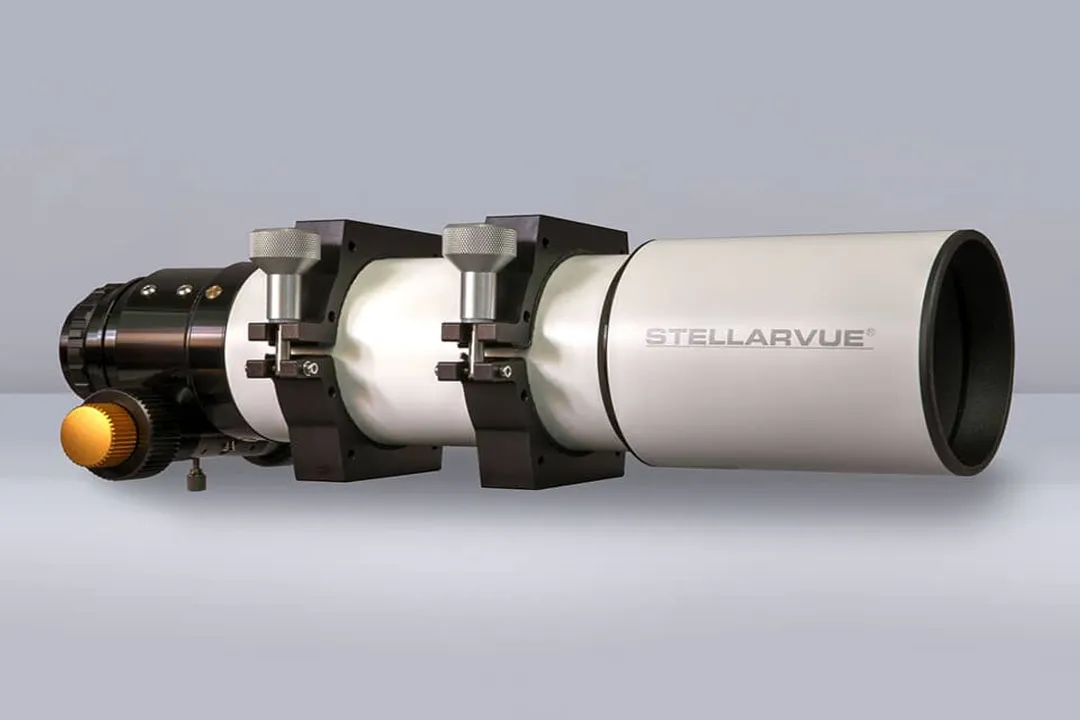
Moving away from the side-port viewing of the Newtonian, the second major category of reflector telescopes involves folding the light path back through the center of the primary mirror, resulting in a much shorter, more manageable tube length for a given focal length. This leads us to the Cassegrain configuration, which relies on a convex secondary mirror to achieve this path-folding effect.[1][2]
In a standard Cassegrain arrangement, light converges toward a focal point behind the primary mirror, but the convex secondary intercepts this light cone before it converges.[1] The secondary mirror then reflects the light back through a precisely drilled hole located in the center of the primary mirror, where the eyepiece or imaging sensor is finally placed.[1][4] This folding action effectively doubles the focal length without significantly increasing the physical length of the telescope tube itself. A telescope with a primary mirror focal length of 1200mm might only have a tube length of 600mm or less, making it highly portable and easy to mount, especially for high-magnification planetary viewing.[2]
The advantages here are clear: a compact tube and a rear-mounted eyepiece, which is often more comfortable for observers and better suited for tracking mounts that demand a balanced instrument.[2] However, this design trades simplicity for optical complexity. Because the secondary mirror is curved (convex), it must be precisely shaped to correct the spherical aberration inherent in the parabolic primary mirror.[4] Achieving perfect focus across a wide field of view requires careful calculation of the hyperbolic shape of the secondary mirror in conjunction with the primary. If the secondary mirror is not perfectly calculated for the primary, the resulting image will suffer from spherical aberration, making pinpoint stars impossible, or worse, exhibit significant coma if the primary is not also shaped correctly for the system.[1] The hole in the primary mirror, while necessary for light passage, also obstructs a small percentage of the incoming light, which can slightly reduce image contrast compared to a Newtonian of the same aperture, though the light loss is generally minimal.[2]

# Advanced Reflections
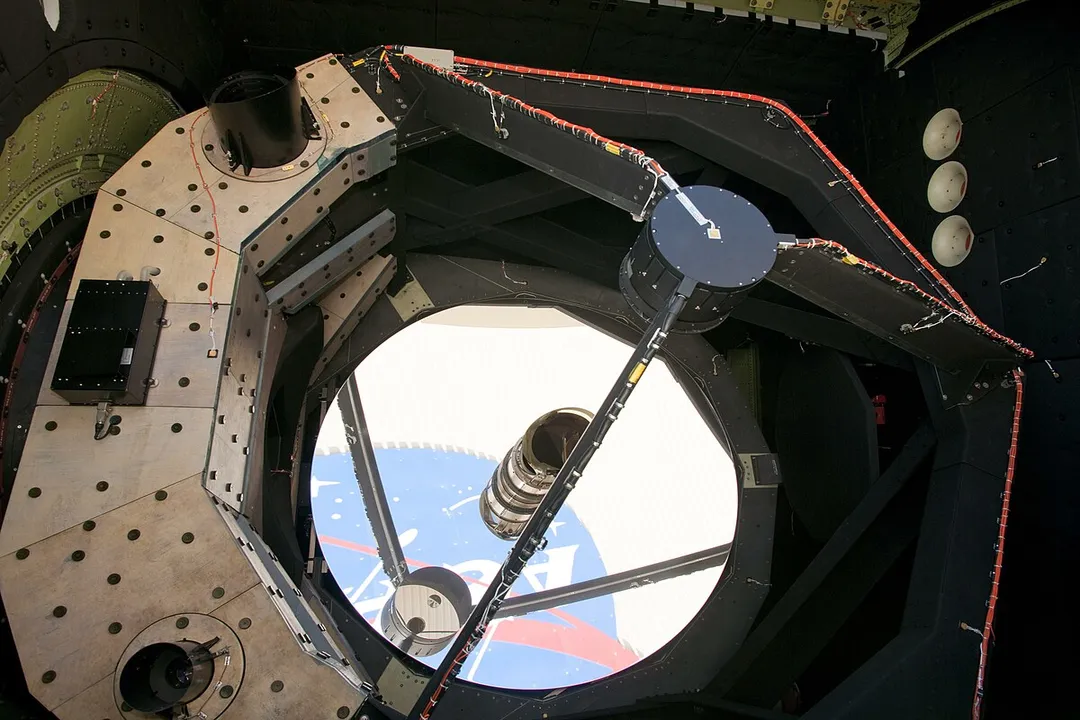
While the Newtonian and standard Cassegrain represent the two foundational pure reflector designs based on their secondary mirror arrangement, the third category often discussed in this context represents sophisticated evolution or hybrid systems that push performance boundaries, particularly for professional or high-end amateur use. Two important variations often fill this "third type" slot: the Ritchey-Chrétien and the incorporation of correcting lenses, leading to catadioptric designs. Since the prompt specifically asks for reflector types, the Ritchey-Chrétien is the better purely reflective optical path to highlight as distinct from the standard Cassegrain.[1]
# Ritchey-Chrétien
The Ritchey-Chrétien system is a specialized form of the Cassegrain configuration developed by George Ellery Hale and used famously on the massive Hubble Space Telescope.[1] It differs fundamentally from the standard Cassegrain by utilizing two hyperbolic mirrors instead of a parabolic primary and a hyperbolic secondary.[1] This dual-hyperbolic shaping is specifically engineered to eliminate coma entirely across a very wide field of view while also correcting for spherical aberration.[1]
For astronomers imaging large fields, such as those mapping entire nebulae or clusters, the Ritchey-Chrétien is superior because stars remain sharp points of light even at the edges of the frame, something even a perfectly aligned Newtonian or standard Cassegrain struggles with.[4] The trade-off is manufacturing complexity; making two high-precision hyperbolic surfaces is significantly more difficult and expensive than making a parabolic primary and a simple convex secondary. As a result, these instruments are typically found on large observatory mounts or as premium, high-performance photographic telescopes where absolute edge-to-edge correction is paramount over cost.[1]
# Distinguishing Reflector Families
It is helpful to view these three optical paths—Newtonian, Standard Cassegrain, and Ritchey-Chrétien—as a progression in solving specific optical problems inherent in simple reflection. A neat way to think about which design suits a particular observing goal is to consider the trade-offs between tube length, field flatness, and complexity. For instance, if one prioritizes ease of construction and low cost for visual deep-sky work, the Newtonian is ideal, accepting the longer tube and side viewing position.[7] If compact portability and high magnification for planetary viewing are the goal, the Cassegrain style excels due to its short physical length.[2] Finally, if the primary use is wide-field astrophotography where perfect star shapes across a large sensor are non-negotiable, the Ritchey-Chrétien stands alone among the purely reflective options.
For the general user setting up their first quality reflector, understanding the aperture is key, but understanding the configuration dictates usability. Imagine purchasing a telescope with a 10-inch aperture. A Newtonian version might be seven feet long and heavy to maneuver on an equatorial mount, whereas a Cassegrain version of the same 10-inch primary could be only four feet long, making the latter much easier to manage on a smaller, more affordable tracking mount. This physical difference, dictated entirely by the secondary mirror's function, is a primary driver in equipment selection.[6]
# Mirror Quality and Maintenance
Regardless of the specific configuration—Newtonian, Cassegrain, or Ritchey-Chrétien—the performance of any reflector telescope is overwhelmingly dependent on the quality and shape of its primary mirror and the precision of its secondary mirror.[4] Unlike lenses, mirrors do not suffer from chromatic aberration, but they are highly susceptible to spherical aberration if not ground to the correct contour.[1] Furthermore, any microscopic imperfections in the mirror surface, often measured in fractions of a wavelength of light, will degrade image quality, especially at high magnifications.[4]
The reflective coating itself is another critical element. Most modern telescopes use aluminum coatings protected by a thin layer of silicon dioxide or magnesium fluoride to prevent oxidation and maintain high reflectivity, often achieving over 95% reflectivity.[4] While the various types use mirrors differently, they all share the need for routine maintenance. If a Newtonian mirror becomes dusty, image contrast drops. If a Cassegrain secondary mirror is slightly knocked out of alignment due to temperature shifts or handling, the entire optical system will be unusable until carefully realigned.
A practical tip for any new reflector owner, regardless of type, is to allow the telescope to reach thermal equilibrium with the outside air before observing. A large mirror takes time to cool down. If the mirror is warmer than the night air, it will create air currents inside the tube that look like shimmering heat waves, effectively blurring the image until thermal equilibrium is achieved. For a large Newtonian, this cooling period might take an hour or more, depending on ambient conditions, while a Cassegrain with a shorter tube generally cools faster. This simple act of patience is often the difference between a frustrating night and one filled with crisp views.[7]
In summary, the three primary optical path configurations for reflector telescopes—the side-view Newtonian, the folded-path standard Cassegrain, and the aberration-free Ritchey-Chrétien—offer distinct compromises in terms of portability, cost, and optical perfection across the field of view. Choosing among them depends entirely on the observer's primary purpose, whether it is casual visual observation, high-power planetary study, or wide-field astrophotography.[2][4]
#Videos
Top 3 Telescopes Types, Explained: Telescope Basics 1 of 6
Related Questions
#Citations
Reflecting telescope - Wikipedia
Types of Telescopes Explained - Learn What Fits Your Needs at OPT
Telescope Buying Guide | SHU Discovery
Reflector telescope - Avantier Inc.
Advantages of each type of telescope type? - Reddit
Types of Telescopes | High Point Scientific
New to Astronomy? Start with a Refractor Telescope - Stellarvue
The image illustrates three types of telescopes: refractor, reflector ...
Top 3 Telescopes Types, Explained: Telescope Basics 1 of 6