What type of tools do scientists use?
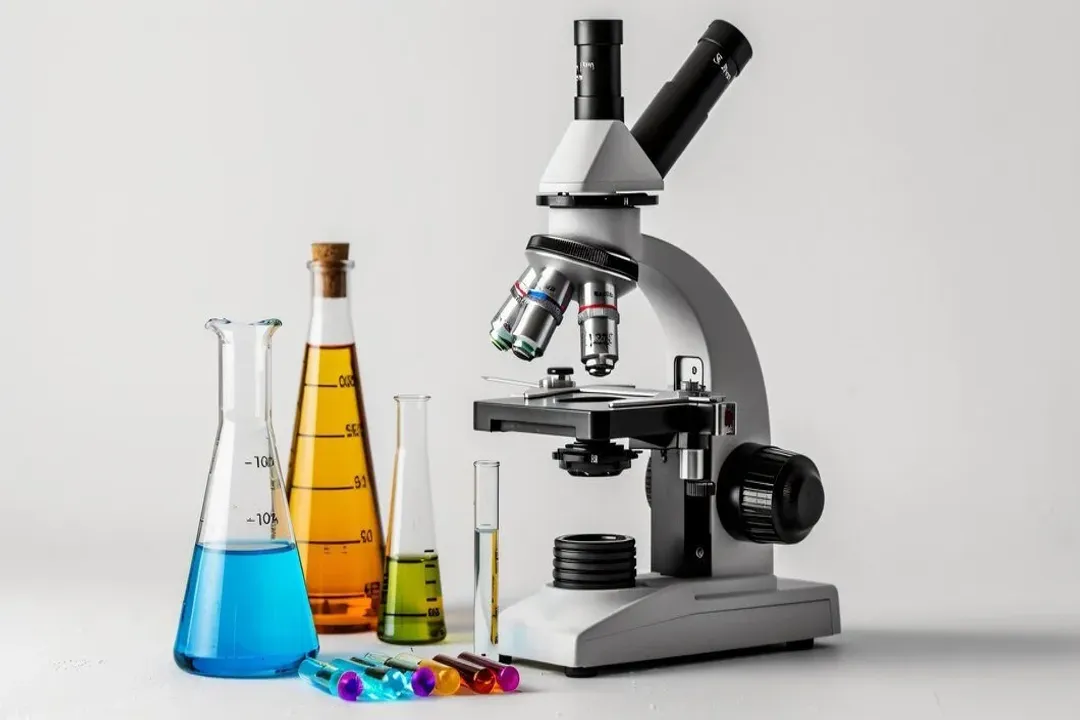
The equipment scientists employ spans an astonishing spectrum, ranging from simple implements first used millennia ago to highly sophisticated, computer-driven apparatuses that can probe the very edge of the observable universe or the smallest components of a cell. No single piece of gear defines science; rather, it is the collection and correct application of these instruments, tailored precisely to the question at hand, that unlocks new knowledge. [6] The fundamental goal of any scientific tool is to extend human capability—to see what the naked eye cannot, to measure what the unaided hand cannot, or to analyze data that the unaided mind cannot process efficiently. [3]
# Simple Start

Many foundational scientific endeavors begin with tools that appear deceptively simple, often falling into the category of observation or basic quantification. [1][2] Take, for instance, the magnifying glass or a basic microscope. While a modern electron microscope can visualize atomic structures, the core function—making the small appear large enough to study—was established with simple lenses. [3] These tools grant the gift of scale, allowing biologists to examine tiny organisms or geologists to inspect crystal structures that would otherwise remain invisible to the naked eye. [3]
Measurement is equally crucial, and here we find the ruler and the balance. A ruler provides fundamental data on length and distance, essential in physics experiments or even when plotting maps for environmental studies. [2] Similarly, a balance is fundamental for determining mass. Whether it is a simple two-pan balance or a modern analytical balance capable of measuring micrograms, the principle remains the same: accurate comparison of unknown mass against a known standard. [1][9] The reliability of these basic instruments ensures that the data collected—the very bedrock of the scientific method—is sound from the very first step. If one observes a phenomenon but cannot quantify its dimensions or mass, the observation remains anecdotal; quantification turns it into science. [1]
# Exact Measures
Moving beyond simple observation, science demands rigorous precision, leading to the development of specialized measuring devices designed for specific variables. [5][9] Temperature, for example, is critical across chemistry, physics, and biology. The thermometer, in its various forms, allows researchers to monitor thermal changes, which can dictate reaction rates, material states, or even the viability of living cultures. [1][3] Modern versions might utilize digital probes with far greater accuracy than traditional mercury columns, but the underlying necessity to quantify thermal energy remains constant. [5]
For those working with solutions, the acidity or alkalinity, measured by pH, is a defining characteristic. A pH meter provides a numerical reading of hydrogen ion activity, which is vital in everything from soil science to pharmaceutical development. [5] The difference between a pH of 7.0 and 7.5 can mean the difference between a stable compound and a failing chemical process.
When comparing the weight of samples, modern laboratories rely on highly sensitive analytical balances. [5] These instruments often feature draft shields to prevent air currents from skewing readings, demonstrating how environmental control becomes an integral tool in achieving accuracy. Consider the challenge of isolating and measuring trace elements in environmental samples; without a balance accurate to four or five decimal places, the resulting data on contamination levels would be meaningless guesswork. [5][9] This move from basic comparison (a two-pan balance) to absolute numerical determination (an analytical balance) represents a major technological leap in scientific measurement capabilities. [1]
# Lab Processing
Within chemistry and biology labs, many tools are not designed primarily for measurement but for manipulation and creation of controlled environments. [10] These instruments manage the physical conditions necessary for reactions, cell growth, or molecular separation. [5]
The centrifuge is a perfect example. This machine spins samples at extremely high speeds, generating significant centrifugal force. This force separates components of a mixture based on density, allowing scientists to easily isolate solid particles from liquid solutions, such as separating blood cells from plasma. [5] Without this mechanical separation, many biochemical analyses would be impossible.
Similarly, maintaining life or chemical stability requires precise environmental control. Incubators provide carefully regulated temperature and atmosphere (sometimes requiring high CO2 levels) necessary for growing microbial cultures or delicate cell lines. [5][10] In molecular biology, the Polymerase Chain Reaction (PCR) machine is indispensable. It rapidly cycles samples through precise temperature changes to amplify small segments of DNA, a process that forms the backbone of modern genetic testing and forensic science. [5] These tools embody the concept of controlled experimentation; they create a miniature, predictable universe where variables can be isolated and tested. [10]
# Specialized Views
When the subject of study is too distant or too complex for standard laboratory settings, entirely different classes of instruments come into play, often bridging the gap between physical science and engineering. [4][6] For the astronomer, the telescope remains the quintessential tool. [4] Its purpose is not merely to magnify, but to collect light—or other electromagnetic radiation like radio waves or infrared—over a large area to detect objects too faint or too far away for the unaided eye. Modern instruments, like the massive reflecting telescopes on Earth or orbiting observatories, are essentially sophisticated light-gathering machines coupled with digital detectors. [4]
NASA’s work relies heavily on these specialized systems to understand planetary atmospheres, stellar evolution, and deep space dynamics. [4] However, an astronomer’s toolkit also includes tools for in situ measurement on spacecraft or probes, such as spectrometers to analyze the chemical composition of distant atmospheres or radiation sensors to map cosmic rays. [4] The common thread here is that the tool must overcome massive physical barriers—distance and time—to gather necessary data. [6]
If we consider the scope of tools across disciplines, we find that the category often defines the field itself. An engineer testing material stress might use a tensile tester to pull a sample apart, recording the precise force needed for failure, while a chemist uses a spectrophotometer to shine light through a solution and measure how much light is absorbed at specific wavelengths to determine concentration. [5][9]
# Conceptual Instruments
The tools of science are not all physical objects one can hold or place on a workbench; an equally vital set of instruments exists purely in the realm of data and computation. [8] These are the analytical methods and software systems that allow scientists to make sense of the massive datasets generated by modern physical equipment. [8]
For researchers dealing with geography, ecology, or urban planning, Geographic Information Systems (GIS) software represents a primary analytical instrument. [8] GIS tools allow scientists to layer different types of data—such as elevation maps, population density, pollution readings, and historical climate data—spatially. [8] The ability to visualize overlapping datasets enables the discovery of correlations that would be invisible in separate spreadsheets. For example, a researcher might use spatial analysis tools to compare the proximity of historical industrial sites with current rates of a specific respiratory illness in a community. [8]
Beyond spatial representation, statistical analysis tools are essential for determining whether observed patterns are genuine scientific findings or merely random chance. [8] These computational instruments allow researchers to run complex models, calculate confidence intervals, and test hypotheses against massive data populations. [8] When a pharmaceutical company tests a new drug, it relies on statistical software to determine if the improvement seen in the treatment group is statistically significant compared to the placebo group. [1] In this digital domain, expertise lies not in operating a centrifuge, but in correctly configuring the algorithm and interpreting the resulting probability distributions. [8]
It is fascinating to compare the reliability standards between these two extremes. A physical balance must maintain physical calibration against known standards, often traceable back to national bureaus. Conversely, a statistical analysis tool must maintain mathematical integrity—the algorithm itself must be proven sound and the underlying assumptions of the statistical test correctly applied to the data type. [6] My own observation, drawing from this duality, is that the modern scientist often spends more time validating the digital environment than the physical one, as a flawed line of code in an analysis script can invalidate months of careful lab work. [8]
# Instrument Evolution
The history of scientific instrumentation shows a continuous drive toward non-invasive techniques and increased automation. Early measurements were inherently intrusive—we had to break a rock to see its crystals, or manually time an event with a stopwatch. [6] Modern science strives for tools that can gather high-fidelity data without disturbing the system being studied. This evolution is evident even in the transition from manual data logging to automated data capture. A researcher today can set an instrument to monitor a chemical reaction for 72 hours, recording the data point every minute, a task impossible to manage manually with the same level of consistency. [5][10]
The selection process itself requires deep expertise. A biologist needing to quantify protein concentration might choose spectrophotometry if they need a fast, high-throughput reading on many samples, or they might opt for Western blotting if they need to confirm the presence and size of a specific protein, even though the latter is much slower. [5] The choice is a scientific tool decision in itself: speed versus specificity. A common pitfall for newcomers is applying the wrong tool to the problem; using a technique designed for bulk measurement when a highly specific identification is required yields data that is technically correct but scientifically useless. [1]
| Scientific Goal | Measurement Type | Example Tool | Discipline Focus |
|---|---|---|---|
| Quantify Mass | Absolute Weight | Analytical Balance | Chemistry, Physics |
| Observe Detail | Magnification | Microscope | Biology, Materials Science |
| Separate Components | Density Separation | Centrifuge | Biochemistry, Medicine |
| Analyze Structure | Light Absorption | Spectrophotometer | Chemistry, Molecular Biology |
| Model Landscape | Spatial Overlay | GIS Software | Geography, Ecology |
The table above illustrates how the fundamental question dictates the required instrument complexity. While the microscope and the GIS software are both "tools," one manipulates light to interact with physical matter, and the other manipulates abstract data layers to reveal relationships. The expertise required to use them effectively is vastly different, yet both are equally essential to their respective scientific domains. [8][6]
# Expertise Required
The sophistication of the apparatus often demands a corresponding level of technical training for its operator. [10] While anyone can use a ruler, operating a mass spectrometer—an instrument that ionizes molecules and measures their mass-to-charge ratio with incredible accuracy—requires specialized knowledge of vacuum systems, ionization techniques, and spectral interpretation. [6] Similarly, managing a sophisticated remote-sensing satellite downlink involves expertise in signal processing and orbital mechanics. [4]
This dependency on complex machinery means that the definition of a "scientist" has subtly shifted. It now often includes the instrument specialist—the physicist or engineer whose primary contribution is designing, building, and maintaining the apparatus that allows others to conduct their primary research. [6][10] This interdependence highlights a critical factor often overlooked: the necessity of calibration and maintenance. A complex machine that is improperly calibrated produces results that are confidently wrong. Regularly verifying instrument performance against known standards—whether it’s checking the alignment of a telescope mirror or confirming the zero-point of a precise scale—is arguably the most fundamental scientific practice associated with tools. [5]
# Synthesis and Future
The diversity of scientific tools confirms that there is no single master key to understanding nature. [6] Instead, science builds a picture piece by piece, using a balance for mass, a microscope for structure, a centrifuge for separation, and software for correlation. [1][8] The future direction of this field points toward even greater integration. We are seeing more lab-on-a-chip technologies, where microfluidics, sensors, and analytical chemistry are miniaturized onto a single slide, combining the functions of many separate traditional tools into one automated platform. [5]
Furthermore, the integration of Artificial Intelligence into data analysis tools means that the machine itself is beginning to assist in forming hypotheses, not just testing them. While the raw data still requires human validation and ethical oversight, the capacity of these digital instruments to spot non-obvious correlations in massive datasets—far surpassing human cognitive limits—suggests that the next great scientific breakthroughs might be driven by a collaboration between the physical tool, the digital analysis tool, and the human interpreter. [8] Ultimately, the scientist’s workshop is a reflection of humanity’s relentless desire to measure, see, and comprehend the world with increasing clarity. [3]
#Videos
How Do We Use Scientific Tools? - Tools Scientists Use
Related Questions
#Citations
Scientific Tools | Definition, List & Uses - Lesson
Scientific Tools Name of the Tool What it Does Picture
Science Tools
Chapter 12: Science Instruments
Laboratory Scientific Equipment: Essential Tools for ...
Scientific instrument
How Do We Use Scientific Tools? - Tools Scientists Use
Understanding Data Analysis Using 8 Scientific Tools
Scientific Instruments And Their Uses
Researchers share their most essential lab equipment