How much does a telescope cost in the US?
The true cost of getting into amateur astronomy in the US is one of the most frequently debated topics among enthusiasts, and the answer is rarely a single number. A telescope can cost as little as $$100$300$ for a quality telescope suitable for visual observing, while anything geared toward serious deep-sky astrophotography tends to start near $$800$ in the current market. [1]
# Low End Traps
Many newcomers are tempted by telescopes priced under $$100$ found at big-box stores or online marketplaces, but these are often referred to by seasoned observers as "Hobby Killers". [1][3] These instruments typically feature long, thin tubes on spindly tripods, resulting in wobbly mounts and poor performance that can quickly sour someone on the hobby. [1][3] While a rare gem might exist, the optics in this bracket are generally not worth the frustration they induce. [3]
If your budget is truly constrained to under $$100$, you might find a more rewarding experience by investing in a high-quality pair of binoculars instead. [1][2] For example, a quality pair like the Pentax SD 10x42 can be found for less than that budget mark and provides excellent celestial views while also being useful for terrestrial observation. [1]
# Budget Tiers
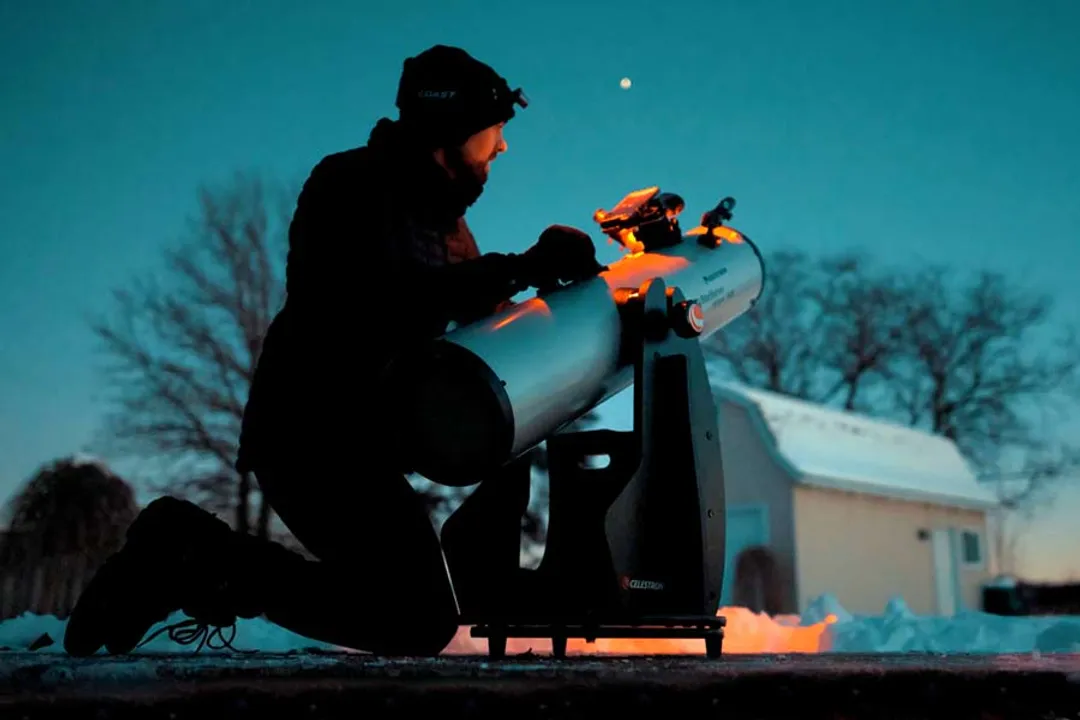
For those ready to purchase their first true telescope, a tiered approach based on spending helps clarify what you receive for your money. The general consensus is that the optical tube assembly (OTA) is only part of the equation; the mount and included accessories matter significantly for a positive first experience. [1][3]
Here is a look at what different spending levels typically provide:
| Price Range (Approx. USD) | Typical Scope Type/Size | Key Feature/Value Proposition |
|---|---|---|
| Under $$300$ | 4" to 6" Tabletop Reflector/Dobsonian | Best "bang for your buck" aperture with stable base mounts. [1][3] |
| $$300 - $500$ | 4" to 5" Manual Telescope with App Assist | Introduction to larger aperture or smartphone navigation (e.g., StarSense Explorer DX 130AZ). [1] |
| $$500 - $1,000$ | 6" to 8" Dobsonian or Smart Scope | Significantly more gratifying views; 8-inch aperture possible for visual work. [1][3] |
| $$700 - $2,000$ | Computerized (GoTo) or Imaging-Ready | Automated object location (GoTo) or features tailored for entry-level astrophotography. [4] |
| $$2,000+$ | Specialized Refractors, SCTs, RC Systems | Premium optical correction, large aperture, or imaging-specific speed/flatness. [4] |
A very acceptable, entry-level refractor, such as the Celestron StarSense Explorer LT 80AZ (a 3-inch achromatic refractor), can be found for around $$200$150$ to $$200$ range, offering a decent optical punch in a small package, provided you place it on a stable surface like a patio table. [3]

# Visual Sweet Spot
The core function of a telescope is gathering light, and the primary way to maximize light-gathering power is by increasing aperture—the size of the objective lens or mirror. [3] For visual observers primarily interested in the Moon, planets, and brighter deep-sky objects like the Orion Nebula, the best value is historically found in the Newtonian reflector design, particularly on a Dobsonian mount. [1][3]
The Dobsonian mount is a simple, intuitive, alt-azimuth base that allows manufacturers to put a large mirror into a complete package for a comparatively low price. [2][5]
If you aim for the $$500$1,000$ bracket, you begin to access serious aperture. An 8-inch Dobsonian telescope is often cited as the point where an observer gets views that are truly gratifying, allowing fainter galaxies and nebulae to become visible. [1][3] For instance, the Celestron StarSense Explorer 8" Dobsonian, which incorporates app-guided location assistance, sits right in this bracket, often around $$800$900$. [1] Even better, a traditional 8-inch Dobsonian can sometimes be found starting near $$500$600+$. [3]
It is interesting to note the price jump for aperture. While a 6-inch Dobsonian might cost in the $$300-$500$ range, the next step up to an 8-inch mirror—which gathers significantly more light—often pushes the price into the $$600-$900$ territory depending on the specific model and inclusions. [3] This suggests that for pure visual impact versus cost, the 6-inch or 8-inch Dobsonian often represents the best aperture per dollar ratio for getting deep-sky views outside of a light-polluted area. [3]
# The Rise of Smart
A significant modern development that changes the cost conversation is the advent of the "smart telescope". [1] These devices integrate optics, an imaging sensor, a tracking mount, and software into a single, compact unit controlled entirely by a smartphone app. [2] The initial setup and tracking are automated, which removes the steepest part of the learning curve for beginners who might be intimidated by manual alignment procedures. [1]
These smart scopes, such as the ZWO Seestar S50 or the DWARF 3, typically list for about $$549$ USD. [1] This price lands them squarely in competition with mid-range manual Dobsonians or entry-level computerized scopes. [1] The trade-off is crucial: smart scopes are designed for photography straight out of the box, automatically stacking images to reveal detail invisible to the naked eye, but they usually lack the eyepiece viewing experience or the long focal length needed for high-magnification planetary detail like an SCT or a large Dobsonian provides. [1][4] They offer an immediate "wow" factor through astrophotography without the separate purchase of a camera, mount, and field correctors—a significant value proposition for the aspiring imager on a budget. [1]
# Intermediate Upgrades
Moving into the $$700$2,000$ range opens the door to computerized functionality and scopes built with astrophotography features in mind. [4] For visual observers, this budget can secure a mid-sized Schmidt-Cassegrain Telescope (SCT) like the popular Celestron NexStar 8SE, which features GoTo tracking, allowing the telescope to automatically locate and center thousands of cataloged objects after alignment. [1][4] The 8SE is a strong all-around performer for visual use. [1]
For those prioritizing astrophotography in this tier, intermediate setups often involve more sophisticated mounts and optical tube assemblies (OTAs) designed for tracking accuracy. [4] An example is the Celestron Advanced VX 6-Inch Newtonian Telescope, which features features like permanently programmable periodic error correction, essential for capturing longer exposures without the need for a meridian flip. [4] Alternatively, a collapsible Dobsonian with GoTo, like the Sky-Watcher Flextube 250P SynScan GoTo, provides a massive 11.38-inch aperture in a transportable package, costing around $$1,649$1,895$. [4][5]
The decision here often centers on whether you prioritize easy visual access (GoTo SCT/Dobsonian) or the imaging capability that requires a stable German equatorial mount (Newtonian or Refractor on an AVX or similar mount). [4]
# Expert Territory
When budgets stretch to $$2,000$8,000$, the focus shifts entirely toward minimizing optical flaws, maximizing light grasp, or achieving professional-level precision in imaging. [3][4]
For expert visual observing or planetary imaging, one might look at large SCTs or specialized reflectors. The Celestron 9.25-Inch EdgeHD OTA, which offers Aplanatic optics that correct for coma and deliver a flat field, is a hallmark of this category, often priced around $$1,700$ for the tube assembly alone, or more for a complete package. [4]
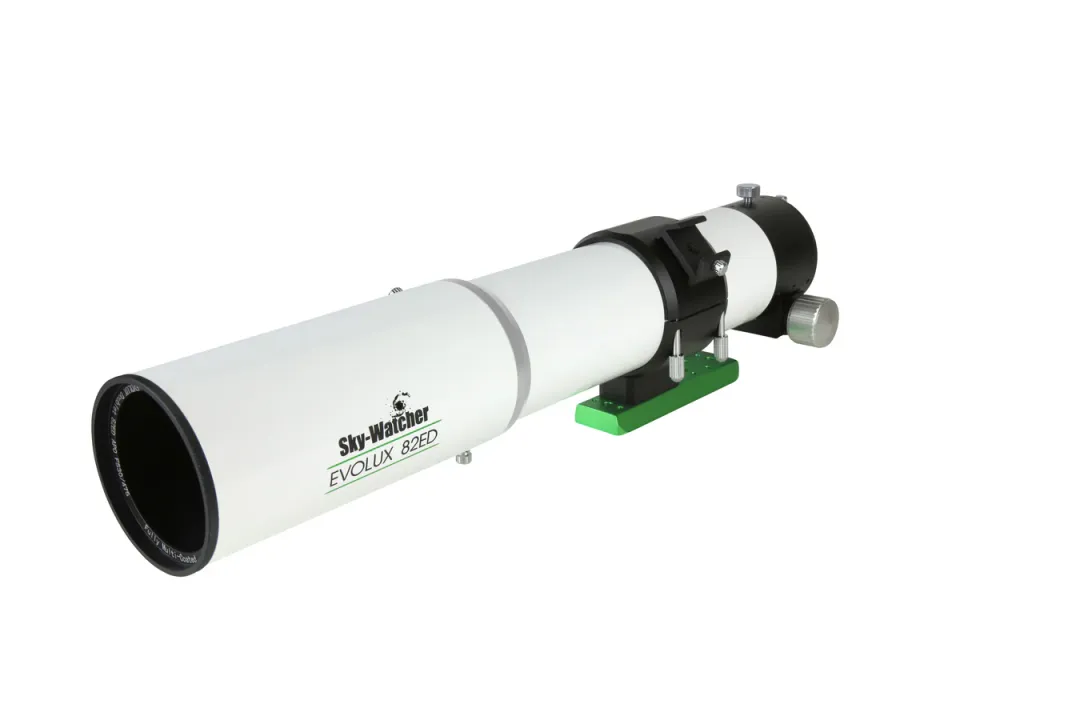
In the realm of high-end imaging refractors, the cost rises sharply due to the complexity of correcting aberrations across multiple lens elements. A premium apochromatic refractor, like the William Optics GT81 WIFD (\sim\2,000$3,210$ or more), [1][5] represents the pursuit of pinpoint, color-pure stars across large camera sensors. These instruments are often the "forever scopes" for dedicated astrophotographers because they require minimal maintenance compared to large reflectors. [3]
For the ultimate precision in deep-sky imaging, Ritchey-Chrétien (RC) reflecting telescopes are the choice, eliminating spherical and chromatic aberrations entirely. [2] The TPO 10-inch Truss Tube RC can easily cross the $$4,000$600$ Dobsonian can far outweigh the novelty of a $$6,000$ instrument if the former is used more often. [1][3] The best instrument is fundamentally the one that you consistently take outside when the skies are clear. [1]
#Videos
The Best Budget Telescopes ($300) for 2025
Related Questions
#Citations
Telescopes Cost: Acceptable, Good, and Really ...
How Much Does a Good Telescope Cost?
How much does a good working telescope cost
How Much Does a Telescope Cost?
Telescopes
Telescopes | Free Shipping & Expert Support
Explore Scientific | Telescopes, Microscopes, STEM Kits ...
Telescopes
The Best Budget Telescopes ($300) for 2025