How did the telescope immediately impact society?
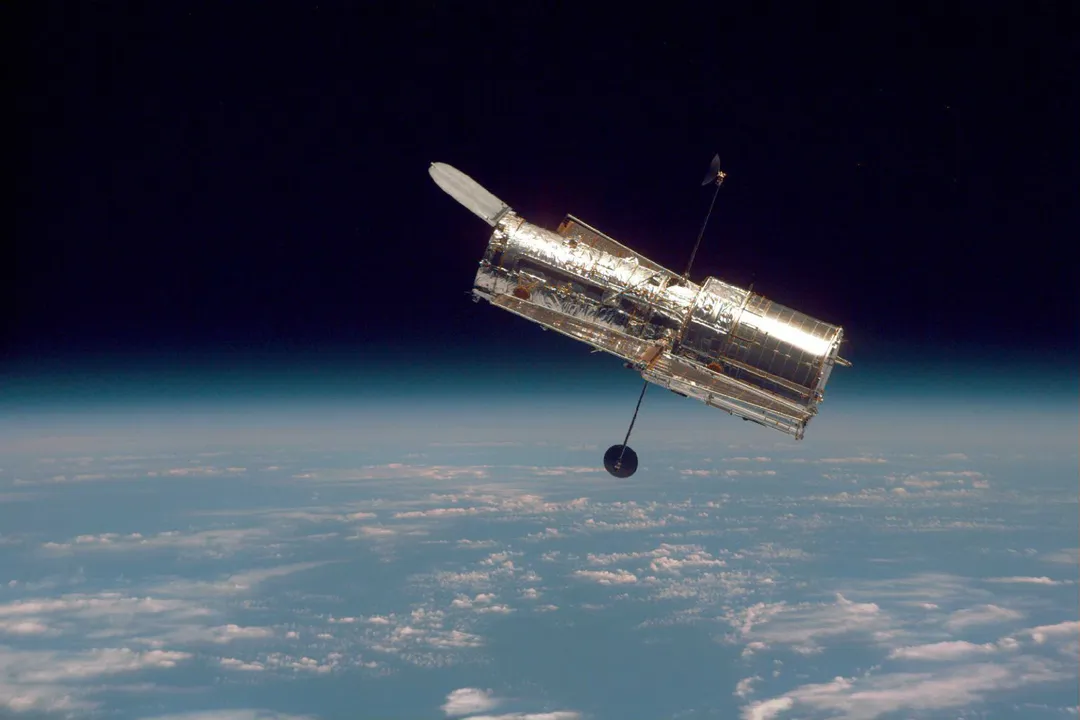
The moment the telescope was turned skyward by individuals like Galileo Galilei in the early 17th century, the established order of the universe, which had stood firm for over a thousand years, began to crack. While the initial invention likely occurred around 1608 in the Netherlands, the immediate societal earthquake came not from the existence of the device itself, but from its systematic application to the heavens. [9] Suddenly, humanity possessed a tool that could confirm or deny ancient philosophical doctrines based on direct, empirical evidence, moving knowledge away from reliance on classical texts and intuition alone. [5]
# Conceptual Shift
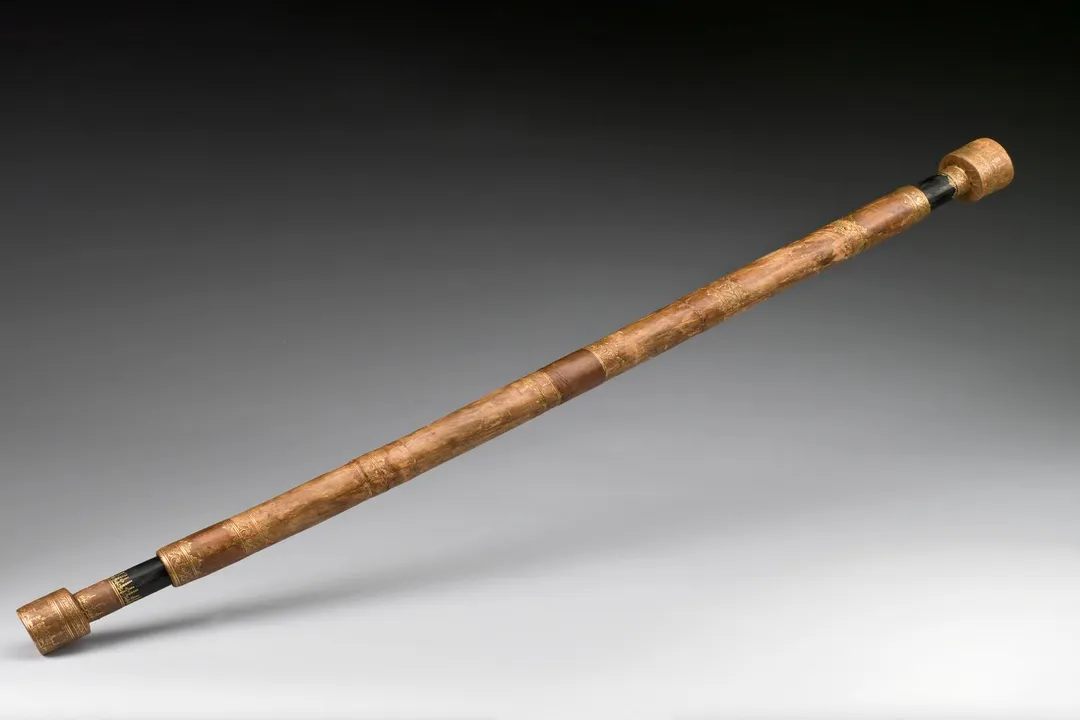
The immediate reaction among scholars and the public was one of profound conceptual adjustment. For centuries, the prevailing worldview, heavily influenced by Aristotle and Ptolemy, held that the heavens were perfect, unchanging, and fundamentally different from the flawed, corruptible Earth. [4][6] The terrestrial realm was associated with change, decay, and movement in straight lines, while the celestial realm consisted of perfect, crystalline spheres moving in flawless circles. [5] The telescope offered a direct, unsettling contradiction to this dualistic cosmos. [4]
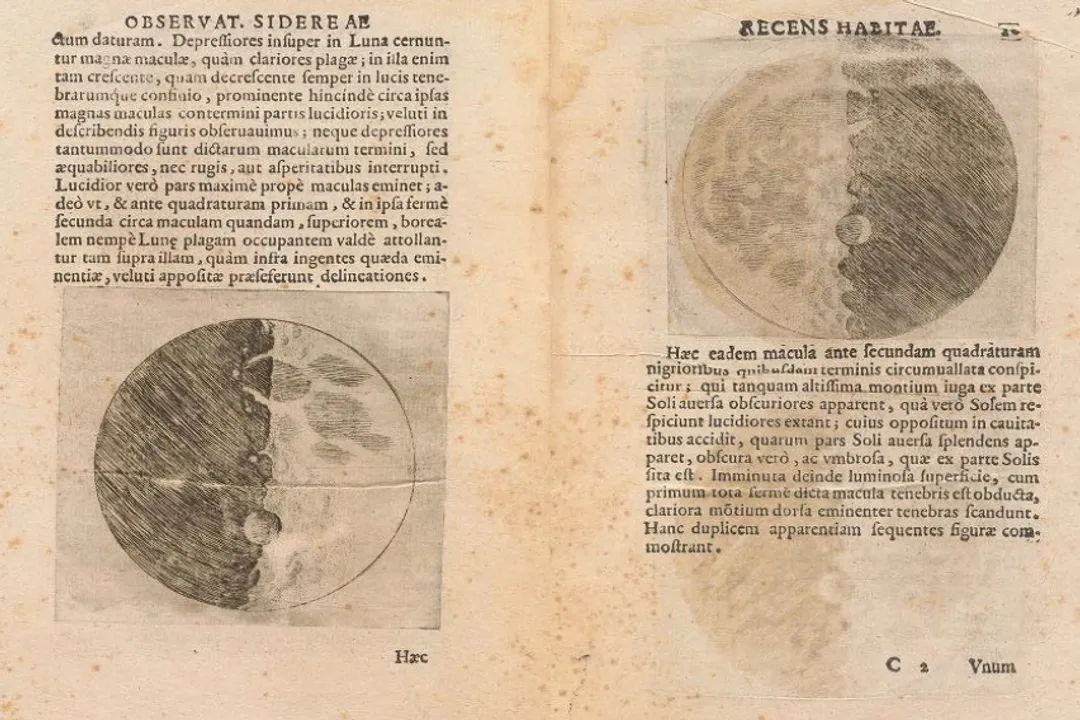
Galileo, upon improving the device—initially magnifying objects only about three to thirty times—did not invent a new theory overnight; he simply gathered undeniable visual proof that demolished the existing one. [1][9] When he peered at the Moon, it was not the smooth, ethereal orb described by ancient philosophers; it was cratered, mountainous, and messy, looking remarkably like the Earth. [1] This single observation immediately blurred the defining line between the "perfect" heavens and the "imperfect" Earth. [6]
# Celestial Discoveries
The specific sights revealed by the lens were the primary agents of social and intellectual disruption. One of the most consequential immediate findings involved Jupiter. [1] Galileo observed four small "stars" orbiting the planet, which he named the Medicean stars, though they are now known as the Galilean moons. [1] This was explosive because it demonstrated that not everything revolved around the Earth. [7] If Jupiter had its own satellites orbiting it, then the Earth could not be the sole center of all celestial motion, a core tenet of the geocentric model. [4]
Similarly jarring was the observation of the planet Venus. [1] Galileo saw Venus go through a full cycle of phases, just like the Moon. [7] Under the Ptolemaic system, Venus would always appear as a crescent because it orbited between the Earth and the Sun, meaning we could never see its full face. [1] Seeing the full Venus could only happen if Venus orbited the Sun, confirming a key prediction of the heliocentric model proposed earlier by Copernicus. [7] These observations, made public in his work Sidereus Nuncius (Starry Messenger), provided the tangible, observable data needed to elevate Copernican theory from a mathematical hypothesis to a viable physical description of reality. [6]

# Authority Disrupted
The impact of these findings immediately spilled out of the astronomical community and into the established structures of power. When empirical data contradicts established dogma—especially dogma that underpins religious and political legitimacy—the consequence is immediate conflict. [5] The Church and traditional scholastic authorities had invested centuries in upholding the Aristotelian cosmos, which supported the special, central status of humanity and, by extension, the theological structure built upon it. [5][6]
The telescope, therefore, became an instrument not just of science, but of intellectual dissent. Its immediate effect was to inject demonstrable, repeatable error into official doctrine, creating a situation where adherence to scripture or tradition required ignoring what the eyes, aided by the new instrument, could plainly see. [7] This confrontation marked a key moment in the Scientific Revolution, showing that truth could be sought through systematic observation rather than solely through inherited authority. [5] The shift wasn't just about where the Earth was located; it was about who had the authority to define reality. [4]
# Technological Spreading
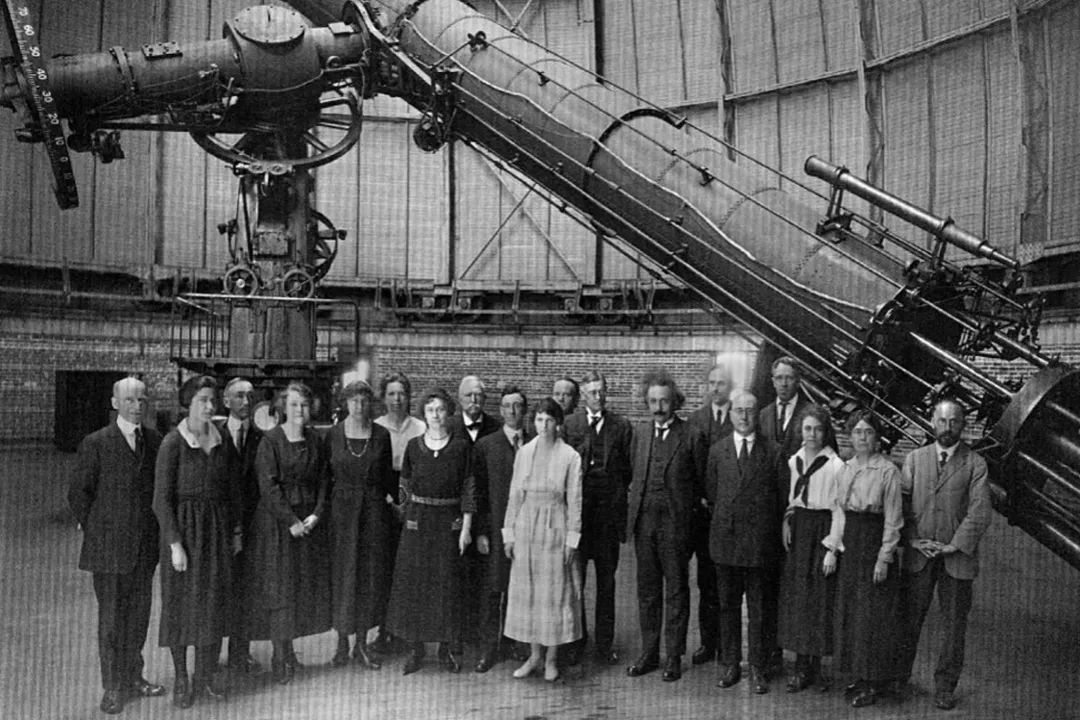
What is often overlooked in the grand narrative of cosmological change is the speed with which the technology itself diffused, which amplified the intellectual shockwave. While Galileo was making his startling claims in Italy, instrument makers and astronomers across Europe—from the Netherlands to England—were scrambling to replicate and improve the device. [9] The immediate societal impact was fueled by this rapid confirmation loop. It wasn't a single genius working in isolation; it was a technology that, once revealed, could be taken up by many practitioners, lending credibility to the results through consensus rather than decree. [9]
This rapid, transnational adoption is a hallmark of the telescope’s early influence. While Galileo published his findings, other observers quickly turned their own, perhaps cruder, lenses toward the sky and saw the same moons, the same mountains on the Moon. [9] This decentralized verification process made it exceptionally difficult for established powers to simply suppress the findings by targeting one individual or one manuscript; the proof was now accessible to anyone who could fashion or purchase the simple lens-and-tube assembly. [1]
Consider the difference in information spread between Galileo’s time and the centuries prior. Before this technology, an astronomical error might persist for a millennium until new mathematical models slowly superseded old ones. With the telescope, the argument shifted instantly from abstract geometry to visual fact, accelerating the pace of scientific acceptance in a way few preceding inventions could claim. This immediate validation system meant that the revolution wasn't gradual; it was a sudden, visual confrontation with the new reality. [5]
# New Applications Emerge
Although the philosophical overhaul dominated the immediate press, the utility of the telescope was not lost on those focused on more terrestrial matters. While the sources often center on astronomy, it is clear that any device offering enhanced vision immediately suggested applications for navigation and military observation. [8] Imagine a commander on a high vantage point suddenly gaining the ability to spot an approaching fleet miles earlier than previously possible. This practical, tactical advantage meant that the technology was immediately attractive to secular, political, and military interests, providing it a base of support outside the academic or religious spheres that were debating its philosophical implications. [8]
This divergence in use—heavenly contemplation versus earthly advantage—created an interesting social dynamic. While theologians debated the moral implications of a non-central Earth, military engineers were likely focused on how many extra miles they could see down the coast, securing funding and interest that kept the technology alive and improving outside of purely academic sponsorship. The very imperfection of the early lenses, which produced inverted images, was often tolerated for terrestrial viewing because the orientation of the image did not hinder simple detection or counting of objects. [7]
# The New Role of Observation
The most enduring, immediate impact was the institutionalization of observational evidence as a primary source of verifiable knowledge, even over revered ancient texts. [5] The telescope functioned as a kind of epistemological agent of change. It didn't just show what the sky looked like; it showed how knowledge should be acquired in the future. If a simple arrangement of glass and metal could overturn the consensus held by figures like Aristotle—a consensus supported by logical deduction—then logical deduction alone was insufficient for understanding the physical world. [4]
This forced a re-evaluation of methodology across all fields. The lesson learned immediately was that the universe was stranger and perhaps more mathematically elegant than human intuition or ancient wisdom suggested. [6] It signaled that true comprehension required creating tools that extended human sensory capabilities, a concept that would later drive advancements in microscopy, timekeeping, and measurement. The telescope marked the moment when instrumentation began to take precedence over pure reason in describing the physical cosmos, setting a standard for scientific inquiry that persists today. [4]
Related Questions
#Citations
Galileo and the Telescope | Modeling the Cosmos | Digital Collections
Q and A of the Day: How Have Telescopes Changed Things?
[PDF] - How Telescopes Changed our Understanding of our Universe
Telescope | Smith | Encyclopedia of the History of Science
How the Telescope Revolutionized Our World and Ignited…
The Telescope & the Scientific Revolution
The Telescope – Science, Technology, & Society: A Student-Led ...
How the Telescope Changed Our Minds - WIRED
The First Telescopes (Cosmology - American Institute of Physics