What impact did Edwin Hubble have on society at that time?
The world into which Edwin Hubble made his greatest discoveries in the 1920s was cosmically constrained. For most people, the entirety of creation consisted of the Milky Way galaxy, perhaps a few hundred thousand light-years across, a vast but ultimately finite island of stars. [9] This conception, which had dominated astronomical thought for centuries, was shattered by observations made using the powerful 100-inch Hooker Telescope on Mount Wilson. [6] Hubble’s impact was not merely adding data points; it was fundamentally rewriting humanity’s address in the universe. [4]
# Cosmic Island Shattered
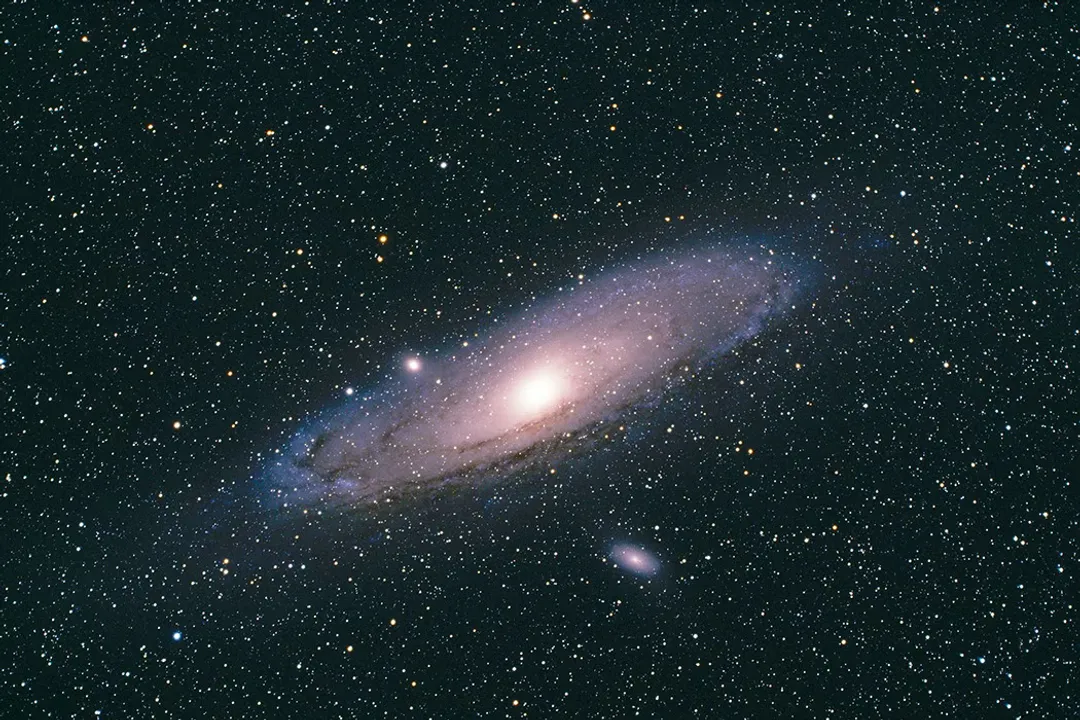
Hubble’s initial societal impact derived from resolving the so-called "Great Debate" concerning the nature of spiral nebulae. [9] Before his definitive work, astronomers argued whether these fuzzy patches of light were small, nearby stellar nurseries within our own Milky Way or, as some suspected, entirely separate "island universes" existing at immense distances. [9] Hubble meticulously measured the distances to these nebulae, notably the Andromeda Nebula, by identifying Cepheid variable stars within them. [3][6] Because the period of these stars' light variation is directly related to their true brightness, measuring their apparent brightness allowed for a precise distance calculation. [6]
When his measurements placed Andromeda far outside the accepted boundaries of the Milky Way—in the realm of millions of light-years—the immediate implication was staggering: our galaxy was one of many. [4][5] This revelation, made public in the mid-1920s, instantly multiplied the scale of the known cosmos by an incomprehensible factor. [9] The philosophical weight of this shift cannot be overstated for the people of that era. It stripped Earth and the Milky Way of their presumed centrality, moving the conversation from local stellar dynamics to intergalactic structure. [5]
# The Expanding Sphere
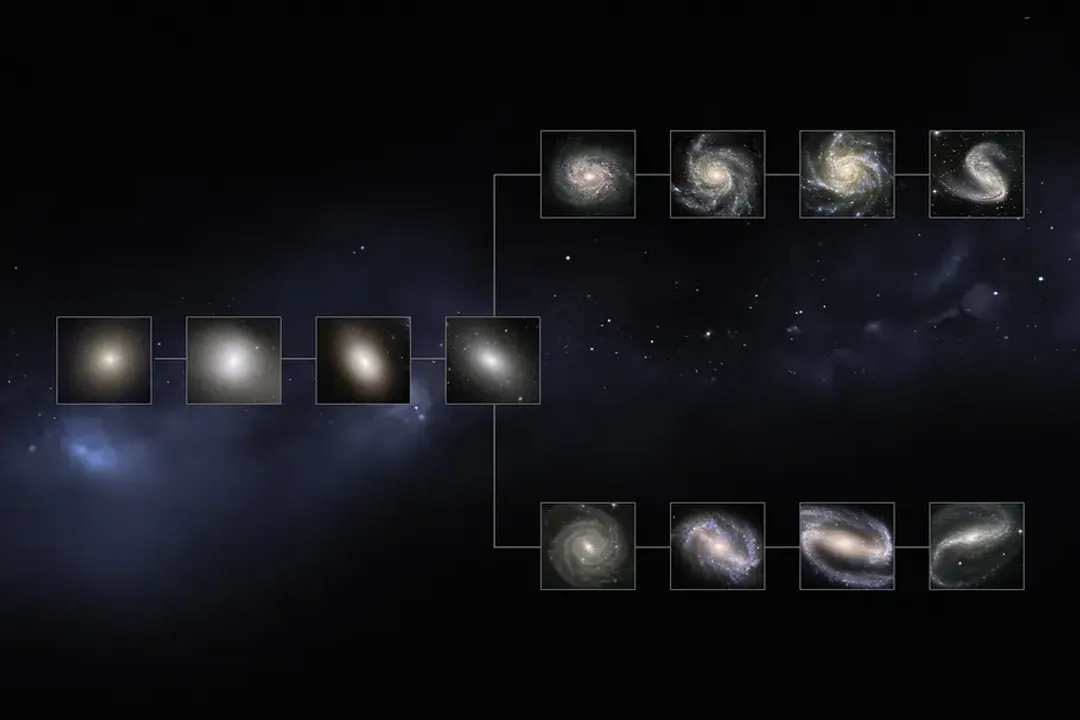
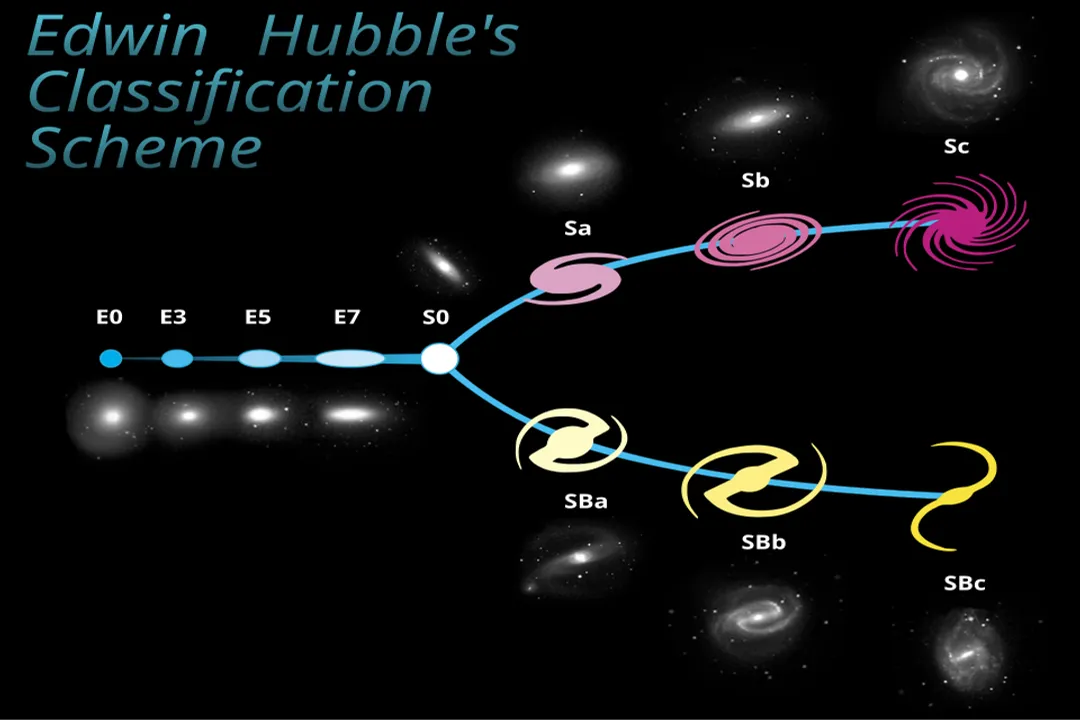
If proving the existence of other galaxies was the first seismic shock, the second—the discovery of universal expansion—redefined the very nature of space and time. [1][7] Hubble, collaborating with Milton Humason and utilizing the established redshift measurements from Vesto Slipher, began plotting the velocity of these newly confirmed galaxies against their distance. [7] This systematic collection of data led to a startling conclusion in 1929: almost every galaxy was moving away from ours, and the farther away a galaxy was, the faster it receded. [2][7] This linear relationship became known as Hubble’s Law. [7]
The societal implication of expansion went deeper than mere scale; it introduced dynamism to the cosmos. [4] For the public accustomed to a Newtonian universe that was largely static and eternal, the idea that space itself was stretching was revolutionary. While Hubble himself was cautious about interpreting the meaning, his findings laid the empirical foundation for what would later become the Big Bang theory. [2][4] This meant the universe had a history, a beginning, which challenged established religious and philosophical doctrines regarding the nature of creation. [9] It shifted cosmological inquiry from describing the contents of the universe to describing its evolution. [1]
# The Context of Observation
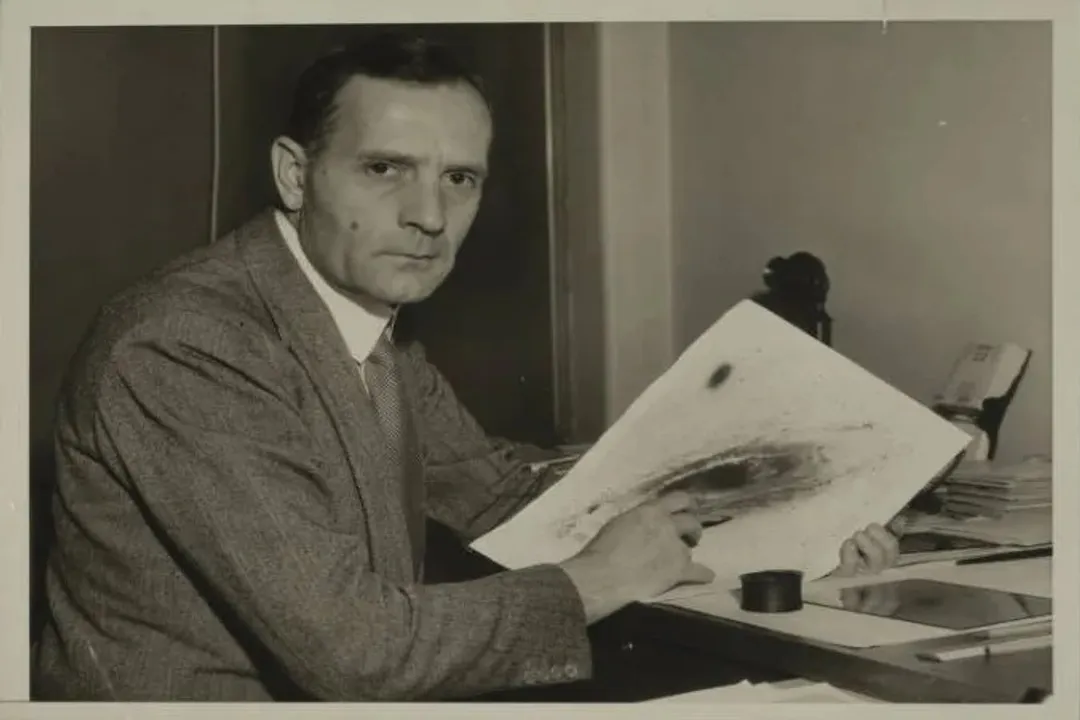
To appreciate the impact, one must consider the context of Edwin Hubble himself and the institutions that supported him. Hubble was not just an observer; he was a figure shaped by the early 20th century’s confluence of academic rigor and military service. [2] Before his astronomical career took hold, he excelled as a Rhodes Scholar, studying law at Oxford, and later served as a Major in the U.S. Army during World War I, earning a distinguished service cross. [2][10] This background suggests a man accustomed to structure, clarity, and the empirical verification of facts.
When he returned to science, he applied this disciplined approach to the most abstract questions imaginable. It is fascinating to consider that the same man who commanded soldiers and understood military logistics was later proving that the very fabric of space was accelerating away from us. [10] This juxtaposition highlights how the era’s intellectual elite were often polymaths, comfortable bridging vastly different domains of human endeavor. [2] The scientific breakthroughs required a clear, almost judicial mind capable of weighing ambiguous data—a mind perhaps honed by legal and military training—to declare the universe far larger and more active than anyone had dared to believe. [2]
# Scientific Authority and Methodology
Hubble’s influence on how science was conducted was also significant at the time. His findings demonstrated the absolute necessity of large, dedicated observatories and precision measurement in modern physics. [3] The 100-inch Hooker Telescope was, for a time, the most powerful instrument of its kind, and Hubble’s success proved that funding and building increasingly larger apparatuses was the only path forward for answering fundamental questions. [6] His work established a high bar for empirical evidence in cosmology, moving the field away from armchair theorizing toward observational proof. [1][3]
He wasn't working in a vacuum. His reliance on the Cepheid period-luminosity relation, established by Henrietta Swan Leavitt, shows that his authority grew from standing on the shoulders of meticulous data collectors who often worked outside the limelight. [6] The impact here was methodological: the modern cosmologist needed access to elite technology and the ability to integrate disparate data streams—like redshift data from California and stellar photometry from various sources—to construct a coherent picture. [3]

# Public Reception and Cultural Aftermath
While the scientific community absorbed the implications of expanding galaxies rapidly, the broader society likely processed this information slowly. [9] The popularization of these ideas required journalists and science communicators to translate concepts like "light-years" and "redshift" into understandable terms. This marked an important moment in the public understanding of science, where abstract, non-intuitive concepts became mainstream talking points in the early decades of the 20th century. [9]
The shift in perspective was profound. If the universe contained billions of galaxies, each containing billions of stars, then humanity’s significance was drastically reduced from the center of creation to a minuscule speck within one unremarkable galaxy. [4] This intellectual demotion resonated through culture, art, and philosophy throughout the 1930s and beyond. It forced a confrontation with the sheer scale of reality that was humbling, perhaps even frightening, contrasting sharply with the more comforting, contained universe known before. [9]
For example, consider the context of the Great Depression starting shortly after his major announcements. While people struggled with economic collapse here on Earth, Hubble was revealing a new, almost infinite stage upon which human affairs were merely a momentary flicker. [9] This contrast between terrestrial anxiety and cosmic indifference likely amplified the philosophical weight of his discoveries for the average reader looking for context outside their immediate struggles.
# The Scientist's Enduring Mark
Hubble’s later career involved shifting focus, particularly during World War II, when he returned to military service, this time aiding in aerial reconnaissance mapping. [2][10] This continued dedication to serving the immediate needs of his time, even after achieving such monumental scientific fame, cemented his image as a figure of duty and factual rigor. [10]
The lasting impact, however, is undeniably tied to the naming of the Hubble Space Telescope generations later. [1] That telescope, designed to look even deeper into the expanding universe—to measure the Hubble Constant () with even greater precision—is the ultimate tribute to his original paradigm-shattering work. [1][7] By proving the universe was dynamic and vastly large, Edwin Hubble ensured that cosmology would remain one of humanity's most fundamental and exciting scientific pursuits, forever altering the human relationship with the night sky. [4][5]
Related Questions
#Citations
Edwin Hubble
Edwin Hubble
Edwin Hubble Expands our View of the Universe
Case Files: Edwin Hubble
Edwin Powell Hubble - The man who discovered the cosmos
The universe: Historical discoveries from Edwin Hubble ...
Edwin Powell Hubble | Research Starters
Who is the Man That Discovered the Universe?
100 Years after the “Great Debate”: How Edwin Hubble ...
Edwin Hubble | Biography, Discoveries, Education, & Facts