Who is Edwin Hubble and why is he important?
Edwin Hubble stands as one of the towering figures of 20th-century astronomy, a scientist whose observational work fundamentally redefined humanity’s place in the cosmos. Before his critical findings, the universe was largely conceived as being confined to our own Milky Way galaxy, a vast but ultimately finite neighborhood. Hubble’s meticulous measurements shattered this limited view, revealing an exponentially larger reality filled with countless other galaxies, and further demonstrating that this grand collection was not static but actively expanding. [1][4][7] Born in Missouri in 1889, his journey to becoming the man who mapped the outer limits of creation involved unexpected detours and the dedicated use of the world's most powerful instruments of the day. [1][3]
# Beginnings
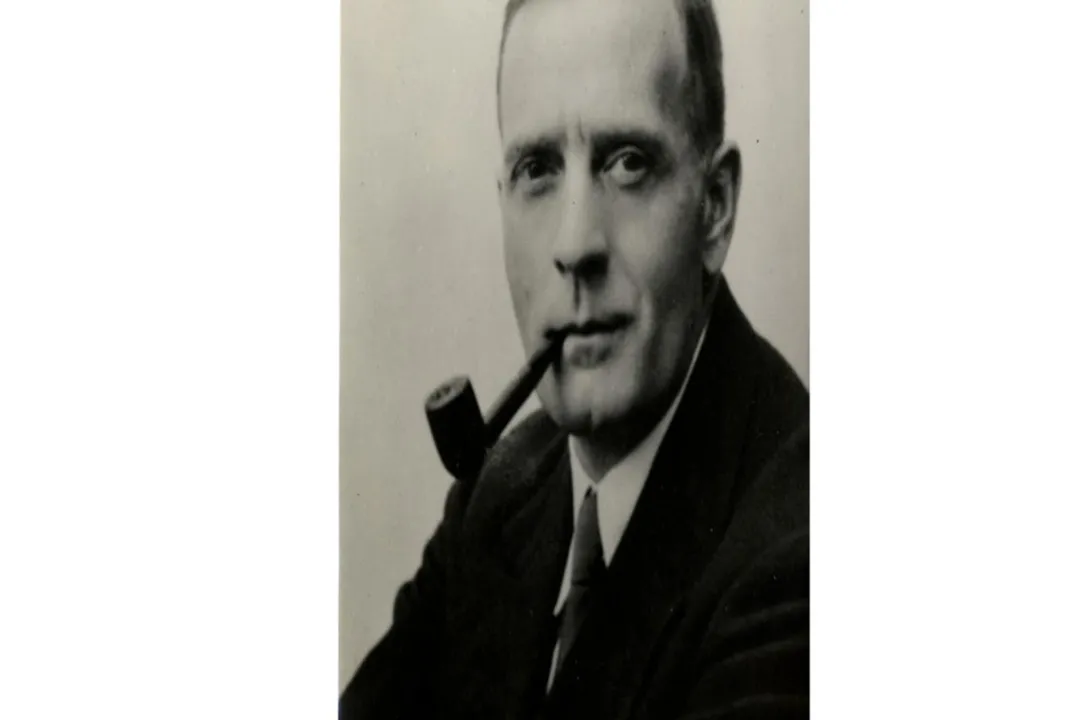
Hubble’s early life showed promise across multiple disciplines. He excelled in high school, particularly in athletics, even setting a state high jump record in Kentucky. [1][7] This blend of physical capability and sharp intellect made him an attractive candidate for higher education. [7] He attended the University of Chicago on an athletic scholarship, earning his undergraduate degree in mathematics and astronomy in 1910. [1][3] Following this, he was awarded a Rhodes Scholarship, sending him to Oxford University in England where he studied law. [1][2][3][7] While he completed his law degree, the pull of the physical sciences remained strong, suggesting a deep, underlying commitment to inquiry that law could not fully satisfy. [3]
# Path Shift
The interlude in England and subsequent return to the United States marked the beginning of his true scientific career. After Oxford, Hubble briefly practiced law in Kentucky, but the academic world called him back. [3] He accepted a teaching position at the University of Virginia while concurrently pursuing his doctorate in astronomy at the Yerkes Observatory, affiliated with the University of Chicago. [1][7] He completed his Ph.D. in 1917, and his thesis already showed his talent for observational astronomy. [1] His academic pursuits were then interrupted by the Great War; Hubble served with the U.S. Army, eventually reaching the rank of Major and serving in an intelligence capacity. [3][7] This mandatory military service delayed his full entry into professional astronomy by several years, though he did manage to conduct some important astronomical work while in uniform. [3]
# Great Scope
Following the war, Hubble was invited by George Ellery Hale, the pioneering astronomer, to join the staff at the Mount Wilson Observatory in California. [1][3] This appointment was transformative, placing him in direct proximity to the most advanced astronomical instrument available: the massive 100-inch Hooker telescope. [1][5] For an astronomer in the 1920s, working at Mount Wilson was akin to having the keys to the universe’s biggest secret vault. The sheer scale of the 100-inch mirror meant that capturing the faint light from distant nebulae—objects that appeared as mere smudges through lesser instruments—was finally achievable. [5] It required intense dedication and collaboration, often working through cold, clear nights alongside skilled observers like Milton Humason, who helped secure the necessary, long-exposure photographic plates. [1][5] It is important to recognize that his breakthroughs were built on painstaking, physically demanding observation, not just theoretical leaps. [5]
# Island Universes
The crucial problem Hubble tackled was the nature of the "spiral nebulae," fuzzy patches of light seen throughout the night sky. Astronomers were deeply divided: were these nebulae merely clouds of gas and dust within our own Milky Way, or were they independent star systems, or "island universes," lying far outside our galaxy?[4][5]
Hubble’s genius lay in finding the method to measure their distance. [5] He focused on identifying Cepheid variable stars within these nebulae. [1][4] These special stars brighten and dim in a predictable cycle, and Henrietta Swan Leavitt had established a crucial relationship between a Cepheid’s period of pulsation and its true intrinsic brightness. [4] By comparing how bright a Cepheid appeared from Earth (its apparent magnitude) with its known true brightness, Hubble could calculate its distance with unprecedented accuracy. [4][5]
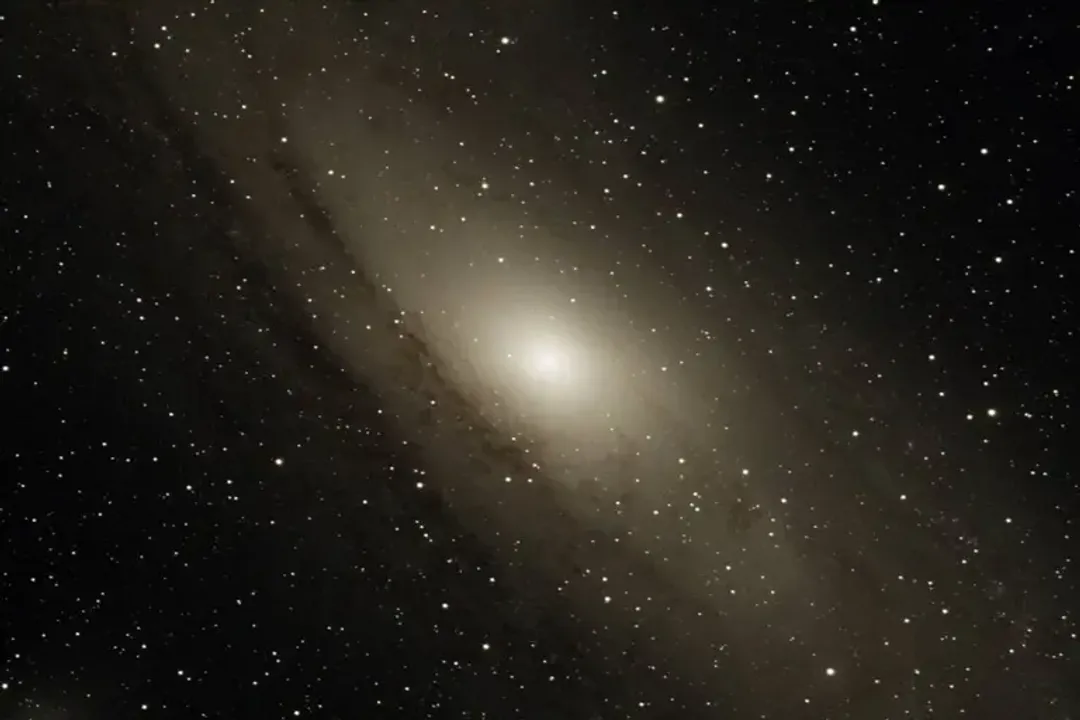
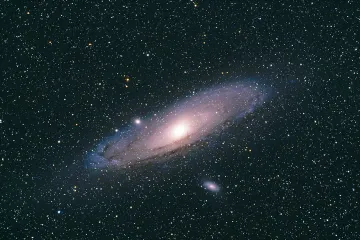
In 1923 and 1924, Hubble identified Cepheids in the Andromeda Nebula (M31). [1][4][5] His calculations definitively proved that Andromeda was millions of light-years away, placing it far outside the boundaries of the Milky Way. [1][4] This single finding instantly multiplied the known size of the universe by orders of magnitude. [4][7] The spiral nebulae were confirmed to be galaxies in their own right. [5]
# Cosmic Motion
While establishing the scale of the universe was monumental, Hubble’s next contribution addressed its behavior. Working with Vesto Slipher’s earlier redshift data—which indicated that many nebulae were moving away from us—Hubble sought a pattern. [5][7] He and his assistant, Milton Humason, measured the recession velocities for many galaxies. [5]
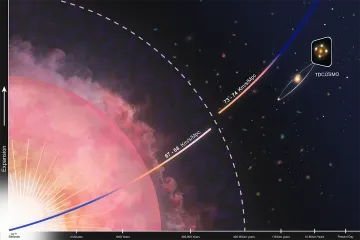
By plotting the measured distance of these galaxies against their measured velocity, Hubble discovered a direct proportionality in 1929. [1][2][5] This relationship, now universally known as Hubble’s Law, states that a galaxy's velocity () is proportional to its distance () from the observer: . [2][5] The constant of proportionality, , is the Hubble Constant. [2][5][7]
This was radical. It meant the universe was not static; it was expanding. [2][5][7] It is a common misconception to think that the galaxies are flying through space away from a central point. Instead, the expansion of the universe is the stretching of spacetime itself between the galaxies, analogous to dots painted on the surface of an inflating balloon. [7] While Hubble himself was often cautious about the theoretical implications, his empirical data provided the first strong observational evidence supporting the idea that the universe originated from an extremely dense, hot state—a concept later dubbed the Big Bang. [7] If we trace this expansion backward using the calculated rate, it implies a definite starting point for cosmic history, a connection that scientists continue to refine today by focusing intensely on the precise measurement of . [2]
# Wartime Interlude
Hubble’s observational work, which had begun to reveal the dynamic nature of the cosmos, faced another, very different interruption starting in the 1940s. [3] During World War II, he again put his scientific career on hold to serve his country, this time working in ballistics research for the military. [3] Though this period shifted his focus away from deep-sky photography and spectroscopy, his skills in analysis were clearly valuable to the defense effort. [3] He returned to astronomy after the war, continuing his investigations into galaxy structure and distribution, though the later years of his life were less defined by groundbreaking discoveries than by the establishment of his lasting authority in the field. [7]
# Lasting Scale
Edwin Hubble passed away suddenly in 1953, just as the field he helped birth was entering an exciting new phase of radio astronomy and quantum theory integration. [3] His legacy, however, is immortalized in two fundamental ways. First, his laws—the scale of the universe and the fact of its expansion—remain the bedrock of modern cosmology. [1][7] Every model describing the universe’s age, fate, and composition must start with Hubble’s observations. [5]
Second, his name was given to the most famous astronomical instrument ever constructed: the Hubble Space Telescope (HST). [6] Launched in 1990, the HST operates above the distorting effects of Earth’s atmosphere, providing images of clarity that Hubble himself could only have dreamed of, allowing astronomers to refine his original distance measurements with incredible precision. [6] The telescope has effectively continued his work, peering farther into the past and cataloging countless new galaxies, thereby confirming and extending the revolutionary vision he first demonstrated using the 100-inch glass eye on Mount Wilson. [6][7] His career perfectly illustrates how a single, persistent investigator, paired with the right technology, can redefine reality for all subsequent generations. [1]
| Discovery Stage | Key Observation / Data Point | Primary Tool / Technique | Cosmological Implication |
|---|---|---|---|
| Distance Measurement | Cepheid Variables in M31 | Period-Luminosity Relation | Universe contains many galaxies outside the Milky Way [1][4] |
| Velocity Measurement | Redshifts of Nebulae | Spectroscopy (Humason’s data) | Galaxies are receding from us [5][7] |
| Synthesis | Distance vs. Velocity Plot | Hubble's Law () | The universe is expanding [2][5] |
Hubble’s accomplishments transitioned astronomy from a descriptive science focused on our local cosmic island to a dynamical science focused on the evolution of the entire cosmos. [7] From his early days as a Rhodes Scholar to his final role as a defining voice in astrophysics, his work provided the observational anchor for our understanding of the vastness and dynamism that surrounds us. [1][2]
Related Questions
#Citations
Edwin Hubble - Wikipedia
Edwin Hubble | Biography, Discoveries, Education, & Facts | Britannica
Edwin Powell Hubble - The man who discovered the cosmos
Carnegie Science celebrates Edwin Hubble's discovery of the ...
Case Files: Edwin Hubble | The Franklin Institute
Edwin Hubble: The man who discovered the Cosmos - ESA
Edwin P. Hubble - New Mexico Museum of Space History
Hubble
Who is the Man That Discovered the Universe?