Why is J.C. Bose important to science?
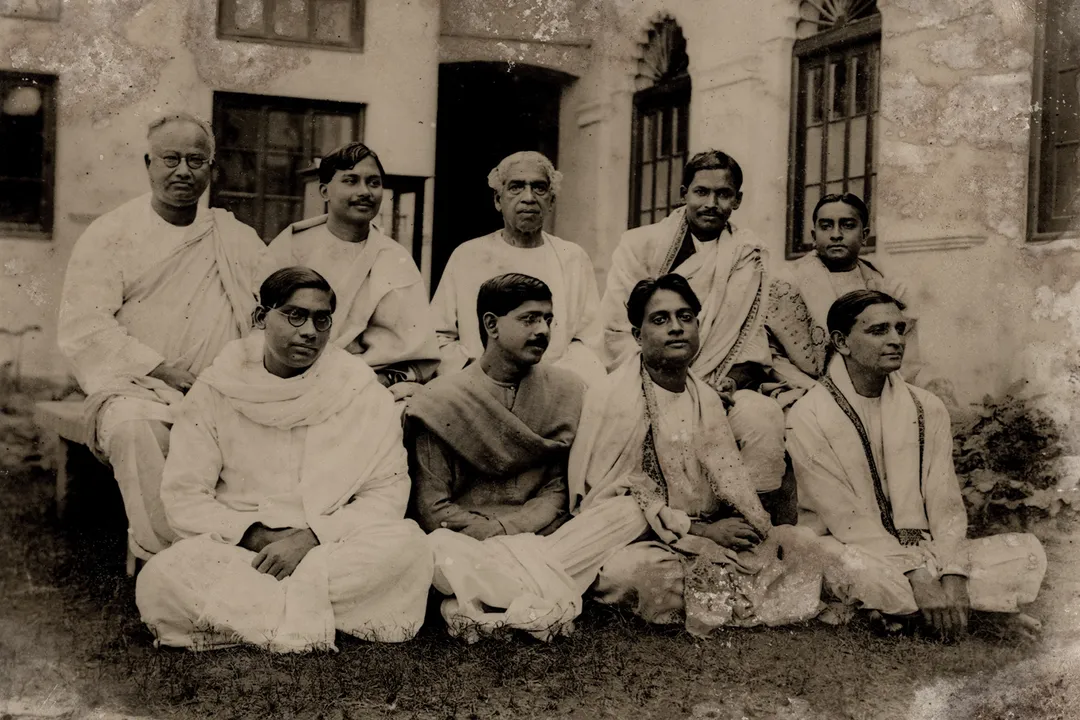
The scientific world rarely produces figures who redefine not one, but two distinct disciplines, yet Jagadish Chandra Bose achieved precisely that, leaving behind a body of work that fundamentally altered perceptions in both physics and botany during the late nineteenth and early twentieth centuries. [3] His importance stems from an unrelenting curiosity and an insistence on rigorous, quantitative measurement where others relied on mere observation, forcing a radical reconsideration of the supposed boundaries between the animate and the inanimate world. [4][6] To understand Bose is to understand a profound shift in how science approached communication technology and the inherent responsiveness of the natural world.
# Wireless Originator
Long before the modern concept of ubiquitous wireless data transfer took hold, Bose was laying the foundational groundwork for radio communication through his meticulous experiments with electric waves. [7] While Guglielmo Marconi often receives the primary credit for the practical realization of wireless telegraphy, Bose's independent work in Calcutta demonstrated an astonishing grasp of the underlying principles years earlier. [2] His early investigations centered on the detection of electromagnetic waves, where he improved upon existing technology by developing a highly sensitive device known as the coherer. [2]
Bose’s coherer was a significant advancement because it could register extremely faint radio signals, allowing him to conduct detailed studies on the reflection, refraction, polarization, and transmission of these invisible waves over relatively long distances. [2] In demonstrating these phenomena, Bose effectively proved the feasibility of sending signals through the air without wires, a concept that was revolutionary at the time. [7] He conducted public demonstrations, notably in London in 1895, showcasing a wireless signal operating a distant lamp, which was often described as sending signals over a distance of several hundred feet. [2]
The common narrative often positions Marconi as the sole inventor of practical wireless, yet Bose's fundamental contributions to wave mechanics and sensitive detection apparatus deserve equal recognition, especially when considering the breadth of his subsequent scientific endeavors. [7] It is fascinating to reflect on how the world might have developed had the institutional support for Bose’s physics research continued with the same vigor as his biological studies; the early adoption of wireless technology might have taken a distinctly different, perhaps more scientifically grounded, trajectory in the Indian subcontinent. [1][3] Bose was not merely replicating Hertz’s work; he was developing new tools and observing phenomena, like the behavior of waves through solid objects, that pushed the frontier of what was then called "invisible radiation". [2]
# Plant Sensitivity

The transition Bose made from the hard physics of electromagnetic waves to the subtle biology of plant life is perhaps the most compelling element of his scientific narrative, yet it is here that his importance truly solidifies. [4] He rejected the prevailing scientific orthodoxy that relegated plants to the status of complex, non-responsive machines, incapable of sensation or feeling. [5][6] Bose posited that life was a continuous spectrum of responsiveness, not a binary state.
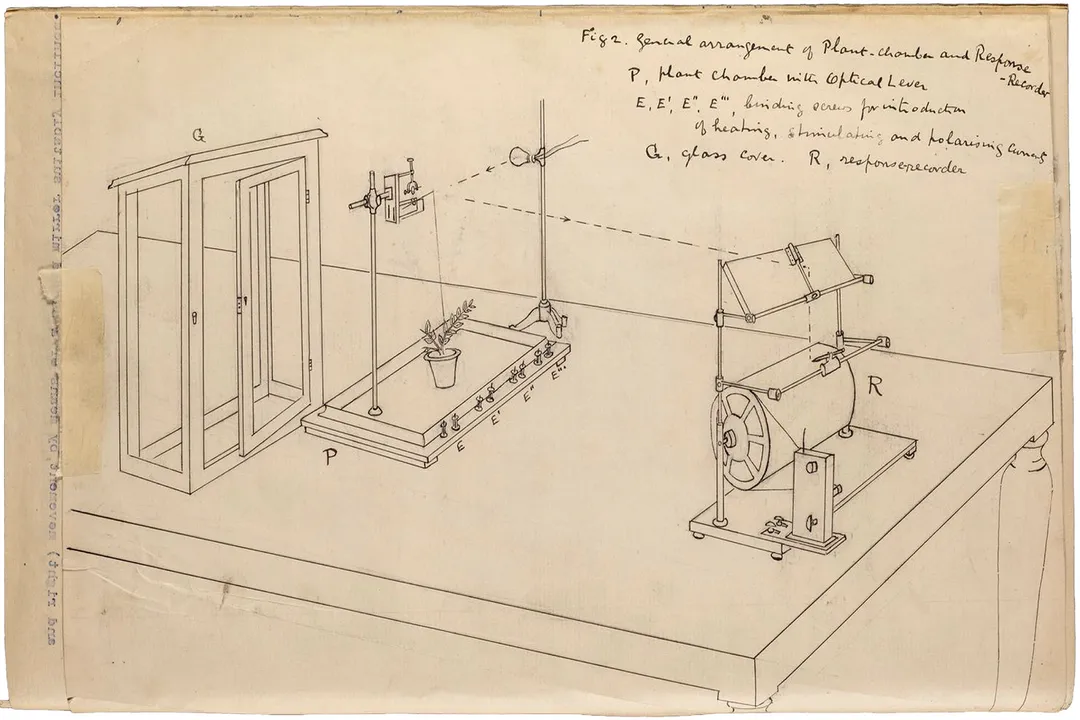
To substantiate this radical claim, he needed to measure minute physical reactions with unprecedented accuracy, much as he had done with radio waves. [6] His fundamental argument, explored vividly in his 1902 paper, Response of Living and Non-Living, was that plants exhibit measurable physical reactions—contraction, electrical potential changes, and stress responses—to various stimuli such as heat, chemical agents (like narcotics or poisons), mechanical shock, and fatigue, reactions strikingly similar to those observed in animal tissues. [6] This blurred the strict lines drawn between biological subjects and inanimate matter.
# Measuring Growth
The tool that made this quantitative biology possible was the crescograph, one of Bose’s most famous inventions. [1] This intricate apparatus, often involving a sophisticated system of levers, fine threads, and smoked glass plates, allowed researchers to magnify the incredibly slow process of plant growth by hundreds or even thousands of times. [1] By magnifying the movement, Bose could chart growth curves that revealed periodic patterns and sudden deflections corresponding to external factors. [1] This transformed botany from a descriptive science, focused on taxonomy and structure, into a precise, measurable field akin to physics.
A practical application of his findings, which is often overlooked, is the establishment of objective standards for plant health assessment. Imagine a modern agricultural system where, instead of guessing based on visual cues like leaf color, farmers could use a calibrated instrument based on Bose’s principles to obtain a quantitative "stress reading" from a crop in real-time, perhaps by measuring minute fluctuations in turgidity or electrical signaling under controlled stimulation. [1] This move from subjective observation to objective, quantifiable data is a cornerstone of modern scientific methodology that Bose championed decades before it became commonplace in plant sciences.

# Shared Responses
Bose’s conclusion was revolutionary: if both a metal rod subjected to stress and a plant subjected to a sudden change in temperature exhibit a measurable, proportional, and temporary electrical response, then the underlying physical mechanism for response must be shared across all forms of matter. [4][6] He meticulously documented that the effects of a narcotic on a section of plant tissue mirrored its effects on a frog’s nerve-muscle preparation. [6]
This concept of universal reactivity is arguably his single most important scientific contribution, as it challenged the metaphysical divide between 'life' and 'non-life' that underpinned much of 19th-century science. [5] He was suggesting a physics of life, where biological processes were not governed by some mysterious vital force but by inherent physical laws applicable to all matter. [6]
| Stimulus Type | Observed Plant Response (Magnified) | Comparative Animal Response | Implication |
|---|---|---|---|
| Mechanical Shock | Sudden electrical signal/Contraction | Nerve impulse/Muscle twitch | Shared irritability |
| Chemical Agents (Poison/Drug) | Cessation or alteration of response curve | Sedation/Paralysis | Shared physiological pathways |
| Fatigue/Overload | Decreased amplitude of response | Exhaustion | Finite energy capacity |
| [1][6] |
The rigor Bose brought to this area is evident in the careful controls he employed. He did not just state plants feel; he measured the electrical response of a plant under duress and compared it numerically to the response of an animal under the same duress, using instruments sensitive enough to record these tiny deflections accurately. [6] This methodology itself establishes a high standard for interdisciplinary scientific reporting.
# Legacy and Scope
The importance of J.C. Bose extends well past his specific inventions and experimental results; it resides in the philosophical reorientation he encouraged. [8][9] By demonstrating the physical continuity between the living and the non-living, he opened pathways for later thinkers to integrate spiritual or holistic perspectives with empirical science. [9] While his early radio work was perhaps too advanced for immediate industrial application in India at the time, his botanical findings had a more immediate, though initially resisted, impact on biological thought. [2][3]
His legacy is sometimes complicated by the very breadth of his achievements. Because he worked so effectively in two disparate fields—radio physics and plant electrophysiology—some credit has been diffused or perhaps mistakenly attributed elsewhere, as seen in the historical context of the wireless race. [7] However, his dedication to developing instruments capable of observing nature’s finer motions remains an enduring testament to his expertise. [1]
In the modern context, Bose’s work serves as an essential precursor to contemporary fields like bio-sensing, environmental monitoring, and even the study of plant neurobiology. The detailed, quantitative charting of a plant’s reaction to minute environmental stressors, which Bose pioneered with his crescograph, is now a critical component in understanding crop resilience in the face of climate change. [1] His insistence on empirical proof for subjective phenomena—that a plant exhibits a quantifiable ‘response’—provides an early model for ethical, evidence-based study in areas where observation can easily be colored by anthropomorphism. His life’s work, therefore, is not just a historical footnote but a continuing source of inspiration for scientists looking to bridge the perceived gaps between physics, chemistry, and biology. [8] His influence reminds us that the most profound scientific discoveries often occur at the previously unexamined intersections of established knowledge.
Related Questions
#Citations
The Thinking Plant's Man | Science History Institute
Jagadish Chandra Bose - Wikipedia
Pioneers in Science: Jagadish Chandra Bose
What actually did Jagdish Chandra Bose contribute towards ... - Quora
Chapter 8: India's Great Scientist, J. C. Bose - Ananda India
J.C. Bose: Why the great scientist's legacy remains astonishing a ...
Jagadish Chandra Bose: The Man Who Almost Invented the Radio
J. C. Bose: A Legacy Beyond Science - LinkedIn
[PDF] Jagadish Chandra Bose and Vedantic Science