What did Dmitry Ivanovsky and Martinus Beijerinck contribute to science?
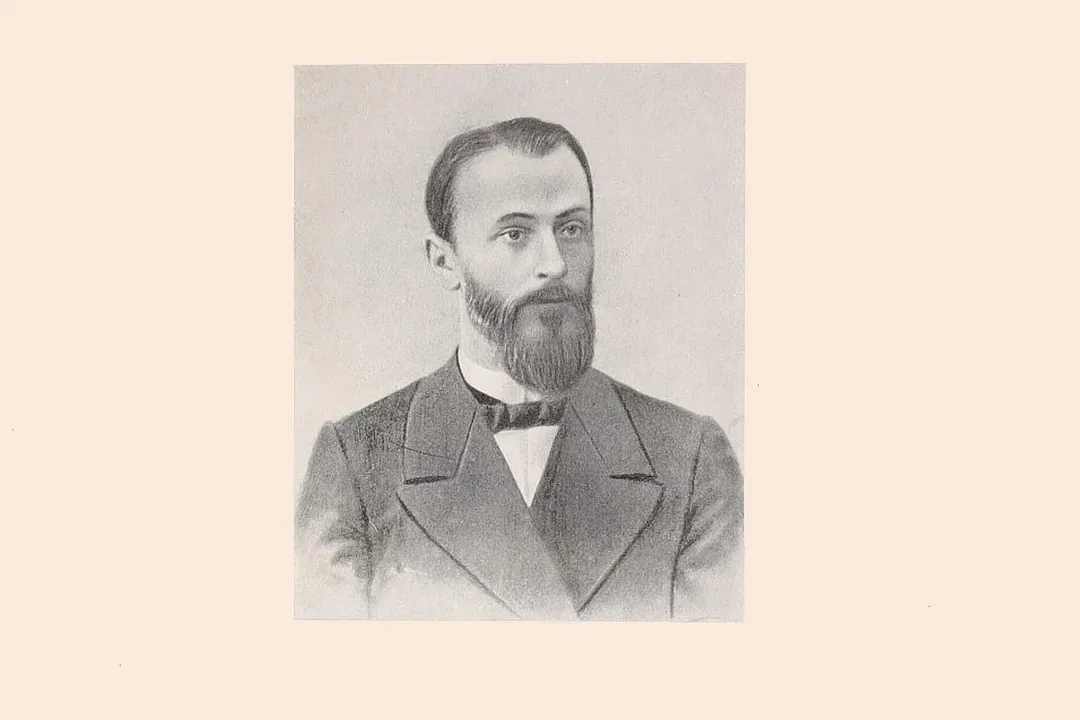
The late nineteenth century was a fascinating, often frustrating, period for microbiologists. They had successfully identified and categorized many of the agents causing disease—bacteria—which were small enough to be seen with improved light microscopes and, critically, could be stopped by fine porcelain filters designed to catch all known living organisms of that size. [1][4] The existence of something smaller, something that caused disease but slipped right through these established physical barriers, remained a major, unsettling puzzle. It was this puzzle, centered around a specific affliction in tobacco plants, that led two different scientists, Dmitry Ivanovsky and Martinus Beijerinck, to lay the groundwork for an entirely new branch of biology: virology. [4]
# Tobacco Mystery
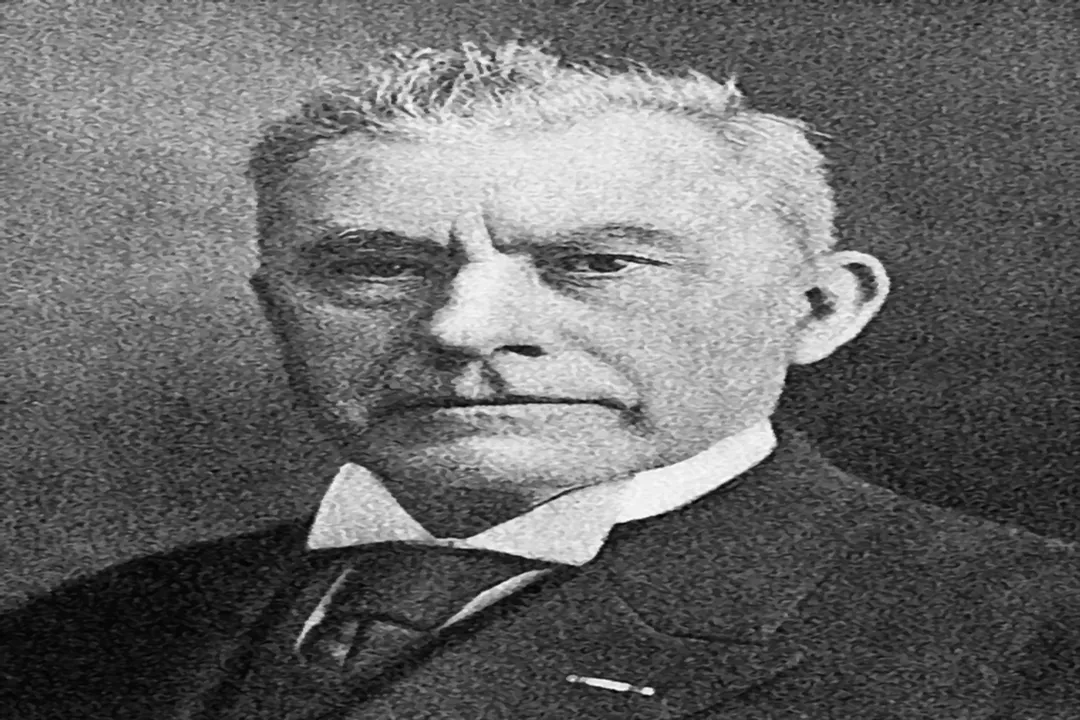
The story begins with Dmitry Ivanovsky, a Russian botanist, in the early 1890s. [1][4][8] He was investigating the tobacco mosaic disease (TMV), a condition that caused characteristic mottling or mosaic-like patterns on tobacco leaves, severely impacting crop health. [1][7][8] Ivanovsky suspected the cause was a bacterium, as that was the prevailing wisdom for infectious agents at the time. [1][7]
He devised an experiment that, in retrospect, contained the seeds of revolutionary discovery. He took infected tobacco leaf extract and forced it through a Chamberland filter—a highly porous candle-shaped filter made of unglazed porcelain. [1][7] In the scientific understanding of 1892, this filter was considered impermeable to all known bacteria. [4][7] If a disease was caused by a bacterium, this process should have successfully removed the agent, rendering the filtered liquid non-infectious. [7]
# Filtration Evidence
What Ivanovsky observed was entirely unexpected. The sap that had passed through the filter retained its ability to cause mosaic disease when applied to healthy tobacco plants. [1][4][7] He repeated the filtration, sometimes performing the procedure multiple times, and consistently found that the infectious agent remained suspended in the filtrate. [1][7]
Ivanovsky was a rigorous observer, but he was constrained by the scientific language and tools of his era. He initially concluded that the pathogen must either be a toxin produced by bacteria that remained active after filtration, or perhaps a form of bacterium so incredibly minute that it could pass through pores that were supposed to be too small. [1][7] Considering the era, where seeing anything smaller than a bacterium was impossible without electron microscopes, his finding was an intellectual dead end for many others—a result that defied the current laws of filtration. It required a mindset willing to accept that the agent itself was simply too small to be seen, rather than assuming the filter had failed. [7]
# Repeating Experiments
A few years later, around 1898, the Dutch microbiologist Martinus Beijerinck turned his attention to the same tobacco mosaic problem. [4][5][6] He replicated Ivanovsky’s crucial filtration experiments, confirming that the infectious material passed through the Chamberland filters just as Ivanovsky had reported. [4][5]
However, Beijerinck took the observations a critical step further conceptually. [4][5] Where Ivanovsky had paused, questioning the nature of the agent or the filter, Beijerinck made a bold leap. He conducted additional passage experiments, diluting the infectious fluid and showing that even highly diluted samples retained their infectivity. [4][5] This demonstrated that the agent was not merely a persistent chemical toxin; it was actively multiplying within the living cells of the tobacco plant. [4][6] For a chemical or toxin, dilution would eventually render it harmless, but this agent retained its power, suggesting self-replication. [4]
# Living Fluid
Beijerinck’s interpretation was fundamentally different from Ivanovsky’s more cautious initial assessment. [7] He argued that the agent was not a bacterium, nor was it an inanimate chemical substance, but something new entirely. [4][5] He proposed the concept of contagium vivum fluidum, which translates to a "contagious living fluid". [5] This description captured the dual nature of the infectious particle: it was capable of self-propagation (living) yet existed in a form that allowed it to pass through filters designed to stop cellular life (fluid). [4][5]
This insight marked the true conceptual birth of virology, recognizing that there existed a class of infectious agents that behaved neither like standard microbes nor like chemical poisons. [6] Beijerinck effectively established that the agent was capable of reproduction only within a living host cell, a characteristic that remains central to the definition of a virus today. [4] While Ivanovsky provided the first empirical proof that an entity smaller than a bacterium caused disease, Beijerinck provided the theoretical classification that distinguished it as a unique biological entity. [7]

# Naming Viruses
It was Beijerinck who coined the term "virus" to describe this novel type of pathogen. [1][4][5] Although the Latin word virus had existed for centuries, generally meaning a poison or venom, Beijerinck imbued it with a modern, specific biological meaning: an agent that could multiply only inside living cells. [1][5]
It is important to recognize the collaborative, yet distinct, roles here. Ivanovsky showed what passed the filter; Beijerinck defined what that thing passing the filter must be biologically. [7] Their findings, though published separately, together provided the initial, undeniable evidence that a microscopic, filterable, self-replicating agent existed. [4]
The challenge Beijerinck issued—that of an agent that was alive but seemed incapable of life outside a cell—would occupy science for decades. For instance, scientists eventually learned that the tobacco mosaic agent was, chemically speaking, a nucleoprotein—a complex molecule made of nucleic acid wrapped in protein—rather than a self-contained, cellular life form. [2] Even so, Beijerinck’s term "virus" stuck, perfectly describing its function as a biological entity long before its molecular structure was deciphered. [2]
# Expanding Knowledge
The work of Ivanovsky and Beijerinck was foundational, setting the stage for virology to mature from a descriptive science into a molecular one. The understanding that these entities were non-cellular and filterable was essential for all subsequent investigation. [4]
Consider the tools available. When Ivanovsky was working, the most powerful microscopes revealed only the shapes of bacteria, perhaps yeast cells. [7] The idea that something more infectious and smaller existed meant that the current limits of visual detection were insufficient to grasp this new reality. The development of the electron microscope decades later finally allowed scientists to see the actual particles that Beijerinck had defined solely by their effects on tobacco plants. [4]
A helpful way to visualize their respective breakthroughs involves separating the observation from the definition.
| Scientist | Key Contribution | Primary Evidence | Conceptual Leap |
|---|---|---|---|
| Ivanovsky | Documented the existence of filterable infectious agents | Filtration experiments showing agent passed porcelain filters [1][7] | Cautious conclusion: Ultra-small bacterium or toxin [7] |
| Beijerinck | Defined the nature of this agent | Serial passage/dilution experiments showing self-multiplication [4][5] | Defined as contagium vivum fluidum and named the virus [1][5] |
This distinction highlights an important aspect of scientific progress: sometimes, the hardest step is not the initial observation, but the conceptual reclassification required to make sense of that observation. [6] Ivanovsky provided the data that broke the existing model, and Beijerinck provided the theory that built the new one.
The study of viruses would later progress significantly when scientists like Wendell Stanley succeeded in crystallizing the tobacco mosaic virus in the 1930s, proving that these particles were indeed non-living, chemical entities that acted like living things only when infecting a host. [2] This later confirmation did not diminish the importance of the earlier work; rather, it demonstrated the extraordinary accuracy of Beijerinck’s functional definition, even without the benefit of modern biochemistry. The legacy of these two scientists is the clear division between the known world of bacteria and the newly discovered, infinitely smaller realm of the virus, a distinction that remains crucial across medicine and plant pathology today. [4][6]
Related Questions
#Citations
How Were Viruses Discovered? | Britannica
1946 Nobel Prize in Chemistry - The Rockefeller University
[Discovery of the first virus, the tobacco mosaic virus: 1892 or 1898?]
History of virology - Wikipedia
Martinus Beijerinck: A co-discoverer of viruses - Hektoen International
Beijerinck Discovers Viruses | Research Starters - EBSCO
130th anniversary of virology - Lvov
Dmitri Ivanovsky - Linda Hall Library
Virus Discovery - Advanced | CK-12 Foundation