What is the basic concept of earth science?

Earth science, fundamentally, is the scientific investigation dedicated to understanding our home planet, Earth, and the universe that surrounds it. It is an expansive field that integrates the study of the planet’s physical, chemical, and biological aspects, focusing heavily on the synergistic linkages between Earth’s major components: the biosphere (life), the hydrosphere (water, including the cryosphere or ice), the atmosphere (air), and the geosphere or lithosphere (the solid Earth). The basic concept revolves around scientists observing, describing, and classifying Earth's features to develop hypotheses explaining their presence and development, ultimately aiming to use this knowledge for humanity’s benefit.
# The Four Spheres
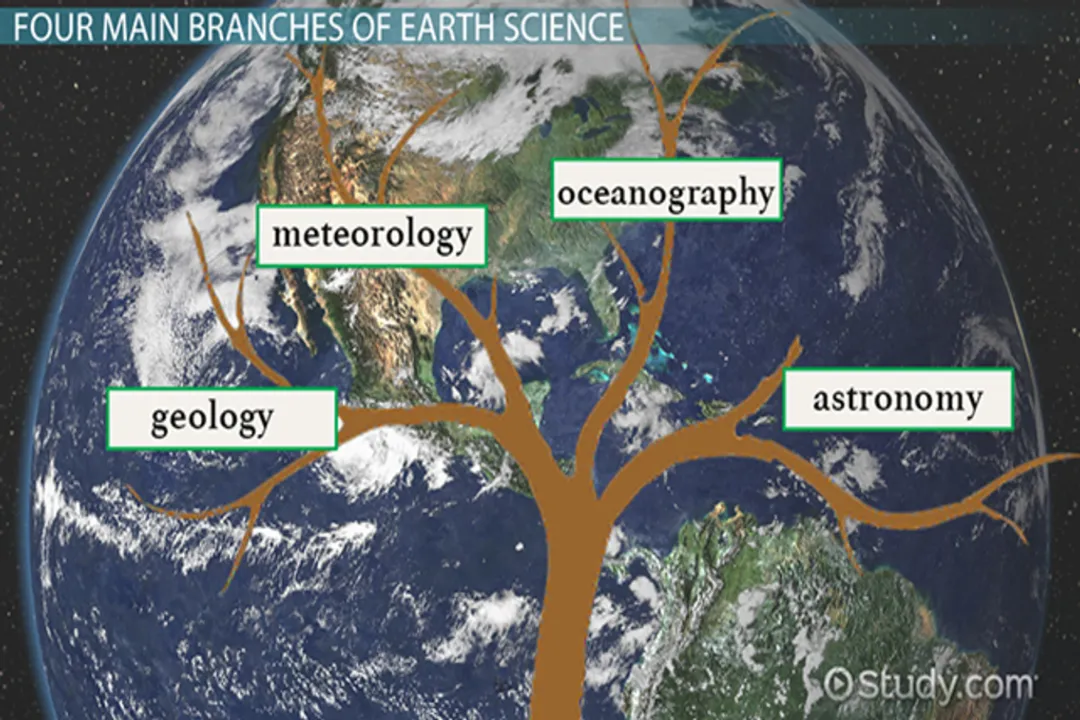
To grapple with this complexity, Earth science is often conceptually broken down into four main branches, each focusing on one of the primary spheres, though specialists constantly collaborate.
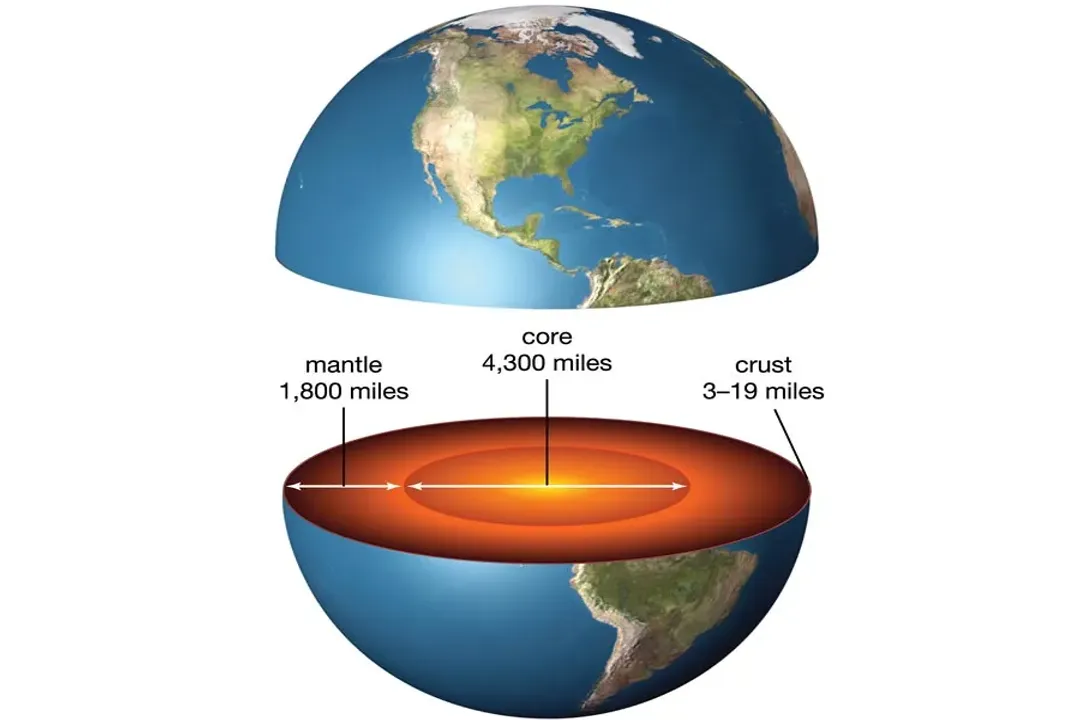
Geology is the pillar concerned with the solid Earth—its structure, composition, processes, and history. This includes everything from the tiniest mineral grains to the largest mountain ranges. Geologists investigate rock strata, the mechanics of earthquakes and volcanoes, the structure of Earth’s interior (core, mantle, and crust), and the study of fossils to piece together the planet's deep past. Subdisciplines like mineralogy study minerals, petrology studies rocks, and seismology investigates seismic waves to map the interior structure and predict seismic activity.
Oceanography focuses on the hydrosphere, specifically the oceans, which cover nearly three-fourths of the planet’s surface. Oceanographers study the physical properties, chemistry, and movements of seawater, as well as the characteristics of the ocean floor and the life it harbors. Physical oceanographers examine waves and currents, which are intimately linked to atmospheric processes, while chemical oceanographers look at changes in water chemistry, such as the absorption of excess atmospheric carbon dioxide. Given that much of the deep ocean remains unexplored, it has been described as a frontier ripe for discovery, where new deep-sea life forms, like the giant squid or the coelacanth, are continually being documented.
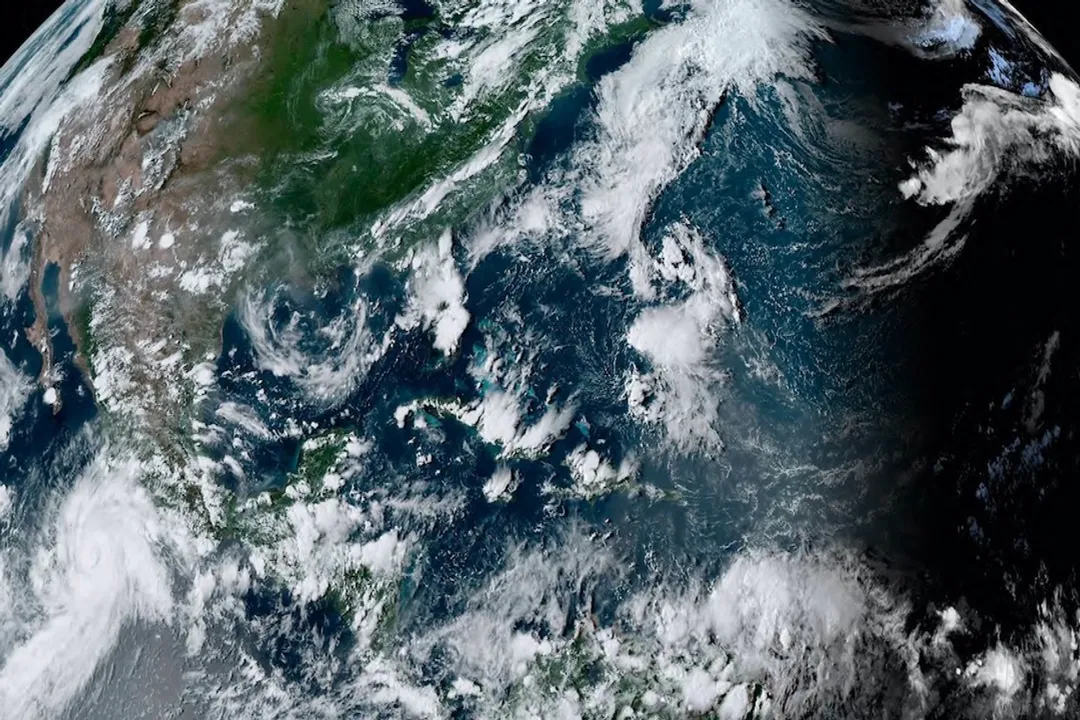
Meteorology addresses the atmosphere, studying the conditions that lead to weather and long-term climate patterns. Meteorologists use technology like satellites and radar to gather data on wind speed, temperature, and rainfall to create forecasts and detailed weather maps. Climatology, a related field, concentrates on patterns over long periods, helping scientists understand phenomena like climate change driven by greenhouse gas concentrations. A clear example of cross-sphere influence is how atmospheric circulation, driven by differential solar heating, blows across the ocean surface to generate and dictate the movement of major ocean currents.
Finally, Astronomy shifts our perspective outward, studying the universe beyond Earth, including the Sun, Moon, planets, asteroids, and galaxies. This branch is essential for placing Earth in its cosmic context, examining concepts like the Big Bang Theory, the life cycle of stars (from nebulae to white dwarfs or black holes), and understanding our solar system's origins via the Nebular Hypothesis. Modern astronomy relies heavily on advanced technology, such as space-based telescopes like the Hubble Space Telescope, to measure the immense distances and chart bodies that are light-years away.
# The Scientific Process
What unifies these diverse disciplines is the shared commitment to the scientific method. Science distinguishes itself from other human endeavors by strictly pursuing explanations for natural phenomena through systematic testing and examination, operating under the assumption that nature is both understandable and predictable.
The process begins with careful observation—gathering information using the senses or instruments. These observations naturally lead to questions about why something occurs, such as why oil deposits are found only in certain locations or what drives volcanic activity. Following this, a scientist proposes a hypothesis, which is a tentative, testable explanation for the observation. For instance, one might hypothesize that plants given more sunlight grow faster.
The next critical phase is testing this hypothesis, often through a controlled experiment. In an experiment, variables are key: the independent variable is what the scientist intentionally changes, while the dependent variable is the factor measured to see the effect of that change. A control group, identical to the experimental group except for the manipulation of the independent variable, provides a necessary standard for comparison. If the experimental results contradict the predictions, the hypothesis must be revised or discarded, leading to new questions—a dynamic, iterative process.
For many Earth phenomena—like the mechanics of plate tectonics or the composition of the deep core—controlled experiments are often impractical or impossible. In these instances, Earth scientists heavily rely on gathering extensive additional observations to test how well a hypothesis explains all the accumulated evidence. Furthermore, they utilize models—descriptions, representations, or imitations of real-world systems. These can range from physical models (like a clay structure of a volcano) to mathematical and computer models that simulate complex processes, such as erosion rates or the geodynamo creating Earth's magnetic field.
Once findings are compiled, they are introduced to the scientific community for peer review. This is a vital quality control step where other experts scrutinize the study design, data analysis, and conclusions to reduce potential bias before publication. If an idea survives this rigorous vetting and repeated testing across disciplines, it may contribute to forming a theory, which is a system of ideas supported by a vast body of evidence that explains many related observations. While a theory is highly certain in scientific language, it remains open to refinement if new, conflicting evidence emerges.

# Unchanging Principles Over Immense Scales
A central philosophical underpinning in Earth science, particularly geology, is uniformitarianism, often summarized as: “the present is the key to the past”. This principle posits that the same physical and chemical laws that govern processes today—like erosion, sedimentation, or volcanism—have operated consistently throughout Earth’s history, albeit at varying rates. This concept allows scientists to interpret ancient landscapes and rock formations by studying active processes visible today.
The implementation of this methodology, when applied to the scale of the planet, has yielded some of the most profound shifts in scientific thought. Consider the development of our understanding of Earth’s age. Early thinkers, often constrained by prevailing religious or philosophical models, estimated Earth’s age in thousands of years, and theories like catastrophism—the idea that major geological changes resulted from sudden, immense events—were favored. However, the systematic application of scientific methods, utilizing data from strata (stratigraphy) and the fossil record, pushed geologists like James Hutton to argue for an age measured in millions of years. The subsequent explosion in scientific measurement capabilities, especially in the 20th century with techniques like radiometric dating, has confirmed that the history of Earth spans billions of years, with the planet currently estimated to be about 4.56 billion years old. This evolution in understanding—from a young Earth governed by sporadic, sudden catastrophes to one operating under constant, measurable physical laws over deep time—is a powerful demonstration of how scientific thought adapts when faced with overwhelming, verifiable evidence gathered through rigorous methodology.
Furthermore, understanding Earth requires understanding its place in the universe, which involves grasping the scale of space. Edwin Hubble’s 1923 discovery that the Andromeda nebula was an entire galaxy far outside our own Milky Way instantly demonstrated that our solar system was merely a speck within a cosmos vastly larger than previously conceived. This realization underscores that the principles discovered through local observation must apply across incredible scales, linking our planet’s formation (the Nebular Hypothesis) to the birth and death of distant stars. The very elements that compose the rocks and water on Earth were forged in the ancient supernovae of stars long gone, meaning our planet’s material origins are fundamentally tied to astronomical processes.
# Interconnected Systems and Practical Benefits
Earth science is rarely practiced in isolation; it is inherently interdisciplinary. The "Big Ideas" framework for Earth system science emphasizes that the Earth is a system of systems where the flow of energy drives the cycling of matter. This is visible in the interaction between the atmosphere and the oceans, as differential solar heating drives atmospheric circulation (wind), which in turn creates the oceanic currents that distribute heat globally.
This interconnected view leads directly to the practical importance of the field in shaping society.
# Hazard Mitigation
One of the most immediate benefits is predicting and mitigating natural hazards. Geologists monitor fault lines and magma movement to better forecast earthquakes and volcanic eruptions, saving lives and property. Meteorologists predict severe weather events like hurricanes, allowing for evacuations that reduce loss of life. Furthermore, the study of Earth’s magnetic field, generated by the convection of molten iron in the outer core (the geodynamo), is critical for understanding how the magnetosphere shields our atmosphere from the destructive solar wind, which, when punctuated by coronal mass ejections, can still interfere with satellites and power grids.
# Resource Stewardship
Earth scientists are also central to managing the resources that support modern civilization—fuel, metals, water, and construction materials. Geologists locate ore deposits and fossil fuels, while hydrogeologists study groundwater supplies. A responsible approach in these endeavors is crucial, as the pursuit of resources often creates new environmental problems that require solutions. The modern field of Environmental Science specifically addresses the ways humans interact with the geologic environment, seeking solutions for issues like pollution, waste management, and climate change, drawing expertise from geology, biology, and the social sciences.
If you ever find yourself examining a landscape feature, like the way a riverbank is being eroded after a heavy rain, you are applying the principle of uniformitarianism on a human-observable scale. That small event—a few centimeters of soil loss over a season—is the same process, just accelerated in time, that shapes enormous features like a river delta or a canyon over millions of years. Understanding that the slow, incremental forces you can witness today are the same forces that built entire mountain ranges over geologic time offers a concrete way to conceptualize the concept of deep time and the planet's vast history.

# Measurement and Modeling
Success in Earth science depends on accurate data, which often requires precise measurement using the International System of Units (SI) for global comparability. Measurements must be evaluated not just for precision (the exactness of the measure, e.g., measuring to the millimeter) but also for accuracy (how close the measurement is to the true value). A measurement can be highly precise yet inaccurate if the measuring instrument is consistently flawed.
Because Earth systems are so complex, scientists must often resort to description and modeling rather than simple physical experimentation. An interesting way to think about the necessity of modeling relates to the interior of the Earth. Since we cannot directly drill to the core or mantle to test material properties under those extreme conditions, geophysicists construct numerical models on supercomputers. These models simulate the flow of fluids and the response of minerals to immense heat and pressure, allowing researchers to test hypotheses about convection currents that drive plate tectonics, much like performing a controlled experiment on a computer screen. This reliance on indirect evidence, mathematical representation, and modeling distinguishes much of modern Earth science from laboratory-bound disciplines.
# Historical Context of Discovery
The scientific study of Earth began millennia ago with careful observations—the ancient Greeks cataloging rocks around 200 BCE, and the Maya tracking celestial movements to create accurate calendars. Over time, the use of technology, from the microscope and telescope to modern satellite imagery, has continually enhanced the ability to observe previously hidden worlds, whether the interior of a mineral or the composition of a distant galaxy. The exchange of ideas across these specialized fields is what allows complex questions to be answered, evidenced by the interdisciplinary work that supported the widely accepted impact hypothesis for the extinction of the dinosaurs, drawing on paleontology, geology, and climate modeling.
Ultimately, the basic concept of Earth science is one of persistent, systematic inquiry into an incredibly dynamic planet—a sphere of interacting systems, driven by energy flows and subject to processes operating across timescales that dwarf human experience, all while striving to provide the knowledge necessary to navigate our existence upon it wisely.
#Videos
What is Earth Science? - YouTube
Related Questions
#Citations
Earth sciences | Definition, Topics, & Facts | Britannica
Earth science - Wikipedia
Chapter 1 - Introduction to Earth Science - GotBooks.MiraCosta.edu
What is Earth Science
Earth System Science: The Big Ideas
1.4: Earth Science and Its Branches - Geosciences LibreTexts
What is Earth Science? - YouTube
[PDF] Chapter 1 Introduction to Earth Science
Earth Science | Branches & Importance - Lesson - Study.com