Which institute recently collaborated with ISRO to create a centre of excellence focused on research in Fluid and thermal sciences?
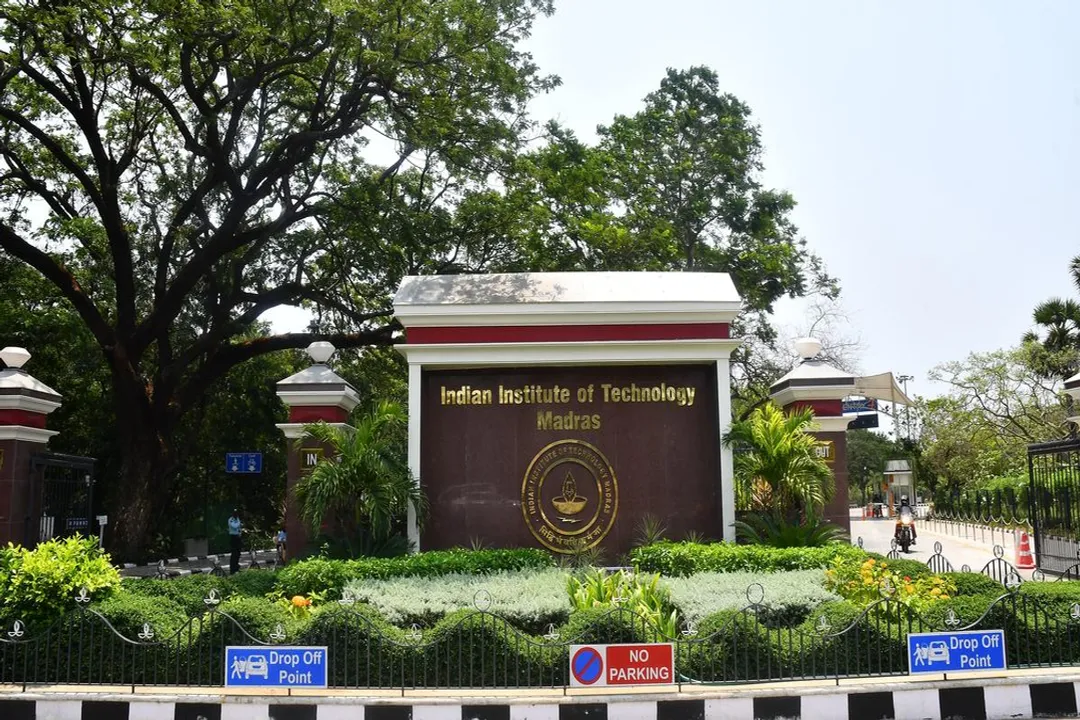
The Indian Space Research Organisation (ISRO) has formalized a significant collaboration with the Indian Institute of Technology Madras (IIT Madras) to establish a dedicated Centre of Excellence (CoE). [1][6] This new centre is specifically focused on advancing research within the demanding fields of Fluid and thermal sciences. [1][4] The formal creation of this specialized hub marks a strategic step in bolstering India's indigenous capabilities for its ongoing and future space missions. [6]
# Institute Collaboration
The institute at the heart of this endeavor is the Indian Institute of Technology Madras (IIT Madras). [1][4][7] This partnership came to fruition through the signing of a Memorandum of Understanding (MoU) between the two esteemed organizations. [4][6] Such an agreement signifies a mutual commitment to pushing the boundaries of knowledge in areas critical to aerospace engineering. [4] The establishment of a Centre of Excellence at an academic institution like IIT Madras indicates a structured approach to knowledge transfer and sustained research output, moving beyond ad-hoc project collaborations. [5]
The formal inauguration of this Centre of Excellence took place at IIT Madras. [3][7] The event was graced by the presence of the ISRO Chairman, who formally opened the centre, underlining the national importance attached to its mission. [7] This physical establishment within the campus provides the necessary infrastructure and academic ecosystem for intensive, focused investigation. [3]
# Core Research
The primary mandate of this CoE revolves around Fluid and thermal sciences. [1][4] This specialization is not arbitrary; it targets some of the most challenging aspects of aerospace engineering, where extreme conditions dictate system success or failure. [1] The research scope is expected to cover critical areas such as advanced propulsion systems and thermal management techniques. [1]
In rocketry and spacecraft design, managing the heat generated during high-speed atmospheric entry or the intense thermal loads within engine combustion chambers is paramount. [1] Fluid dynamics, which governs how gases and liquids move under these conditions, directly influences the efficiency of engines, the stability of flight paths, and the integrity of thermal protection systems. [4] By concentrating expertise here, ISRO aims to develop homegrown solutions rather than relying on external technologies for these fundamental physics challenges. [6]
When considering the spectrum of space technology, dedicated centers like this one allow for deep dives that broader, multi-disciplinary labs might not always accommodate. For instance, while propulsion itself is complex, focusing solely on the fluid mechanics of injectors or the thermal properties of new composite insulation materials allows researchers to achieve breakthroughs at a granular level that might otherwise be overlooked in a faster-paced, mission-driven environment. [1] This focused approach often yields foundational knowledge applicable across various ISRO programs, from launch vehicles to reusable space technology. [4]

# Academic and National Significance
The joining of ISRO’s operational needs with IIT Madras’s academic and research depth is designed to create a powerful feedback loop. [5] IIT Madras brings its faculty expertise and student talent pool, while ISRO brings real-world problems, data, and mission requirements. [6]
This type of collaboration suggests a distinct model for national capability building. Instead of dispersing research funding thinly across various institutions for general studies, this strategy centralizes resources and specialized talent to solve specific, high-stakes engineering bottlenecks. [2] This targeted investment into specialized CoEs, especially in foundational sciences like fluid dynamics and thermodynamics, is essential for achieving technological self-reliance, often termed Atmanirbharata, in sensitive sectors like space exploration. [6] Furthermore, the research generated is likely to produce high-quality doctoral and post-doctoral work, creating a continuous pipeline of highly skilled professionals entering both ISRO and related private aerospace industries. [5]
# Operationalizing Expertise
The Memorandum of Understanding signed by the two bodies lays the groundwork for sustained interaction. [4] While the exact funding structures or duration are part of the formal agreement, the intent is clearly long-term research output rather than short-term project completion. [6] The establishment itself is a commitment to building physical and intellectual infrastructure dedicated to these sciences. [3]
To appreciate the importance of this specialization, one might look at historical performance metrics in aerospace. A 5% improvement in nozzle efficiency, for example, which is directly tied to optimized fluid dynamics, can translate into significantly reduced fuel requirements or increased payload capacity over the lifespan of a launch vehicle series. If we assume an average of four major launches per year utilizing an engine design improved by this CoE’s work, even marginal gains, when compounded over a decade, represent massive savings in launch mass and significant increases in accessible orbital capacity—a subtle but profound gain for the national space program. [1][2] This subtle optimization work is precisely what specialized centers excel at delivering.
The structure implies that ISRO scientists will work alongside IIT Madras faculty and students, meaning the research agenda will be constantly informed by operational necessities, keeping the academic pursuit relevant to immediate engineering demands. [7] This prevents the research from becoming purely theoretical, grounding it in the tangible challenges of building and launching spacecraft.
# Looking Ahead
The creation of the Centre of Excellence in Fluid and Thermal Sciences at IIT Madras signals ISRO's deepening commitment to mastering the physics that governs flight in extreme environments. [1][4] As India targets more ambitious goals, such as Gaganyaan crewed missions or deep-space planetary exploration, the reliability of thermal shielding and propulsion efficiency becomes non-negotiable. [3] This collaboration aims to secure that reliability through cutting-edge, indigenous scientific inquiry. [5] The success of this specialized centre will likely be measured not just by publications, but by its direct impact on the design margins and operational robustness of ISRO’s next generation of space hardware.
Related Questions
#Citations
IIT Madras partners with ISRO to establish Research Centre to study ...
ISRO Chairman Dr. V. Narayanan launches Research Centre at IIT ...
Inauguration of Centre of Excellence at IIT Madras - ISRO
ISRO, IIT-M sign MoU to set up centre of excellence in fluid and ...
IIT Madras Partners with ISRO to Establish Research Centre
Indian Economy News - IBEF
ISRO Chairman Opens Space Research Centre at IIT Madras
IIT Madras teams up with ISRO to set up centre of excellence
IIT Madras on Instagram: "@isro.dos Chairman Dr. V. Narayanan ...