Which scientific process did Sir John Herschel contribute to the development of photography?
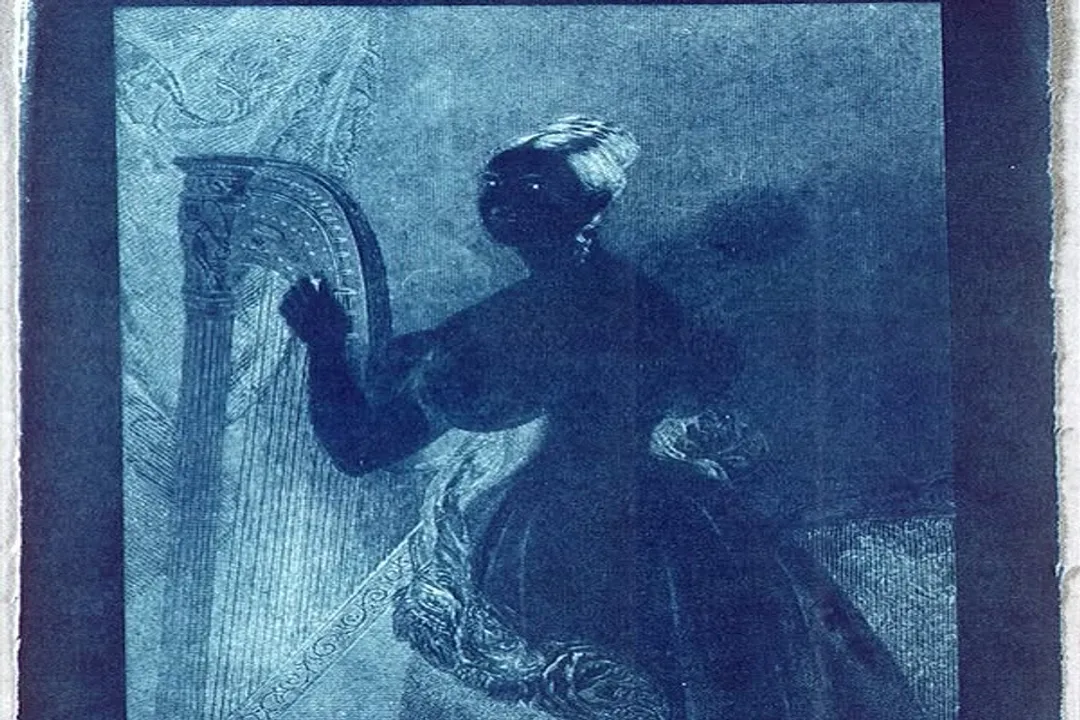
Sir John Herschel’s contributions to the nascent field of photography were deep, spanning from essential chemical discoveries to the actual invention of a unique printing process. [4][5] While many associate the birth of photography with Daguerre or Talbot, this accomplished English astronomer and chemist quietly laid foundational groundwork that allowed the medium to stabilize and diversify. [5][6] His most direct contribution to a specific photographic process was the creation of the cyanotype, a method instantly recognizable by its distinctive blue prints. [1][5]
# Astronomer Chemist
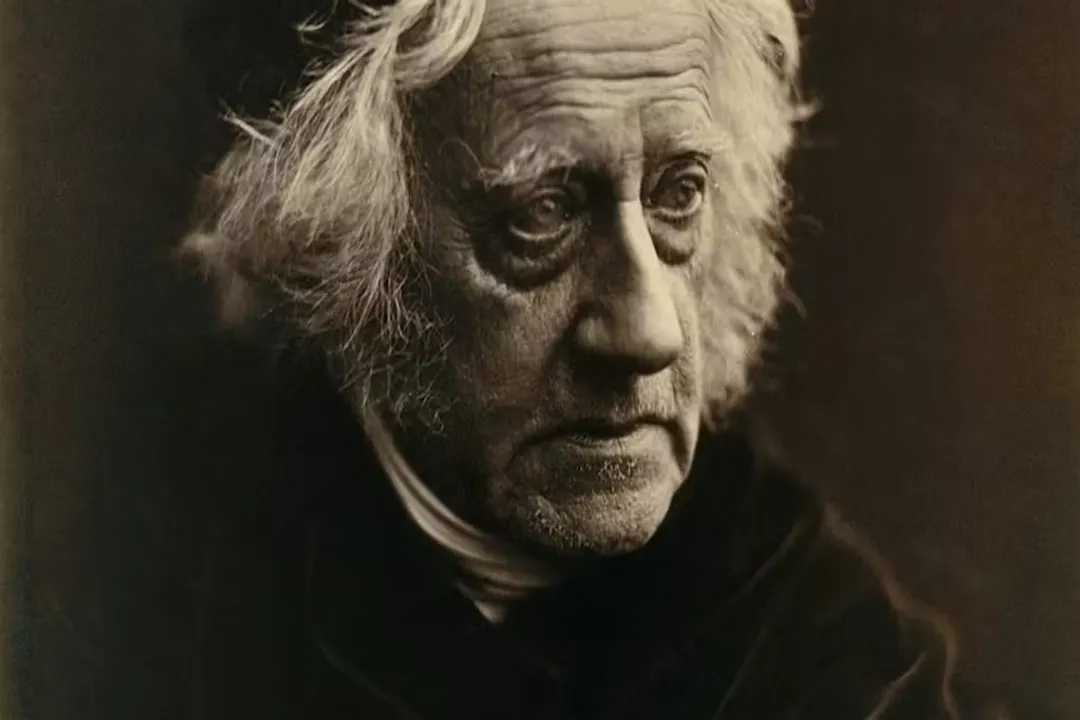
John Herschel was not merely a hobbyist dabbling in chemistry; he was a serious scientist whose primary career was in astronomy. [5] This background informed his approach to optics and light sensitivity. [4] His investigations into chemistry were often driven by the needs of his astronomical work, requiring methods for recording observations precisely and permanently. [5] This dual expertise—understanding the physical properties of light (astronomy) and the chemical reactions it caused (chemistry)—placed him in a unique position to advance photographic science. [6]
Herschel’s general scientific input into photography was arguably just as important as the cyanotype itself. He discovered that sodium thiosulfate, which he termed hyposulfite of soda, was an excellent agent for fixing images, meaning it stopped the chemical process that made the image sensitive to further light exposure. [4][6] This understanding of the fixing agent was critical for creating lasting, permanent photographs, a hurdle that plagued early photographic experiments. [4] Moreover, he bestowed upon the world several terms we still use today, including photograph, positive, negative, snapshot, and lumen. [4][5][6]
# Cyanotype Invention
The invention of the cyanotype process arrived in 1842. [5][8] This method became known for producing sharp, detailed silhouettes and flat objects in a rich shade of Prussian blue. [1][5][6] Unlike the contemporary silver-based processes, which required complex layering and development stages, the cyanotype offered a straightforward, two-part chemical reaction triggered by UV light. [1]
The process required coating a substrate—usually paper—with a mixture of two simple chemical solutions: ferric ammonium citrate and potassium ferricyanide. [1][6] When this coated surface was exposed to ultraviolet light (such as sunlight), the ferric salt was reduced to a ferrous state. [1] This newly created ferrous compound reacted with the potassium ferricyanide to form Prussian blue, an intensely colored, stable pigment that resisted fading. [6]
What is fascinating about the cyanotype, especially when compared to Talbot’s calotype or Daguerre’s daguerreotype of the era, is its relative simplicity and reliance on inherently stable pigments rather than delicate metallic silver compounds. [1][7] While the silver processes offered greater tonal gradation and subtle shading—crucial for high-end portraiture—the cyanotype offered unparalleled archival stability for technical work, provided the initial chemicals were thoroughly washed out. [1] If we consider the chemical "ecosystem" of early photography, where silver salts were often unreliable, Herschel’s creation provided a chemically simpler path to permanence, even if it was limited to a single, striking color. [5]
# Chemical Discovery
The basis of the cyanotype rests entirely on the photochemistry of iron salts. [6] Herschel identified that certain iron compounds become light-sensitive when combined with cyanide derivatives. [1] The key components are iron in its ferric state () which is light-sensitive, and the ferricyanide ion, which acts as the color-forming agent when light exposure causes the necessary chemical reduction. [6]
To produce a finished print, the exposed paper must be washed in water. [1] This washing step is critical; it removes any unreacted chemicals, leaving behind only the permanent Prussian blue pigment that formed where the light struck. [1] If the washing is incomplete, residual iron salts can continue to react over decades, leading to a slow darkening of the unexposed areas, though the initial blue tone itself is exceptionally durable. [6]
Thinking about Herschel's motivations, one can speculate that his extensive astronomical observations demanded a system where failure was rare and reproducibility was high. [5] An astronomer needs to document a transit or a nebula with absolute certainty that the recording medium won't degrade unpredictably. The cyanotype, being a pigment-forming process rather than a simple dye-bleaching or latent-image development process, delivered that high degree of chemical certainty, even if it lacked the visual fidelity of the competition. [4]
# Early Use
Though Herschel invented the process, he was not the first to extensively document subjects using it. [5] That distinction belongs to his contemporary, Anna Atkins. [1][5] Atkins, a botanist, began applying Herschel's cyanotype in 1843 or 1844 to illustrate her seminal work on algae. [1][7]
Atkins placed dried specimens of seaweed directly onto the sensitized paper and exposed them to sunlight. [1] The resulting prints were detailed, deep blue silhouettes of the plant structures, serving as scientific records of the specimens. [1] Her publication, Photographs of British Algae: Cyanotype Impressions, is considered the first book illustrated with photographic images. [5][7] This application beautifully illustrates the cyanotype’s strength: it excels at rendering the precise outlines of two-dimensional objects, making it ideal for botanical records, architectural blueprints (its later, more famous application), and simple photograms. [1]

# Terminology Coined
Beyond the tangible chemical process of the cyanotype, Herschel’s greatest enduring, though less visible, scientific contribution was standardizing the language of photography. [4] Prior to his input, descriptions of light-based image making were often ad-hoc or inconsistent. [5]
He provided the scientific community with precise terms:
- Negative: The initial light-sensitive transparency that records the subject in reverse tone. [4]
- Positive: The final print derived from the negative, showing the correct tones. [4]
- Photograph: A general term for an image made with light. [4]
- Snapshot: A very brief exposure. [4]
This act of naming was a scientific step in its own right. By assigning clear, concise terminology, Herschel gave scientists and artists a common vocabulary, which accelerated clear communication and the sharing of experimental results across different labs and workshops. [4][5] When we compare Herschel's methodical approach to naming to the almost accidental discoveries of the initial photographic methods, we see a scientist intent on building a stable discipline, not just capturing a single image. [6]
# Lasting Blue Print
The cyanotype process itself faded slightly from mainstream photographic use in the 20th century, often supplanted by cheaper or higher-resolution methods. However, it experienced major revivals, particularly in the 20th century, where it was widely adopted for architectural and engineering drawings, often called blueprints. [5][8] The term "blueprint" itself is a direct, albeit secularized, legacy of Herschel’s initial 1842 invention. [8] It is worth noting for modern practitioners that while the original paper prints often faded slightly over a century, they rarely suffered the extreme degradation seen in poorly processed early silver prints, reinforcing the inherent stability of the ferric-ferrocyanide reaction. [1][6] This long-term stability is a direct testament to Herschel's chemical insight into creating a resilient pigment from simple, readily available iron salts.
Related Questions
#Citations
Cyanotypes: The origins of photography - Kew Gardens
There's More to John Herschel Than Cyanotype - Kim Herringe
Sir John Frederick William Herschel - Getty Museum
Sir John Herschel – his life and discoveries
Astronomer John Herschel's invention of the cyanotype
John Herschel: A Chemist's Remarkable Contributions to Photography
Eureka: How a Scientist Revolutionized Photography With the ...
Invented by Sir John Herschel in 1842, cyanotype is a photographic ...
Sir John Hershel Flashcards | Quizlet