What did John Frederick William Herschel do for math?
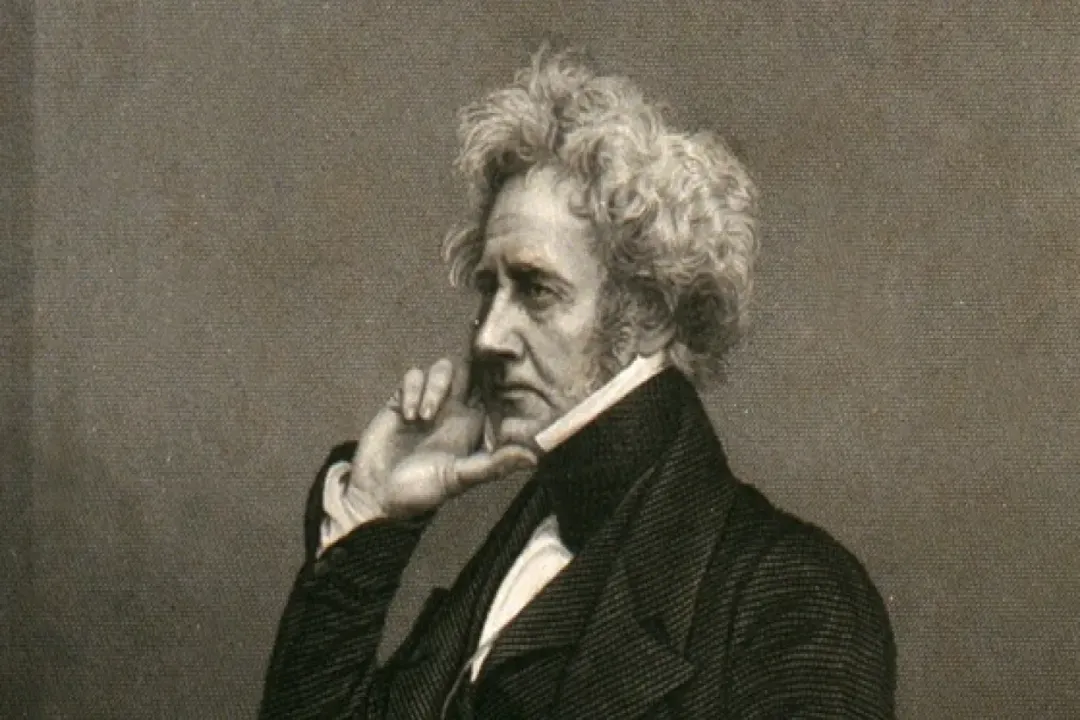
John Frederick William Herschel was a figure whose scientific breadth often overshadows the depth of his contributions to abstract fields like mathematics. While his fame rests largely on his astronomical surveys and pivotal work in early photography, his intellectual inquiries reached into areas of pure mathematical theory, demonstrating a rare versatility for someone so deeply embedded in empirical observation.
# Scientific Naming
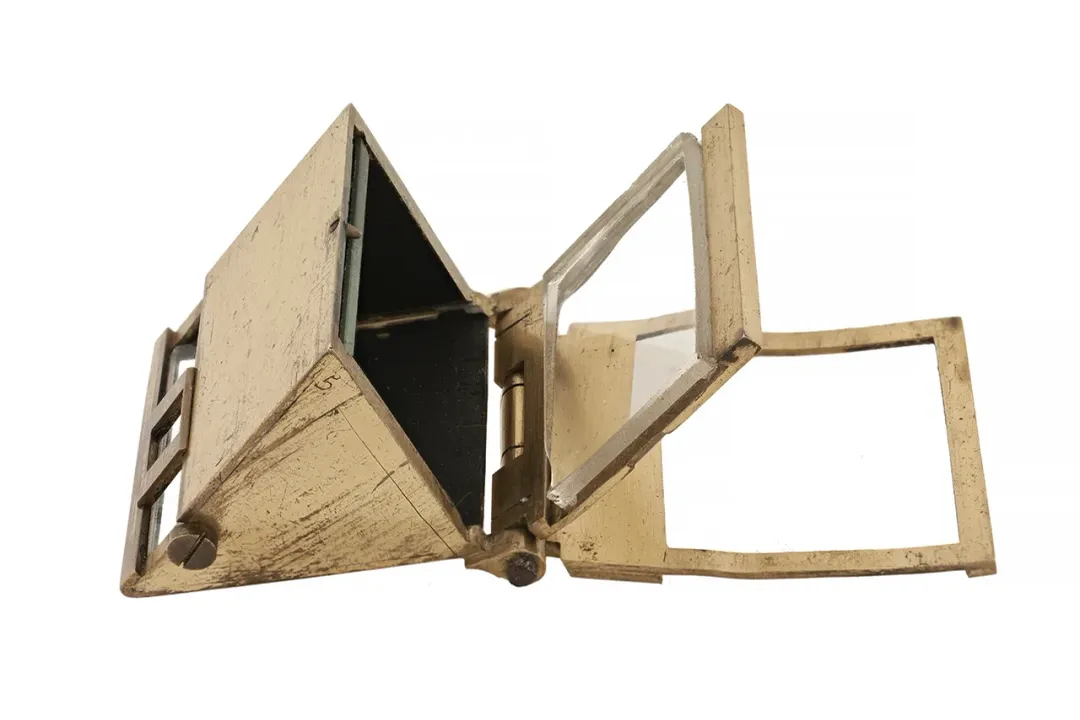
Perhaps one of the most accessible, though indirectly mathematical, contributions Herschel made was providing standardized language for a burgeoning field: photography. As the science developed rapidly in the 1830s, following the work of Daguerre and Talbot, a clear vocabulary was needed to describe the resulting images. Herschel is credited with introducing the terms "negative" and "positive" to describe the reversed image captured on the processed plate and the final derived print, respectively. This act of linguistic standardization is vital for any emerging science. It moves a practice from simple experimentation to a formalized discipline, establishing a binary, logical structure—a foundational step that allows for consistent communication, record-keeping, and further mathematical analysis of optical processes. Adopting terms based on light values (positive/negative) showed an early grasp of duality in image representation, something later crucial for understanding signal processing.
# Advanced Functions
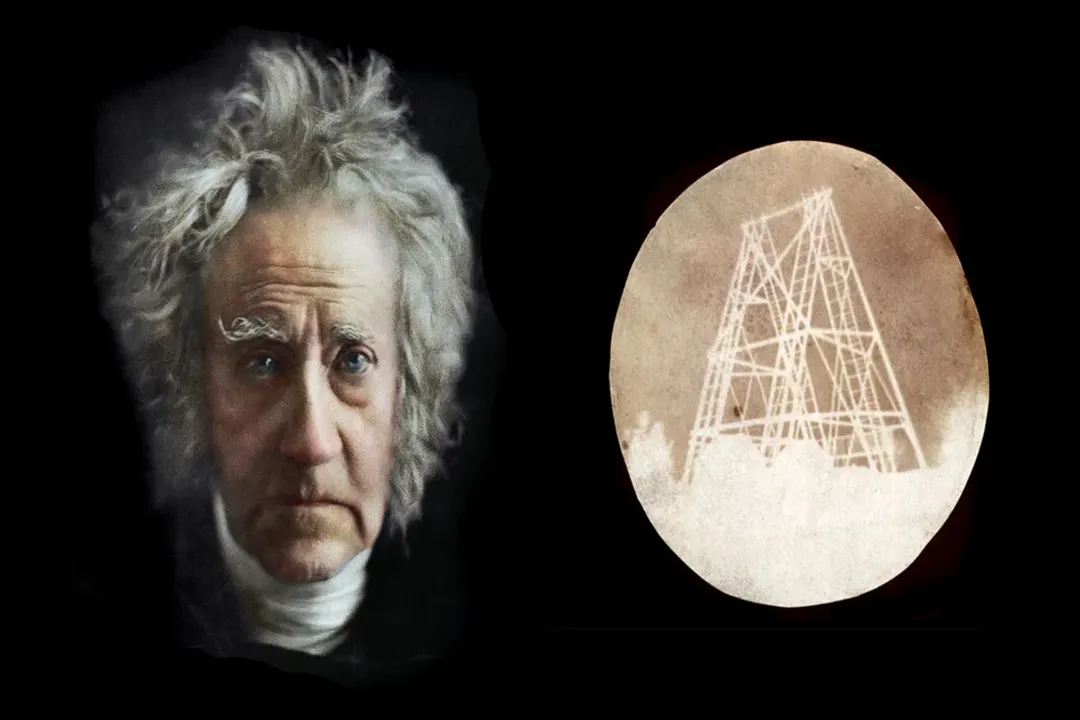
Beyond lending names to chemical processes, Herschel engaged with high-level mathematics, particularly concerning functions that arise in complex physical problems. His work touched upon the subject of elliptical functions. These functions are generalizations of trigonometric functions and are essential in solving various differential equations encountered in physics and mechanics, such as describing the motion of a pendulum or in advanced potential theory. While the primary development of elliptical functions is often attributed to others later, Herschel's early engagement with them places him within the contemporary discussion of advanced analysis in the early 19th century. This shows a mind prepared to grapple with concepts far removed from the telescope lenses he was refining for his observations at the Cape of Good Hope.
# Algebraic Forms
A more specific, though highly specialized, mathematical area where Herschel made an imprint involves quaternions. Quaternions are an extension of complex numbers, representing four-dimensional number systems that were instrumental in understanding rotations in three-dimensional space before the widespread adoption of vector calculus. Although William Rowan Hamilton is famously associated with the "discovery" of quaternions later, Herschel was aware of and worked within these developing algebraic structures. This kind of theoretical exploration suggests a mathematical fluency that complemented his applied work in optics and astronomy. It is fascinating to observe a scientist so dedicated to mapping the physical universe—cataloging stars and refining astronomical instruments—while simultaneously contributing to purely abstract algebraic forms that describe spatial relationships on a fundamental level. It reflects a deep comfort in navigating both the tangible and the purely conceptual dimensions of science.
# Mathematical Context
It is important to situate Herschel’s mathematical endeavors within his primary scientific life. He was a prolific astronomer, responsible for completing his father's survey of the southern skies, a monumental observational task. His work in chemistry involved early investigations into chemical changes induced by light, directly leading to his photographic breakthroughs. Even his studies of optics, which involved improving telescope design and understanding light propagation, demanded a sophisticated mathematical foundation, likely involving the application of calculus to model aberrations and light paths.
If we consider the output of his contemporary scientific endeavors, we can see the mathematical thread running through everything. For example, when cataloging hundreds of nebulae and star clusters in the Southern Hemisphere, the process demanded rigorous positional calculation, error analysis, and the establishment of coordinate systems—all inherently mathematical exercises. One might speculate that his explorations into quaternions, which are fundamentally about representing orientation and rotation, were subtly informed by the need to accurately document celestial positions and the changing orientations of his observational equipment over time. His work wasn't just about seeing the universe; it was about quantifying it using the best available mathematical language of the time.
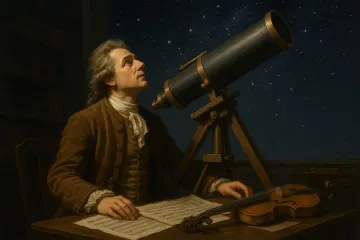
# The Legacy of Dual Expertise
Herschel’s true mathematical impact might be seen not in establishing a completely new field, but in serving as an essential bridge. He took abstract mathematical concepts, such as those found in elliptical functions or non-standard algebras, and applied them to real-world scientific problems, while simultaneously injecting rigor and precise nomenclature into emergent experimental disciplines like photography. This dual expertise—the ability to work with the precise symbols of the mathematician and the precise measurements of the observer—is what marks his historical significance. While he may not be remembered primarily as a pure mathematician like Gauss or Cauchy, his application and early adoption of complex mathematical ideas ensured that the physical sciences he dominated were built upon increasingly sophisticated theoretical ground.
It’s noteworthy that this dual intellectual capacity was highly valued, securing him membership in scientific societies and earning him significant recognition in his era. His achievements were recorded on the walls of Westminster Abbey, commemorating a life dedicated to understanding the natural world through observation, measurement, and theoretical modeling. He ensured that the language used to describe light, whether captured chemically on a plate or mathematically defined by an equation, possessed the clarity required for future generations of scientists to build upon that foundation.
Related Questions
#Citations
John Herschel - Wikipedia
Sir John Herschel, 1st Baronet - Britannica
Sir John Frederick William Herschel - Getty Museum
Science, Optics and You - Timeline - John Herschel
William & John Herschel | Westminster Abbey
HOF Inductee Sir John Frederick William Herschel
Herschel, John Frederick William 1792 - 1871
Great Creation Scientists: Sir William Herschel (1738–1822)
Remembering Sir John F.W. Herschel (1792–1871)