What was John Herschel known for?
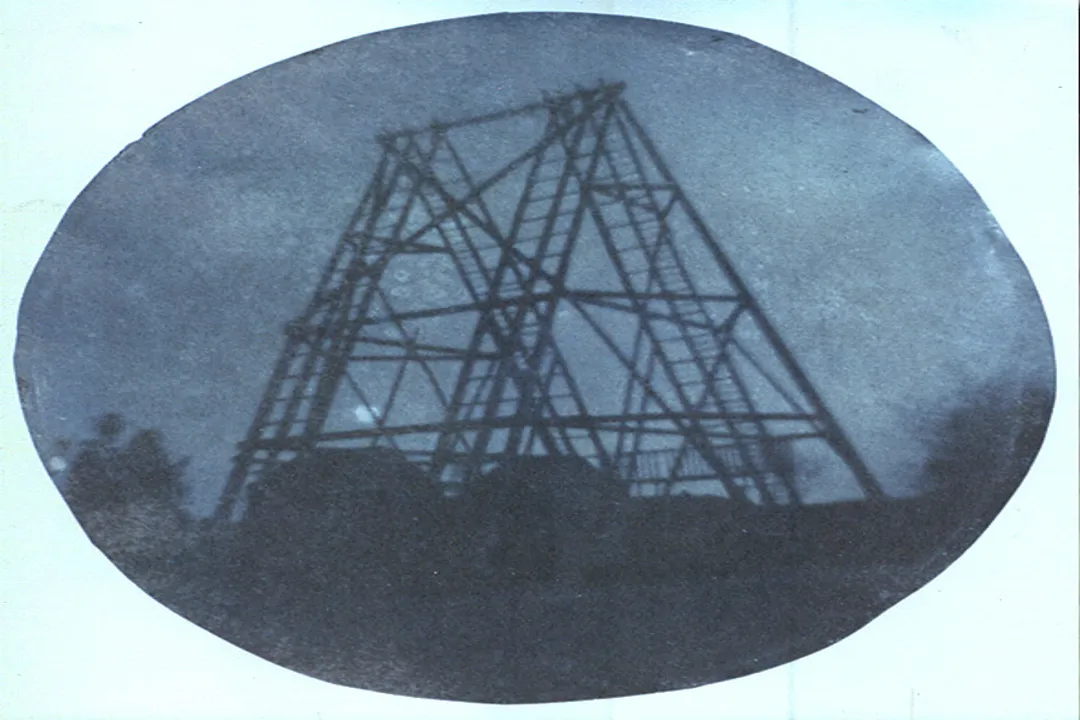
Sir John Herschel was a figure whose breadth of scientific inquiry spanned the heavens and the nascent world of chemical imaging. Though often mentioned alongside his father, William Herschel, the pioneering discoverer of Uranus, John carved out a distinct and massive legacy across multiple disciplines, most famously astronomy and the very early days of photography. [1][2] He was a true polymath whose contributions shaped how we observe the universe and how we capture light on paper. [2]
# Celestial Cataloging
Perhaps the most immediate recognition of John Herschel’s importance comes from his astronomical pursuits, which built directly upon the foundations laid by his father. [1] While William Herschel mapped the northern sky, John completed the monumental task by systematically surveying the Southern Hemisphere. [1] This dedication resulted in the publication of the General Catalogue of Nebulae and Clusters of Stars (GC) in 1864, which added thousands of new deep-sky objects to the scientific record. [1]
He was also deeply engaged in the study of binary stars—pairs of stars orbiting a common center of mass. [1] Herschel meticulously observed these stellar couples, contributing significantly to the understanding that gravity governed not only the planets in our solar system but distant suns as well. [1] Furthermore, he named many of the moons of Saturn and Uranus, and several major features on the Moon and Mars, establishing a naming convention that persists in planetary science today. [1] An interesting point of comparison arises when viewing his career arc against his father's: William’s work was focused on an initial, revolutionary survey of the known sky from England, while John’s mission was one of completion and systematization across a vast, previously unmapped celestial territory. [1][2] This generational dedication ensured that the Herschel name became synonymous with foundational observational astronomy for the 19th century. [1]
# Photographic Language
While his astronomical achievements were immense, Herschel’s influence on the emerging art and science of photography is arguably where his impact is most universally felt today, even if less directly recognized by the general public. [2] He worked on photographic processes concurrently with William Henry Fox Talbot, and though Talbot is often credited with the first widely publicized successful photographic method, Herschel made critical, foundational contributions to making the process viable for lasting documentation. [2][5]
Herschel discovered that a solution of sodium thiosulfate—which he called hyposulphite of soda—could effectively "fix" images, stopping the light-sensitive silver salts from further darkening after exposure. [2][5] This was a key chemical understanding that allowed images to become permanent artifacts rather than fleeting shadows. [5] It is astonishing to consider that without this chemical insight, the entire history of photography might have stalled at the stage of temporary experiments, making the ability to preserve the image as important as the ability to create it in the first place. [2]
Crucially, Herschel did not just invent; he codified the language of the medium. [2] He is credited with introducing terms that are fundamental to photography even now, including negative, positive, exposure, and the word photograph itself. [2][9] His efforts bridged the gap between chemical experimentation and the development of a recognizable field of study. [7]
# Blueprints Cyanotypes
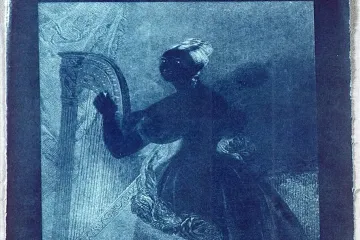
One of Herschel’s most enduring, though perhaps specialized, legacies is the invention of the cyanotype process around 1842. [5] This process utilized iron salts coated onto paper which, when exposed to ultraviolet light (like sunlight), turned a deep Prussian blue upon processing. [5] While other processes might have produced sharper images, the cyanotype was remarkably simple, stable, and inexpensive, requiring only sunlight and water for development. [5][9]
This invention found its most famous, if perhaps unintentional, application in architecture and engineering. [5] The resulting blue-and-white prints quickly became known worldwide as blueprints—a direct descendant of Herschel’s chemical discovery. [5] Even today, while digital printing dominates, the term persists as a legacy of this 19th-century scientific endeavor. [5] His experiments in photography were characterized by this practical application; he viewed the processes not merely as artistic tools but as aids for scientific recording and communication, perfectly demonstrating how his deep knowledge of chemistry informed his optical interests. [7]
# Wider Recognition
John Herschel's scientific output was not limited to the sky or the camera obscura. His early career involved significant work in mathematics and chemistry. [1][2] He corresponded extensively with leading mathematicians and scientists of his time, cementing his standing within the international scientific community. [1] His breadth of knowledge allowed him to draw connections between seemingly disparate fields, which is a hallmark of truly original scientific thinkers. [2]
His life reflected a dedication to public science, including his time spent organizing and preparing scientific data for publication and public consumption. [7] Due to his eminent status and manifold achievements across the sciences, he was highly regarded in his later life. [8] When he died in 1871, he was interred in Westminster Abbey, a rare honor reserved for Britain's most distinguished figures, resting near Isaac Newton. [8] This physical placement in the Abbey serves as a potent symbol of the authority and trust the scientific establishment placed in his collected works and discoveries. [8]
# Comparative Achievements Summary
To better appreciate the scope of John Herschel's renown, it helps to see his major areas of accomplishment side-by-side, recognizing that while many scientists specialize, Herschel excelled in defining entire subfields. [1][2]
| Field | Key Contribution | Approximate Timeline |
|---|---|---|
| Astronomy | Comprehensive cataloging of Southern Skies; Binary Star Analysis | Mid-19th Century |
| Photography | Invention of the Cyanotype (Blueprint); Coining of key terms | c. 1842 |
| Chemistry | Discovery of the fixing agent (Thiosulfate) | c. 1839 |
| Mathematics | Significant published contributions and correspondence | Early Career |
This table highlights the concentration of his achievements within a relatively short period, especially in the 1840s, when he effectively jump-started both the deep-sky cataloging of the Southern Hemisphere and the chemical stabilization of photography. [1][5] This combination of observational astronomy, chemical mastery, and linguistic precision places him in an elite tier of scientific minds whose work laid the groundwork for subsequent generations of researchers in multiple domains. [2]
Related Questions
#Citations
John Herschel (1792 - 1871) - Biography - University of St Andrews
Sir John Herschel, 1st Baronet - Britannica
Sir John Frederick William Herschel - Getty Museum
Sir John Herschel's contributions to astronomy and photography
Astronomer John Herschel's invention of the cyanotype
John Herschel | The Engines of Our Ingenuity - University of Houston
John Herschel: A snapshot of his adventures in photography
William & John Herschel | Westminster Abbey
Sir John Herschel – his life and discoveries