Is Cup also known as crater?
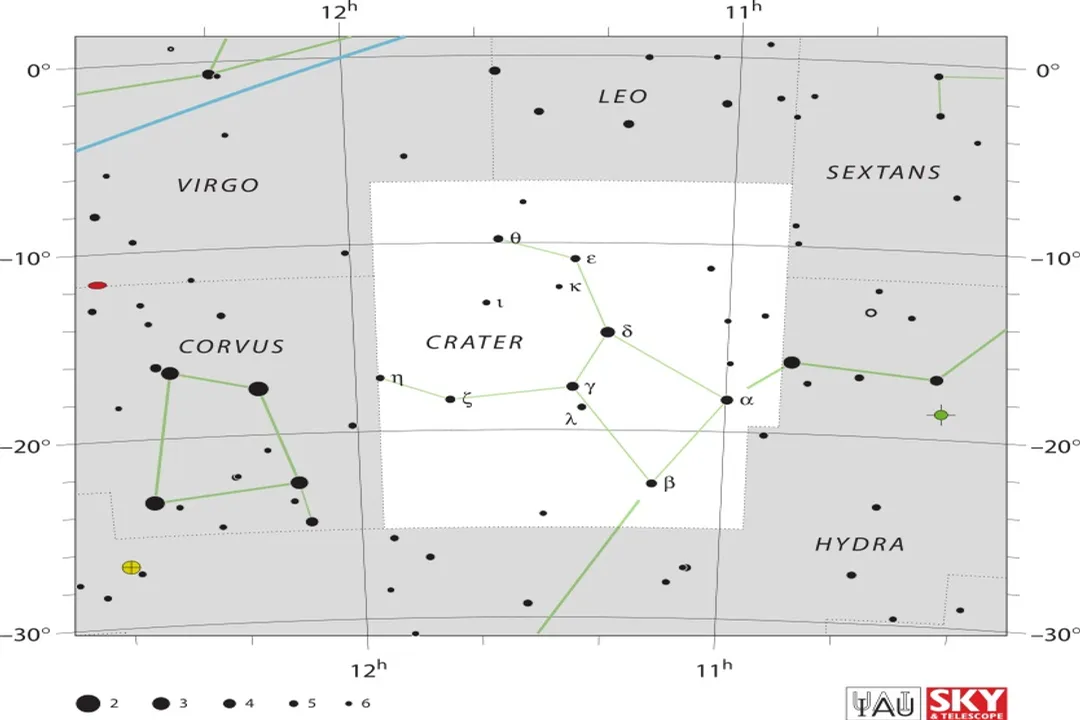
The constellation known formally as Crater is indeed often referred to as the Cup, a direct translation from its Latin name. While many celestial patterns evoke animals or heroes, Crater stands as a simple, utilitarian object: a drinking vessel in the night sky. This identification immediately separates it from the more dramatic figures populating the heavens, grounding it in something familiar, even if its visibility requires a keen eye and a bit of patience. It is one of the 88 constellations officially recognized today, though its history stretches back much further, cataloged among the 48 classical figures by the Greco-Egyptian astronomer Ptolemy in the second century.
# Latin Derivation
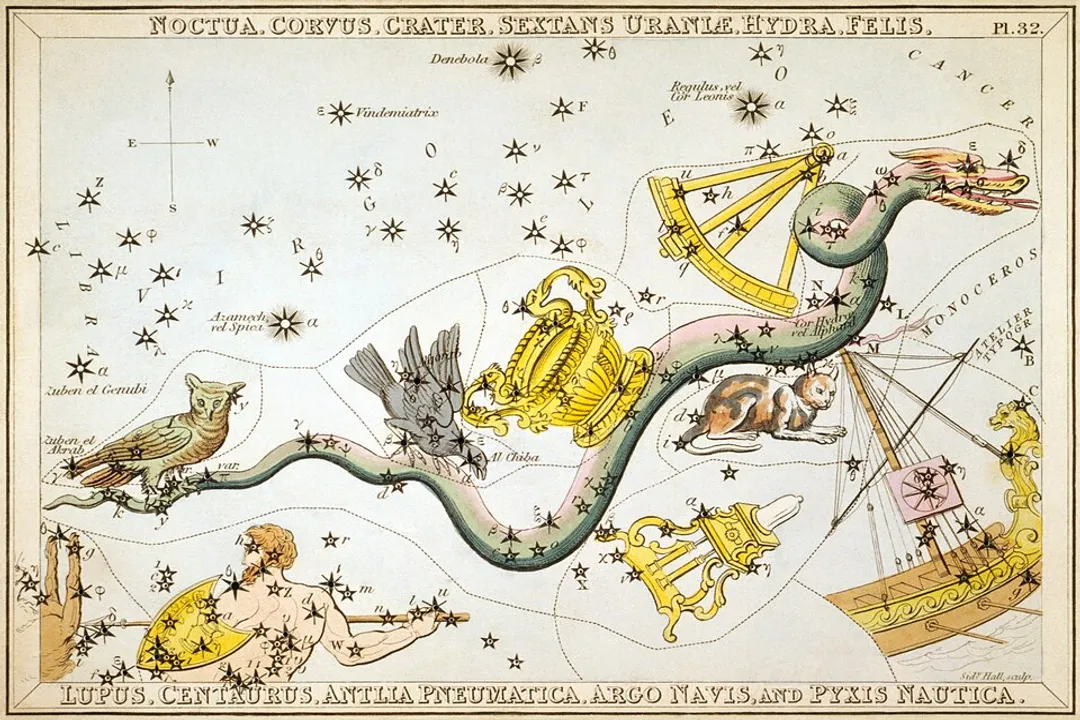
The fundamental connection between the names lies in etymology. Crater is simply the Latin word for a drinking cup, bowl, or mixing vessel. Unlike some constellations whose names derive from complex myths instantly recognizable to modern audiences, Crater’s name is purely descriptive of the object it represents. This straightforward naming contrasts with its immediate neighbors, such as Corvus, the Crow, which is intrinsically linked to the Cup in classical lore. Understanding that Crater translates to Cup demystifies its label, placing it firmly in the category of recognizable, earthly objects mapped onto the sky.
# Celestial Neighbors
Crater is not a sprawling giant of the celestial sphere; it is considered a relatively small constellation, covering only about 299 square degrees of the sky. In the celestial coordinate system, it resides in the southern celestial hemisphere. For observers located in the Northern Hemisphere, its appearance is most favorable during the spring evenings.
Its precise location relative to brighter, more recognizable patterns is key to finding it. Crater sits close to several other constellations that share a loose association with water or drinking themes. Most prominently, it borders the massive constellation Hydra, the Water Snake, often seen as containing or flowing near the cup. Perhaps even more visually significant is its proximity to Corvus, the Crow. In traditional star lore, the presence of the Crow next to the Cup often suggests a narrative involving the bird and its quest for water. Other celestial neighbors include Sextans (the Sextant) and Virgo. Because Crater itself is faint, knowing where Hydra or Corvus lie is usually the first step in locating the Cup.

# Faint Visual Presence
One of the most striking characteristics of Crater is its faintness. It is not home to any exceptionally bright stars that draw the eye across light-polluted skies. Its brightest star, Delta Crateris, possesses a visual magnitude of approximately 3.92. To put that into perspective, stars visible to the unaided eye under moderate conditions are generally below magnitude 6.0, but the brightest stars in major constellations often shine at magnitude 1 or lower. A magnitude 3.92 star is certainly visible on a clear night away from city lights, but it lacks the punch to stand out against any significant light pollution.
This dim nature means that identifying the constellation’s shape—the actual outline of a cup or bowl—requires an observer to be relatively experienced or to use a star chart to connect the fainter points of light. Its dimness contrasts sharply with its neighbor Corvus, which is noted for its distinctive, kite-like shape formed by four brighter stars.
When we compare the visual characteristics of Crater and Corvus, an interesting pattern emerges for the dedicated amateur astronomer. Corvus, being brighter and more distinct, often acts as the celestial landmark, a celestial anchor point. If you locate the unmistakable quadrilateral of Corvus, tracing a short line downward or slightly away from it, often toward the larger expanse of Hydra, will eventually lead to the sparser star field that constitutes Crater. This reliance on a brighter neighbor to locate a dimmer one is a common technique in navigating areas of the sky devoid of obvious asterisms.
# Astronomical vs. Geological Terminology
It is essential to pause and address the common, non-astronomical definition of the word "crater," as this often causes confusion. In everyday language, geology, or planetary science, a crater refers to a bowl-shaped depression, most commonly associated with the impact scars left by meteoroids on moons and planets, or the vent of a volcano. While the shape—a bowl—is consistent with the astronomical object named Crater (the Cup), the context is entirely different. One is a formal classification of a collection of stars defined by the International Astronomical Union, and the other is a geological landform. The naming similarity relies purely on the shape of the vessel.

# Myths of the Water Bearer
The mythology surrounding Crater is usually intertwined with the legends associated with its close neighbors, particularly Corvus (the Crow) and sometimes Aquarius (the Water Bearer) or the nearby Hydra. One popular narrative involves the god Apollo sending his bird, the Crow, to fetch water in a cup (Crater). The Crow, perhaps thirsty or delayed, stopped to drink from a stream before returning with the water. Apollo, angered by the delay, cast the Crow, the Cup, and the Water into the sky, placing them near each other as an eternal reminder of the transgression.
This narrative framework helps explain why Crater is often positioned so close to Corvus. The Crow, the Cup, and sometimes the Water Snake (Hydra) form a small grouping of "water-related" symbols in that section of the sky. While the constellation itself is small and lacks deep-sky objects that draw major public attention, these connecting myths provide a rich historical texture for those who wish to connect the stars to ancient stories.
# Locating the Cup
For those interested in viewing Crater, the best approach involves using an all-sky chart or a stargazing application to first pinpoint the larger, clearer constellations nearby. As mentioned, Corvus is the most useful pointer.
Here is a simple approach to track down Crater:
- Identify Hydra: Look for the very long, winding constellation Hydra, the Water Snake, which is the largest constellation in the sky.
- Locate Corvus: Find the distinct four-star grouping of Corvus, which looks somewhat like a small quadrilateral or kite. Corvus is positioned near the head or upper body of Hydra.
- Scan the Area: Crater lies generally between the main body of Hydra and Corvus. It will appear as a loose grouping of fainter stars, often forming a rough bowl or triangle shape, significantly less pronounced than Corvus.
Because Crater is faint and lacks bright asterisms, many sky watchers might actually view its stars without realizing they are looking at Crater. For instance, one might notice a small cluster of magnitude 4 or 5 stars near Corvus and simply dismiss them as background noise rather than recognizing them as the official constellation boundary. This highlights a valuable learning exercise in amateur astronomy: appreciating the faint, less celebrated patterns that fill the vast darkness between the bright beacons. The actual visual experience of finding Crater is one of patient accumulation, piecing together faint points of light rather than being struck by a brilliant configuration.
# Deep Sky Objects in Context
While the constellation itself is known for its faintness, the region of space it occupies is not entirely barren of interest for those with larger telescopes. When looking at Crater, an observer is gazing toward a patch of sky near the galactic plane, though Crater itself does not host many famous deep-sky targets like prominent galaxies or bright nebulae compared to some of its neighbors.
In the grander scheme of astronomical objects, Crater hosts a few spiral galaxies visible to advanced amateurs or small professional instruments. For instance, NGC 3245 is a barred spiral galaxy located in the vicinity, sometimes listed within the boundaries of Crater or very near them, depending on the exact chart used. The faintness of the constellation emphasizes that astronomical interest isn't solely determined by the visual magnitude of the constituent stars but by the total collection of objects found within its mapped boundaries.
This phenomenon—a constellation being named for a simple object yet containing complex, distant galaxies—offers a small window into the nature of celestial mapping. The ancient observers named what they saw with the naked eye, focusing on asterisms like the Crow and the Cup. Modern science, however, has overlaid these ancient patterns with catalogs of objects light-years away, objects completely invisible to Ptolemy, proving that the boundaries drawn centuries ago still serve as useful signposts for contemporary discovery.
The name "Cup" or "Crater" might suggest a vessel meant to hold something precious, like wine or water. In the modern context, what that vessel now "holds" are these incredibly distant collections of billions of stars, the galaxies, making the ancient naming convention surprisingly appropriate in a purely symbolic sense. The fainter the constellation, the more satisfaction an observer gains from successfully identifying it, transforming an empty patch of dark sky into a recognized celestial landmark defined by its own history and its relationship to its brighter companions. This quiet recognition of a less glamorous star pattern is a hallmark of developing expertise in sky-watching.
Related Questions
#Citations
Crater (constellation)
Crater the Cup sits upon Hydra's back
Crater - Students
Crater, the Cup Constellation
Chandra :: Photo Album :: Constellation Crater
Star Lore Of All Ages/Crater - Wikisource, the free online library
Crater Constellation | Star Map & Facts
CRATER Definition & Meaning
Crater Facts For Kids | AstroSafe Search
Crater - The Constellations