How to know which crater is older?
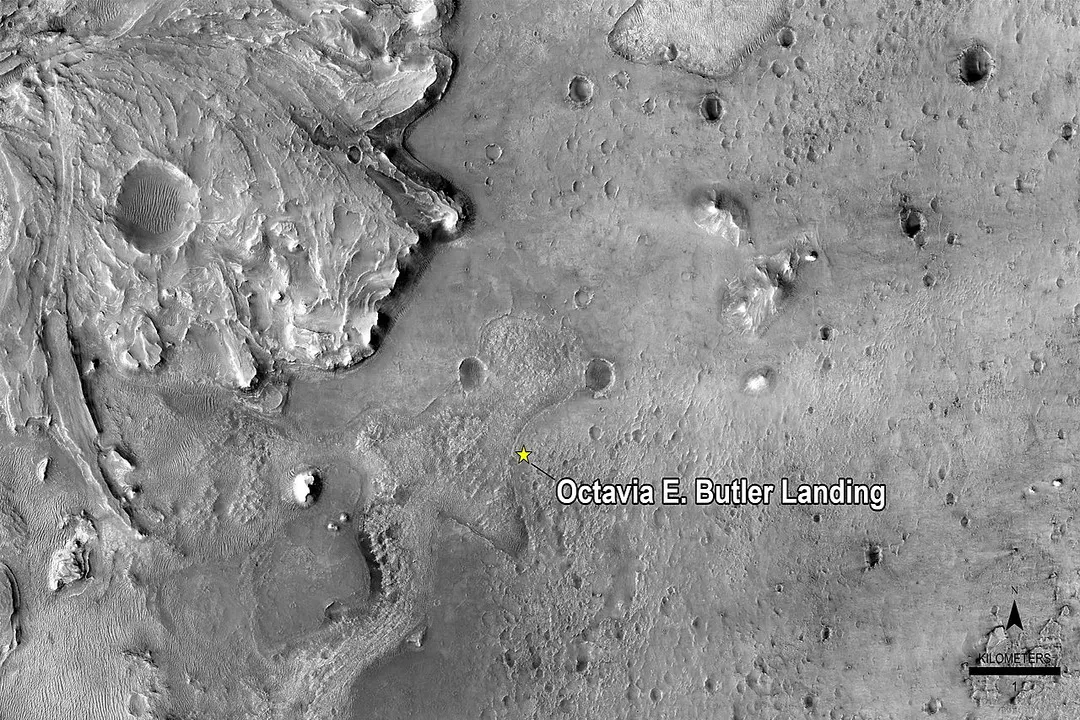
Dating an impact crater, whether on our Moon or the red sands of Mars, is akin to looking at a snapshot of an ancient event, but determining when that snapshot was taken requires geological detective work. We cannot simply pull out a calendar for a billion-year-old scar on the lunar surface. Instead, planetary scientists rely on observable clues left behind by the impact itself and the subsequent, slow march of geologic time. The fundamental principle is that surfaces exposed to impacts for longer periods will have accumulated more impacts, creating a measurable record of bombardment history. [8][7]
# Relative Dating
The primary method for establishing the relative age of a crater, meaning determining if it is younger or older than its neighbors, is known as crater counting. [7][8] This technique is foundational to understanding the surface evolution of airless bodies like the Moon and Mercury. [1]
# Superposition
The simplest rule in this geological game is superposition. If a crater clearly overlaps or cuts across the rim of another crater, the overlapping crater must be the younger feature. [2][6] Similarly, if lava flows bury one crater but leave another exposed on top, the exposed one is younger than the buried one, and the flow itself is older than the exposed one. [9] This provides an immediate, local sequence of events, building a relative timeline one intersection at a time. [7]
# Density Measurement
When superposition isn't clear—perhaps two craters are close but don't intersect, or the surface is heavily saturated—scientists turn to crater density. [7] This involves counting the number of impact craters within a defined area, typically normalized to a standard unit like square kilometers. [7]
The logic here hinges on the assumption that the rate of impact bombardment was relatively constant over large timescales, or at least that we can model how that rate changed. [9] A region with a high density of craters, meaning many craters packed into a small space, is considered older than a region with a low density, because it has had more time for impacts to accumulate. [1][7]
This method works best on surfaces that have remained relatively unchanged since their formation, like the lunar highlands. On the Moon, geologists have established a continuum of ages based on these counts, ranging from very old, heavily cratered terrains to younger, smoother maria. [1] The key is that the rate of cratering isn't static across all time periods. Early in the solar system's history, the bombardment rate was far higher than it is today, so an area with moderate crater density might actually date back to that intense early period. [9]
# Morphological Changes
While counting is excellent for large areas or when superposition is present, the physical appearance, or morphology, of an individual crater provides crucial internal evidence about its age. [6][4] A fresh, recently formed crater looks drastically different from one that has sat exposed for hundreds of millions of years.
# Rim Sharpness
New craters have sharp, well-defined rims because there hasn't been enough time for erosion or subsequent impacts to degrade the structure. [2][4] As a crater ages, processes like micrometeorite bombardment, thermal stressing, and gravitational slumping cause the rims to soften, become rounded, and eventually merge with the surrounding terrain. [2][4] On Mars, however, the presence of wind—aeolian processes—accelerates this degradation significantly, sandblasting rims smooth over much shorter timescales compared to the vacuum of the Moon. [9]
# Ejecta Blankets
The material blasted out during the impact forms an ejecta blanket surrounding the crater. [4] In young craters, this blanket is distinct, often showing blocky textures and lobate (lobe-like) patterns. [4] Over time, this ejecta is broken down, softened, and subsequently buried by other deposits or new impacts, causing the distinction between the blanket and the surrounding ground to fade. [4][2]
# Infilling and Degradation
Another major clue involves what has happened inside the crater bowl. A very young crater will be deep and retain its original bowl shape. [6] An older crater will have lost a significant portion of its original depth because loose material has slumped in from the walls, or sediment or volcanic material has filled the floor over geological eras. [4][6] On Mars, the presence of layered sedimentary deposits or channels within the crater strongly suggests it has survived long enough to interact with water or wind processes, pushing its age much further back into the planet’s history. [9]
When looking at Martian surfaces, you might notice terrains described as plains versus highlands. The plains, often smoother and less cratered, are typically younger than the heavily pocked highlands, indicating that some resurfacing event—perhaps ancient lava flows or widespread sedimentation—wiped the slate clean at some point in Mars's past. [9]

# Surface Context Matters
Determining age is rarely about applying one rule in isolation. It involves synthesizing evidence from multiple sources, and the environment of the body being studied significantly influences the interpretation.
Consider the Moon versus Mars. On the Moon, degradation is primarily driven by micrometeorites and thermal changes, leading to slow, predictable softening. [2] This makes crater counting a relatively reliable proxy for age across large regions, provided you account for the varying early bombardment rates. [1]
Mars presents a more complex scenario. Its atmosphere, though thin, allows for wind erosion, and there is ample geological evidence for past liquid water. [9] A crater on Mars might appear moderately degraded not because it is ancient, but because it has been subject to intense wind erosion for a shorter period than a similarly degraded crater on the Moon. [9] Therefore, a simple visual comparison between lunar and Martian degradation states can be misleading without understanding the local geological processes at work. [2][9]
To illustrate this challenge, imagine two craters of identical morphology: one on the oldest lunar uplands and one on a Martian plain. The Martian crater might be hundreds of millions of years younger simply because the wind had enough time to smooth its features almost as effectively as micrometeorites smoothed the lunar one over epochs. [9] The key is calibrating the degradation rate to the specific planetary environment.
Here is a quick comparative checklist a field geologist might mentally run through when looking at high-resolution images:
| Feature | Young Crater Appearance | Old Crater Appearance | Primary Degradation Agent (Example) |
|---|---|---|---|
| Rim | Sharp, raised, distinct topography | Rounded, subdued, merging with ground | Micrometeorites/Slumping [2][4] |
| Ejecta | Blocky, clear boundaries, lobate features | Softened, buried, indistinct texture | Wind/Burial [4][9] |
| Depth | Deep, bowl-shaped cross-section | Shallow, approaching flat plains | Wall collapse/Infilling [4][6] |
| Internal | Clear floor, no sediment layers | Filled with layered deposits or lava | Volcanism/Water/Sediment [9] |
It is fascinating to consider that some complex craters, those with central peaks or terraced walls, retain these features for a very long time, even as the overall rim softens. The central structure, being the result of the most energetic rebound phase of the impact, often resists superficial erosion longer than the outer rim structure. [6] This difference in persistence allows for finer-scale relative dating between two otherwise similar, intermediate-aged craters.
# Absolute Chronology Challenges
All the methods discussed so far—superposition, density, and morphology—provide relative ages. They tell us that Feature A is older than Feature B, but they do not tell us that Feature A formed exactly million years ago. [6] To assign an absolute date—a specific number on the calendar—requires a physical sample tied to a known event.
For terrestrial craters, this is sometimes possible using techniques like radiometric dating of impact melt rocks or shocked minerals. [6] However, for distant bodies like the Moon or Mars, collecting a sample is exceedingly rare. [6]
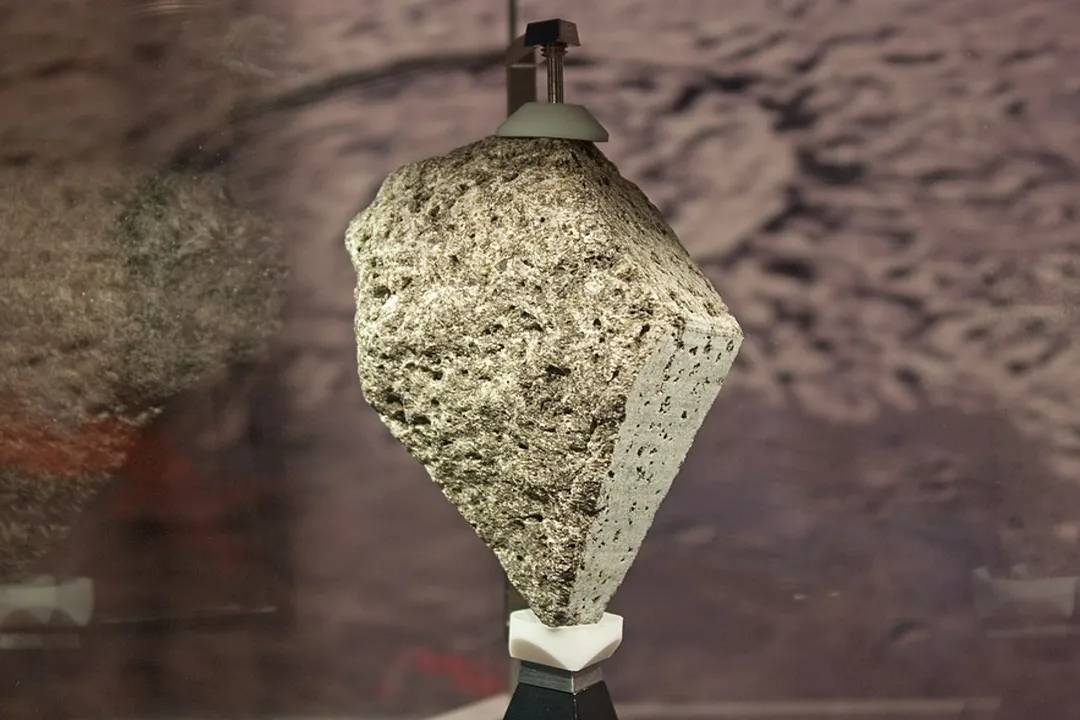
Therefore, planetary scientists must rely on establishing an absolute age scale for crater counting. This involves finding specific geological units on the Moon or Mars whose ages are known, often through samples returned by the Apollo missions (for the Moon) or by cross-referencing features with known ages based on geological mapping tied to those samples. [8] Once an absolute age is tied to a known crater density, that density value becomes a benchmark, allowing scientists to estimate the age of any other surface on that body simply by counting its craters and comparing the density to the established curve. [9]
This calibration step is crucial and also where uncertainty creeps in. The initial age estimates for the lunar maria, for example, were derived from Apollo landing sites. If the assumed age of a landing site is later revised, every crater count calibrated against that site across the entire Moon must be adjusted. It is a constant process of refinement, connecting the surface record to the handful of physical samples we possess. [8]
This reliance on calibration introduces a point worth noting: the relationship between crater density and age is not perfectly linear over billions of years. Early on, the impact rate dropped off very sharply, meaning a small difference in crater density could represent a huge difference in age (e.g., 50 million years). Later on, when the rate stabilized, the relationship becomes much flatter; the same difference in density might represent 500 million years. This nonlinear nature means that crater counting is exquisitely sensitive for very old terrains but less precise for younger features, where subtle degradation features may give a better clue than raw counts alone. [1]
If you are examining an image and see two very young craters, say both less than 100 million years old, counting them might yield a density difference of only one crater per thousand square kilometers. A novice might dismiss this as noise. However, the subtle difference in the sharpness of their ejecta blankets—one slightly softer, one slightly crisper—is the deciding factor, showcasing how morphology serves as the high-resolution "zoom lens" when crater counting becomes too coarse. [2][4] This interplay between the statistical (counting) and the descriptive (morphology) is the hallmark of expert crater dating.
Related Questions
#Citations
The Crater Age Continuum - Mars Education - Arizona State University
How do we distinguish old craters from new ones on the Moon?
[PDF] LRO - The Relative Ages of Lunar Surfaces - Space Math @ NASA
Determining the age of surfaces on Mars
Stupid question, but is there a consensus regarding whether these ...
How do we determine the age of impact Craters? - Quora
Crater counting - Wikipedia
Crater Dating | National Air and Space Museum
Establishing Ages from Mars's Craters - AAS Nova