Will we know alien life when we see it?

The question of whether we can confidently identify life beyond Earth, should we encounter it, moves beyond simple detection and into the much trickier realm of recognition. We are currently searching for life based on what we already know—the chemistry and biology that evolved here on our pale blue dot. [2] This inherent bias presents the central hurdle: will we know alien life when we see it, or will we mistake the truly strange for mere geology or physics anomalies?[10]
# Search Limits

Our current search strategies are primarily focused on finding life similar to our own. For exoplanets, this means searching for biosignatures—atmospheric gases like oxygen, methane, or ozone that, in combination, strongly suggest biological activity. [1][5] We look for planets in the habitable zone, where liquid water could exist, because water is the universal solvent for terrestrial life. [2] This approach is pragmatic; it focuses on the highest probability targets based on our only example of a living world. [1]
However, this focus might blind us to possibilities that are truly alien. Life elsewhere might not be carbon-based, or it might use solvents other than water, perhaps liquid methane or ammonia, or exist in environments we consider inhospitable, like subsurface oceans. [2][10] If an alien biosphere operates on a fundamentally different chemical toolkit, the biosignatures we are programmed to search for—like the coexistence of oxygen and methane—might be completely absent. [10] We risk overlooking life because it doesn't fit the terrestrial template we have built. [2]
# Chemical Signals

The detection of biosignatures hinges on finding chemical imbalances that are highly unlikely to arise through non-biological processes alone. [10] On Earth, for example, oxygen and methane exist together in the atmosphere, but they rapidly destroy each other unless constantly replenished by living organisms—photosynthesis pumping out oxygen, and methanogens producing methane. [1][5] Finding such a clear disequilibrium in an exoplanet’s atmosphere would be a strong hint.
The difficulty arises when considering false positives. Many chemical processes unrelated to life can produce single gases that mimic biosignatures. For instance, some geological processes can generate methane, and water splitting driven by stellar radiation can produce oxygen. [5] The breakthrough moment isn't just seeing a single unusual gas; it’s the combination and context. If we find Earth-like oxygen and methane simultaneously on a planet orbiting a star very different from our Sun, the probability of an unknown abiotic pathway explaining both simultaneously plummets dramatically compared to finding just one of those gases alone. The co-occurrence itself begins to act as an emergent signature that points toward a complex, self-sustaining process, even if we cannot immediately name the lifeforms responsible. [5][10]

# Artificial Markers
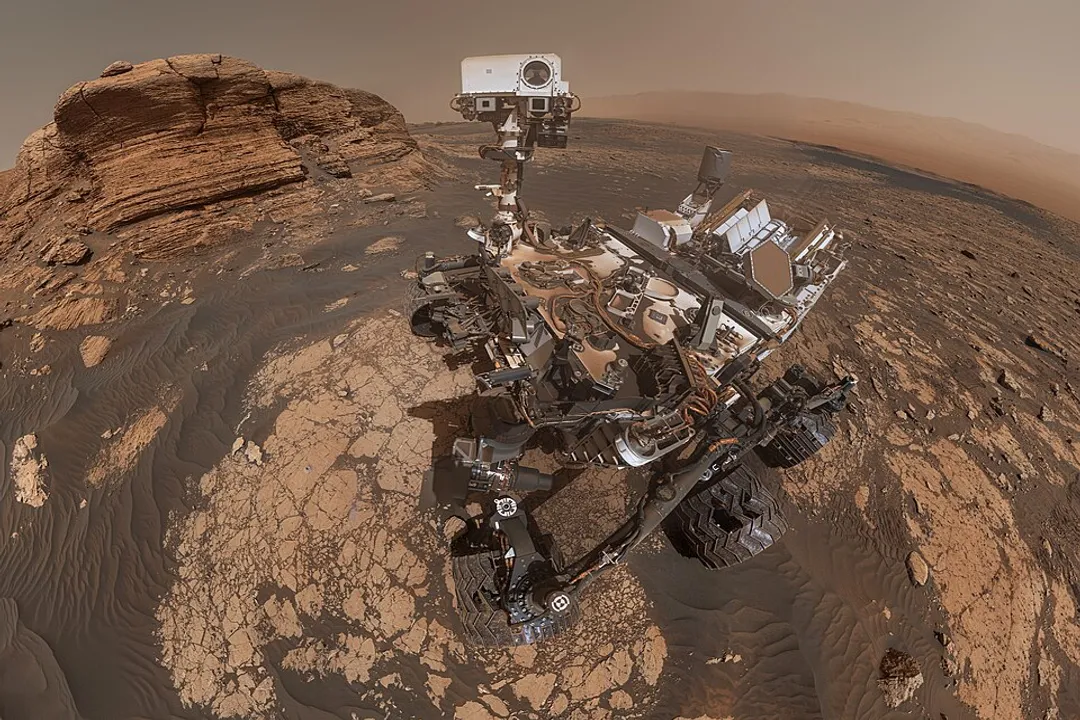
While recognizing a microscopic organism on an ocean moon might be incredibly difficult, recognizing evidence of intelligence might be comparatively straightforward. [5] This falls under the umbrella of technosignatures.
Technosignatures are observations that can only be reasonably explained by advanced technological activity. [5] Examples include:
- Narrow-band radio signals: Artificial, structured signals that stand out clearly against the background noise of the universe. [5]
- Vast structures: Hypothetical megastructures, such as a Dyson swarm attempting to capture a star’s total energy output, would produce distinct, unnatural patterns in a star's light curve. [5]
- Atmospheric pollutants: The presence of industrial byproducts or artificial, long-lived chemicals in an atmosphere might signal technology, analogous to the way industrial pollutants reveal human activity on Earth. [7]
The relative ease of spotting a technosignature lies in the fact that we are looking for something deliberately organized or fundamentally non-natural, whereas biosignatures are subtle chemical imbalances that nature itself might occasionally stumble upon through non-living means. [5]
# Verification Hurdles

Even when a compelling signal—whether a strange gas mix or a pulsing radio wave—is detected, the initial "discovery" is rarely accepted as definitive proof of alien life. The scientific community demands extremely high standards for a claim that would fundamentally alter humanity's place in the cosmos. [5][7]
The path to acceptance requires rigorous confirmation across multiple independent lines of evidence. A signal first reported by one observatory must be confirmed by a different observatory using different instrumentation. [7] If the evidence points toward a biosignature, scientists must exhaust every known abiotic (non-life) chemical or geological explanation before favoring a biological one. [10] The scientific burden of proof here is significantly heavier than for a typical discovery because the stakes are so high, meaning a premature announcement could lead to significant embarrassment or misdirection of resources. [5]
The true test isn't the initial detection by one telescope; it is the ability of independent scientific teams, using different methodologies—perhaps one team using spectroscopy from the James Webb Space Telescope and another using future radio arrays—to arrive at the same conclusion within a defined timeframe. This consensus, built on repeated, independent verification, forms the necessary barrier to true acceptance. [7]
# Exotic Life Forms
The most profound challenge remains the possibility of life forms that defy our current imagination. What if the chemistry isn't just slightly different, but radically so? Consider life that doesn't need a planet, perhaps existing as self-replicating chemical structures floating within a gas giant’s atmosphere, or even non-chemical, purely informational life forms existing within plasma or magnetic fields. [2]
If life operates on physics we don't yet fully understand, or utilizes energy sources we aren't monitoring, we might literally be looking right at it and classifying it as background noise. Imagine looking for life on a distant world by analyzing its atmosphere when the actual life resides deep beneath its icy crust, using geothermal energy and chemistry entirely foreign to our surface-dwelling assumptions. Our current survey maps are essentially checklists based on terrestrial necessity: water, carbon, energy, temperature range. [1] If alien life has bypassed one or more of those necessities, the corresponding search method becomes useless. [2]
# Readiness Mindset
Preparing for a discovery requires more than just building better telescopes; it demands a shift in scientific philosophy away from simple pattern matching. Researchers must actively begin developing theoretical models for non-carbon life or non-water solvents, even if those theories currently seem far-fetched. [2] This kind of theoretical groundwork prepares the community to recognize anomalies that don't neatly fit into existing models.
Furthermore, when an unusual reading comes in—say, a very high concentration of an unusual, stable atmospheric gas on an M-dwarf planet—the initial response must be caution tempered by open-mindedness. Rather than immediately trying to force the data to fit known models (e.g., "This must be an unknown volcano"), the immediate next step should be to search for contradictions in the data that only a living system could explain. Does this strange gas cycle seasonally? Does its presence correlate with changes in surface temperature that seem too rapid for standard geology to account for? The key is shifting the default hypothesis from "natural process" to "unknown process" requiring deeper investigation, rather than immediately settling on the closest known natural explanation. [10]
For the public and the scientific community alike, accepting an alien life discovery will be a process, not an event. It will involve careful documentation, peer review, and eventually, a cultural acceptance that our Earth-centric view of biology is just one successful outcome among potentially infinite possibilities. [2][7] The search is not just about finding a signal; it is about training ourselves to recognize a signal that we cannot yet imagine.
#Videos
Alien Life: Will We Know It When We See It? - YouTube
Related Questions
#Citations
Can We Find Life? - NASA Science
Will We Know Alien Life When We See It? - Nautilus Magazine
Extraterrestrial life - Wikipedia
Will we discover Extra-Terrestrial life during our lifetime? - Reddit
The essential guide to proving we've found alien life | New Scientist
Will We Know Alien Life When We See It? by Tina Hesman Saey
Will we know about alien life when we see it? - Quora
Will we know alien life when we see it? - Science News Explores
Alien Life: Will We Know It When We See It? - YouTube
What if we find alien life and don't recognize it? - EarthSky