Are humans genetically modified by aliens?

The notion that human biology is not purely the product of terrestrial evolution, but rather the result of deliberate manipulation by advanced extraterrestrial intelligence, captures a powerful thread of public imagination. This idea surfaces across various media, from fringe theories to speculative fiction, suggesting that key leaps in our development were engineered by beings from beyond our solar system. [4][9] While mainstream biology grounds human origins firmly in the established lineage of primate evolution, the enduring appeal of the alien engineer hypothesis warrants a closer look at what these claims entail and what current science suggests about our genetic makeup.
# Alien Design Claims
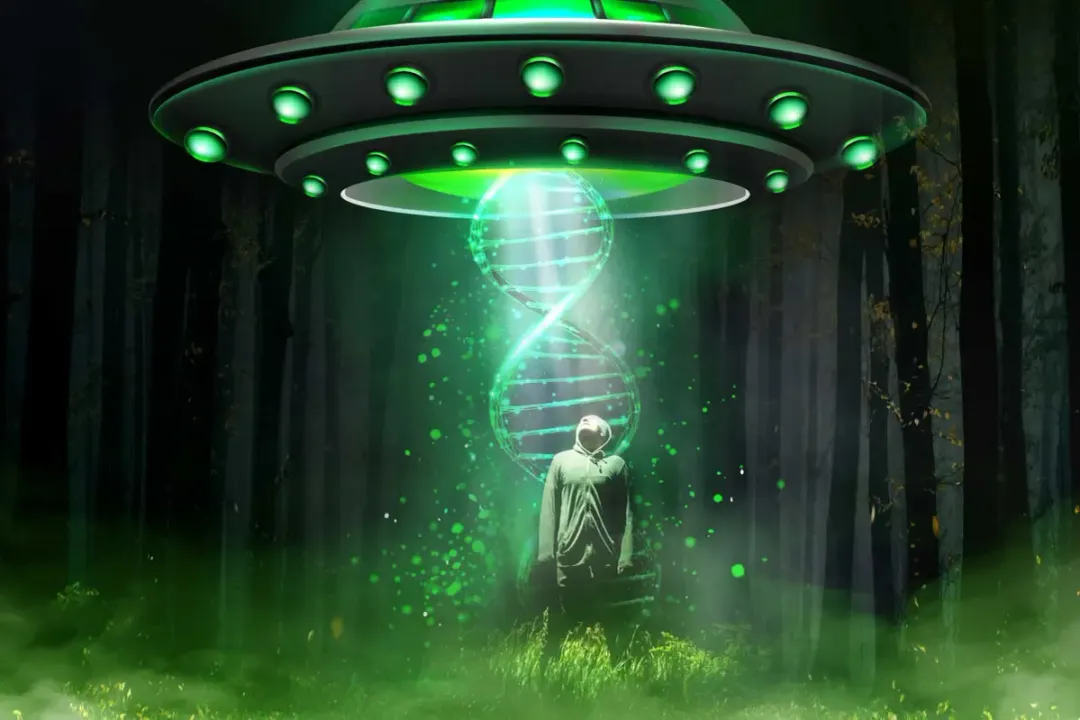
The specific theories suggesting extraterrestrial modification are varied, though they generally center on introducing novel genetic material or accelerating our evolutionary timeline. [2] One prominent concept posits that complex genetic sequences found within the human genome are foreign introductions, implying an intentional, non-terrestrial source. [2] Such claims sometimes specify ancient intervention, perhaps millions of years ago, positioning early hominids as subjects in an extraterrestrial experiment or as vessels for a complex life-seeding project. [4]
Some public instructors have advanced even more direct hypotheses, suggesting that advanced alien species are currently involved in a breeding process with humans. [7] These scenarios paint a picture where humanity is either the direct descendant of hybrid offspring or the product of continuous, controlled genetic fine-tuning. On online forums dedicated to speculation, the idea persists that ancient, possibly parasitic, aliens could have played a role in shaping our development to suit their own purposes. [4]
The argument for external influence often stems from perceived anomalies or gaps in the fossil record or genetic complexity. Proponents point to the sheer speed of human cognitive development compared to other primates as a marker that natural selection alone might not fully account for, suggesting a "push" from an external designer. [9]
# Genetic Structure
From a conventional scientific standpoint, the foundation of life on Earth, including human life, is based on DNA, a molecule built from the elements readily available on our planet—carbon, hydrogen, oxygen, nitrogen, and phosphorus. [1] The entire structure of our genetic code, from the double helix shape to the mechanism of replication and transcription, is intrinsically linked to terrestrial biochemistry. [1]
The scientific consensus traces Homo sapiens through deep evolutionary time, supported by extensive fossil evidence, comparative anatomy, and genomic sequencing that reveals our shared ancestry with other great apes. Our genome is demonstrably a mosaic, containing segments inherited from archaic hominins, evidence of ancient viral insertions, and natural mutations accumulated over millennia. [6]
When considering the possibility of alien engineering, a key scientific hurdle arises regarding the delivery mechanism itself. If an advanced civilization were to genetically modify a species, one might logically expect them to employ a technology far more advanced than DNA—perhaps a mechanism that doesn't rely on the messy, imperfect replication and repair systems characteristic of DNA-based life. [6] DNA requires an extremely complex cellular environment to function, involving ribosomes, enzymes, and specific membrane structures. Simply inserting a segment of DNA and expecting it to integrate seamlessly and function over millions of years, without extensive external maintenance, presents a significant biochemical challenge. [6]

# Origin Theories
The debate often conflates two distinct concepts: panspermia and direct genetic engineering. Panspermia is the hypothesis that life's building blocks, or even simple microorganisms, might be distributed throughout the universe and could arrive on planets like Earth via meteorites or comets. [1] This suggests that the origin of life's raw materials might be extraterrestrial, but it does not imply conscious design or engineering of complex species like humans. NASA has discussed the possibility that the early Earth was "seeded" with necessary organic molecules from space. [1]
Direct engineering, conversely, implies intelligent, goal-oriented manipulation. If advanced beings modified our DNA, we would theoretically look for genetic signatures that are biochemically different from the rest of our code or that serve a function clearly tailored to an external agenda rather than immediate terrestrial survival.
Here is a brief comparison of the primary models regarding human genetic input:
| Model | Primary Mechanism | Timeframe Implied | Empirical Support |
|---|---|---|---|
| Standard Evolution | Natural Selection, Mutation, Genetic Drift | Billions of Years | Extensive fossil and genomic data [1] |
| Panspermia | Accidental seeding of basic life components | Early Earth (4.5 to 3.8 billion years ago) | Possibility of organic molecule delivery [1] |
| Genetic Engineering | Intentional insertion/modification by aliens | Variable (Ancient or Recent) | Anecdotal claims; no verified sequence evidence |
If an advanced alien race had intervened, their genetic legacy might manifest in ways that are difficult to distinguish from very rapid, intense natural selection that occurred during critical junctures in human development. For instance, the sudden appearance of advanced cognitive capacity in the fossil record—a phenomenon often pointed to by proponents—could also be interpreted as an instance where ecological pressures favored subtle, pre-existing genetic variations that suddenly provided a massive advantage, rather than requiring an external "patch". [5]
# Evidence Status
Despite the captivating narratives, the scientific community maintains that concrete, verifiable evidence supporting the claim of alien genetic modification is absent. [2] While studies look for anomalous sequences or unusual genetic behavior, claims regarding "alien DNA" within the human genome have not withstood rigorous peer review or replicated independent verification sufficient to shift the accepted model of human evolution. [2][5] Scientists often conclude that what is sometimes interpreted as an anomaly is simply a poorly understood aspect of known biological processes or common genetic inheritance. [5]
The scientific focus remains on studying known mechanisms of genomic change. For example, the field of horizontal gene transfer—where organisms acquire genetic material from other organisms without sexual reproduction—shows how complex the reality of genetic borrowing can be, even within Earth's biosphere. Such transfers, while usually occurring between bacteria, illustrate that DNA can move and integrate in surprising ways, demonstrating the inherent plasticity of genomes without invoking interstellar travel. [5]
Furthermore, the sheer uniformity of the genetic code across nearly all life on Earth—a universal triplet codon system—is often cited as strong evidence for a single common ancestor, a finding that would be complicated, though not entirely refuted, by multiple, independent engineering events by distinct alien groups. [6] If different aliens had engineered different human subgroups using incompatible genetic operating systems, we would expect to see a far more fragmented, chemically inconsistent genome across the global population. The remarkable consistency of the code suggests a single, shared terrestrial origin event.
The continuing search for extraterrestrial life focuses on finding the conditions for life elsewhere, or detecting unambiguous biosignatures, which is a very different objective than proving we are a deliberate genetic experiment. Until a specific, alien-derived segment of DNA is isolated, characterized, and shown to be biochemically and functionally distinct from all known terrestrial inheritance pathways, the hypothesis remains firmly in the realm of speculation, however compelling the stories may be. [5] The true mystery remains not who modified us, but how life arose here in the first place, a question that even the most advanced scientific instruments are still working to fully answer. [1]
Related Questions
#Citations
Does DNA Have Extraterrestrial Origins? - NASA SVS
'Alien' DNA lurks inside human genome, scientist claims
We Are the Aliens | Scientific American
millions of years ago, parasitic ancient aliens implant their DNA into ...
What do you think of the theory that the human DNA was genetically ...
Alien DNA in Humans?
Space aliens are breeding with humans, university instructor says ...
Can aliens have combined human DNA with extraterrestrial beings?
'Alien' DNA May Exist Within Humans, Genetic Study Claims - VICE