What is the connection between stars and humans?

The night sky, speckled with distant suns, has captivated humankind since we first looked up. This connection is not merely philosophical or historical; it is deeply physical. We are, quite literally, the physical manifestation of ancient celestial events, sharing a material bond with the distant, burning furnaces that populate the darkness. [2][3] This relationship spans from the very atoms that compose our bodies to the structures of civilization built upon tracking their movements. [1][5]
# Cosmic Origins
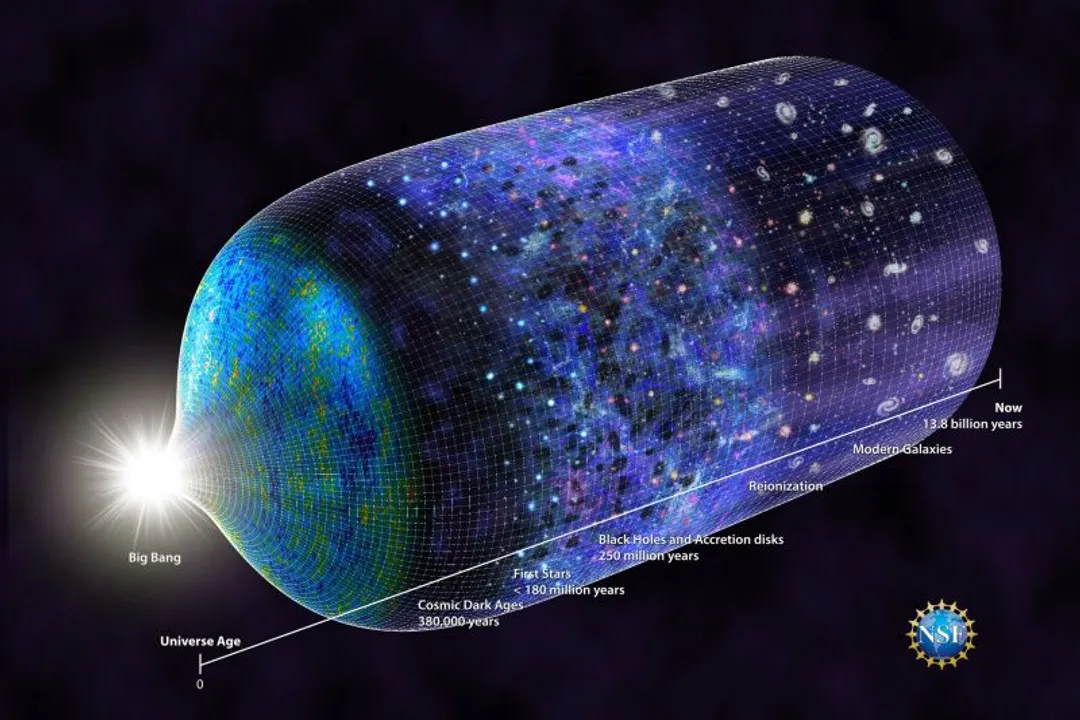
The scientific understanding of our physical relationship with stars centers on nucleosynthesis—the process by which elements are created. Stars function as cosmic forges. Throughout their active lives, they fuse lighter elements into heavier ones, steadily building up the periodic table. [3] Elements like hydrogen and helium were created in the Big Bang, but almost everything else essential for life required stellar power. [2]
When massive stars exhaust their fuel, they collapse and then explode as supernovae. These cataclysmic events provide the extreme energy necessary to forge elements heavier than iron, scattering them across the galaxy. [3] These cosmic ejections seed interstellar clouds, which eventually collapse to form new stars, new planets, and, ultimately, us. [2]
Consider the composition of your own body. The calcium in your bones, the oxygen you breathe, and the carbon that forms the backbone of all organic life originated inside a star that lived and died long before our solar system existed. [3] A particularly striking example is the iron circulating in your red blood cells, responsible for carrying oxygen. That iron, crucial for sustaining human activity, was forged in the fiery heart of a long-extinct star. [8] The vast temporal disconnect between the stellar creation event—often occurring millions or even billions of years ago—and our current moment underscores the sheer patience of the universe in preparing the building blocks for complex life forms like ourselves. [2]
To make this physical inheritance clearer, we can map the elements that constitute our physical being back to their fiery genesis:
| Biological Element | Stellar Origin | Process Example |
|---|---|---|
| Hydrogen, Helium | Big Bang Nucleosynthesis | Formed the initial stellar fuel. |
| Carbon, Oxygen, Neon | Massive Star Fusion | Created during the star's main life phase. |
| Gold, Uranium | Supernova or Neutron Star Merger | Formed during the star's explosive death. |
| Iron | Massive Star Core Fusion/Supernova | Formed in the final stages before collapse. [3][8] |
This material kinship means that every human being carries within them the dust of countless stellar generations. [7]
# Celestial Guides

Long before science explained the origins of matter, the observable stars provided practical, indispensable service to developing human societies. [1] They were, quite simply, the first reliable guides for navigation, timekeeping, and seasonal measurement. [5]
For nomadic ancestors, the stars offered a fixed map in an otherwise shifting world. [1] By observing the consistent paths and positions of specific constellations, travelers and sailors could maintain their bearing across vast oceans or featureless deserts. [5] This knowledge was not just a matter of convenience; it was fundamental to trade, migration, and survival. [1]
Furthermore, the cycle of the stars dictated life on Earth long before mechanical clocks. [5] The rising and setting of certain stars marked the precise start of seasons, signaling the correct times for planting crops or preparing for harsh winters. [1] Ancient cultures developed intricate calendrical systems based on these regular celestial events, linking astronomical observation directly to agricultural success and social planning. [5] The predictability of the heavens offered an anchor in the chaos of the natural world, establishing rhythms for human organization. [1]
# Cultural Views
The consistent, unwavering presence of the stars naturally wove them into the fabric of human belief, culture, and mythology. [1][9] They became messengers, deities, or ancestors watched over by the night sky. [1] Nearly every civilization developed narratives to explain the constellations, connecting the gods or heroes to specific points of light, serving as foundational stories that defined a people’s worldview. [9]
This deep historical relationship sometimes leads to inquiries about whether the stars exert an influence beyond physical matter—specifically on human behavior, personality, or destiny. [6] While astronomy charts the physical mechanics of the cosmos, systems like astrology attempt to map celestial positions onto human affairs. [6] It is important to distinguish between the scientifically verified physical connection (we are made of their material) and the interpretive, belief-based systems suggesting influence over daily life or fortune. [6] While the stars undoubtedly influence human culture and art, providing inspiration and a sense of place in the vast universe, [5][9] the direct, causal link between the position of a distant star and an individual's daily actions or fate remains outside the realm of demonstrable physical science. [6]
This dual perspective—the demonstrable reality of stardust and the enduring mythos—shows the depth of the human need to find meaning in the cosmos. [9] We look up seeking knowledge of where we came from, and perhaps, where we are going. [1]
# Temporal Reflection
The material connection is undeniable, but the sheer scope of time involved in this relationship invites reflection. When you see a star that appears bright overhead tonight, you are seeing light that might have traveled for tens, hundreds, or even thousands of years to reach your eye. [3] This means the star is not as it is now, but as it was when ancient civilizations were first charting the skies or building monuments like Stonehenge. [1]
This realization forces a unique kind of temporal humility. The atoms that form the carbon in your cell structure have participated in chemical reactions across light-years and eons. [2] When we consider that the elements required for human life—the building blocks—were manufactured in events that occurred before Earth even solidified, it frames our contemporary concerns against a backdrop of immense cosmic time. [3]
It is worth noting that while the heavy elements are stellar products, the mechanism for combining them into life required local conditions provided by our planet—liquid water, a stable atmosphere, and a specific geological timeframe. [2] The universe provided the ingredients; Earth provided the kitchen. Our existence is a highly specific result of both stellar alchemy and planetary chemistry occurring at the right moment. [3]
To maintain a grounded perspective on this massive connection, try this simple mental exercise: the next time you feel overwhelmed by a short-term challenge, pause to consider that the iron atom allowing you to feel the anxiety, or the oxygen allowing you to breathe through it, was synthesized in an environment far more violent and immense than anything you can perceive on Earth. [8] That inherent link to the powerful, enduring cosmos can offer a subtle recalibration of scale, a quiet reminder of your participation in something far older and grander than momentary concerns. [9]
Related Questions
#Citations
A History of Human Connection with Stars | Medium
Are we made of stardust?
Humans Really Are Made of Stardust, and a New Study ...
The Connection Between Humans and Star Dust
THE IMPORTANCE OF STARS FOR HUMANS
Do the stars in the sky have any relationship with human ...
A question about humans and us being stardust.
The stars within us | NSF - U.S. National Science Foundation
Our universal connection to the stars