What is the final stage of a very high mass star?
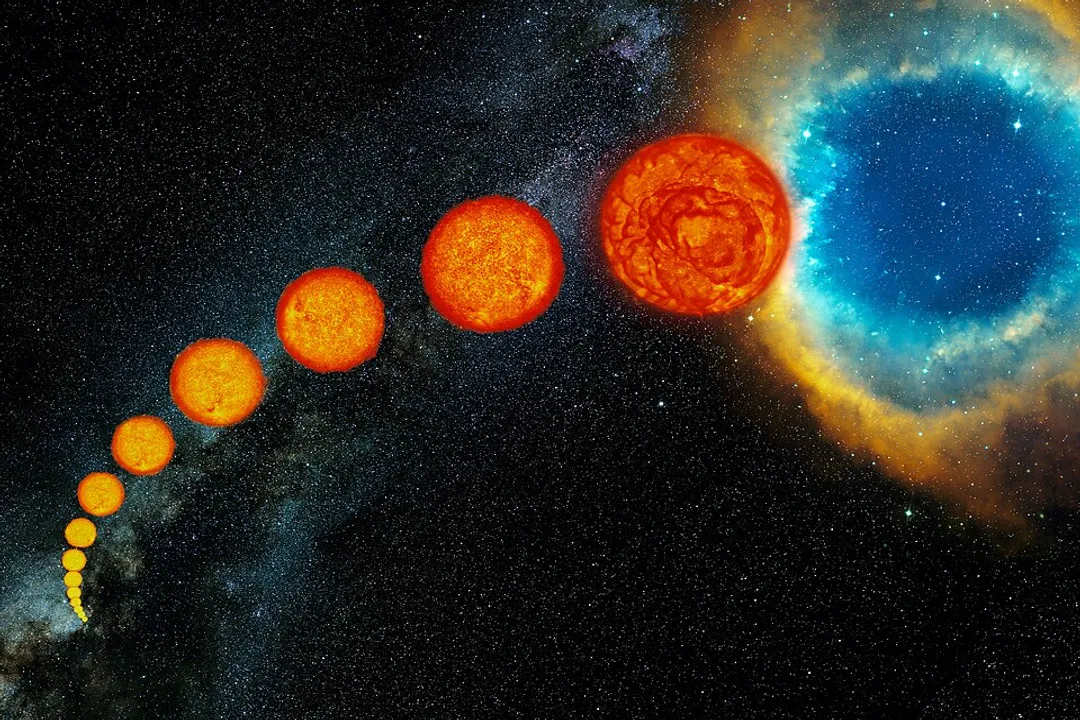
The final act of a very high mass star is not a gentle dimming, but a catastrophic, universe-shaking collapse that leaves behind one of the most extreme objects known to physics. When we speak of "very high mass," we are generally referring to stars starting out at perhaps to times the mass of our Sun, or even much greater. These stellar behemoths live fast and die violently, their lifespans measured in mere millions of years, contrasting sharply with the billions of years allotted to smaller stars like our Sun. Their end is dictated by the relentless force of gravity overcoming the outward pressure generated by nuclear fusion within their cores.
# Stellar Mass
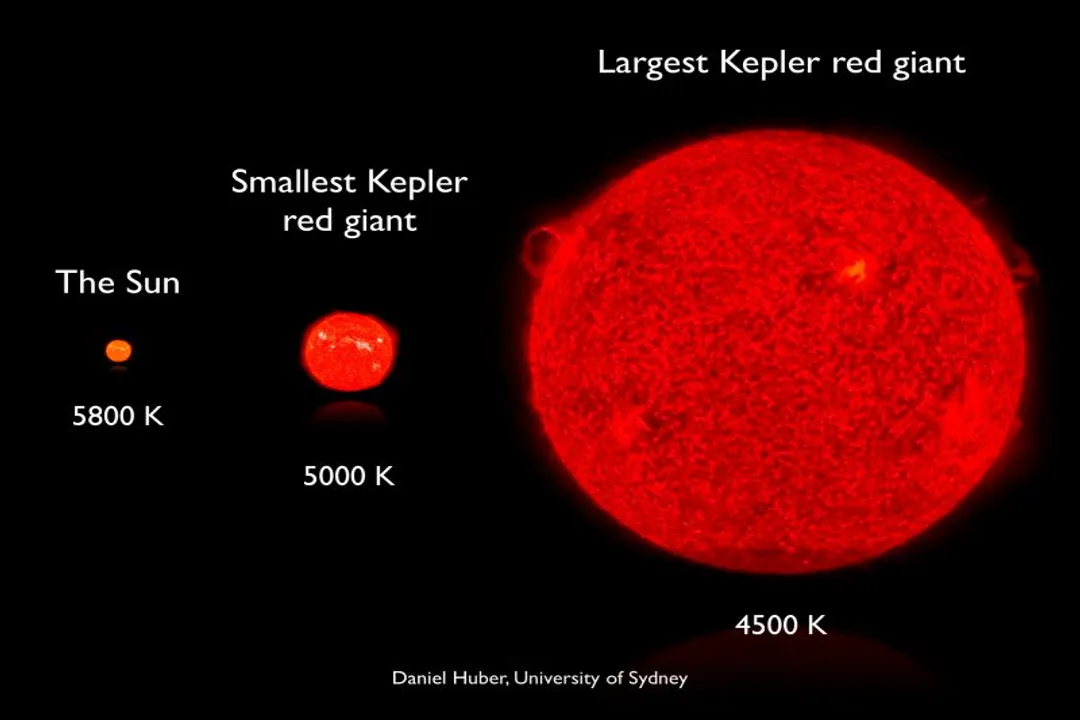
The key differentiator in stellar fate is mass. Stars are classified based on their initial mass, which determines their internal temperatures, luminosity, lifespan, and eventual demise. Stars with masses greater than about times the mass of the Sun are categorized as high-mass stars. These stars burn hotter, fuse heavier elements faster, and progress through their evolutionary stages with dramatic speed compared to low-mass counterparts. The life cycle of these giants is a progression of burning lighter elements into heavier ones, a process that continues until the star can no longer extract energy from fusion.
# Core Burning
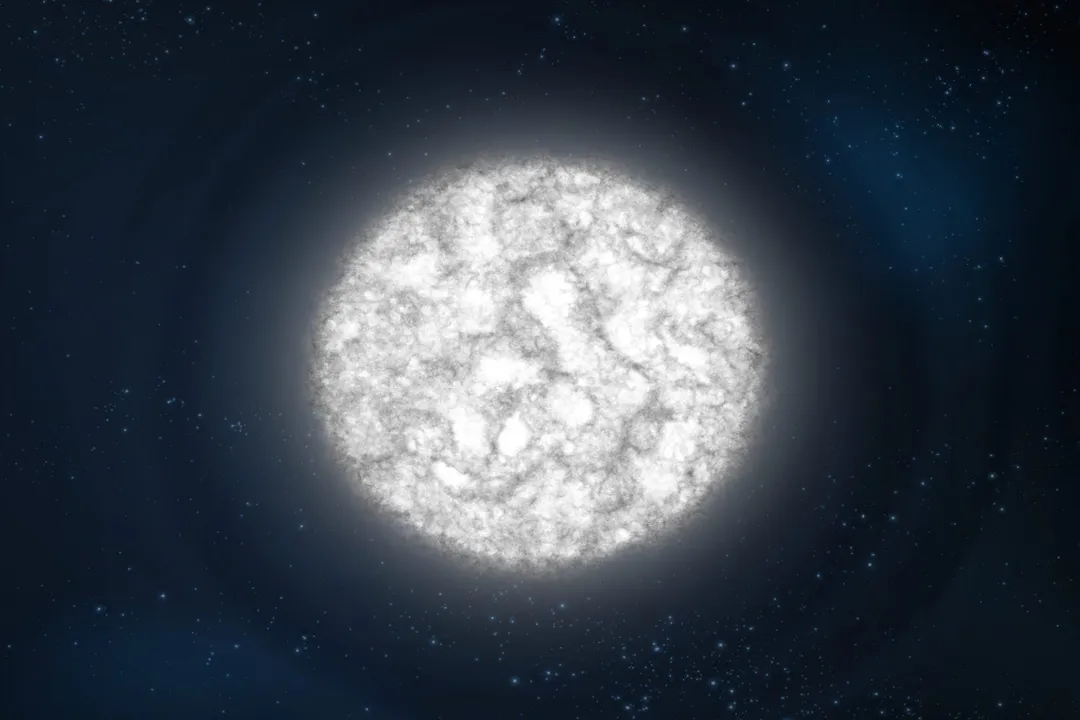
Throughout its main sequence life, the star maintains equilibrium, with gravity pulling inward balanced by the thermal pressure from hydrogen fusion in the core pushing outward. Once the hydrogen fuel is exhausted in the core, the star begins to evolve off the main sequence. For a high-mass star, this transition is marked by the ability to fuse elements heavier than helium. Unlike lower-mass stars that might eventually become white dwarfs after fusing helium into carbon and oxygen, massive stars achieve core temperatures and pressures high enough to ignite subsequent fusion stages.
This sequential burning creates an onion-like structure within the star's interior. Hydrogen fuses into helium in an outer shell, helium fuses into carbon and oxygen in a deeper shell, and so on. The process continues through carbon, neon, oxygen, and silicon burning. Each subsequent stage burns much faster than the last, consuming the available fuel in a fraction of the time, because the energy released per reaction decreases as the atomic mass of the product increases.
| Fuel Source | Product | Approximate Lifetime in Core (Relative) |
|---|---|---|
| Hydrogen | Helium | Longest (e.g., millions of years) |
| Helium | Carbon/Oxygen | Shorter (e.g., hundreds of thousands of years) |
| Carbon | Neon/Magnesium | Much Shorter (e.g., a year or less) |
| Neon | Oxygen/Magnesium | Weeks |
| Oxygen | Silicon | Days |
| Silicon | Iron | Hours |
This table illustrates the increasing urgency of the star's final days; what took millions of years in the first step now takes mere hours in the silicon-burning phase. The very high mass star has the necessary gravitational pressure to force these heavier elements to fuse, maintaining stability momentarily through each step.
# Iron Core
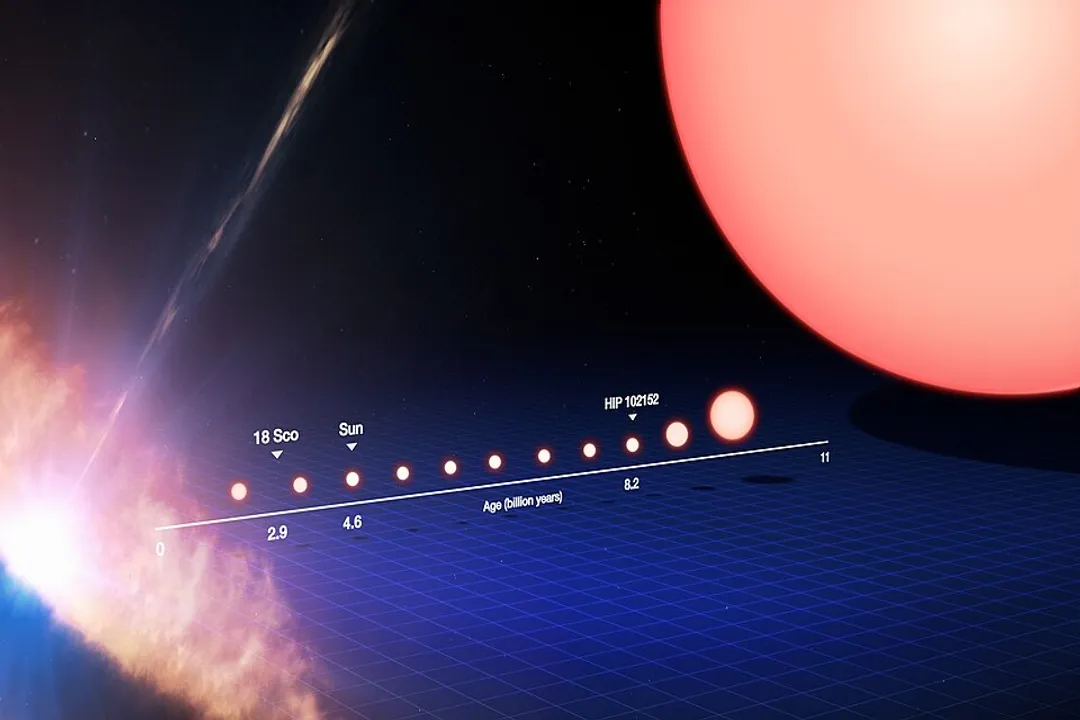
The fusion chain halts definitively at iron (). Iron is the most stable atomic nucleus, meaning that fusing iron nuclei consumes energy rather than releasing it. Once the core is predominantly composed of iron, the star loses its ability to generate the thermal pressure required to counteract gravity. At this point, the star has run out of options for energy generation through standard thermonuclear fusion. Gravity wins the final, immediate battle, and the core begins to collapse catastrophically.
The mass of this inert iron core is crucial. In lower-mass stars that evolve into white dwarfs, the Chandrasekhar limit (about $1.4$ solar masses) dictates the maximum stable mass supported by electron degeneracy pressure. However, the core of a massive star far exceeds this limit, meaning electron degeneracy pressure is instantly overwhelmed when fusion stops. The iron core rapidly collapses inward under its own immense weight.
# Collapse Begins
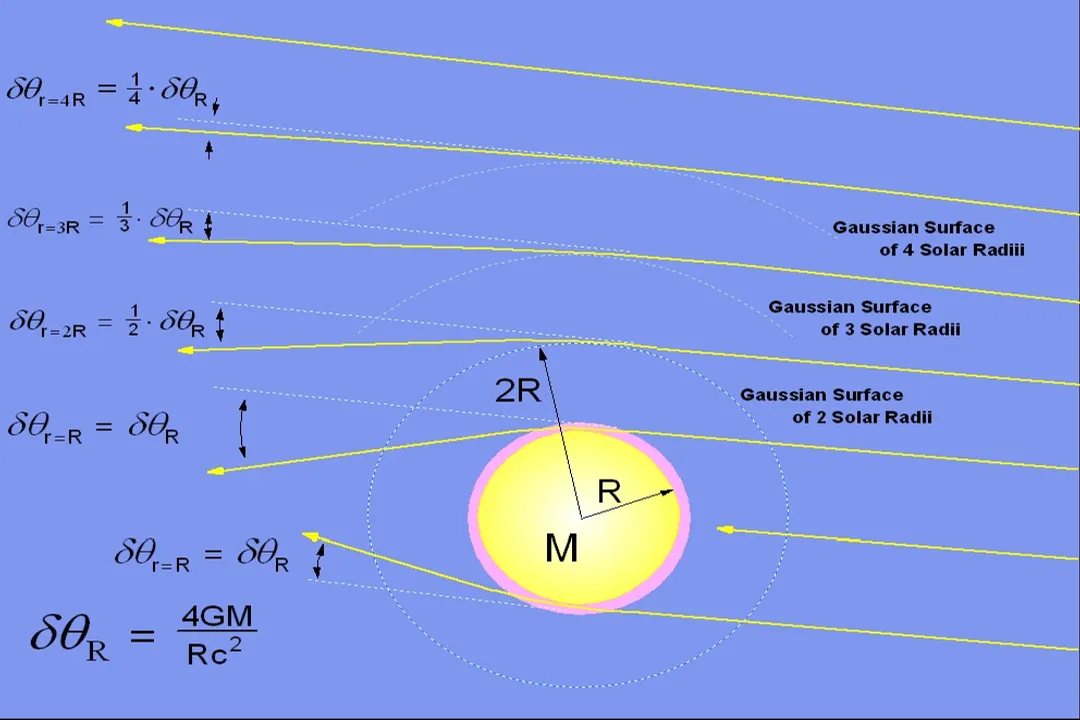
The collapse of the iron core is incredibly rapid, occurring in mere fractions of a second. As the core shrinks, the density skyrockets. The pressure becomes so extreme that electrons are forced into the protons, a process called inverse beta decay, resulting in the formation of neutrons and the release of neutrinos.
This process removes the remaining outward pressure supported by electrons and dramatically increases the density of the core, squeezing it down to nuclear densities—where atomic nuclei are packed almost perfectly together. When the density reaches this point, the strong nuclear force and, more importantly, neutron degeneracy pressure halt the collapse momentarily. This sudden stop is the pivot point for the star's grand finale.
# Supernova Blast
The material from the outer layers of the star, which is still falling inward, slams into this now incredibly dense, incompressible neutron core. This impact generates a powerful outward-moving shock wave. While the initial shock wave often stalls due to energy loss by producing copious amounts of neutrinos, the massive burst of these neutrinos streaming out from the core re-energizes the shock wave, pushing it outward through the star's layers.
This outward explosion is observed as a Type II Supernova. For a short period, this single event can outshine the entire galaxy in which the star resides. This explosive death enriches the universe by synthesizing elements heavier than iron—like gold, silver, and uranium—during the supernova event itself, scattering them, along with the star's lighter core elements, across interstellar space. This process of cosmic recycling is foundational to the formation of future stars and planets.
# Remnant Fate
The final stage of the very high mass star is defined by what remains after the supernova shock wave blasts away the outer envelopes. The nature of the remnant depends critically on the mass of the collapsing core after the explosion.
If the initial star was massive enough to trigger the supernova but the remnant core mass is between approximately $1.4$ and $3$ solar masses (the Tolman-Oppenheimer-Volkoff, or TOV, limit), the neutron degeneracy pressure successfully supports the remnant against further collapse. The result is an incredibly dense, rapidly spinning object known as a neutron star. Neutron stars are fascinating objects, packing the mass of several Suns into a sphere only about to kilometers across.
However, for the very high mass stars, the mass left behind in the core often exceeds this critical TOV limit. This is where the evolution diverges into the truly final, most extreme state possible for a massive stellar object.
# Black Hole
When the remnant core mass exceeds the maximum stable mass for a neutron star—often cited around $2.5$ to $3$ solar masses, though the exact upper limit is still a topic of research—even the immense force of neutron degeneracy pressure is insufficient to withstand the crushing grip of gravity.
The collapse does not stop at nuclear density; it continues indefinitely. The matter is compressed into an infinitely small, infinitely dense point called a singularity. This forms a stellar-mass black hole. The defining characteristic of a black hole is its escape velocity, which exceeds the speed of light within a certain boundary known as the event horizon. Nothing, not even light, that crosses this boundary can escape the black hole's gravitational pull.
It is interesting to consider the role of angular momentum here. While the star’s core spins rapidly as it collapses into a neutron star (often resulting in a pulsar), if the collapse is too extensive, the resulting black hole may still retain a high rotational velocity. A rotating black hole, described by the Kerr metric in general relativity, has a more complex structure than a non-rotating Schwarzschild black hole, featuring an ergosphere outside the event horizon where spacetime itself is dragged around the singularity. This distinction in the final state, based on a property like spin, adds another layer of complexity to the "final stage" beyond just mass. For the reader interested in tracking these behemoths, remember that while we can observe the supernova explosion, the final product—the black hole—is inherently invisible, detectable only through its gravitational influence on surrounding matter and spacetime. The transformation from a star spanning millions of kilometers to an object defined by a few tens of kilometers, or even just a singularity, represents the most powerful gravitational phenomena generated by stellar death.
Related Questions
#Citations
High mass star - Las Cumbres Observatory
Stellar evolution - Wikipedia
Stellar Evolution - | The Schools' Observatory
The Lives of High Mass Stars - NMSU Astronomy
Life Cycle of Stars and Their Transformation - Facebook
Life Cycle of High Mass Star | American Scientific Research Journal ...
Star Basics - NASA Science
Stars - High Mass Stellar Evolution - Astronomy Online
Massive Star | Definition & Life Cycle - Lesson - Study.com
How Stars Form: A Star's Life Cycle in Six Stages - KiwiCo