Why do stars lose mass?
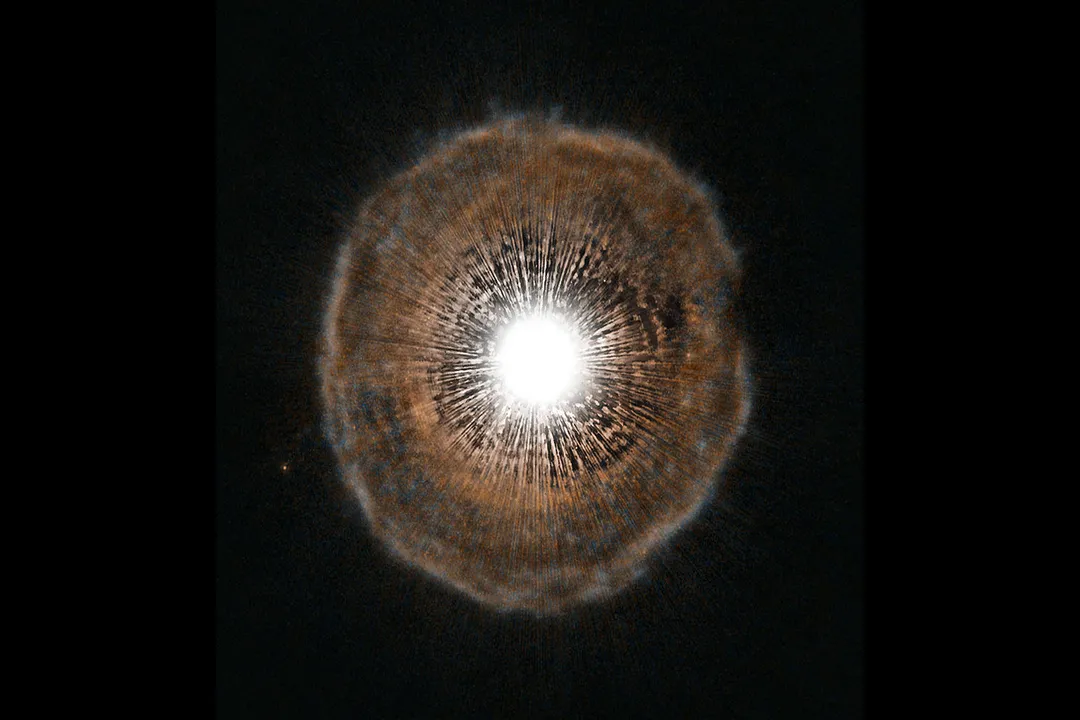
Stars, those luminous beacons that punctuate the night sky, are not static entities; they are dynamic objects undergoing constant, dramatic evolution across billions of years. A fundamental aspect of this evolution involves the steady, and sometimes sudden, shedding of their outer material, leading to a continuous loss of mass throughout their lifetimes. [2][7] This process is intrinsically linked to the extreme physics governing their interiors and exteriors, setting the stage for their eventual demise and contributing recycled elements back into the interstellar medium. [4]
# Fusion Energy
While the engine driving a star's existence is nuclear fusion, which converts mass into enormous amounts of energy according to Einstein's famous equation, , this energy generation itself is distinct from the physical ejection of stellar material. [1] The fusion process within the core is a form of mass loss, as the resulting energy—photons and neutrinos—carries momentum and mass equivalent away from the star. [1] However, when astronomers discuss stellar mass loss, they are usually referring to the actual physical expulsion of atoms, predominantly hydrogen and helium, from the star's outer atmosphere into space, often through processes that take much longer than the main sequence lifetime but account for vastly greater total mass percentages. [2][4]
# Stellar Winds
The primary, persistent mechanism by which a star sheds its material throughout its life, long before it becomes a giant, is the stellar wind. [2][7] These winds are essentially continuous streams of charged particles flowing outward from the stellar surface into the surrounding space. [2] The driving force behind these outflows is a combination of thermal expansion and the outward push of radiation pressure. [7]
For stars like our Sun, which are on the "main sequence" (the longest phase of their lives), the winds are relatively gentle. The heat generated by core fusion creates an atmosphere hot enough to expand rapidly, with photons pushing the gas outward. [2] In more luminous stars, particularly massive ones, the radiation pressure becomes so intense that it can strip away the outer layers very effectively, leading to rapid mass loss even while they are still fusing hydrogen. [4] The physics behind how these winds accelerate from subsonic speeds near the surface to supersonic speeds farther out involves complex interplay between magnetic fields, thermal energy, and the radiation field, a topic that has seen continuous refinement in astrophysics. [7][8]
# Giant Phase
The most dramatic period of mass loss occurs when a star exhausts the hydrogen fuel in its core and begins the transition into a red giant or supergiant phase. [4][5] As the core contracts and heats up, the outer layers of the star expand to immense sizes, becoming incredibly extended and loosely bound. [2]
When a star enters the red giant phase, its surface gravity drops significantly relative to its total mass because the star is so large, making the outer layers much easier to dislodge. [5] For stars similar in mass to the Sun, this phase can result in the loss of a very substantial fraction of their initial mass—estimates suggest that stars like the Sun might lose between 30 and 50 percent of their total mass during this late evolutionary stage. [5] This ejected material forms an expanding shell of gas around the star, which eventually becomes a planetary nebula, enriching the cosmos with processed elements like carbon, nitrogen, and oxygen. [8] The rate of loss here is orders of magnitude higher than the quiet stellar winds experienced during the main sequence. [4]
# Evolutionary Impact
The total amount of mass a star loses over its entire lifetime is not merely an astronomical curiosity; it is a critical determinant of the star's final fate. [3] A star's initial mass dictates its core temperature, its luminosity, and the ultimate composition of its remnant. [4]
For lower-mass stars, the significant mass loss during the red giant phase is essential because it reduces the remaining core mass. [8] If a star loses enough material, the remnant core—the stellar ash—will be too light to collapse under its own gravity into a black hole. [3] These stars settle down as white dwarfs, dense remnants supported by electron degeneracy pressure. [8]
Conversely, stars that begin their lives with significantly greater mass (often considered above about 8 solar masses, though the precise threshold is complex) experience mass loss, but perhaps not enough to prevent a catastrophic end. [3] If the core remnant mass after all evolutionary mass loss exceeds a certain limit, often associated with the Chandrasekhar limit (about $1.4$ solar masses) for white dwarfs, or a higher limit for more massive progenitors, the pressure supporting the core will fail, leading to a supernova explosion and, if the initial mass was high enough, the formation of a neutron star or a black hole. [3] Therefore, the stellar wind and the red giant ejection are cosmic regulators, adjusting the initial mass down to a final mass dictated by the laws of gravity and quantum mechanics. [3]
# Loss Rate Comparison
The scale of mass loss varies enormously across the stellar population, which makes direct comparisons between different star types illuminating. While the Sun will lose a fraction of its mass during its entire post-main sequence life, massive stars experience a far more aggressive process. A Sun-like star might lose mass at a rate of about solar masses per year during its quiescent phase, which is extremely slow. [2]
However, a massive O-type star, burning furiously with intense radiation, might lose mass at rates approaching solar masses per year. [4] Consider this difference: a star losing mass at would shed the mass equivalent of the entire Sun in one million years, whereas the Sun requires $100$ billion years to lose that much mass at its main sequence rate. This disparity highlights that the physical environment—specifically the internal temperature and resulting surface pressure—is the dominant factor controlling the mass-loss rate. [7] The total mass lost over a star's entire lifetime, however, is dominated by the brief, hyper-active giant phases for low- to intermediate-mass stars, while massive stars lose significant fractions continuously throughout their shorter, more luminous lives. [5]
Editor's Note on Cosmic Accounting: It's interesting to frame the material loss not just as an ending, but as the primary method of cosmic element dispersal. Stars are element factories, but without mass loss mechanisms—the winds and eruptions—the freshly forged heavy elements (everything heavier than helium) would remain locked inside the star until a supernova finally shattered it. The slow, gentle wind of a red giant is arguably more important for seeding the next generation of stars and planets with carbon and oxygen than the brief, spectacular supernova that follows the death of a much heavier star, because the giant phase is far longer and more common for the material that forms solar systems.
# Formation Influence
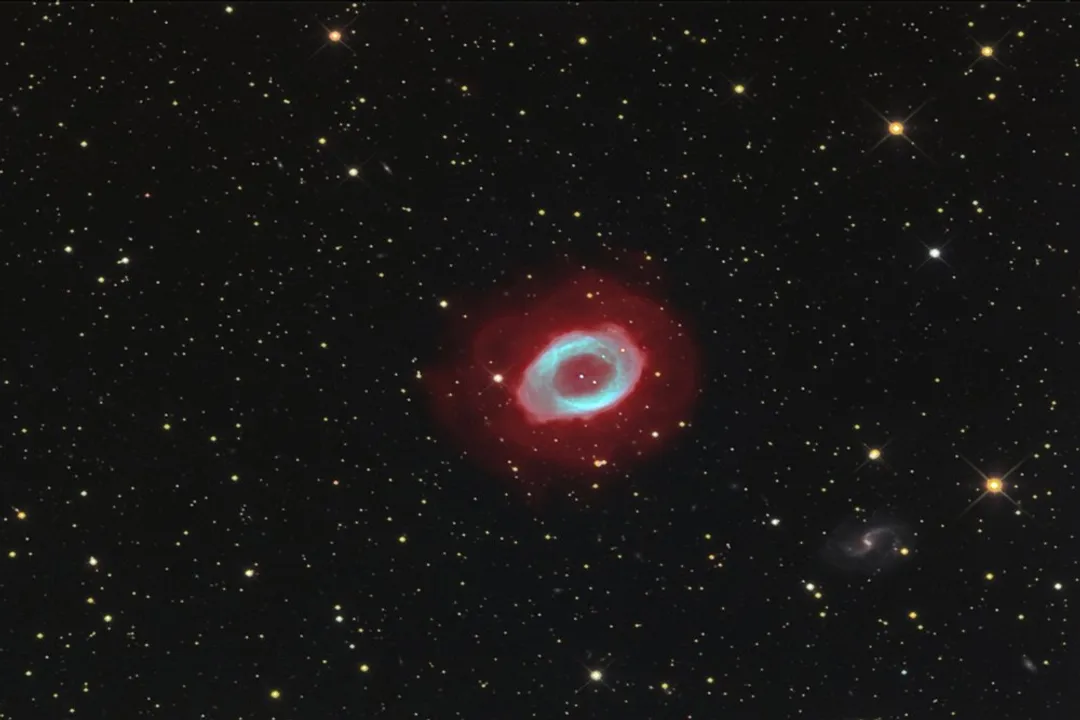
The physics dictating mass loss also has consequences for objects that don't form black holes. The remnant of a Sun-like star becomes a white dwarf surrounded by the ejected shell, the planetary nebula. [8] The mechanics of this ejection are crucial for understanding the resulting nebula's shape and structure. The central star must expel its envelope in a way that forms the complex structures we observe—rings, bipolar lobes, and intricate filaments. [8] This suggests that while the overall mass loss is thermally driven, local instabilities or perhaps magnetic fields must play a role in shaping the ejected material as it leaves the now-exposed, extremely hot core. [7] The material that escapes forms the interstellar medium's chemical enrichment, the very dust and gas that will eventually condense to form new stars, planets, and perhaps, life. [4]
Analysis of Remnant Mass: The transition point between a white dwarf and a core-collapse supernova remnant hinges on the mass retained after mass loss has occurred. For a star that starts at, say, $10$ solar masses, if its wind phase strips away $5$ solar masses, the core remnant is $5$ solar masses, almost certainly leading to a black hole. If, however, a star that starts at $7$ solar masses only loses $1.5$ solar masses, its core remnant might be $5.5$ solar masses, again leading to a black hole. This dependence on the efficiency of the wind is a chaotic factor in stellar evolution modeling; a slight difference in the internal physics dictating the wind rate during the supergiant phase can shift a star's fate from a quiet white dwarf to a violent supernova. [3] The exact efficiency of mass loss in massive stars remains one of the most challenging areas of stellar structure theory. [4]
Related Questions
#Citations
Since stars are fueled by nuclear fusion, do they constantly lose mass?
Stellar Mass Loss - Star Birth and Death - Teach Astronomy
How does a star become a black hole if stars lose mass over time?
Mass loss from stars (Chapter 8) - An Introduction to the Theory of ...
How much mass is lost in the red giant phase of a star?
Mass Loss in Dying Stars - AAS Nova
Stellar Mass Loss - an overview | ScienceDirect Topics
Low mass star - Las Cumbres Observatory
The evolution of massive stars with mass loss. - NASA ADS