Can low-mass stars go supernova?
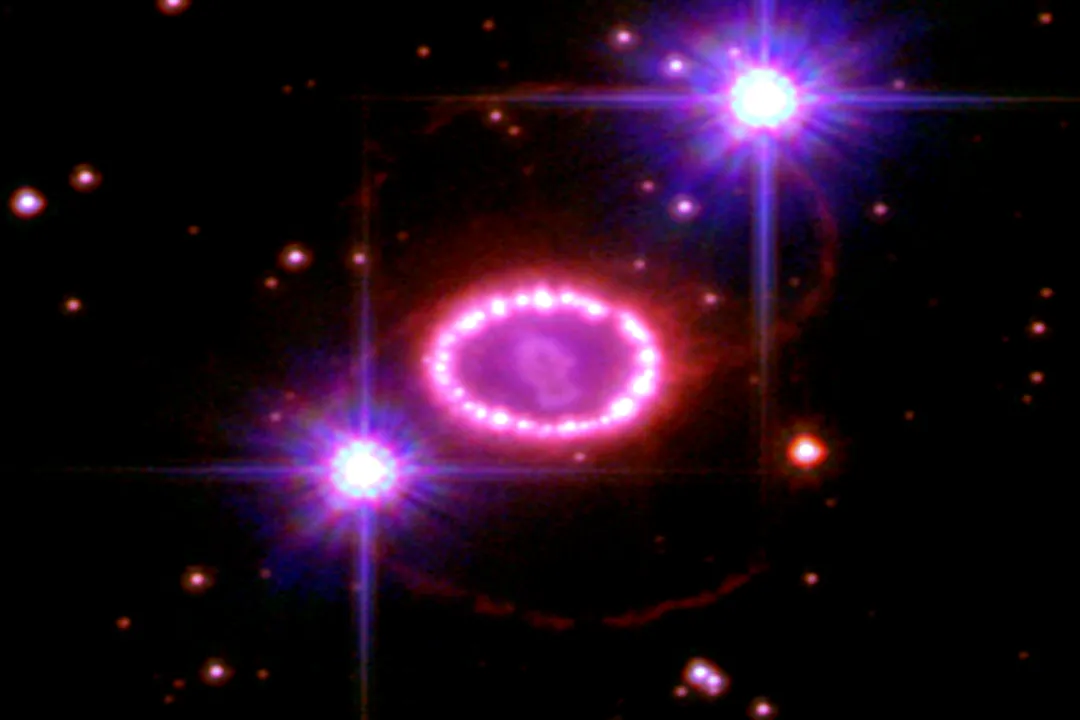
The fate of a star is almost entirely dictated by its initial mass, a principle that governs everything from its lifespan on the main sequence to the dramatic final act it performs. When astronomers discuss the glorious death of a star—the supernova—they are usually referring to cataclysmic events that spew heavy elements across the galaxy. However, the concept of a "supernova" isn't monolithic; it describes several distinct types of explosions, which immediately leads to a crucial question: can the common, low-mass stars we see around us ever meet this explosive end? The short answer, for the most common death scenario, is a definitive no, but the nuances involving white dwarfs make the full story far more complex.[5][8]
# Stellar Endpoints
Stars spend the vast majority of their lives fusing hydrogen into helium in their cores. This stable phase, the main sequence, ends when the hydrogen fuel runs out. What happens next depends entirely on how much mass the star retained after shedding its outer layers.[8]
For the vast majority of stars, including our own Sun, their lives conclude relatively peacefully. Once core hydrogen is exhausted, a low-mass star contracts, heats up, and begins fusing helium into carbon and oxygen. Eventually, these stars lack the gravitational pressure necessary to initiate fusion beyond carbon. They puff off their outer atmospheres, forming a beautiful planetary nebula, and the remaining core collapses into a dense, hot ember known as a white dwarf.[8] This white dwarf then cools over eons, fading into a theoretical black dwarf.[3]
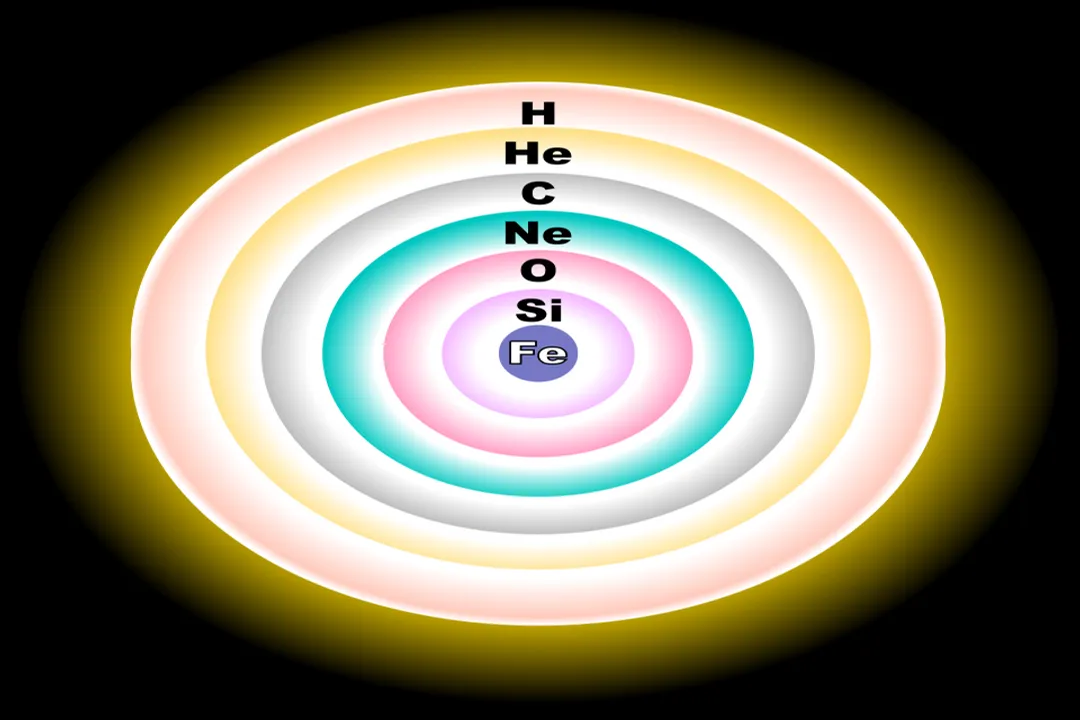
In stark contrast, stars significantly more massive than the Sun—generally considered to be those starting with masses greater than about eight times the mass of the Sun () —meet a much more violent end. These behemoths can fuse progressively heavier elements, building up shells of fusion products until they develop an inert core of iron. Since fusing iron consumes energy rather than releasing it, the core collapses catastrophically in mere seconds, triggering a Type II supernova (core-collapse supernova).[2][3][5]
# Core Collapse Limits
The mechanism responsible for a Type II supernova hinges on the inability of gravity to be halted by electron degeneracy pressure once the iron core exceeds a critical mass, often cited around $1.4$ to $3$ solar masses, depending on the specific model and the mass of the progenitor star.[1][4]
A star must achieve incredibly high central temperatures and densities to initiate the fusion chain that leads to an iron core. A star with a mass similar to the Sun simply never generates the requisite heat and pressure to move beyond carbon burning. If it can't build the iron core, it cannot initiate the catastrophic gravitational implosion that characterizes a core-collapse event.[3] Therefore, in terms of the standard Type II mechanism, low-mass stars simply do not have enough gravitational energy to overcome electron degeneracy pressure in a runaway fashion after core collapse begins, nor do they possess the initial fuel load to create the necessary iron seed.[1]
The Sun, being a low-mass star, is firmly outside the realm of becoming a Type II supernova progenitor. Its eventual fate will be a gentle dissipation into space, leaving behind a white dwarf.[8]
# Alternative Explosions
While low-mass stars cannot become Type II supernovae, the term "supernova" also encompasses explosions arising from white dwarfs, which are the stellar remnants of lower-mass stars. This brings us to Type Ia supernovae.[5]
A Type Ia supernova occurs when a white dwarf, a star that has already exhausted its fuel and settled into its stable remnant form, accretes mass from a companion star in a binary system.[5][6] As the white dwarf gathers material, its mass increases until it approaches the Chandrasekhar limit—approximately $1.4$ solar masses.[6] When this limit is breached, the white dwarf's core becomes hot and dense enough to reignite runaway carbon fusion. This thermonuclear explosion completely obliterates the white dwarf, unlike the core-collapse which leaves behind a neutron star or black hole.[5][6]
This distinction is key: low-mass stars themselves do not explode upon death, but the remnants of some low-to-intermediate mass stars (those that become white dwarfs) can cause an explosion later, provided they are in the right binary setup.[5] Furthermore, the progenitor for a Type Ia event must have been a star that failed to go supernova initially—meaning it was not massive enough to become a Type II progenitor in the first place.[6]
To clarify the different ways stars explode, we can outline the primary paths:
| Supernova Type | Progenitor Mass | Primary Mechanism | Resulting Remnant |
|---|---|---|---|
| Type Ia | Low to Intermediate () | Thermonuclear runaway in a White Dwarf exceeding the Chandrasekhar limit [5][6] | Total Destruction |
| Type II (Core-Collapse) | High () | Gravitational collapse of an iron core [2][3] | Neutron Star or Black Hole |
| Type Ib/Ic | High () | Core-collapse after stripping outer layers [5] | Neutron Star or Black Hole |
# The Physics of Pressure Failure
The difference between a white dwarf remnant and a core-collapse explosion rests on the physics governing pressure support. In a white dwarf, the star is supported by electron degeneracy pressure, a quantum mechanical effect where electrons resist being squeezed into the same quantum state. This pressure is remarkably strong but has a limit, defined by the Chandrasekhar limit, as seen in the Type Ia scenario. [6]
For a star destined to become a Type II supernova, gravity overwhelms electron degeneracy pressure when the iron core forms, causing an immediate, rapid implosion until neutron degeneracy pressure briefly halts the collapse, leading to the bounce we observe as the explosion.[1][7] Low-mass stars never reach the stage where gravity is strong enough to overcome electron degeneracy pressure in this manner because they run out of viable fusion fuel much earlier, leaving behind a stable, degenerate remnant that requires external mass transfer to trigger a secondary event.[3]
It is worth considering the sheer energy scales involved, which illustrates why a gradual heating process fails where a sudden gravitational collapse succeeds. A Type II supernova releases about joules of kinetic energy alone, alongside vast amounts of neutrinos generated during the core collapse itself. [7] In contrast, a Type Ia event is purely thermonuclear, converting a significant fraction of the white dwarf's mass directly into kinetic energy via runaway carbon fusion. While both are immensely energetic compared to stellar lifetimes, the initiating force—gravitational collapse versus quantum degeneracy breach—is fundamentally different, explaining the mass disparity in their progenitors.[5]
# The Mass Threshold Nuance
While is often quoted as the boundary for a star to become a Type II supernova progenitor, the exact cutoff is fuzzy and depends on metallicity and mass loss mechanisms experienced during the star's life.[2] Some stars slightly above this limit might shed so much mass through stellar winds that they end up as very massive white dwarfs instead of collapsing. Conversely, a star just below the mark might remain in a binary system and still contribute to a Type Ia event later.
The physics governing the remnants also shows interesting boundaries. A core-collapse supernova must leave behind a remnant—either a neutron star or a black hole. For a neutron star to form, the collapsing core must be massive enough to overcome electron degeneracy pressure but not massive enough to overcome neutron degeneracy pressure. If the remnant core is too heavy (perhaps greater than $2.5$ to , depending on current theoretical estimates), even neutron degeneracy pressure fails, and the object collapses further into a black hole.[4] Low-mass stars, by never reaching the iron core stage, avoid both the neutron star and black hole fate entirely, settling instead for the lower-energy White Dwarf state.
One might conceptually visualize stellar mass as a ladder of destructive potential. Low-mass stars () only make it to the first rung—the White Dwarf—where stable, non-explosive equilibrium is achieved via quantum mechanics. Intermediate-mass stars that are born in binaries can use this White Dwarf to achieve a secondary, thermonuclear explosion (Type Ia). Only the high-mass stars that can climb to the top rungs of the fusion ladder, forming iron, earn the right to a complete gravitational collapse and the subsequent, far more powerful core-collapse (Type II) explosion.[5][8]
Ultimately, for a star to experience the explosive death we usually associate with the term "supernova" via core collapse, it must be massive enough to initiate and sustain fusion reactions all the way to iron, a process strictly reserved for the heavier members of the stellar population.[2][3]
Related Questions
#Citations
Why don't less massive stars explode in form of supernovas?
Type II supernova - Wikipedia
Why do smaller stars not supernova? - Quora
Neutron Star Limbo: How Low Can Their Masses Go? - Astrobites
These Are The 6 Different Ways To Make A Supernova - Forbes
How massive does a main sequence star need to be to go type 1 ...
Low-mass particles that make high-mass stars go boom
Stellar Evolution - | The Schools' Observatory
Type II supernovae - Imagine the Universe! - NASA