What kind of star is left after a supernova?
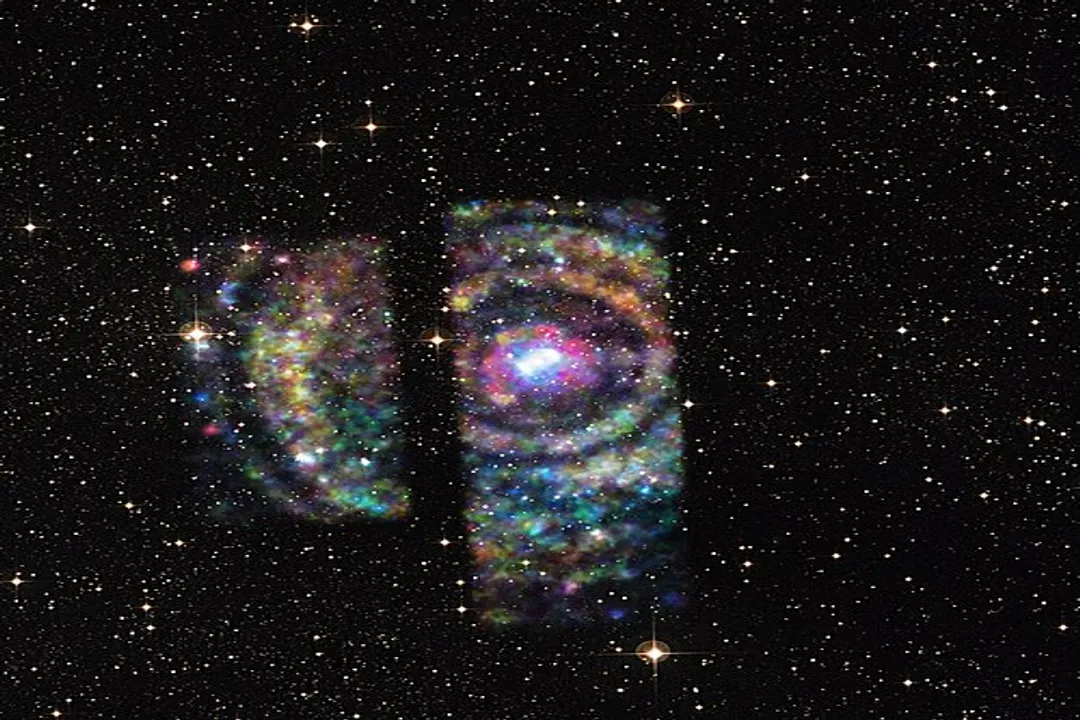
The dramatic end of a massive star, known as a supernova, is one of the universe's most spectacular events, releasing incredible amounts of energy. [4] But what remains after the blinding flash subsides and the expanding gas cloud begins to drift away? The answer is not always the same; the final state of the collapsed core depends entirely on how much material was left behind after the explosion. [3][6] Instead of simply disintegrating entirely, the heart of the star often compresses into one of two exotic, ultra-dense objects: a neutron star or a black hole. [3][5][6]
# Core Collapse
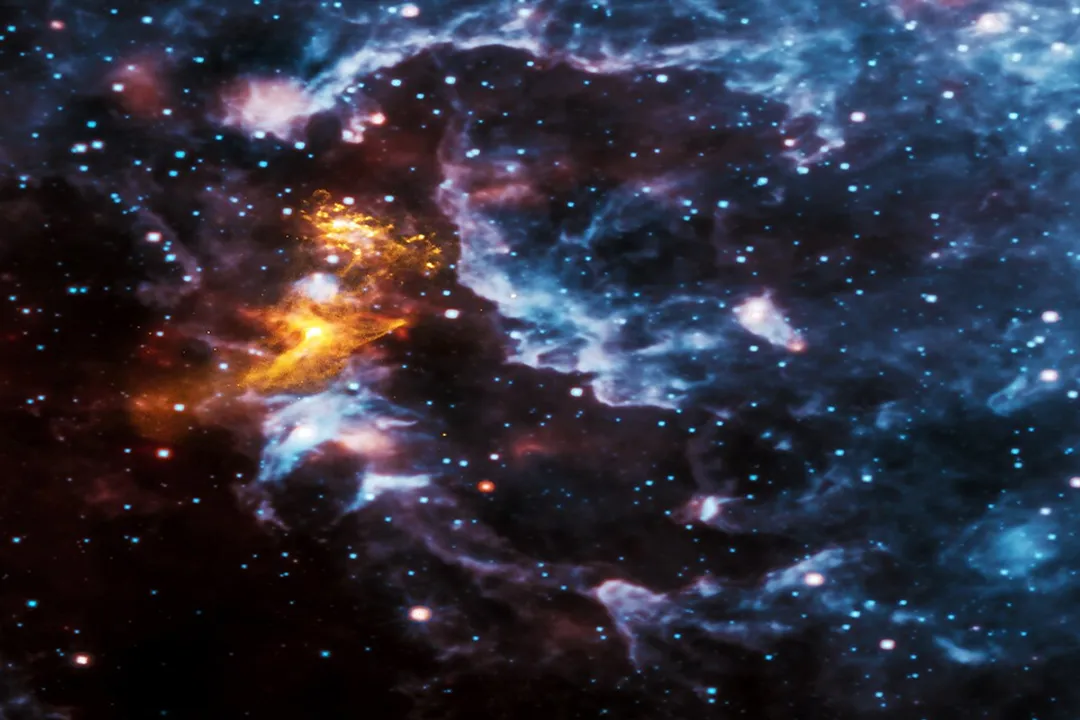
Stars follow an evolutionary path dictated by their initial mass. [4] When a star significantly more massive than our Sun exhausts its nuclear fuel, its core collapses under its own immense gravity. [4] This catastrophic implosion triggers the supernova explosion that blows the outer layers into space. [3] The fate of the dense core that survives this blast is determined by its mass relative to the Sun—a critical threshold known as the Tolman-Oppenheimer-Volkoff limit, though the exact number varies slightly depending on the model. [1][3]
If the remaining core mass falls within a specific, relatively narrow range, typically cited as being between about $1.4$ and $3$ solar masses, the gravitational pressure is intense enough to crush matter to an extraordinary degree, resulting in a neutron star. [1][3] If the remnant core exceeds this upper mass boundary, gravity wins completely, and the object collapses further into a black hole. [3] Stars that are less massive, like our Sun, do not go through this core-collapse supernova but instead shed their outer layers to become white dwarfs. [4][9]
# Neutron Star Density
A neutron star represents a triumph of gravity over the fundamental forces that usually keep matter stable. When the collapsing stellar core reaches a point where electron degeneracy pressure—the quantum mechanical resistance of electrons to being squeezed together—is overwhelmed, the process accelerates. [8] Protons and electrons are forced to combine, effectively turning the core material into a sea of neutrons. [8]
The resulting object is unbelievably compact. Imagine taking a mass greater than that of our Sun and squeezing it down until it fits within a sphere only about 10 to 20 kilometers in diameter. [1][2] To grasp this density, consider that a single teaspoon, or about one cubic centimeter, of neutron star material would weigh approximately a billion tons on Earth. [1][2] For context, that is roughly the weight of Mount Everest compressed into a sugar cube. This immense packing is only maintained because another force pushes back: neutron degeneracy pressure. [8] This quantum resistance from the neutrons prevents the object from collapsing further into a black hole, provided its mass stays below that critical upper limit. [8]
This density difference between the two potential outcomes is perhaps the most profound aspect of stellar death. A white dwarf, the remnant of a smaller star, is dense, but a neutron star takes density to a near-theoretical extreme. [9] If you visualize the initial star's progenitor—perhaps a star twenty times the Sun's mass—it effectively sheds most of its bulk in the explosion, yet the core remains incredibly stubborn, clinging to stability just shy of the final point of no return.
# Black Hole Formation
When the residual core mass is too great, even the powerful neutron degeneracy pressure cannot counteract the crush of gravity. [8] In these high-mass scenarios, the core collapses completely, shrinking to an infinitely small, infinitely dense point called a singularity, hidden behind an event horizon—the defining feature of a black hole. [3]
The fact that the tipping point between a neutron star and a black hole is so finely balanced—a mere few solar masses separating an object we can sometimes observe emitting radio waves from an object from which nothing, not even light, can escape—highlights a gap in our complete understanding of matter under the most extreme conditions. [3] The exact upper mass limit for a neutron star is a topic of ongoing astrophysical research because it tests our models of physics at the intersection of general relativity and quantum mechanics. [1]
# Stellar Observation
While the term "remnant" suggests a static object, many neutron stars are anything but quiet. Some neutron stars rotate incredibly fast, sometimes hundreds of times per second. [2] As they spin, they can emit beams of electromagnetic radiation, such as radio waves, from their magnetic poles. [2] If these beams sweep across Earth as the star rotates, we detect them as rapid, highly regular pulses—hence the name pulsar. [2] Pulsars are essentially cosmic lighthouses, providing astronomers with precise clocks that help probe spacetime itself. [2]
The overall structure of the aftermath, including both the compact object and the expanding shell of gas and dust, is often called a supernova remnant. [5] These expanding nebulae, like the Crab Nebula, offer visual proof of the star's violent demise, scattering the heavy elements forged in the star's life and death throughout the galaxy. [5]
# Remnant Comparison Table
The primary outcome depends on the progenitor star's mass, which dictates the mass of the core left behind. Here is a simplified comparison of the fates for different stellar initial masses, focusing on the core remnants discussed:
| Initial Star Mass (Solar Masses) | Typical Final Compact Remnant | Key Stability Factor |
|---|---|---|
| $< 8$ | White Dwarf | Electron Degeneracy Pressure [4][9] |
| Neutron Star | Neutron Degeneracy Pressure [1][3][8] | |
| $> 25$ | Black Hole | Gravity Overwhelms All Pressure [3] |
It is important to note that these mass ranges are approximations; the actual stellar mass lost during the supernova explosion introduces significant uncertainty. [6]
# Formation Timing
A common question centers on when this object forms relative to the visible explosion. The collapse that creates the neutron star or black hole is the mechanism driving the supernova explosion itself. [3] Therefore, the compact remnant is born essentially at the moment the light of the supernova peaks. It is not a delayed process that happens weeks or months later; the core collapse occurs almost instantaneously, setting off the visible spectacle. [3] The subsequent appearance of the visible shockwave and expanding gas takes time to propagate across the light-years to our telescopes, but the object in the center is present from the start of the light curve. [3]
Understanding the nature of these remnants—be they rapidly pulsing neutron stars or silent, infinitely dense black holes—allows scientists to trace galactic evolution, as these objects are the cosmic factories that seed the interstellar medium with the heavy elements necessary for forming later generations of stars, planets, and life itself. [5]
Related Questions
#Citations
Neutron star - Wikipedia
Neutron Star - ESA/Hubble
When Does a Neutron Star or Black Hole Form After a Supernova?
Stellar Evolution - | The Schools' Observatory
What happens to a neutron star after a supernova explosion?
What is the aftermath of a supernova? Is there any remnants left ...
What gets left behind in the aftermath of a massive star's death ...
Why does matter stay collapsed in the core, following a supernova ...
Stellar Remnants | Research Starters - EBSCO