Which kind of stars have a short lifespan?
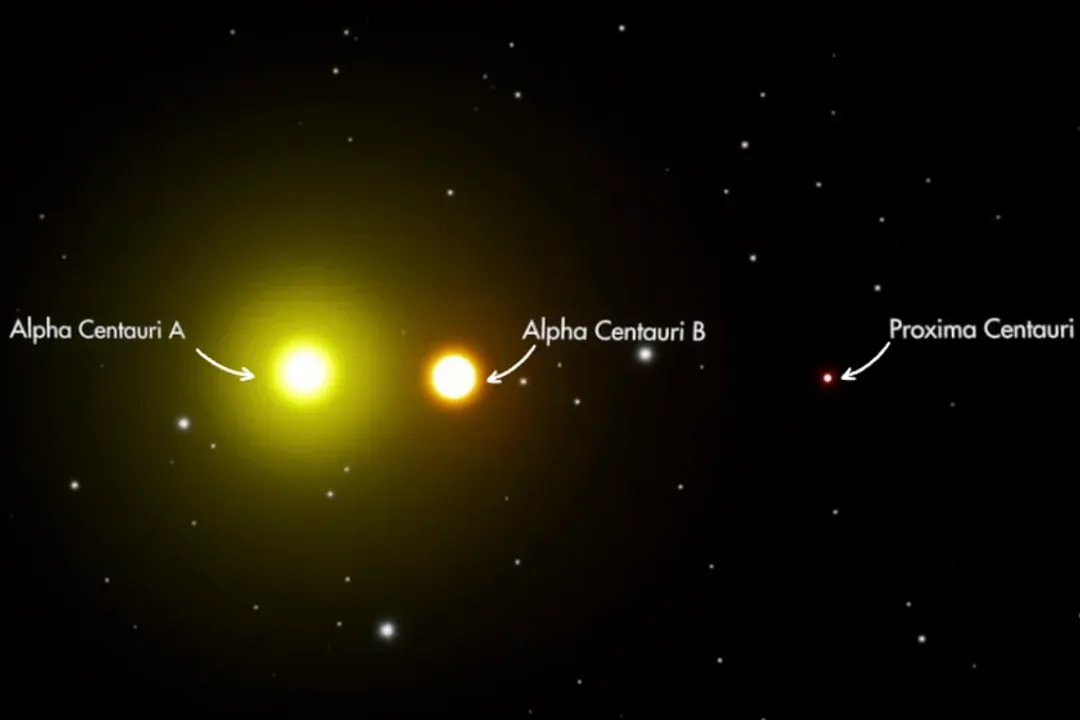
The stars that blaze the brightest and hottest are paradoxically the ones destined for the quickest demise. When we look up at the night sky, it is easy to assume that bigger means longer-lasting, much like a larger fuel tank allows a car to drive farther. In stellar terms, however, the opposite is true: the more massive a star is, the more furiously it burns through its nuclear fuel, resulting in a dramatically shorter lifespan. This relationship is perhaps the most fundamental and counterintuitive aspect of stellar evolution.
# Mass Rule

The primary factor determining how long a star will inhabit the main sequence—the phase where it fuses hydrogen into helium in its core—is its initial mass. Stars are fundamentally giant balls of plasma held in equilibrium by two opposing forces: the inward crush of gravity and the outward push generated by thermonuclear fusion in the core.
For a star to resist the immense gravitational force trying to collapse it, the core pressure and temperature must be significantly higher in more massive stars. A star that is ten times the mass of our Sun, for example, requires a core temperature far greater than the Sun’s to maintain balance against its own overwhelming gravity. This necessity forces the massive star to burn its hydrogen fuel at an absolutely ferocious rate.
Consider the simple economics of stellar life: a star’s fuel supply is directly proportional to its mass, but its rate of consumption is proportional to a much higher power of its mass (often simplified as Luminosity to ). This means that while a star ten times the Sun’s mass has only ten times the fuel, it might consume that fuel at a rate one thousand to ten thousand times faster. This disproportionate burn rate is the engine of a short stellar life.
# Giant Classes
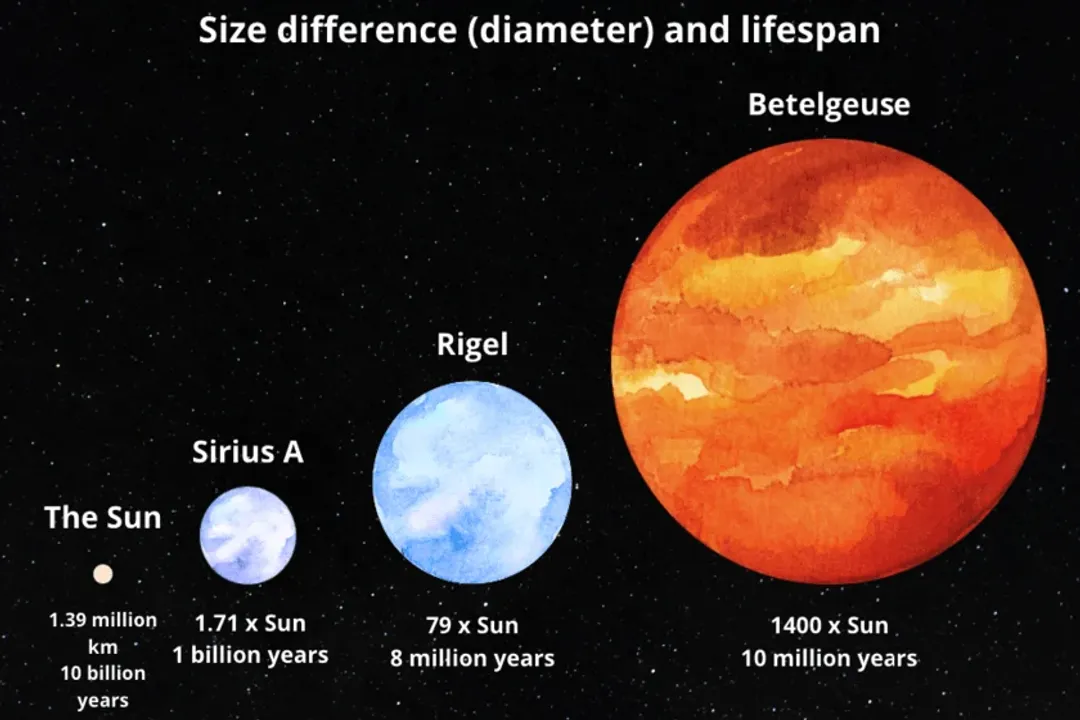
The stars with the shortest lifespans belong to the hottest and most luminous spectral classes, specifically the O-type and B-type stars. These are the stellar heavyweights, often possessing masses twenty times or more than that of the Sun.
O-type stars are the titans of the galaxy. They are exceedingly hot, with surface temperatures often exceeding 30,000 Kelvin. Because they convert mass into energy so rapidly, their expected time on the main sequence is measured in mere millions of years, rather than the billions that smaller stars enjoy. For instance, a star 60 times the mass of the Sun might only survive for about 4 million years.
B-type stars, while slightly cooler and less luminous than O-types, are still massive enough to live exceptionally brief lives compared to intermediate stars like the Sun. While our Sun is expected to shine for about 10 billion years, a B-type star with, say, five times the Sun's mass might exhaust its core hydrogen in only 70 million years.
It is helpful to put these timescales into perspective. If the Earth’s entire history—all 4.54 billion years—were compressed into a single day, the Sun would still be shining normally. An O-type star, however, would have lived and died long before the first signs of multicellular life appeared on our planet.
Here is a quick comparison of estimated lifespans based on mass:
| Star Type (Relative to Sun) | Approximate Mass () | Estimated Lifespan (Years) |
|---|---|---|
| Red Dwarf | Trillions | |
| Sun-like Star | Billion | |
| Massive B-Type Star | Million | |
| Giant O-Type Star | Million |
While the lower limit for a star to ignite sustained hydrogen fusion is around $0.08$ solar masses, meaning objects below this threshold—like brown dwarfs—do not technically have a "lifespan" in the same sense as true stars, the upper limit is what dictates the shortest lives. Some of the most massive stars are theorized to be over 150 times the mass of the Sun. If such a star exists or has existed, its life would be exceptionally short, potentially burning out in under a million years.
# Accretion Limits
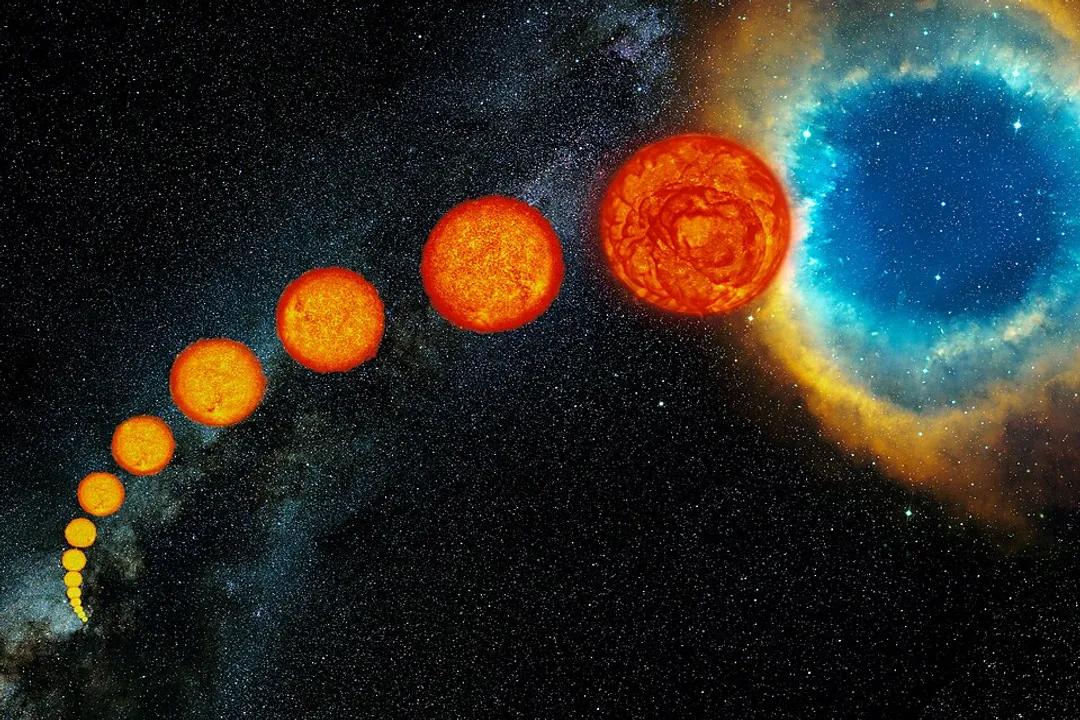
The very existence of these short-lived giants depends on their ability to accumulate such tremendous amounts of material in the first place. Stellar evolution theory suggests that massive stars form just as smaller stars do: by gravitational collapse and accretion of gas and dust from the surrounding molecular cloud. However, the process for giants seems to involve rapid accretion, possibly continuing even after the initial core ignition.
One perplexing mystery astronomers work on is how these stars manage to grow so large without blowing off their envelopes prematurely due to the intense radiation pressure they generate as they gain mass. Some models suggest that stars may form similarly to the Sun, only to later accumulate significant mass through continued infall of material, which influences the total mass available to fuel their brief, intense burning phase. If a star accumulates more mass, its core collapses more severely, raising the fusion rate, and thus cutting its life short even further.
# Violent Ends
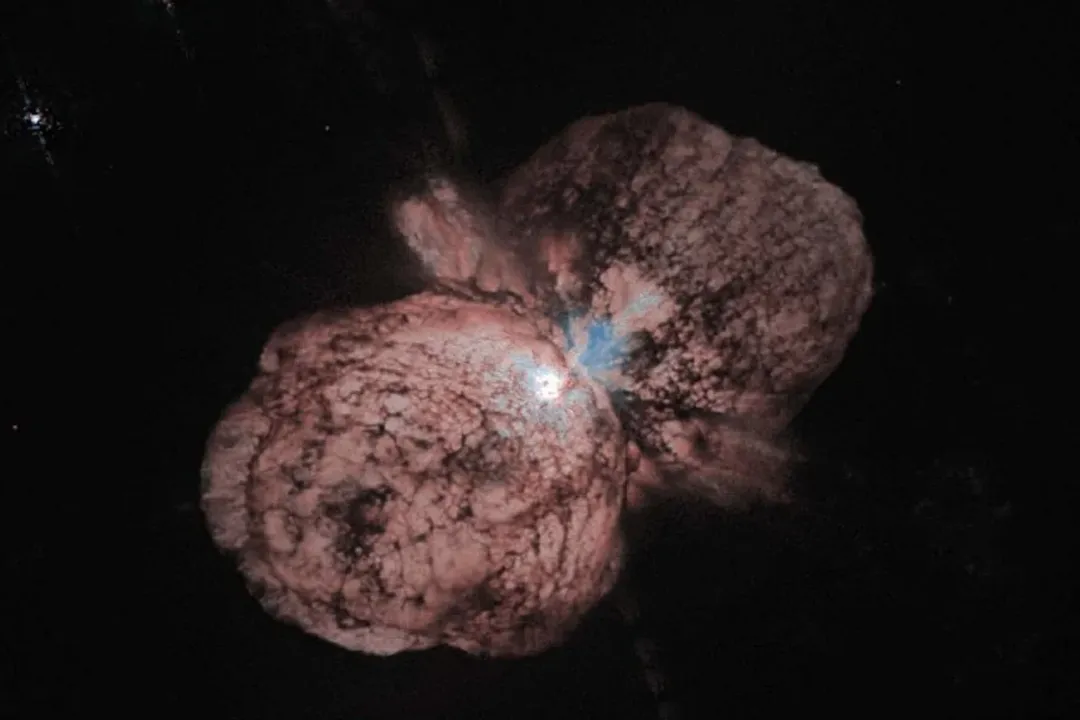
The short lives of massive stars culminate in spectacular and destructive deaths, which is another defining characteristic that separates them from their smaller, long-lived cousins. Stars like the Sun will end their lives gently, puffing off their outer layers to become a white dwarf. The short-lived giants, however, face a much more immediate and violent end once their core fuel is spent.
When a massive star exhausts the hydrogen in its core, the resulting collapse triggers further fusion stages involving heavier elements like helium, carbon, and so on, until an iron core is formed. Since fusing iron consumes energy rather than releasing it, the core collapses catastrophically, leading to a Type II supernova explosion.
This explosion scatters the star’s heavy elements—everything from oxygen to gold—across the galaxy. The remnant left behind is either an incredibly dense neutron star or, for the most massive stars, a black hole. The speed of their lives dictates the violence of their deaths: the less time they spend shining, the more energy they release in one final, spectacular moment.
# Contrast Synthesis
When comparing a low-mass M-dwarf star, which burns its fuel so slowly it could conceivably last for trillions of years, to a high-mass O-star measured in mere millions of years, the contrast highlights an essential trade-off in the cosmos. The universe seems to have prioritized either longevity or intensity. The most massive stars effectively use their entire existence as a brief but brilliant beacon, illuminating vast regions of the galaxy for a time before vanishing entirely, while the smallest stars are content to simply simmer quietly for epochs far exceeding the current age of the universe. It’s a stark lesson that in astrophysics, fuel efficiency is directly tied to endurance.
Furthermore, analyzing the output of the most massive stars suggests an efficiency paradox in terms of stellar system creation. While these giants create the heavy elements necessary for rocky planets and life—the very building blocks of future Sun-like systems—they do so with such rapid turnover that the environment around them is often too unstable (scorched by intense radiation and frequent supernovae) to allow complex planetary systems to fully mature before the giant star explodes. They are fast creators of material, but poor providers of stable, long-term nurseries for life, unlike the steady, reliable Sun.
#Videos
Which Type Of Star Has The Shortest Life Span? - Physics Frontier
Related Questions
#Citations
Shortest lived stars | Guinness World Records
Flexi answers - What type of star has the shortest lifespan? - CK-12
How Do Stars Die and How Long Do Stars Live? - Sky & Telescope
What is the shortest lifespan of a star created during the big bang ...
Which Type Of Star Has The Shortest Life Span? - Physics Frontier
How Long Do Stars Live? - Label Stars
Star Types - NASA Science
Astronomers Keep Finding Stars That Should Be Dead. Now, We ...
Massive, short-lived stars may still form like the Sun
Stellar evolution - Wikipedia