What happens to material from stars after supernova?
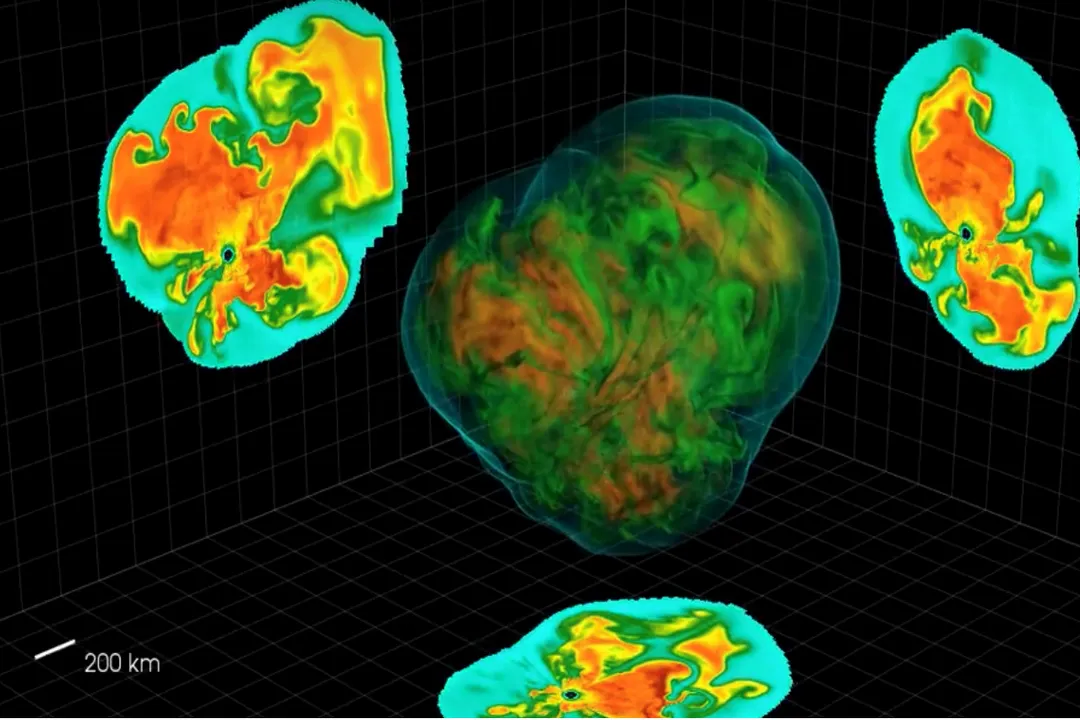
The spectacular, violent death of a massive star, known as a supernova, is one of the most energetic events in the universe. It is a moment of absolute transformation, not only ending one celestial body’s life but fundamentally reshaping the chemical landscape of its cosmic neighborhood. When a star exhausts its nuclear fuel, the subsequent collapse and explosion don't just vanish into the void; the material is redistributed, becoming the building blocks for everything that follows, from new stars to planets and, eventually, life itself.
# Core Fate
What happens to the star’s innermost structure depends entirely on the mass of the original star's core once the supernova explosion is underway. During the final moments, the iron core collapses under its own immense gravity. If the remaining mass of the core after the explosion is less than about three solar masses, the collapse halts, leaving behind a neutron star. This object is incredibly dense, packing perhaps one and a half times the mass of our Sun into a sphere only about $20$ kilometers across. The matter within this remnant is packed so tightly that the repulsive forces between the constituent neutrons prevent further gravitational collapse.
However, if the mass left behind is greater than roughly three solar masses, gravity overwhelms even the neutron degeneracy pressure, and nothing can stop the infall. The core collapses completely, creating a black hole. In this case, the stellar material has been crushed into an infinitely dense singularity, a region where gravity is so strong that nothing, not even light, can escape the event horizon. The distinction between forming a neutron star or a black hole determines the final compact remnant left at the explosion’s center. The material that forms these objects has been subjected to pressures and densities unimaginable in any terrestrial environment. For instance, just a teaspoon of neutron star material would weigh billions of tons, illustrating the extreme state transition the matter has undergone compared to the diffuse gas ejected outwards.
# Compact Objects
The formation of these compact objects—neutron stars and black holes—occurs in the aftermath of the core collapse that triggers the supernova. The time frame for this transition is rapid; the collapse and subsequent rebound or implosion happen incredibly quickly. A neutron star is a fantastic example of extreme matter states; it is essentially a gigantic atomic nucleus held together by gravity instead of the strong nuclear force alone. These objects are often highly magnetized and spin rapidly, sometimes emitting beams of radiation that we detect as pulsars.
In contrast, the black hole represents a more complete destruction of structure as we understand it. The matter simply ceases to exist as ordinary or even degenerate matter; it becomes part of a spacetime singularity. The presence of a black hole is inferred indirectly by observing its gravitational influence on surrounding matter or by the high-energy emissions generated as material spirals in toward it. The fate of the core, whether it results in a stable, albeit exotic, neutron star or a complete gravitational singularity, is the most extreme outcome of the supernova process.
# Gas Ejection
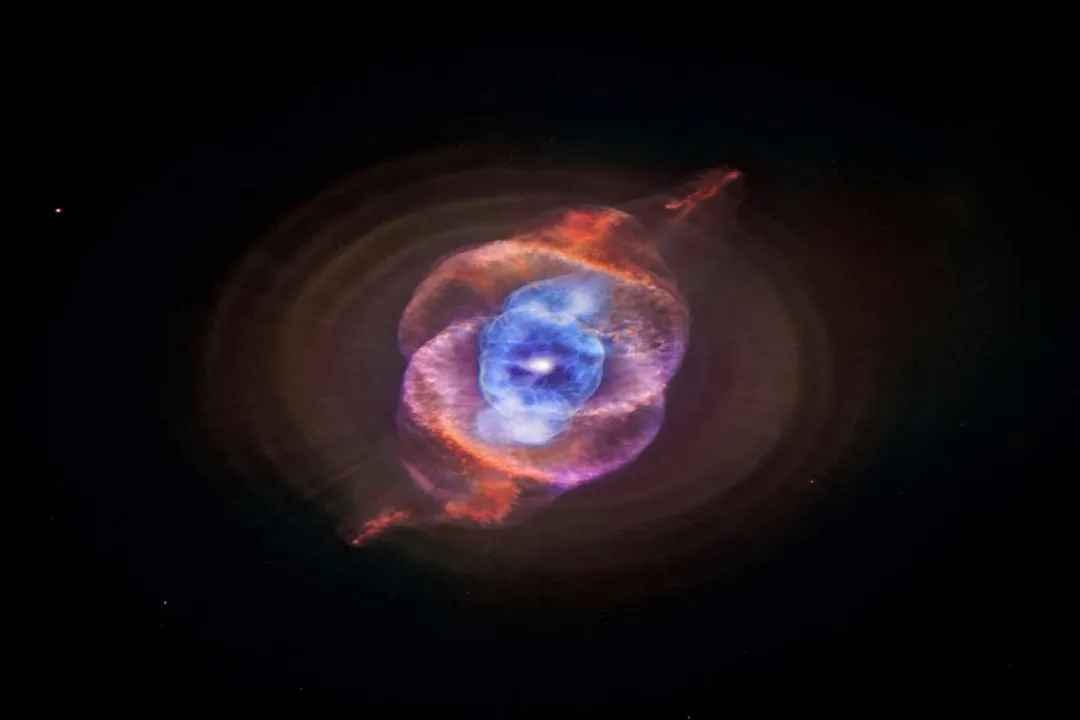
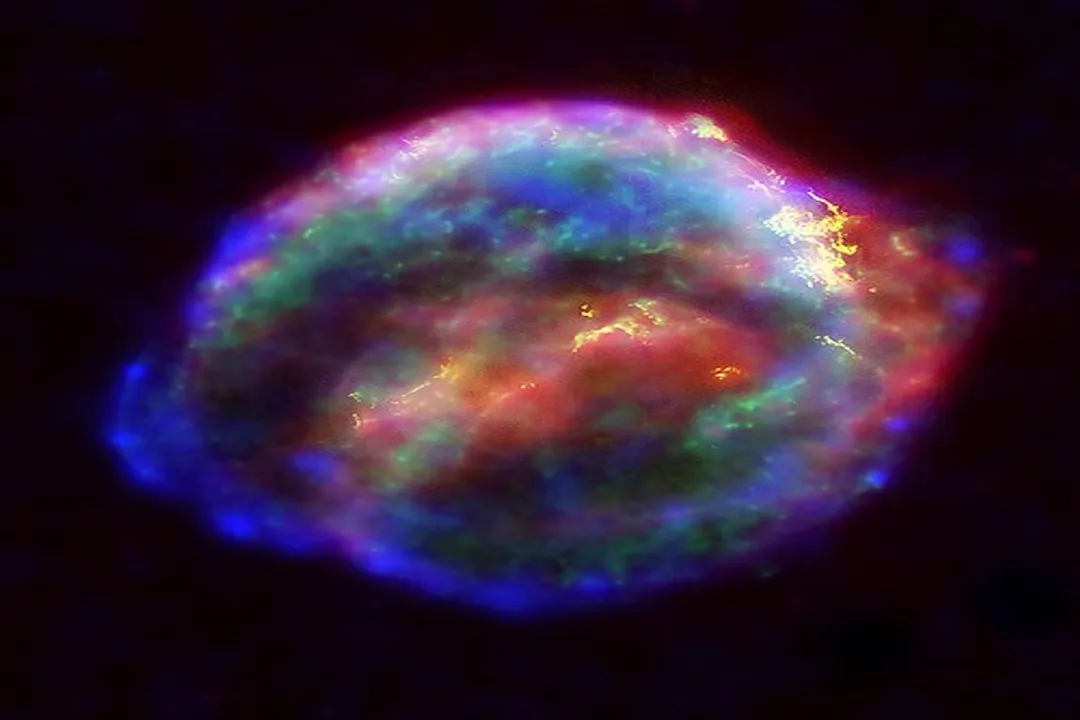
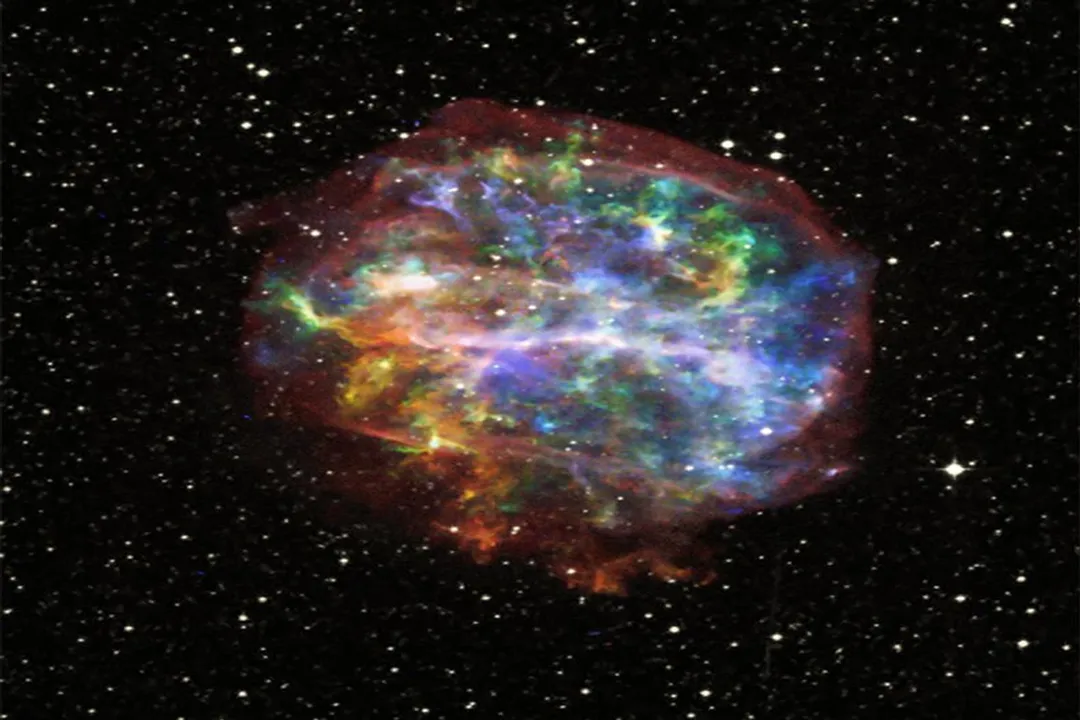
While the core settles into its new, compact form, the rest of the star’s material—the immense outer layers—is blasted outward at tremendous speeds, forming a supernova remnant (SNR). This ejected gas, consisting of the stellar material that had fused elements up to iron in the core, expands rapidly into the surrounding interstellar medium (ISM). These expanding shells of gas glow brightly for thousands of years, powered initially by shock waves heating the material to millions of degrees.
The physical processes within the SNR are complex, involving turbulent mixing and the cooling of the superheated gas. The appearance of an SNR changes dramatically over time; initially, it is a hot, X-ray-emitting cloud, but as it expands and interacts with the ISM, it forms filaments visible across the electromagnetic spectrum. For example, the remnant of a core-collapse supernova can persist for tens of thousands of years, slowly sweeping up surrounding gas and dust. This physical dispersal of mass is critical because it moves processed material away from the site of the explosion to enrich the galaxy.
# Element Creation
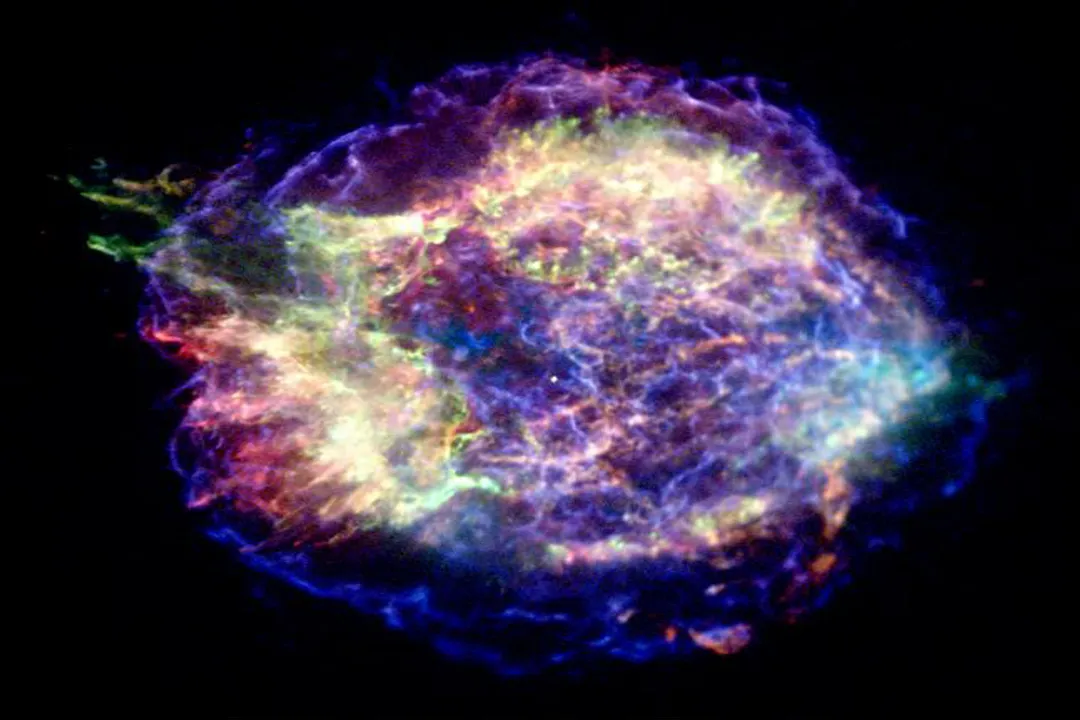
Perhaps the most profound consequence of a supernova explosion, as far as cosmic chemistry is concerned, is the creation of elements heavier than iron—a process called supernova nucleosynthesis. Stars up to a certain mass fuse lighter elements up to iron in their cores. Iron fusion actually consumes energy rather than releasing it, which triggers the core collapse.
The intense energy and neutron flux during the actual explosion provide the necessary conditions for rapid neutron capture, the r-process, which synthesizes elements like gold, platinum, and uranium. These elements cannot be made easily, if at all, through normal stellar fusion processes. The supernova acts as a massive cosmic forge, rapidly injecting these newly created heavy elements into the expanding debris cloud. While elements up to iron are made during the star's life, elements heavier than iron are overwhelmingly synthesized during the brief, violent moments of the supernova itself.
This means that the very stuff that makes up our technology, jewelry, and biological structures like our bones—elements like calcium, carbon, oxygen, and the even heavier ones—were forged in the crucible of a dying star. The proportion of elements ejected varies depending on the explosion type, but the key takeaway is that the supernova recycles the star’s original composition and adds newly forged materials to the interstellar mix.
# Cosmic Cycle
The ejected material from the supernova remnant, now seeded with fresh heavy elements, begins to mix with the existing gas and dust clouds in the galaxy, which is known as the interstellar medium (ISM). This enrichment process is what allows subsequent generations of stars and their planetary systems to form with a greater abundance of refractory materials, which are essential for rocky planets and organic chemistry. A star born in a molecular cloud devoid of heavy elements, like the very first stars, would only be capable of forming a very different kind of planetary system, if any.
Consider the timeline of this recycling. A supernova event is practically instantaneous on an astronomical scale, but the SNR takes tens of thousands of years to dissipate its energy and merge its material into the wider ISM. Only after this dispersal and subsequent cooling and compression—sometimes over hundreds of millions of years—can a new cloud aggregate and collapse to form a second-generation star system. This continuous process ensures that the galaxy remains chemically dynamic. The material that forms our solar system billions of years ago certainly passed through several cycles of stellar birth, explosive death, and incorporation into new nebulae, making the supernova explosion the necessary cleanup crew and chemical re-stocker for galactic evolution.
If we look at the cosmic inventory, we can see that every star that dies violently plays a direct role in determining the elemental makeup of future stellar nurseries. The distribution isn't perfectly uniform; regions that have recently experienced a massive supernova will have a higher metallicity (astronomer's term for all elements heavier than hydrogen and helium) in their gas clouds than more pristine regions. This spatial variation in elemental abundance is a direct, lingering imprint of past stellar deaths, shaping where and how the next stars will be born.
Related Questions
#Citations
what is actually happening during the explosion? : r/space
Supernova nucleosynthesis
Why does matter stay collapsed in the core, following a ...
When Does a Neutron Star or Black Hole Form After ...
Supernova explosions
What happens to the core of a super massive star after it ...
Educational Materials :: Investigating Supernova Remnants
DOE Explains...Supernovae
Stellar Evolution