What elements are produced in low-mass stars?
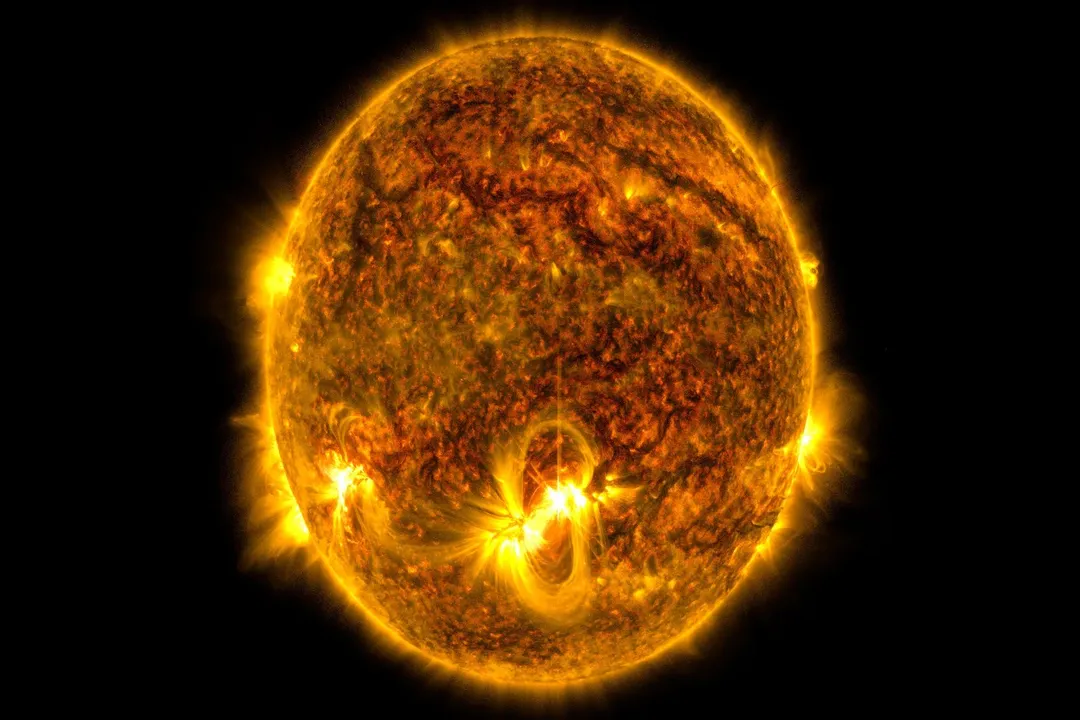
The vast cosmic machinery responsible for creating the chemical elements that make up everything we see—from distant nebulae to the very ground beneath our feet—operates through the lives and deaths of stars. Among these stellar engines, the low-mass stars, those similar to or smaller than our Sun, play a foundational, though often underestimated, role in building the periodic table. They are the universe's initial elemental factories, working patiently over billions of years to transform the simplest ingredients into the building blocks of later generations of stars, planets, and life itself. [1][3]
# Stellar Beginnings
Stars begin their lives from immense clouds of gas and dust, primarily composed of the lightest elements forged in the Big Bang: hydrogen and helium. [3][8] When gravity pulls enough of this material together, the core heats up intensely, eventually reaching the millions of degrees necessary to ignite nuclear fusion. [3] Stars vastly more massive than the Sun will proceed quickly through several fusion stages, but the low-mass star follows a much longer, more gentle path. [1]
# Main Sequence Fusion
For the majority of its active life, a low-mass star is settled into what astronomers call the main sequence. During this stable phase, the star generates energy by fusing hydrogen nuclei into helium nuclei in its core. [6] This process, known as the Proton-Proton (P-P) chain, is the dominant power source for stars like the Sun. [6] While this reaction changes hydrogen into helium, it does not produce any heavier elements; it simply concentrates the mass into helium ash in the core. [2] This initial state is why stars are predominantly made of hydrogen and helium when they are born; the necessary temperatures and pressures for fusing heavier nuclei simply haven't been reached yet in the core, or they are insufficient to initiate fusion with elements beyond hydrogen. [8]
# Core Evolution
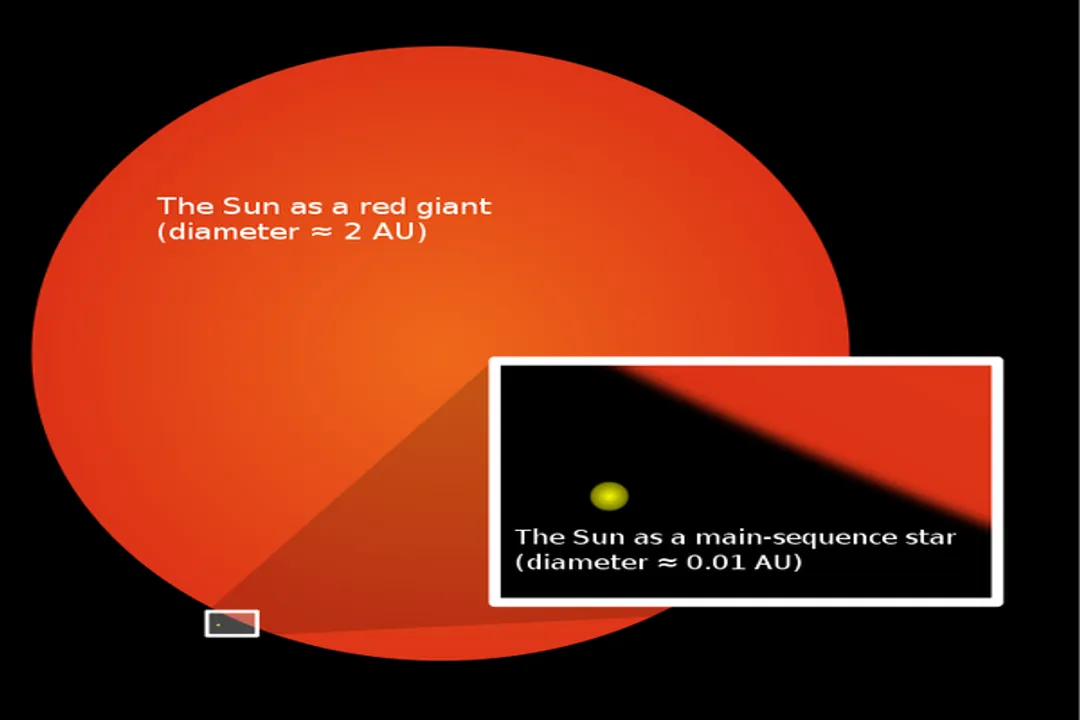
The star remains on the main sequence until it exhausts the supply of hydrogen fuel in its center. For a star like the Sun, this phase lasts about ten billion years. [1] Once hydrogen runs out, the core contracts under gravity, causing the surrounding shell of hydrogen to heat up and ignite a hydrogen-shell burning phase. [1] This increased energy output causes the star's outer layers to expand dramatically, cooling them down in the process, which transforms the star into a red giant. [1]
# Helium Ignition
As the core contracts further and heats up significantly—reaching perhaps 100 million Kelvin—a new fusion process can finally begin: the fusion of helium. [6] This is accomplished through the Triple-Alpha process. [6] In this reaction, three helium nuclei (also known as alpha particles) fuse together to form a single nucleus of carbon (), releasing energy in the process. [6] This production of carbon marks the first step where a low-mass star synthesizes an element heavier than helium. [2]
If the star's core temperature rises even higher, carbon nuclei can capture another helium nucleus to form oxygen (), or two carbon nuclei can fuse to form heavier elements like neon (). [6] For stars near the upper limit of the low-mass category—those slightly more massive than the Sun—the core temperature might reach the threshold to start fusing carbon. However, in the Sun-like stars that represent the lower end of this spectrum, the helium-burning phase often stops after producing significant amounts of carbon and oxygen. [2] The elemental output here is essentially limited to elements up to oxygen, with carbon being a key product of this short-lived secondary phase. [1][6]
# Final Stages and Dispersal
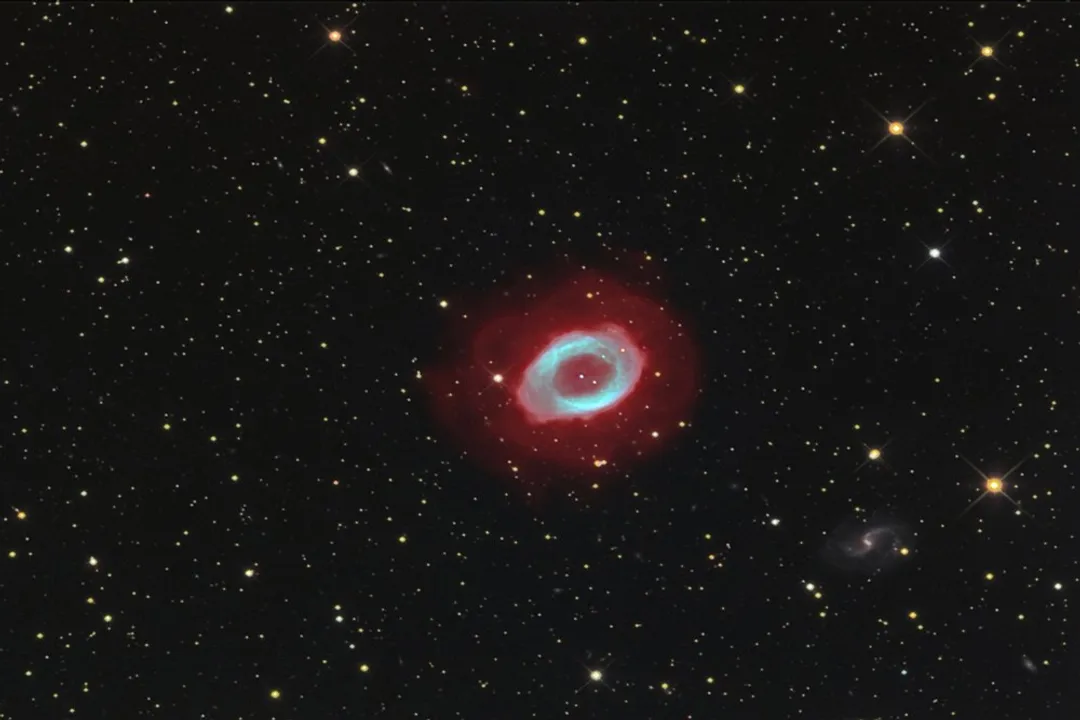
What happens next depends critically on the star's initial mass, but for the vast majority of low-mass stars, the end is gentle, not catastrophic. [1] Once the core depletes its helium, fusion ceases in the center. [2] The star develops an inert core of carbon and oxygen surrounded by shells of burning helium and hydrogen. [1]
The star becomes unstable, pulsing and shedding its outer layers into space over tens of thousands of years. [1] This expelled gas, glowing from the radiation of the hot, exposed core, forms a beautiful structure known as a planetary nebula. [1] The central remnant shrinks into a dense, hot white dwarf, which slowly cools over eons. [1]
The true contribution of the low-mass star to galactic enrichment lies in the material blown off during the planetary nebula phase. [2] This ejected matter is now enriched with the newly synthesized carbon and oxygen, which were completely absent in the primordial gas cloud from which the star formed. [1] This material seeds the interstellar medium with the necessary ingredients for rocky planets and organic molecules found in the next generation of stars. [3]
# Element Production Comparison
It is important to contrast this relatively limited elemental output with what happens in truly massive stars (more than about eight times the mass of the Sun). [6] Massive stars undergo repeated cycles of core collapse and fusion, achieving temperatures high enough to synthesize elements all the way up to iron () in their cores before undergoing a supernova explosion. [6] Low-mass stars simply cannot achieve the necessary core temperatures or pressures to initiate fusion beyond carbon and oxygen. [2] Therefore, while massive stars are the cosmic foundries for iron, gold, and uranium, the low-mass stars are the primary factories responsible for distributing the early abundance of elements like carbon and oxygen throughout the galaxy. [2][6]
| Element Produced | Fusion Process | Star Type Requiring Process |
|---|---|---|
| Helium () | Proton-Proton Chain | Low-Mass & High-Mass |
| Carbon () | Triple-Alpha Process | Low-Mass (post-MS) & High-Mass |
| Oxygen () | Carbon + Helium Capture | Low-Mass (post-MS) & High-Mass |
| Elements up to Iron () | Successive Shell Burning | High-Mass only |
One intriguing aspect of this process is how the ratio of carbon to oxygen dictates the final state of the white dwarf remnant. If the star is slightly more massive and manages to fuse all its core helium into carbon and then oxygen, the remnant is oxygen-rich. [5] If the helium burning stops after creating carbon, or if convection mixes the newly formed carbon outward before it can fuse further, the resulting white dwarf—and the expelled nebula—will be relatively carbon-rich. [5] The chemistry locked into these remnants provides a stellar fossil record of their mass and internal processes. [1]
# Contribution to Cosmic Chemistry
Considering the sheer number of low-mass stars in the galaxy—they are the most common type of star—their collective contribution to chemical enrichment is immense, even if the yield per star is small compared to a supernova. [3] Think of it this way: a supernova is a massive, sudden injection of heavy elements, but a low-mass star is like a slow, steady drip feed of essential life-forming elements over eons. [9] If we look at the elemental composition of our own solar system, the carbon that forms the backbone of all known life and the oxygen we breathe into our atmosphere are direct descendants of stars that lived and died exactly like this, long before the Sun formed. [1][3]
An interesting way to visualize the scale of this enrichment is to consider the Sun's current composition versus its original composition. While the Sun is currently about $73%$ hydrogen and $25%$ helium by mass, this reflects the original material plus the helium produced over the last $4.6$ billion years. [3] The trace amounts of carbon, oxygen, and other light elements are what the previous generations of low-mass stars had created and dispersed, which were then incorporated into the solar nebula that formed our Sun and its planets. [8] In fact, the material that makes up the Earth itself—the silicates and oxides—are mostly the products of these stellar remnants. [4]
The process is cyclic. The gas expelled in a planetary nebula mixes with existing interstellar material. This enriched cloud can then collapse to form a new star and its accompanying protoplanetary disk. This new system, therefore, starts with a higher baseline abundance of carbon and oxygen than the very first stars that formed in the early universe. [9] This gradual "cooking" of the interstellar medium, driven primarily by the long, quiet lives of low-mass stars, is fundamental to allowing the complex chemistry necessary for terrestrial worlds to arise. [1][6]
# Low Mass Stars Physics
The physics governing the P-P chain versus the Triple-Alpha process highlight a key difference in required energy. The P-P chain is highly sensitive to temperature and proceeds relatively slowly at the Sun's core temperature ( million Kelvin). [6] This slow burn is what gives the Sun its long lifespan. In contrast, the Triple-Alpha process requires temperatures seven times higher. [6] This explains why helium burning is only a brief episode in the life of a low-mass star; once the core contracts enough to hit $100$ million Kelvin, fusion proceeds much more rapidly, burning through the available helium in perhaps only $100$ million years—a mere blink in cosmic time. [1] This rapid burn leads to instability, which is why the star must shed its layers violently, relatively speaking, through the planetary nebula phase. [1]
If you consider a star on the smaller end of the low-mass spectrum—say, a red dwarf below about $0.5$ solar masses—its physics is even more constrained. These stars are so cool in their cores that they fuse hydrogen so slowly that they remain stable for trillions of years, never reaching the $100$ million Kelvin required to ignite helium fusion at all. [1] Therefore, the smallest stars will simply burn through their hydrogen, slowly contract, and eventually become a dim helium white dwarf without ever producing any carbon or oxygen. [2] Their contribution to the galactic inventory is only to sequester hydrogen and eventually release it as helium. [6]
The study of these elements, which we can measure in the spectra of stars and nebulae, serves as excellent astrophysical evidence for our models of stellar evolution. [4] When astronomers observe an old star with only hydrogen and helium signatures, they know it formed very early. When they find gas clouds rich in carbon and oxygen, they know that at least one generation of Sun-like stars has already completed its life cycle in that region. [9] The relative amounts of these elements act as a precise clock and chemical tracer for the history of the Milky Way disk. [4] This deep understanding of stellar nucleosynthesis, from the simplest P-P chain to the violent supernova, builds confidence in our understanding of the universe’s entire elemental budget. [7]
#Videos
Low Mass Stars: Crash Course Astronomy #29 - YouTube
Related Questions
#Citations
Low mass star - Las Cumbres Observatory
What elements can low mass stars produce? - Quora
Star Basics - NASA Science
[PDF] dying low-mass stars - astro 3d
This image baffles me, Can someone explain? : r/astrophysics - Reddit
Stellar nucleosynthesis - Wikipedia
Low Mass Stars: Crash Course Astronomy #29 - YouTube
Why are stars made from hydrogen and helium and not other ...
Low Mass Stars: Crash Course Astronomy #29 - PBS