What role do low-mass stars play in the chemical enrichment cycle compared to massive stars regarding elements up to iron?
Answer
They are the primary factories distributing early elements like carbon and oxygen steadily
Low-mass stars continuously enrich the interstellar medium with lighter elements like carbon and oxygen over billions of years, whereas massive stars are required to synthesize elements all the way up to iron before collapsing.
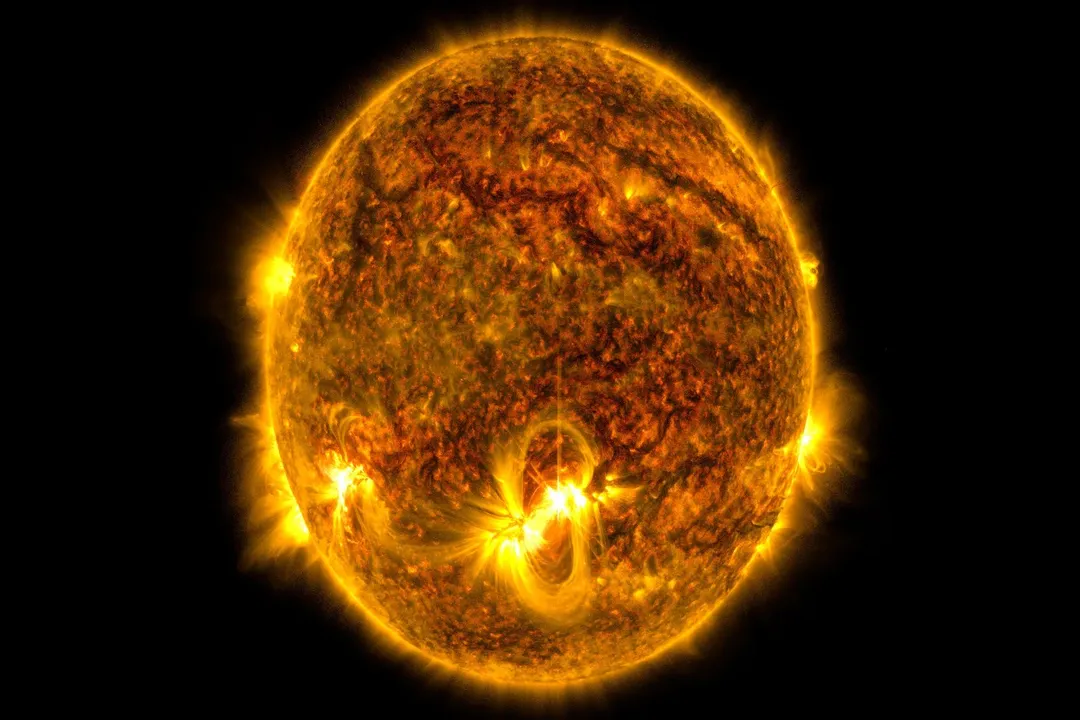
#Videos
Low Mass Stars: Crash Course Astronomy #29 - YouTube
Related Questions
What are the primary elements stars begin their lives composed of, as forged in the Big Bang?What is the dominant nuclear fusion process powering a low-mass star during its stable main sequence phase?What process allows a low-mass star to synthesize carbon after exhausting the hydrogen fuel in its core?What stellar structure forms when a low-mass star begins hydrogen-shell burning after core hydrogen depletion?What is the practical upper limit for elements synthesized within the core of a typical Sun-like low-mass star during fusion stages?Through which structure does a low-mass star disperse its newly synthesized elements like carbon and oxygen into space?What dense remnant is left behind by a low-mass star after fusion ceases and its outer layers have been expelled?For the smallest stars, such as red dwarfs below 0.5 solar masses, what is their ultimate contribution to galactic chemistry?How does the required temperature for the Triple-Alpha process compare to the temperature needed for the Proton-Proton chain in the Sun's core?What role do low-mass stars play in the chemical enrichment cycle compared to massive stars regarding elements up to iron?