What process defines the longest phase of a star's life, known as the main sequence?
Answer
Fusing hydrogen into helium
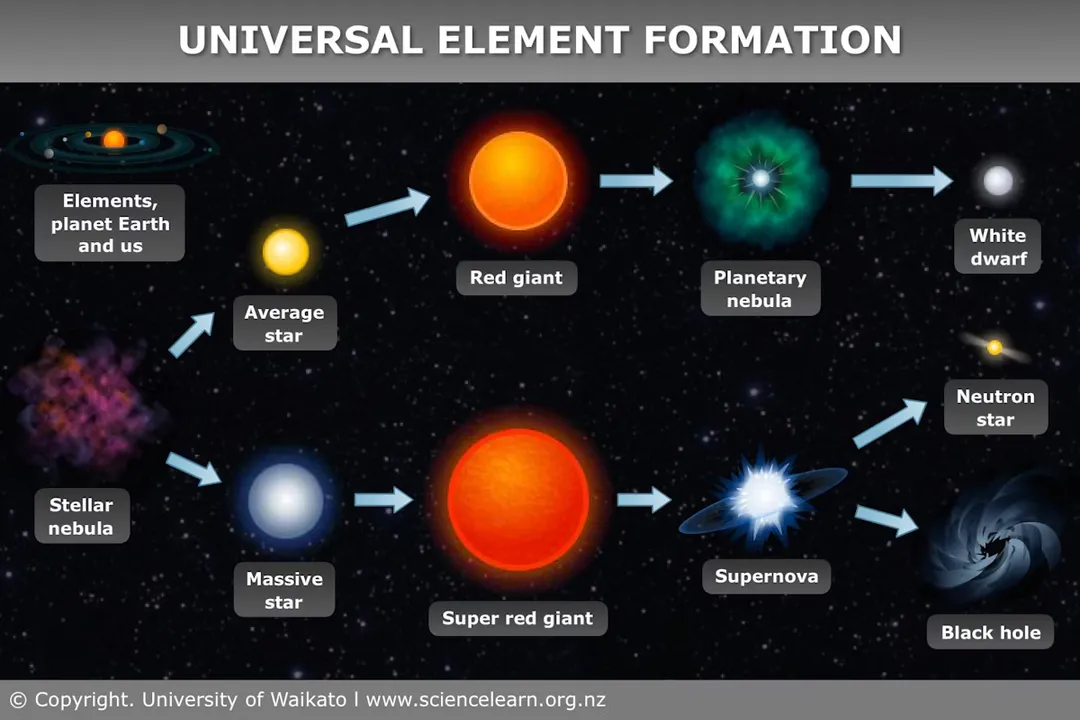
During the main sequence phase, a star maintains stability by successfully fusing hydrogen into helium in its core.
#Videos
Creating the Elements - Sixty Symbols - YouTube
Related Questions
What are the two primordial elements created in the Big Bang?What process defines the longest phase of a star's life, known as the main sequence?Approximately what minimum temperature is required to ignite the fusion of hydrogen into helium?What elements are primarily forged by stars comparable to or slightly larger than the Sun before they become white dwarfs?In very high-mass stars, what element is produced at the very center following the silicon-burning stage?Why does fusion effectively stop being an energy source once a star's core becomes predominantly iron?What process is responsible for creating elements heavier than iron, such as gold and uranium, during a core-collapse supernova?How does the main sequence lifetime of a star twenty times the Sun's mass compare to the Sun's?Which structure describes the internal fusion zones of a truly massive star?What stellar mechanism produces elements heavier than iron, such as barium or strontium, over thousands of years in aging, lower-mass stars?