What factor determines the fate of a star?
The destiny awaiting a star, whether it ends its long existence as a quiet cinder or explodes in a catastrophic event visible across galaxies, is not a matter of chance or cosmic lottery; it is overwhelmingly predetermined by one fundamental characteristic: its initial mass. [1][2][5][8][9] This single measurement, taken at the moment of its birth in a collapsing nebula, sets the tempo, the brightness, and the entire final act of its stellar life story. [9] While stars might seem like immutable beacons, their evolution is a tightly controlled process governed by the relentless battle between gravity pulling inward and the outward pressure generated by thermonuclear fusion in their cores. [2]
# Initial Size
The concept of "mass" in astronomy relates to how much matter a star contains, which directly correlates to how large it is when it first ignites hydrogen fusion in its core—the main sequence phase. [2] In essence, the heavier the star, the more intense the gravitational squeeze on its interior. [6] This increased pressure necessitates a much higher core temperature to maintain equilibrium, which in turn drives the nuclear fusion engine at a furious pace. [2]
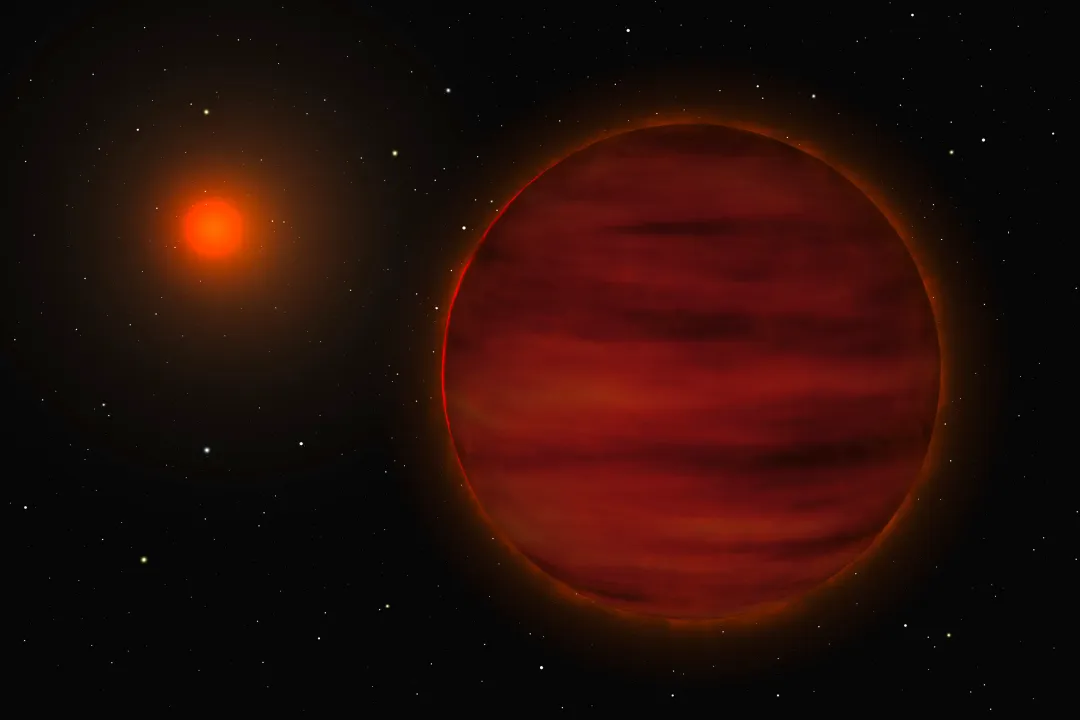
It is interesting to note that the relationship between mass and luminosity (brightness) is not linear; it follows a power law, meaning a slight increase in mass results in a disproportionately massive increase in energy output. [5] For example, a star merely twice the mass of our Sun can be tens of times brighter. Conversely, a very low-mass star, a red dwarf, may only be a fraction of the Sun’s mass and incredibly dim. [2] This fundamental disparity in energy production is the engine behind the vastly different life paths we observe. Some sources suggest that while mass is the near-absolute dictator of fate, factors like rotation speed or the presence of strong magnetic fields might introduce minor deviations, but they seldom override the verdict delivered by the initial mass value. [6]
# Lifespan Duration
The furious pace of the high-mass stars translates directly into a dramatically shortened existence when compared to their smaller cousins. [9] A star spends the vast majority of its life fusing hydrogen into helium on the main sequence. [2] For a star like our Sun, this stable period lasts for billions of years—around ten billion years is a standard estimate. [1] This extended timeline allows for the development of complex planetary systems, as seen in our own solar neighborhood. [2]
Consider the scale change: A star with just a few times the Sun’s mass burns through its fuel supply far more quickly, perhaps lasting only a few hundred million years. [9] The most massive stars, those perhaps 20 to 100 times the Sun's mass, live fast and die young, their main sequence lives potentially lasting only a few million years. [2] This stark contrast in longevity is perhaps the most tangible demonstration of mass's influence on stellar behavior. If you were to plot the lifespan of stars against their mass on a graph, you would see a steep, falling curve, indicating that the heavier stars are the universe's greatest spendthrifts when it comes to their nuclear budget. [1]
A deeper way to frame this is to consider what determines the fuel reserve versus the burn rate. The fuel reserve scales roughly with mass, but the burn rate (luminosity) scales much faster, often as mass cubed or higher. This means the ratio of fuel to consumption plummets as mass increases, leading to those short, brilliant lives. [2]
# Terminal Stages
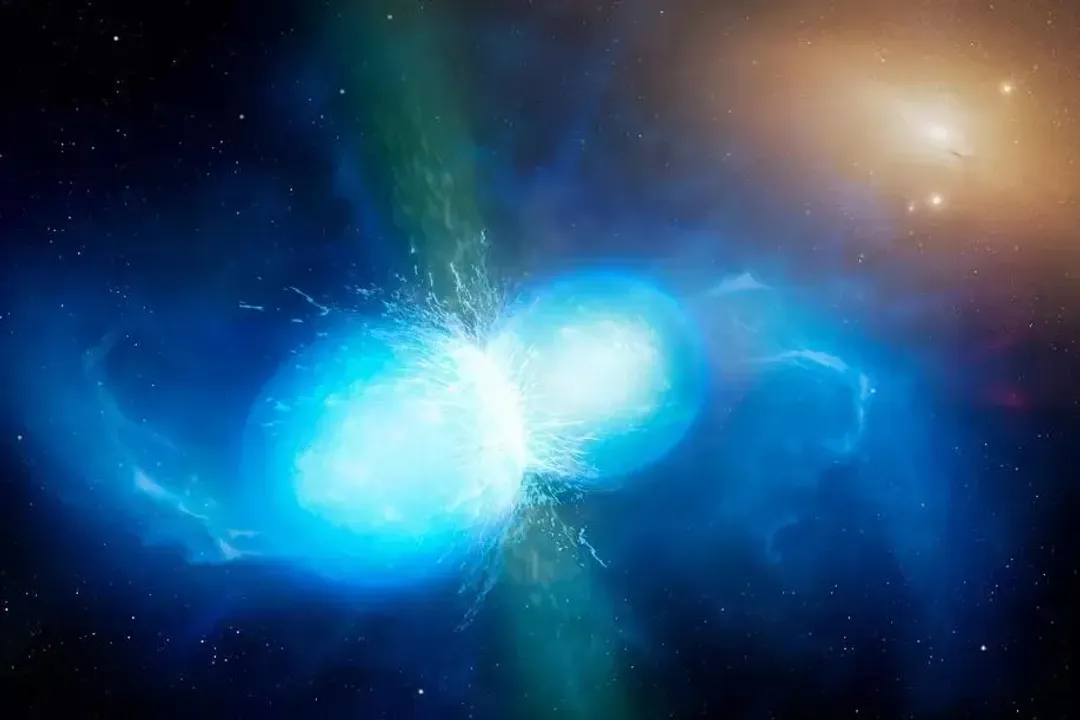
Once the core hydrogen is exhausted, the internal pressure drops, gravity wins momentarily, and the star begins the process of contraction and reheating, moving off the main sequence and setting its ultimate fate in motion. [2] The path it takes now is entirely dictated by that original mass measurement, leading to three primary categories of stellar corpses. [5][8]
# Solar Fates
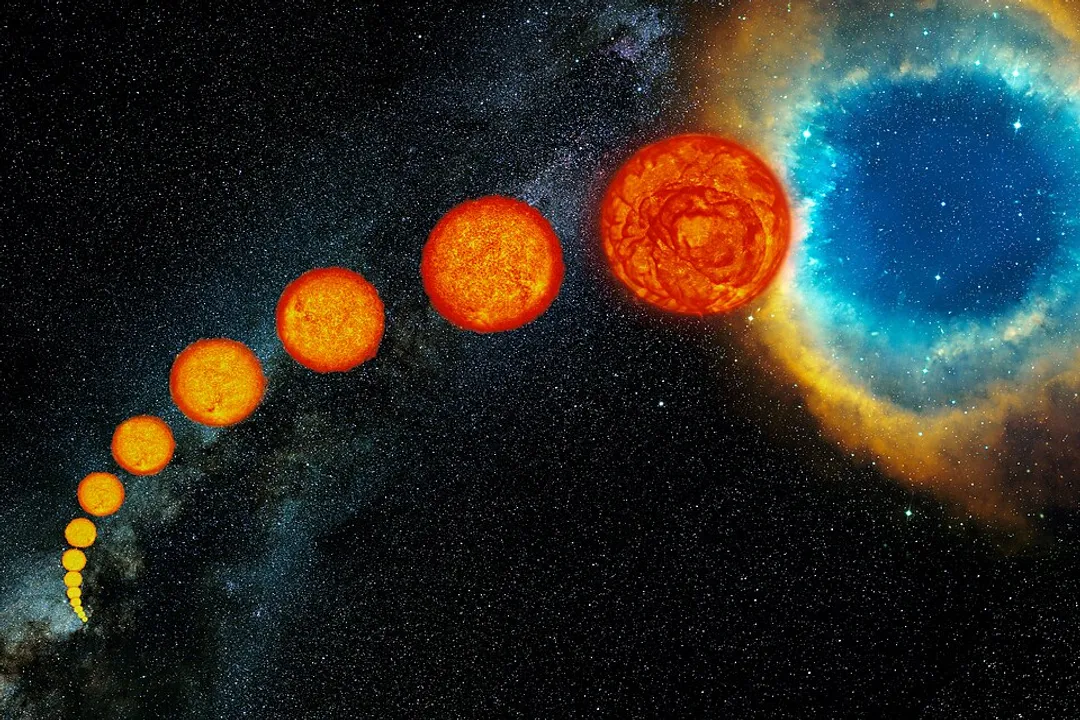
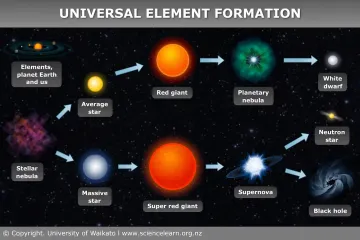
Stars comparable to or slightly more massive than the Sun—those up to about eight solar masses—have a relatively gentle exit strategy. [1] After leaving the main sequence, they swell into red giants, briefly fusing helium in their core. [2] Eventually, they shed their outer layers into space, creating a beautiful, expanding cloud known as a planetary nebula. [1] What remains is the inert, super-dense core, which cools and fades over eons as a white dwarf. [2][5] A white dwarf is essentially a stellar ember, supported against further gravitational collapse by electron degeneracy pressure—a quantum mechanical effect that prevents the electrons from being squeezed any closer together. [2] Our own Sun is destined for this fate. [1]
# Massive Deaths
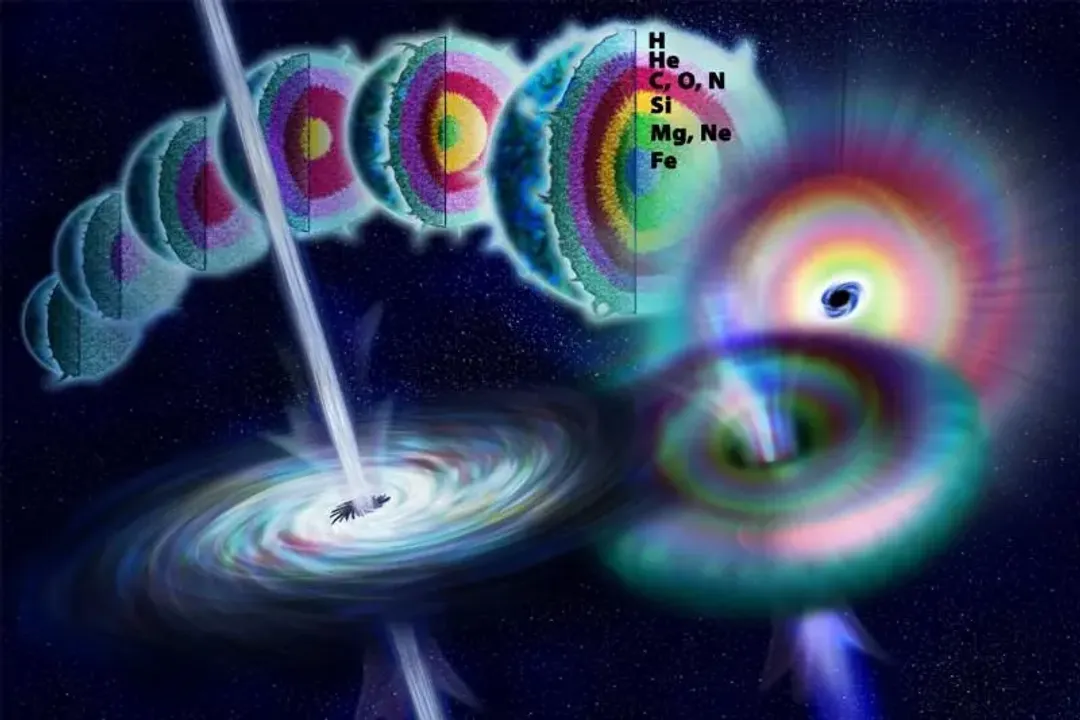
For stars significantly more massive than the Sun—generally those exceeding about eight solar masses—the post-main sequence evolution is far more violent. [2] Their greater mass allows their cores to reach temperatures high enough to fuse elements heavier than carbon and oxygen, leading to sequential burning stages: neon, oxygen, silicon, and so on, until an iron core is formed. [2] Iron fusion does not release energy; it consumes it. This causes the core to collapse catastrophically in mere seconds. [2]
The ensuing supernova explosion blasts the star's outer layers into the cosmos, enriching the universe with the heavy elements essential for life. [1][2] The remnant left behind depends on the mass of the core after the explosion. If the remnant core is between roughly $1.4$ and $3$ solar masses, the collapse halts when the protons and electrons are crushed together to form neutrons, resulting in an incredibly dense object called a neutron star. [2] A teaspoon of neutron star material would weigh billions of tons. [2] If the remnant core exceeds roughly three solar masses, even the pressure from neutron degeneracy cannot withstand gravity, and the core collapses completely into a black hole, a region of spacetime from which nothing, not even light, can escape. [2]
# Binary Influence
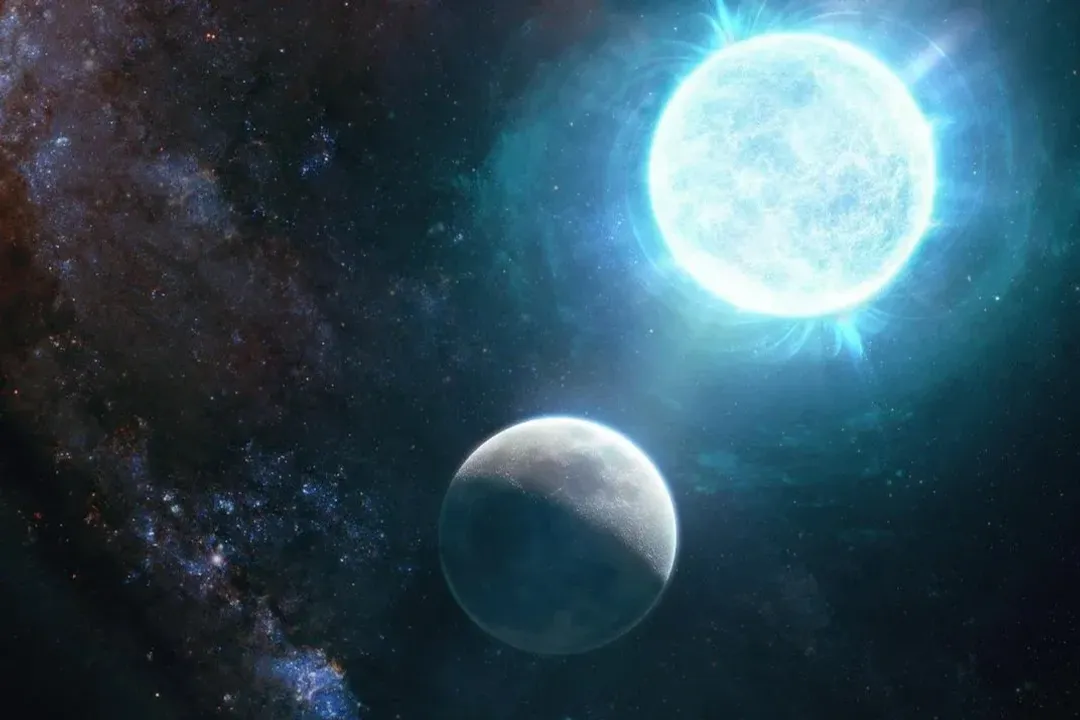
While initial mass is the most significant determinant, the environment a star is born into can introduce a critical variable that changes the expected outcome: the presence of a close binary companion. [10] Many stars, perhaps even more than half of all stars, exist in multi-star systems. [10] If two stars orbit closely, mass transfer can occur as one star swells during its giant phase. [10]
This mass exchange can fundamentally rewrite a star's final chapter. For instance, a star destined to become a white dwarf might receive material from its neighbor, pushing its total mass over the critical limit (the Chandrasekhar limit, about $1.4$ solar masses), causing it to collapse into a supernova instead. [10] Conversely, a massive star on track for a black hole might lose enough of its outer envelope to its companion that it collapses into a less dramatic neutron star. [10] This gravitational interaction introduces a layer of cosmic complexity, showing that while the star’s intrinsic property is mass, its actual fate can be subject to external gravitational negotiation. [10]
# Density Extremes
The physical state of these final remnants showcases the sheer scale of the gravitational forces at play. Consider the density difference between a white dwarf and a neutron star. A white dwarf, having the mass of the Sun squeezed into a volume roughly the size of the Earth, packs matter to an incredible density. [2] However, a neutron star, possessing perhaps $1.5$ times the Sun’s mass crammed into a sphere only about $20$ kilometers across, is orders of magnitude denser. [2] To truly grasp the difference: if you took a single cubic centimeter of white dwarf material, it would weigh several tons. A cubic centimeter of neutron star material, however, would weigh roughly a billion tons—the mass of a large mountain compressed into the size of a sugar cube. This progression from a star shedding its skin gracefully to one that collapses into an object defined by the limits of quantum mechanics perfectly illustrates the sheer power locked within the initial mass budget. [2]
The life and death of a star, therefore, is a story with a clearly established protagonist—mass—and a well-defined script outlining the potential endings: a fading white ember, a spectacular explosion leaving behind a super-dense neutron core, or the complete spacetime warp of a black hole. [1][5] It is a cosmic physics problem where nearly all the boundary conditions are established before the star even truly begins to shine. [2]
#Videos
What Factors Determine A Star's Final Lifecycle? - Physics Frontier
Related Questions
#Citations
The Life Cycles of Stars - Imagine the Universe! - NASA
Stellar evolution - Wikipedia
What determines the fate of a star? a) The star's age b) The ... - Brainly
What Factors Determine A Star's Final Lifecycle? - Physics Frontier
Stellar Evolution - aavso
Is the life-arc of a star determined 100% by its starting mass ... - Reddit
What decides the fate of the stars? - Quora
Stellar Evolution - Chandra X-ray Observatory
How a companion can change a star's fate - Big Think