How do we determine the age of the stars?
Figuring out the age of a distant star is one of astronomy’s most challenging yet fundamental tasks. Unlike dating a rock on Earth, where we can use the predictable decay of radioactive isotopes, stars are massive, luminous fusion reactors whose lifespans span billions of years. [8] We cannot simply wait to watch them evolve; instead, astronomers must rely on intricate physics, careful observation, and comparison to theoretical models of stellar life cycles. [3][7] The method chosen depends heavily on whether the star is lonely or part of a bustling stellar nursery.
# Stellar Clocks
At its heart, determining a star's age hinges on understanding its fuel consumption rate, which is directly tied to its initial mass. [7] Stars spend the majority of their lives on the main sequence, steadily fusing hydrogen into helium in their cores. [7] A star’s mass dictates how hot and bright it burns: the more massive the star, the faster it consumes its fuel, and the shorter its lifespan. [3]
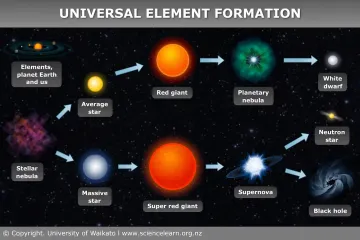
To visualize this, astronomers use the Hertzsprung-Russell (H-R) diagram, which plots a star’s luminosity (brightness) against its temperature (or color). [7] As a star ages and exhausts the hydrogen in its core, it begins to evolve, moving off the main sequence toward the red giant phase. [7] The exact position a star occupies on this map—or its current evolutionary stage—is the primary indicator of its age relative to its mass. [3] A star that has begun swelling into a giant is far along in its life, whereas a star still happily burning hydrogen is younger.
# Cluster Members
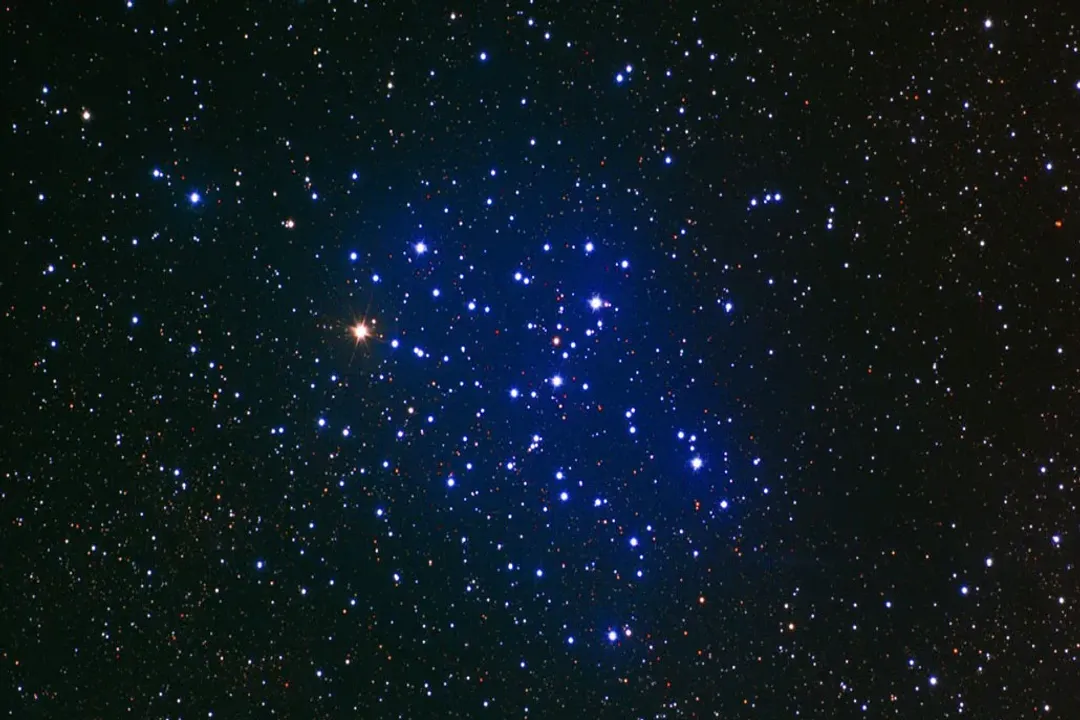
The most reliable way to date stars is not by looking at an isolated individual but by observing star clusters. [3] Clusters are fantastic natural laboratories because all the stars within them are thought to have formed at nearly the same time from the same cloud of gas and dust. [3][7] Since they share an age, any differences in their current state must be due to their initial mass.
When astronomers plot the stars from a cluster onto an H-R diagram, they look for the main-sequence turnoff point. [7] This point marks the location of the stars that have just run out of core hydrogen and begun evolving away from the main sequence. [7] If the most massive stars have already turned off, the cluster is old. If only the very smallest, longest-lived stars remain, the cluster is ancient. [3] For instance, if the turnoff point corresponds to stars about five times the mass of the Sun, we know the cluster’s age because we can calculate how long a five-solar-mass star burns its fuel—perhaps only a few hundred million years. [7] If we observe a cluster where stars similar to our Sun are just beginning to expand, we can infer an age closer to billion years, based on solar models. [3] This comparative approach, using a whole population rather than one star, removes much of the uncertainty inherent in single-star dating.
# Single Star Clues
Dating a single, isolated star, like our Sun, presents a much tougher proposition. [6] Without the context of a co-born cluster, we must rely heavily on evolutionary models constructed from theory and observation of other star types. [6] Astronomers must estimate the star’s mass and metallicity (the abundance of elements heavier than hydrogen and helium) and then use models to predict its life path. [3] The uncertainty in these estimations is generally greater than when dating a cluster. [6]
Consider the difference in approach: dating a planet like Earth relies on the known half-lives of radioactive elements within the planet, a chemical clock that ticks with high precision. [8] Stellar dating, conversely, relies on physics—how quickly the core converts mass to energy—which is sensitive to initial conditions that we can only estimate for a lone star. [8] If an astronomer estimates a star is $4$ billion years old based on its luminosity and mass, that age might have an uncertainty range of billion years, reflecting the limits of current modeling for solitary stars. [6]
# Spin Down
A fascinating alternative technique focuses on the star’s rotation, known as gyrochronology. [1] Stars are born spinning relatively quickly, but they lose angular momentum over time through their stellar winds, which are streams of charged particles driven by magnetic fields. [1] These magnetic fields effectively drag the stellar wind away from the star, slowing its rotation rate much like a brake. [1]
The rate at which a star slows down appears to be predictable for stars in a certain mass range, similar to our Sun. [1] By measuring a star’s current rotation period and comparing it to established decay curves—which are calibrated using clusters of known ages—scientists can derive an age estimate. [1] This method provides an independent check on the H-R diagram method and is particularly useful for measuring the ages of Sun-like stars that have not yet begun to leave the main sequence. [1] However, the magnetic braking process can become less efficient or change over time, meaning this clock might not tick perfectly uniformly across all stellar ages or masses. [1]
# Star Quakes
Perhaps the most direct way to probe a star's interior structure and thus its current stage of fuel consumption is through asteroseismology. [3] This technique treats stars like musical instruments, analyzing the subtle, periodic variations in their brightness caused by internal pressure waves or oscillations—essentially, starquakes. [1][3]
These sound waves travel through the star and depend critically on the density, temperature, and composition profiles inside. [1] By observing the frequencies of these oscillations, astronomers can map the internal structure of the star. [3] For example, the size of the helium-rich core in a hydrogen-fusing star is a direct signature of how much time has elapsed since it joined the main sequence. [1] This allows scientists to determine a star’s evolutionary state with great precision, offering an age estimate derived from the physical reality inside the star rather than just its surface appearance. [3] While requiring extremely precise, long-term photometric data, asteroseismology is rapidly becoming a benchmark for stellar age determination where possible. [1]
# New Tools
Advancements in observational technology continuously improve our ability to measure these stellar properties with less error. Telescopes are getting better at measuring the minute light variations needed for asteroseismology and precisely determining the colors and brightnesses needed for H-R diagram analysis. [5] For instance, upcoming missions, like NASA’s Nancy Grace Roman Space Telescope, are designed with wide fields of view and high sensitivity, enabling them to observe thousands of stars in distant clusters with the precision necessary to map out their turnoff points more clearly than ever before. [5] Greater statistical samples, coupled with refined models that incorporate findings from gyrochronology and seismology, will lead to tighter constraints on stellar lifetimes across the galaxy. [5] This continuous feedback loop—new data refining models, which in turn improve age predictions—is how astronomical knowledge advances.
#Videos
How Do We Measure the Ages of Stars? With Astrophysicist Ruth ...
How do you measure the age of a star? | Science News - YouTube
Related Questions
#Citations
How do scientists calculate the age of a star? - Science News
How Do We Measure the Ages of Stars? With Astrophysicist Ruth ...
How to Learn a Star's True Age | Smithsonian Institution
How do scientists determine the ages of stars? Is the technique ...
How NASA's Roman Telescope Will Measure Ages of Stars
eli5 how do we KNOW how old stars are? : r/explainlikeimfive - Reddit
Measuring the Age of a Star Cluster | ASTRO 801
How do astronomers know the age of the planets and stars?