What mechanism provides the necessary outward force to counteract gravity during a star's main sequence life?
Answer
The thermal pressure from hydrogen fusion in the core pushing outward.
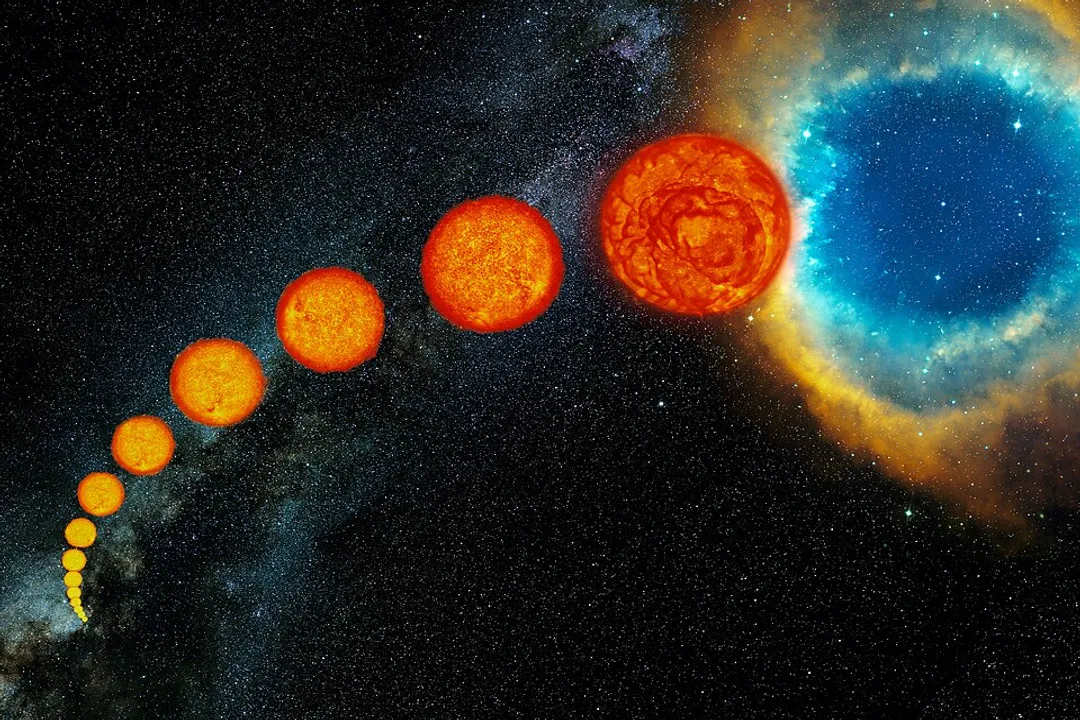
During its main sequence, a star achieves equilibrium where the inward pull of gravity is balanced by the thermal pressure generated by ongoing hydrogen fusion occurring in the core.
Related Questions
What initial mass generally defines a star as a very high mass star?How is the lifespan of a very high mass star measured compared to smaller stars like the Sun?What is the element at which the thermonuclear fusion chain definitively halts in the core of a massive star?What process characterizes the core collapse when electrons are forced into protons?What ultimately provides the momentary outward pressure that halts the initial rapid collapse into a neutron density core?What phenomenon is observed when the outward explosion results from the material slamming into the newly formed dense core?What is the result if the remnant core mass remains between approximately 1.4 and 3 solar masses after the explosion?How is the lifespan of the silicon-burning core stage described relative to the hydrogen-burning stage?What mechanism provides the necessary outward force to counteract gravity during a star's main sequence life?What occurs if the remnant core mass exceeds the Tolman-Oppenheimer-Volkoff (TOV) limit?