Can human urine be recycled?
The possibility of turning human urine back into usable resources is moving from the realm of speculative science fiction into tangible, everyday applications, both off-grid and in advanced research settings. [4] While it may sound unorthodox, urine is not simply a waste product to be flushed away; it is a concentrated stream of valuable compounds that we have historically paid to remove from our systems. [9] Rethinking this seemingly discarded liquid is now seen as a key component in building more sustainable food systems and managing resource scarcity. [9] The core question isn't if it can be recycled, but how efficiently, and for what end product—whether that is agricultural fertilizer or clean water.
# Nutrient Concentration
What makes urine so valuable is its chemical makeup. It contains nearly all the nitrogen, phosphorus, and potassium (N-P-K) excreted by the body. [1][9] These three elements are the primary components sought in commercial fertilizers, yet we treat them as contaminants in our wastewater infrastructure. [9] A significant portion of the nutrients we consume through food ends up being flushed down the toilet, representing a loss of resources that agriculture depends upon. [1][9] For instance, the nitrogen content in urine is substantial enough that treating it as a resource instead of a waste stream can offset the need for energy-intensive synthetic fertilizer production. [1]
Consider a small-scale example: if a single person produces roughly 1 to 1.5 liters of urine per day, that liquid contains measurable amounts of these vital crop nutrients. [1] If we were to calculate the annual savings for a community that successfully captures and processes this output, the reduction in reliance on mined or industrially fixed nitrogen would become quite clear. The volume might seem small per person, but aggregated across a population, it represents a significant nutrient reservoir currently being discarded. [1]
# Fertilizer Production
The primary pathway for terrestrial urine recycling focuses on transforming it into safe, usable fertilizer. [1][7] Projects like those at the Rich Earth Institute demonstrate a system for collecting, storing, and treating source-separated urine to create nutrient-rich compost or liquid fertilizer. [1] This separation is vital because it keeps the urine stream relatively clean, avoiding the dilution and contamination associated with mixing it with fecal matter and flush water. [1][6]
At the Rich Earth Institute, collected urine is stored for a minimum of six months. [1] This storage time allows for pathogen die-off, making the resulting product safer for agricultural use. [1] The end product, often referred to as "humanure" or recycled fertilizer, can then be applied to non-food crops, or, with careful monitoring and processing, potentially to food crops, closing the nutrient loop locally. [1] This contrasts sharply with conventional agriculture, which often imports nutrients from distant sources, adding to the carbon footprint of food production. [9]
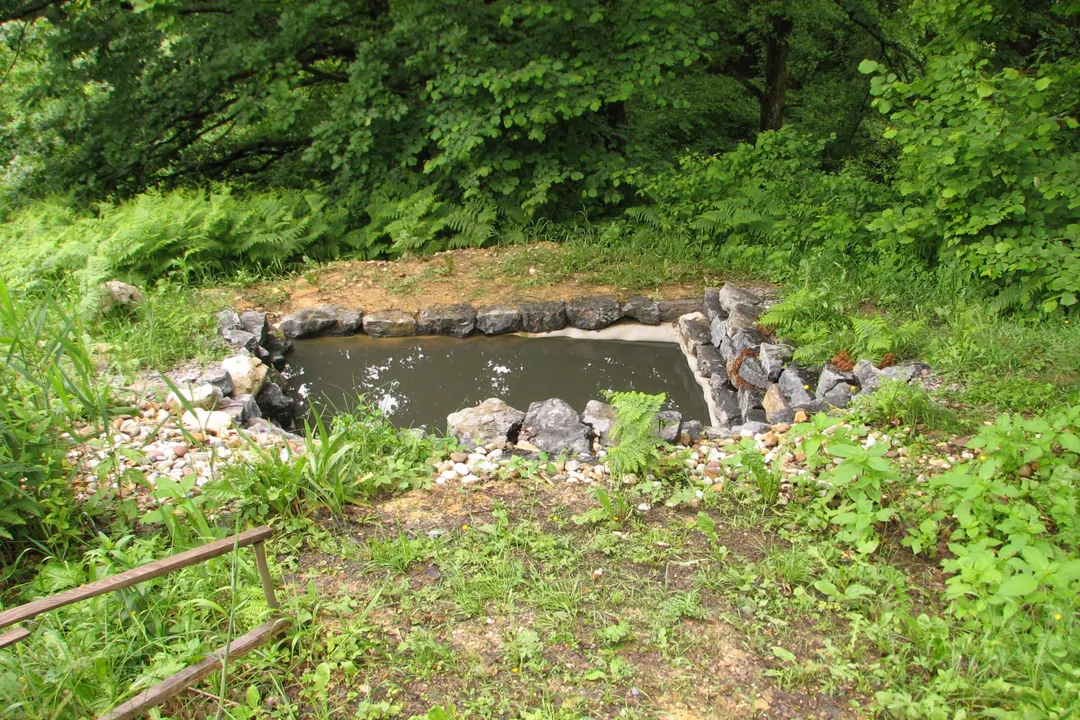
For those managing homes off-grid or seeking extreme self-sufficiency, recycling urine is a well-established practice, though often done on a smaller, more direct scale. [5] On such properties, some individuals use stored and diluted urine directly as a nitrogen boost for garden beds, recognizing that while it needs dilution, it offers immediate plant food. [5] This hands-on approach requires a good understanding of plant needs and dilution ratios to avoid burning vegetation, a clear difference from centralized processing facilities. [5]
# Water Recovery
Beyond agriculture, urine recycling addresses the critical need for water conservation, a necessity that becomes paramount in closed environments like spacecraft. [3] NASA has developed technologies to recycle water from urine and sweat aboard the International Space Station (ISS). [3] In these extraterrestrial settings, every drop of water is precious, and the recovery systems are highly advanced, designed to produce potable (drinkable) water. [3][4]
The process on the ISS involves capturing the urine, processing it, and then combining it with the reclaimed moisture from the cabin's air. [3] The goal is to achieve extremely high recovery rates, often targeting near-perfect recycling efficiency for survival. [3]
On Earth, technology is catching up. Research published in Nature describes a system, an external device, that can convert the salts and water in urine back into clean water and fertilizer salts. [7] This process often involves crystallization and thermal treatment to separate the components. [7] The resulting water, once sufficiently purified, meets potable standards, demonstrating that urine can indeed be converted back into drinking water, mirroring the depictions seen in science fiction. [4][7] The key difference between space-based and terrestrial reclamation often lies in the energy required and the acceptable purity levels for the final product. In space, water purity is non-negotiable for life support; on Earth, the immediate need is often fertilizer, making water secondary or a co-product.
# Separation Technology
The success of any large-scale urine recycling program hinges on source separation. [6] If urine is mixed with everything else in the sewage system, the resulting slurry is complex, dilute, and expensive to treat for individual nutrient recovery. [1][6] Technologies like urine-diverting dry toilets (UDDTs) or specialized plumbing systems are designed to keep the liquid stream pure. [6]
A urine separator, whether integrated into a toilet or as a separate collection point, directs the urine into one container while solids go elsewhere or are flushed with minimal water. [6] This seemingly simple plumbing change has enormous implications for downstream processing. By keeping the streams separate:
- Pathogen load management is simpler, as urine generally has fewer pathogens than fecal matter. [1]
- The concentration of valuable NPK remains high, reducing the energy needed for concentration or evaporation. [6]
- The resulting solid waste (feces) can be managed separately, often through composting, without introducing the high nitrogen load of urine immediately. [1]
This separation approach is essential for any circular economy model involving human waste. Imagine retrofitting an entire apartment building: instead of two standard drains, you would have one for solids and one for liquids, fundamentally altering the waste stream's value proposition from a disposal cost to a raw material input. [6]

# Adoption Hurdles
Despite the clear environmental and agricultural benefits, widespread adoption of urine recycling faces significant social and logistical hurdles. [4] The primary challenge is often psychological—the cultural taboo associated with human waste. [4] While many people are comfortable with the idea of nutrient recycling, applying it to their own waste requires a mental shift.
This acceptance problem is evident when comparing the two main goals. Reclaiming water for irrigation is generally met with less resistance than claiming it will be treated back to drinking water standards. [4] Even with rigorous testing proving potability, the "yuck factor" remains a powerful deterrent for public acceptance of reclaimed potable water. [4]
Another hurdle is infrastructure. Implementing source separation on a municipal scale requires significant investment in new plumbing, collection infrastructure, and specialized treatment plants designed for urine, which often process different chemical loads than traditional sewage treatment works. [1][6] Without dedicated infrastructure, the collected urine often ends up being treated as standard wastewater, negating the resource recovery potential. [1] Local regulations regarding the use of human-derived products in food production also play a major role; while centralized facilities follow strict guidelines, individual homesteaders must educate themselves on safe application practices. [5] For instance, when using diluted urine directly on food crops, timing the application is key—applying it well before harvest minimizes any perceived risk associated with direct contact. [5]
We see a clear divergence in accepted practice based on geography and infrastructure level. In highly developed, water-scarce urban areas, investment in advanced closed-loop systems like those on the ISS may become necessary, focusing on water purification. [3] Conversely, in decentralized, rural, or developing communities, the simpler, less energy-intensive approach of producing fertilizer through safe storage and composting is often the more practical and readily accepted first step. [1][9] The choice between creating fertilizer versus creating drinking water effectively dictates the complexity, cost, and public relations effort required for the recycling program.
#Videos
Pee-cycling: Turning human urine into fertilizer - YouTube
Related Questions
#Citations
How It Works - Rich Earth Institute
Current scenario and challenges in recycling of human urine ...
NASA says 98% of astronauts' urine, sweat can be recycled into ...
Can urine actually be recycled into drinking water, like in sci-fi stories?
Recycling urine at my off grid homestead in the high desert - Reddit
The Liquid Gold - Urine Recycling 101 - Shit and blossoms
Cost-effective urine recycling enabled by a synthetic osteoyeast ...
Pee-cycling: Turning human urine into fertilizer - YouTube
Is Recycling Urine the Secret to Building Sustainable Food Systems?