Is tap water recycled urine?
The water you drink today has almost certainly been part of someone else’s—or something else’s—system before, whether that system was a municipal treatment plant, a river basin, or the digestive tract of a dinosaur. The idea that tap water might be "recycled urine" taps into a deep, often uncomfortable public awareness that Earth has a finite amount of water, constantly cycling through evaporation, precipitation, and consumption. [1][5] The real question isn't if water is recycled, but rather the degree and immediacy of that recycling in modern society, and whether human waste products are being reintroduced directly into our drinking supply.
# Planetary Cycling
The vast majority of the water on Earth has been here for billions of years, meaning every drop has cycled through countless biological and geological processes. [1] When considering the sheer volume of water and the time scales involved, the probability that the water molecule you are consuming has, at some point, passed through another human being is exceptionally high. [1][2] Some estimates suggest that the water you drink has likely been consumed by ten other people already. [4] This natural recycling happens through evaporation from oceans, lakes, and rivers, followed by condensation and rainfall, which replenishes the water sources we draw from. [1]
While this is a geological certainty, the concern people have today usually relates to direct reuse—the process where treated wastewater, which may contain flushed urine, is deliberately routed back into the supply intended for drinking. This is fundamentally different from the slow, natural mixing that occurs over centuries in the global hydrological cycle. [5]
# Spacecraft Purification

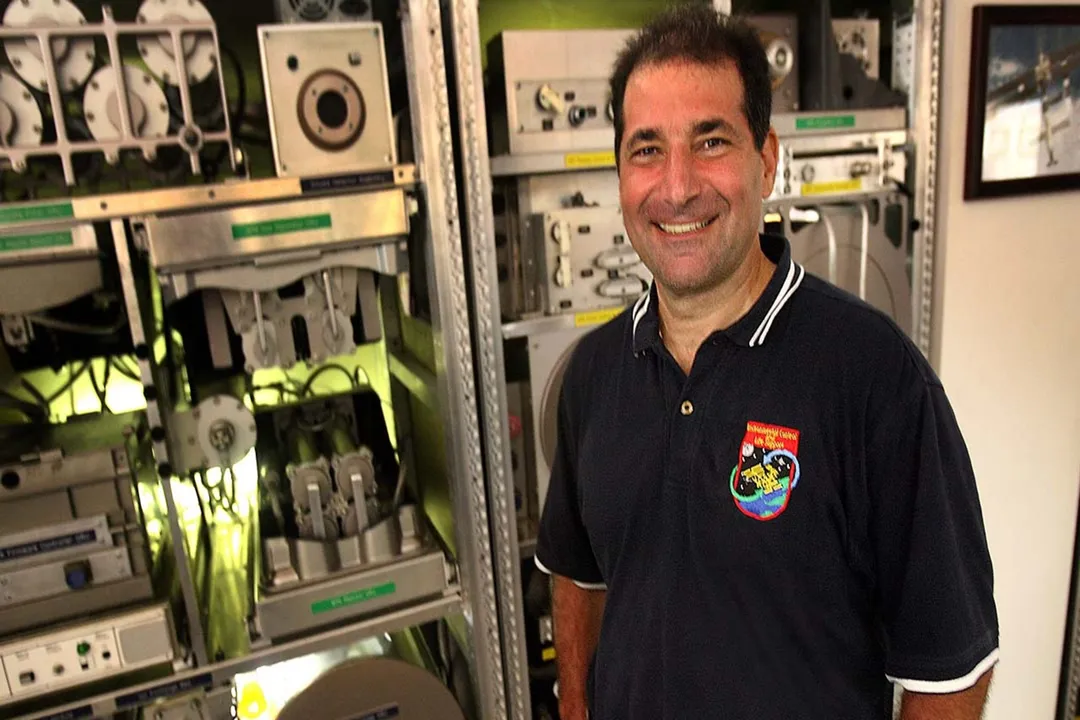
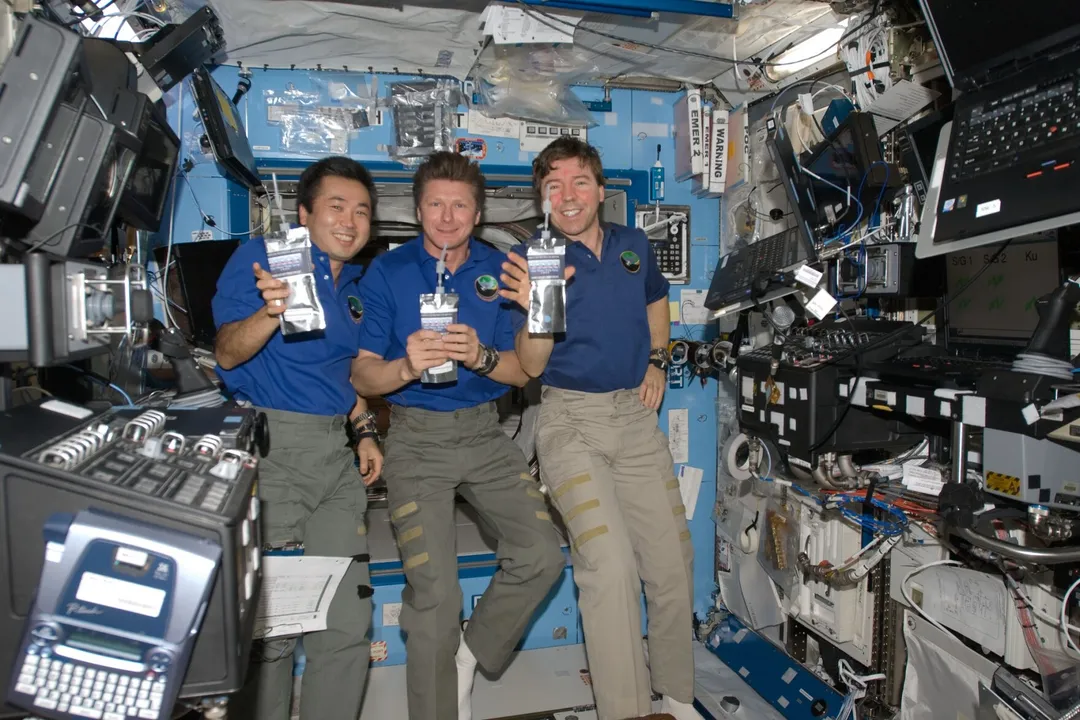
Perhaps the clearest, most intentional example of urine being turned back into drinking water happens far above our heads, aboard spacecraft. In closed environments like the International Space Station (ISS), resources must be managed with extreme efficiency. [3] Astronauts do not have the luxury of waiting for rain; they must reclaim every usable drop.
NASA employs advanced technology to recycle virtually all wastewater, including urine, sweat, and cabin humidity. [3] This process involves significant filtering and purification to ensure the resulting water is potable—drinkable by humans. [3] The recycling rate on the ISS is remarkably high, often exceeding 90 percent. [3] This direct conversion process serves as a high-tech case study demonstrating that, with appropriate engineering, urine can indeed be processed back into safe drinking water. The fact that space agencies rely on this technology highlights its viability when necessity dictates, even if the initial source material includes metabolic waste. [3][10]
# Ground Treatment Systems
On Earth, the process of turning wastewater into drinking water is generally more segmented, although the lines are blurring. Most communities utilize a system where wastewater goes through stages of treatment before being released back into the environment—rivers, aquifers, or the ocean—where it eventually mixes and is drawn back in as raw source water for treatment plants. [6] This is known as indirect potable reuse. [6] The natural environment acts as a large-scale buffer and "treatment polishing" stage before the water is re-entered into the potable supply chain. [6]
However, some regions are moving toward direct potable reuse, which involves treating wastewater to a high standard and sending it directly back into the drinking water system, bypassing the natural environmental buffer. [7] This treatment involves multiple steps to remove pathogens and dissolved solids, often including microfiltration, reverse osmosis, and advanced oxidation processes. [6][7] While the goal is to create water quality that meets or exceeds existing standards, the term "recycled urine" often comes up because urine constitutes a significant component of the wastewater entering these systems. [7][10]
It is interesting to note the difference in intent between space and terrestrial applications. While NASA must recycle urine due to extreme scarcity, terrestrial systems often move toward direct reuse primarily as a response to growing regional water stress and drought, rather than an immediate necessity for resource survival. [5] In systems utilizing indirect reuse, the water might sit in an aquifer for months or years, allowing natural processes and dilution to occur, whereas direct reuse eliminates that environmental waiting period. [6]
# Public Perception Hurdles
Despite the engineering success demonstrated in space and the rigorous standards applied in advanced wastewater treatment facilities on the ground, the acceptance of recycled water—especially through direct potable reuse—faces a significant social barrier. [8] This hurdle is often labeled the "ick factor". [8]
The psychological resistance is understandable; many people feel intuitively uncomfortable drinking water that was recently wastewater, regardless of how clean the purification process makes it. [8] Ethical considerations also arise when discussing turning human waste directly back into a potable resource. [10] While treatment plants have been recycling water for non-potable uses, such as irrigation, for decades, the move to the dinner table raises alarms for some segments of the population. [7][8] In certain Western cities looking toward more recycled water, this public opinion hurdle has proven to be a curious, yet significant, obstacle to implementation. [8]
One community attempting to overcome this has focused on public education, often shifting the terminology away from "wastewater" or "toilet-to-tap" toward phrases emphasizing the environmental benefit and advanced technology, such as "water resource recovery". [6][8] A practical way to frame this for local consumption is to realize that many reservoirs and groundwater sources already contain treated effluent from upstream cities; the debate is really about removing the time lag in that cycle. [5] If your local municipality is drawing from a river system that flows through a major metropolitan area miles upstream, those molecules have already cycled through treatment once before reaching your intake point.

# Molecular Odds Synthesis
When we look at the raw probabilities, the direct presence of urine molecules in any given glass of tap water drawn from a large, well-mixed natural source like a major river basin is extremely low, approaching zero, simply due to dilution over vast distances and time. [1][2] However, the molecules that were in someone's urine have certainly been evaporated, rained down, and reabsorbed into the system—that is the nature of the planetary water budget. [1][5]
Where the connection becomes direct is in specific local scenarios. Consider a small, arid community reliant on a local reservoir that also receives highly treated effluent from a neighboring city—this is where the cycle becomes much shorter, and the percentage of recycled water in the input stream becomes significantly higher. [5]
Thinking about scale helps put this into perspective. If a city treats and reuses 50% of its wastewater indirectly into a shared aquifer, and that aquifer only mixes with natural recharge at a 1:1 ratio over a year, then 25% of the water drawn from that aquifer is, effectively, recently treated wastewater. [6] If that wastewater included metabolic products, the chain leads directly back to the source of the concern. [10] This means that while your glass might not contain fresh urine, it absolutely contains water that has passed through a purification system designed to handle all sewage outputs, including urine. [6][7]
A useful mental calculation for understanding local reliance on reuse is to look at population density versus available natural recharge. In areas like Southern California or parts of Europe, where natural water sources are heavily stressed, the percentage of the total water budget derived from advanced recycling or managed aquifer recharge is significantly higher than in a city situated near massive, fast-flowing freshwater systems. [5] For instance, if a community of 100,000 people relies on a river that naturally feeds 200,000 people, the impact of reuse is diluted. If that same community of 100,000 relies on a river that only naturally feeds 50,000 people, the reuse component becomes dominant, often exceeding 50% of the annual supply. [5]
The future of water security, particularly as climate change tightens supplies, increasingly points toward more efficient, direct recycling methods, mirroring what NASA has perfected. [3] Public understanding needs to evolve from the visceral reaction to the chemical reality: modern treatment technology is capable of removing nearly every contaminant, ensuring the resulting water is safe, whether it came from a distant rain cloud or a local sewage line. [6][10] The challenge is bridging that gap between engineering assurance and public trust. [8]
Related Questions
#Citations
Where does all the urine go? Is the water that we drink recycled by ...
What's the probability that the water we're drinking was someone ...
NASA says 98% of astronauts' urine, sweat can be recycled into ...
How every glass of tap water you drink has been consumed by up to ...
How much of the water we drink is recycled? | News - CORDIS
Does Wastewater Become Drinking Water?
One Small Sip for Man and a Giant Gulp of Recycled Urine For ...
As More Western Cities Turn To Recycled Water, They May Face A ...
The water that are in our pipes. Is the water recycled spring water or ...
Turning pee into drinking water