What is made of frozen water and frozen gases?
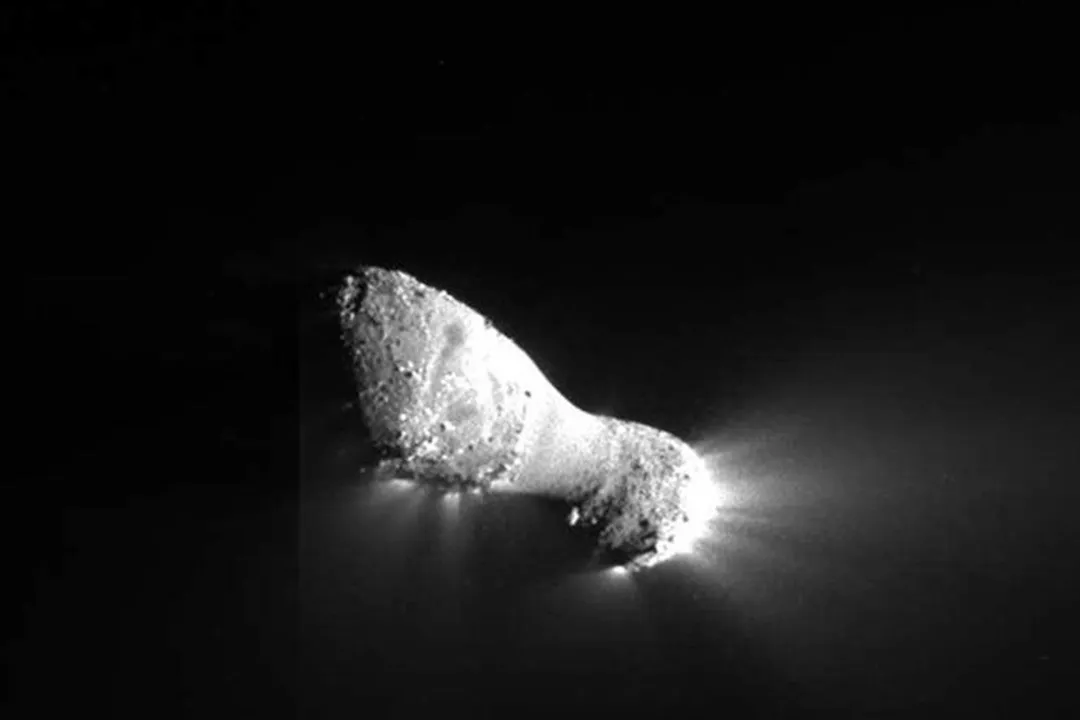
The vast expanse of space is home to remarkable objects built primarily from materials we rarely see in their solid state on Earth: frozen water and frozen gases. These celestial bodies range from small, fast-moving travelers to behemoths orbiting far from the Sun, yet they share a fundamental composition rooted in deep cold. Understanding what these objects are reveals much about the conditions present when our solar system first formed.
# Dirty Snowballs
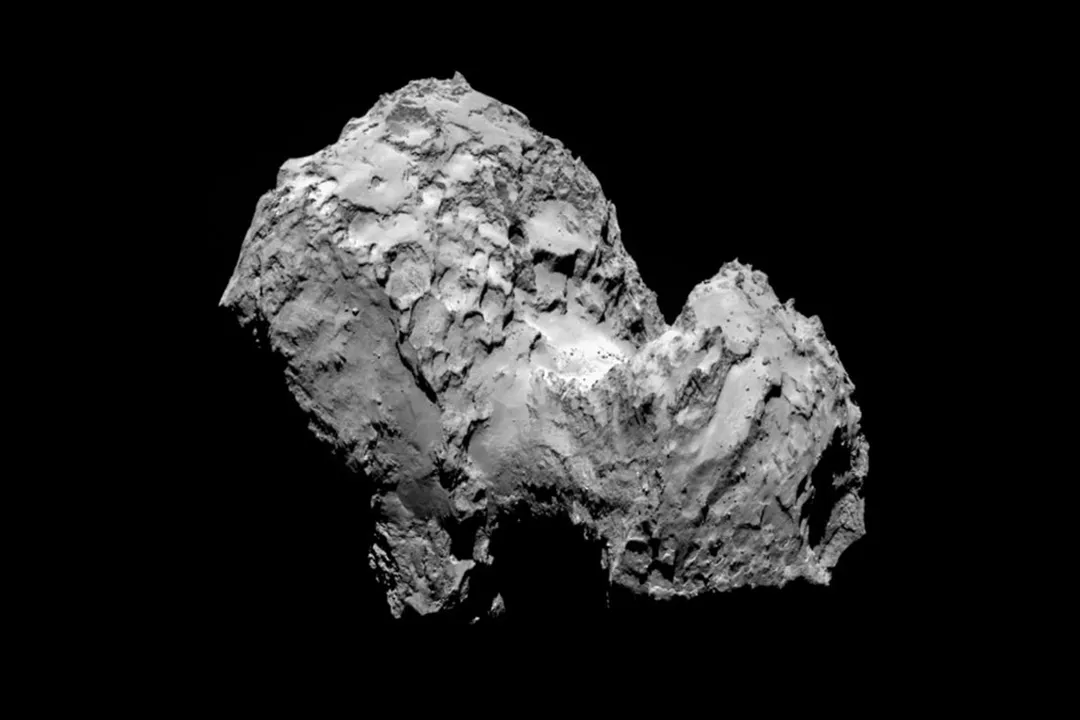
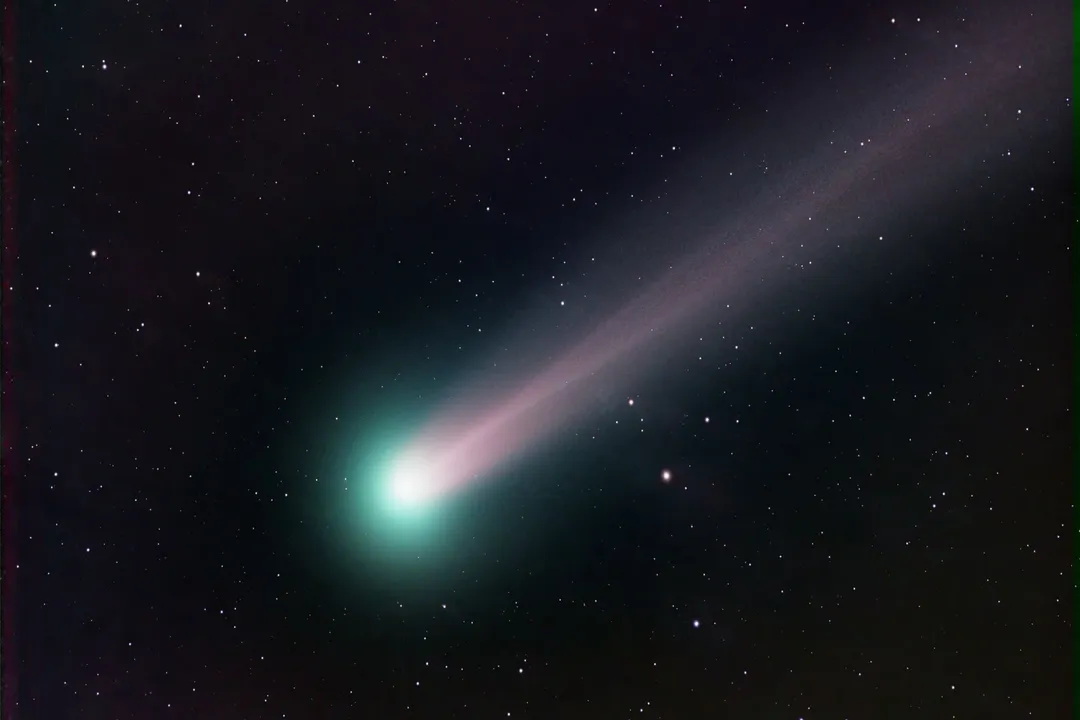
When discussing objects made of ice, dust, and frozen gases, the immediate astronomical phenomenon that comes to mind is the comet. [2][5] Often described using the evocative term "dirty snowball," a comet is essentially a small, irregularly shaped body composed of rock, dust, and various ices. [2][5] These ices are not just frozen water; they include a cocktail of frozen gases, such as carbon dioxide (), carbon monoxide (), methane (), and ammonia (), mixed with silicate dust and rocky material. [1][2][5]
The solid, central part of the comet, the nucleus, is the storage unit for these materials. [8] Because these frozen volatiles have very low sublimation temperatures—meaning they turn directly from solid ice into gas when heated—comets remain inert and dark as long as they reside far from the Sun, deep in the cold fringes of the solar system, such as the Oort Cloud or the Kuiper Belt. [1][8]
# Sublimation Activity
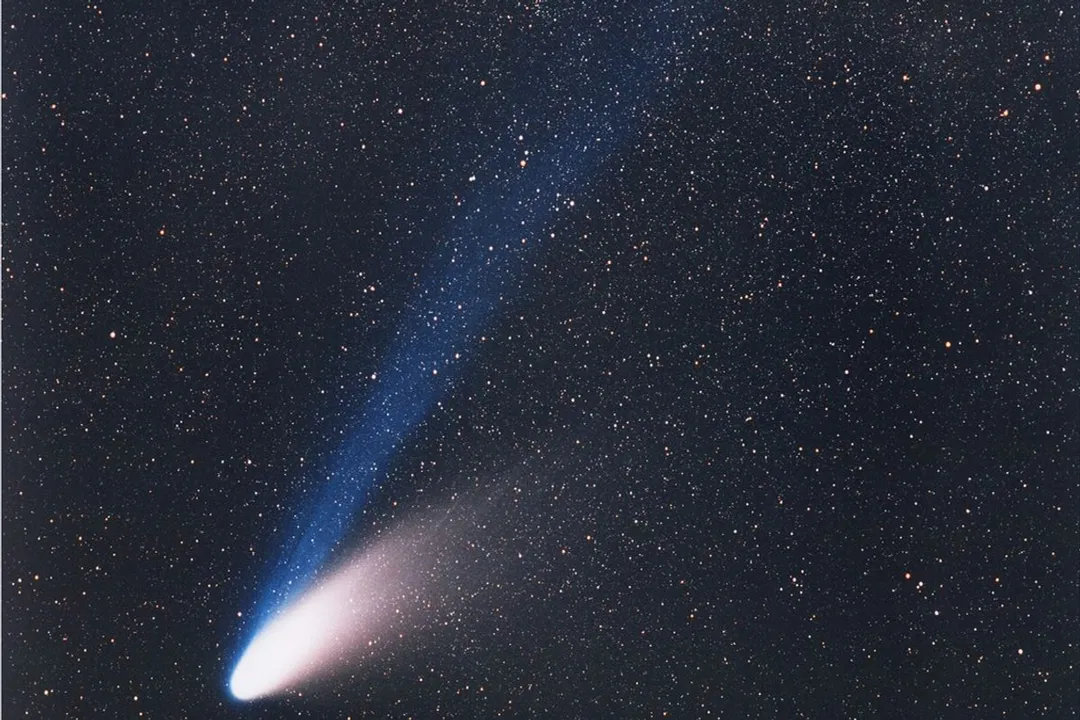
The transformation begins when a comet's orbit brings it closer to the Sun. As solar radiation warms the nucleus, the ices begin to sublimate. [1] This process releases jets of gas and dust, creating a vast, glowing atmosphere around the nucleus called the coma. [8] The coma can grow to be larger than a planet, though the solid nucleus itself is typically only a few kilometers across. [2]
It is the coma and the resulting tails that make comets visible from Earth. [2] The escaping gas drags dust particles along, forming two distinct tails that always point away from the Sun, regardless of the comet’s direction of travel. [1][5] One is the curved dust tail, made up of millimeter-sized particles reflecting sunlight, and the other is the fainter, straighter ion tail (or plasma tail), which is composed of ionized gas pushed directly outward by the solar wind. [8] The relative visibility and length of these tails depend heavily on the specific mix of frozen gases present in the nucleus. For instance, the rapid sublimation of highly volatile ices like carbon dioxide provides the initial, vigorous push that makes a comet dramatically brighten early in its passage toward the inner solar system.
# Water's Deep Connection
Water ice is a dominant component of cometary material. [6] Studying the isotopic composition of this cometary water has provided critical insight into the history of water in the solar system. [6] Scientists analyze the ratio of heavy water () to normal water () in comets, comparing it to Earth's ocean water. [6] This research suggests that comets likely delivered a significant fraction of the water that now fills Earth's oceans, acting as ancient, frozen delivery vehicles across astronomical distances. [6]
# Giant Ices
While comets are small, transient visitors to the inner system, there exist massive, permanent worlds composed predominantly of frozen materials: the Ice Giants. [7] In our solar system, Uranus and Neptune fit this classification. [7] The term "ice" here is used loosely, as the materials exist under extreme pressure and heat, but their fundamental building blocks are volatile compounds that are frozen far out in the cold regions where these planets formed. [7][9]
The internal structure of an Ice Giant is layered. [7] At the center is believed to be a relatively small, dense core composed of rock and various ices. [7] Surrounding this core is a thick mantle composed mostly of water, methane, and ammonia that exists in a supercritical fluid or dense icy state under immense pressure. [7]
# Atmospheric Shells
What truly distinguishes these planets is their vast outer envelope, which consists primarily of hydrogen and helium gas, similar to the gas giants Jupiter and Saturn, but with a much higher proportion of heavier, "icy" elements like oxygen, carbon, and nitrogen. [7] This higher concentration of volatiles is why they are designated "ice" giants rather than "gas" giants. [7][9] Methane, in particular, plays a key role in their appearance, as it strongly absorbs red light, giving Uranus and Neptune their characteristic blue-green hues. [7]
The definition of what constitutes an "ice" in these planetary mantles is fascinatingly divorced from our terrestrial experience. While a comet's water is frozen solid at the pressure of space, the water in Neptune's mantle exists at temperatures perhaps exceeding , yet under pressures so high that the molecules are packed together as tightly as they would be in solid ice. [7]
# Comparing Forms of Frozen Matter
Though both comets and Ice Giants contain frozen water and frozen gases, their scale and role in the cosmos differ dramatically. Comets are residuals, small icy planetesimals that never accreted into larger bodies, primarily orbiting in the solar system's far outer reaches. [1] Their visibility is temporary and tied to their elliptical orbits, causing them to swing through the inner solar system. [2]
Ice Giants, conversely, are massive planets, second in size only to Jupiter and Saturn. [7] They are gravitationally dominant, possessing complex atmospheres and moons, and their compositions reflect the specific material available in the solar nebula beyond the "frost line," the boundary where volatile compounds could condense into solid ices during the initial stages of planetary formation. [7]
An interesting consideration when viewing these distant icy bodies is how the physics of pressure dictates the state of matter, even for the same chemical compounds. For example, the frozen gases that form the nucleus of a comet—like methane—are stable as solids because they are either in the vacuum of space or very far from the Sun's heat. [1][2] However, the methane within the mantle of Neptune is not a simple solid ice; it exists as a dense, hot fluid or plasma due to the crushing weight of the overlying atmosphere. [7] This highlights that for deep space objects, "frozen" means thermodynamically cold, whereas for planets, "ice" can refer to a dense, non-molecular state achieved through extreme pressure, a truly different kind of freezing. [7]
The presence of so much frozen material in the outer solar system provides powerful, albeit indirect, evidence about the early solar nebula. The Ice Giants—Uranus and Neptune—must have formed where it was cold enough for water, methane, and ammonia to solidify into ice grains, allowing them to grow massive enough to gravitationally capture the surrounding hydrogen and helium gas before that gas was blown away by the young Sun. [7] If these bodies had formed closer in, they would have been entirely rocky or gas-dominated. Their very existence confirms that the solar nebula possessed a steep temperature gradient, allowing water to exist as liquid or vapor closer in, but as abundant, solid ice far out in the regions where the giants reside. [1] Thus, these massive, distant icy worlds stand as frozen monuments to the temperature profile of our cosmic nursery.
Related Questions
#Citations
Comets - NASA Science
Comets: Everything you need to know - Space
A comet is a small, icy body that orbits the Sun. It is composed ...
What is a mixture of frozen gases, ice, dust, and rock that ... - Brainly
Comets consist of ice, frozen gases and rocks, and as they travel ...
Frozen comet had a watery past, scientists find - Phys.org
Ice giant - Wikipedia
Comet Anatomy | Research Starters - EBSCO