What is the primary element that stars are made of?
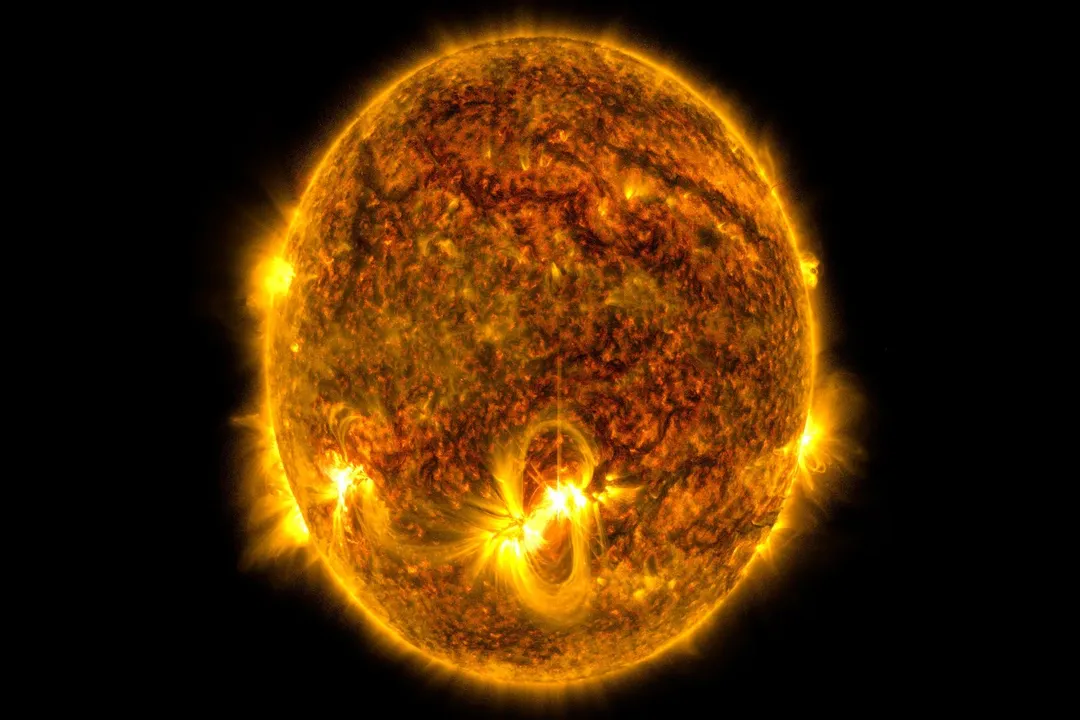
Stars, those brilliant beacons dotting the night sky, appear as simple points of light, but their internal mechanics and composition are anything but. When we ask what the primary element making up these celestial furnaces is, the answer is surprisingly consistent across the vast majority of observed stars: hydrogen. In fact, stars are overwhelmingly giant balls of extremely hot gas, which in astronomical terms, is often referred to as plasma.
# Dominant Gases
The bulk of any typical star's mass—about 98%—is locked up in the two lightest elements created shortly after the universe began: hydrogen and helium. Breaking down that percentage further, hydrogen typically accounts for roughly 75% of the star's total mass, leaving helium to make up the remaining 24%. This means the fundamental material that fuels nearly all stars is hydrogen.
The remaining fraction, a mere 1% to 2%, is composed of everything else on the Periodic Table—elements heavier than the two lightest ones. Astronomers often group all these heavier constituents together and refer to them simply as "metals," regardless of their actual chemical properties. This trace amount, while small in percentage terms, is still immense in absolute scale. For instance, the Sun, which is only about 1% "metals" by mass, still contains a total mass of these heavier elements equivalent to roughly 46.6 planet Earths made entirely of iron.
# Cosmic Origins
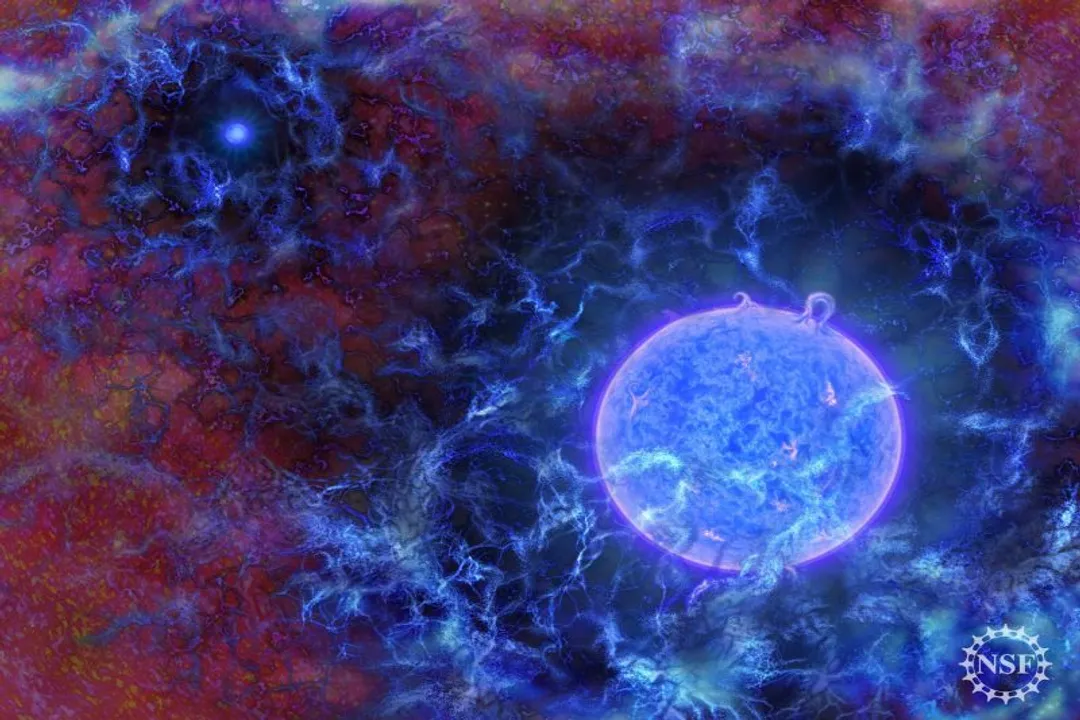
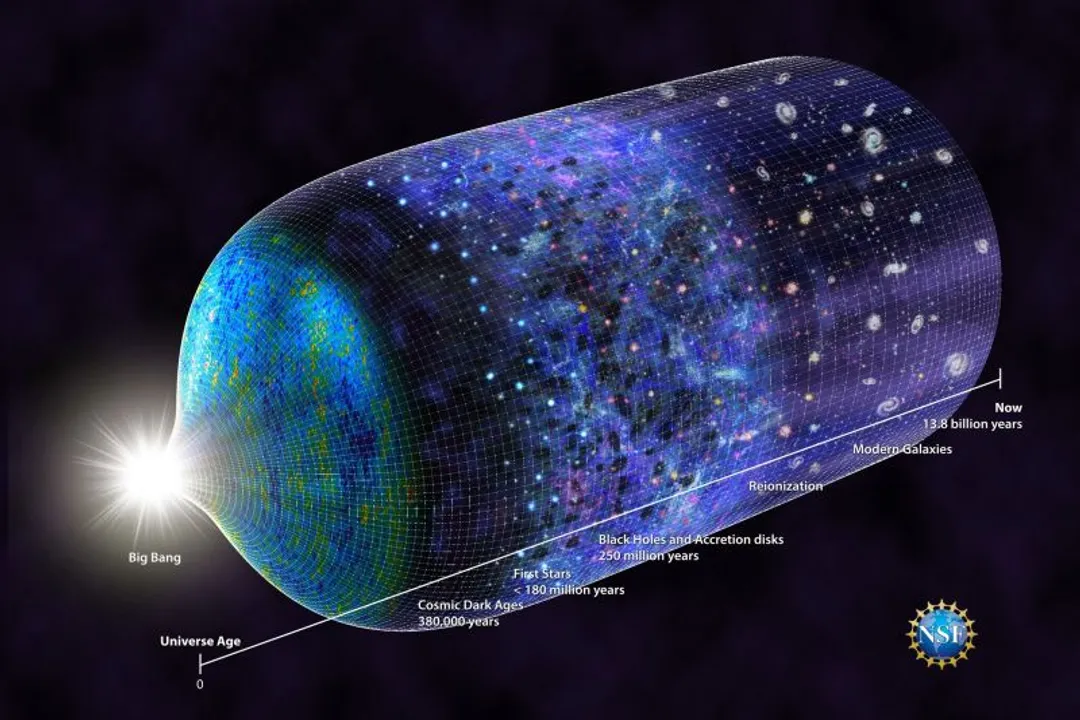
The reason for this overwhelming hydrogen and helium dominance ties directly back to the dawn of time itself. The Big Bang, the event that initiated the universe, produced almost exclusively hydrogen and a small amount of helium, along with trace amounts of lithium. Within a few hundred million years after this initial burst, vast, cold clouds of this primordial gas, called molecular clouds, began to condense under gravity.
When a clump within one of these clouds achieves sufficient mass, its self-gravity causes it to collapse inward. This collapse increases the temperature and pressure until the core ignites a sustained nuclear reaction—the birth of a star. Since the interstellar medium from which stars are born is already dominated by hydrogen and helium, the resulting stars inevitably inherit that same compositional bias. It is not that heavier elements are somehow excluded from the birth nebula; rather, they are present only as minor contaminants within the overwhelming bulk of the primary light gases.
# Core Reaction
A star’s life, especially its main sequence—the longest phase—is defined by the ongoing process of converting hydrogen into helium deep within its superheated core. This process, known as nuclear fusion or "hydrogen burning," releases the prodigious energy that counteracts the relentless inward crush of the star's own gravity.
There are two primary pathways for this fusion, and which one dominates depends on the star's mass and, consequently, its core temperature. In lower-mass stars, like our own Sun, the dominant mechanism is the proton–proton chain reaction. This reaction starts at temperatures around Kelvin and is highly sensitive to temperature changes.
For stars significantly more massive than the Sun—those exceeding about $1.3$ times the Sun's mass—the core temperature gets high enough ( K or more) for a different, more efficient process to take over: the carbon–nitrogen–oxygen (CNO) cycle. This cycle uses carbon, nitrogen, and oxygen as intermediaries, catalytically producing helium while releasing energy. Because the CNO cycle's rate increases much more rapidly with temperature than the proton-proton chain, it drives the intense energy output required to support these larger stars against their own crushing gravity.
# Element Factory
While hydrogen fusion defines a star's stable life, the star's composition is constantly evolving. Once the core hydrogen is exhausted, the core begins to collapse again, raising the temperature until helium itself can begin to fuse into heavier elements, a process collectively termed stellar nucleosynthesis.
For stars of lower mass, like the Sun, the helium burning stage yields carbon and oxygen in the core. When this fuel is spent, these stars will shed their outer layers, forming a planetary nebula, leaving behind a dense, cooling core called a white dwarf. They essentially manufacture their immediate ashes (Helium Carbon/Oxygen) and then stop the process.
The creation of elements beyond this point requires far more extreme conditions, typically only found in the most massive stars. These giants continue the fusion ladder, burning carbon, then oxygen, and finally silicon, creating elements up to iron in their cores. However, fusing iron does not release energy; it consumes it. This loss of outward pressure triggers a catastrophic collapse, leading to a violent explosion known as a supernova.
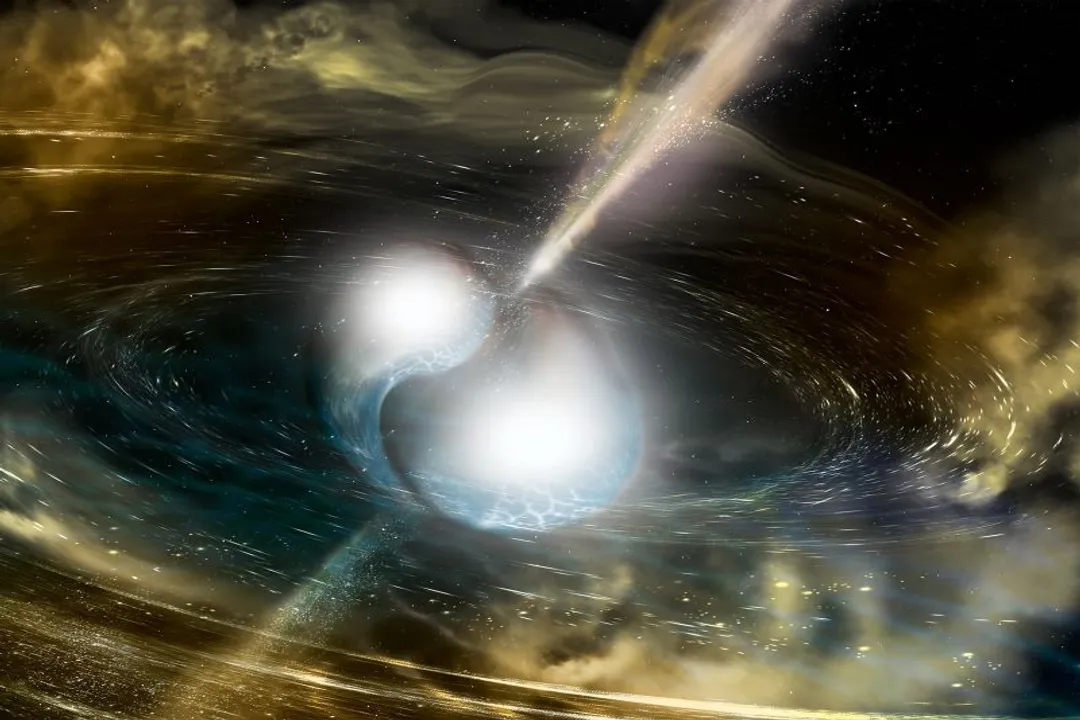
It is within this final, explosive epoch, known as supernova nucleosynthesis, that the heaviest elements are forged. Elements heavier than iron are primarily created through neutron capture processes during the intense heat and pressure of the explosion or during the collision of compact objects like neutron stars. The remnants of these stellar explosions then scatter this newly created "star stuff" back into interstellar space.
# Recycling Cycle
The fate of a star—its death—is intrinsically linked to the chemical enrichment of the universe, offering a key insight into how we observe celestial bodies today. The material ejected by supernovae seeds the next generation of molecular clouds with elements heavier than hydrogen and helium. This creates a constant, repeating cycle where the ashes of one stellar lifetime become the raw fuel for the next generation of stars and planets.
This recycling explains why stars have varying compositions based on their age. The earliest stars, sometimes called Population II stars, formed when the universe had very few heavy elements, meaning they were composed almost entirely of primordial hydrogen and helium. In contrast, younger stars, like our Sun (a Population I star), formed from clouds already enriched by previous stellar deaths, giving them that small, but significant, percentage of "metals" like carbon, oxygen, and iron. The variation in this small percentage of heavier elements is a significant factor astronomers use to classify and study different stars.
An interesting point to consider, which contrasts the composition of stars with the composition of the inner planets like Earth, is the retention of light gases. While the initial nebula was overwhelmingly H and He, the rocky inner planets formed in the hotter, inner region of the solar system where only high-melting-point solids could condense. The resulting smaller planets simply lacked the gravitational pull necessary to hold onto the extremely light gases like hydrogen and helium, which escaped to space, leaving behind the heavier, rocky cores. In contrast, the gas giants, being far more massive and forming in colder regions, managed to accumulate the abundant hydrogen and helium, which is why they resemble stars in their overall composition, even if they failed to achieve ignition.
#Videos
What Are Stars Made Of? The Science Behind Their Glow! - YouTube
Related Questions
#Citations
Star Basics - NASA Science
What are stars made of? - Cool Cosmos - Caltech
Stellar nucleosynthesis - Wikipedia
Why are stars made from hydrogen and helium and not other ...
What Are Stars Made Of? The Science Behind Their Glow! - YouTube
What Are Stars Made Of? - Layers of the Sun and More at Little ...
What Are Stars Made of? - Reddit
Flexi answers - What are the two main elements that make up a star?
The stars within us | NSF - U.S. National Science Foundation