What did Carl Sagan mean by "We are made of star stuff"?

Carl Sagan’s observation that we are made of "star stuff" is more than just beautiful poetry; it is a scientifically literal statement that encapsulates our direct, physical lineage to the universe's most energetic processes. [3] When the astronomer delivered this line, perhaps most famously in his 1980 Cosmos television series, he was connecting the atoms within our own bodies—the calcium in our bones, the iron in our blood—directly back to the immense, fiery furnaces of long-dead stars. [1][6] This cosmic pedigree is fundamental, suggesting that the elements which form us were scattered across the void by cataclysmic stellar deaths, only to coalesce later into the gas clouds that formed our Sun and Earth. [1][2]
# Cosmic Declaration
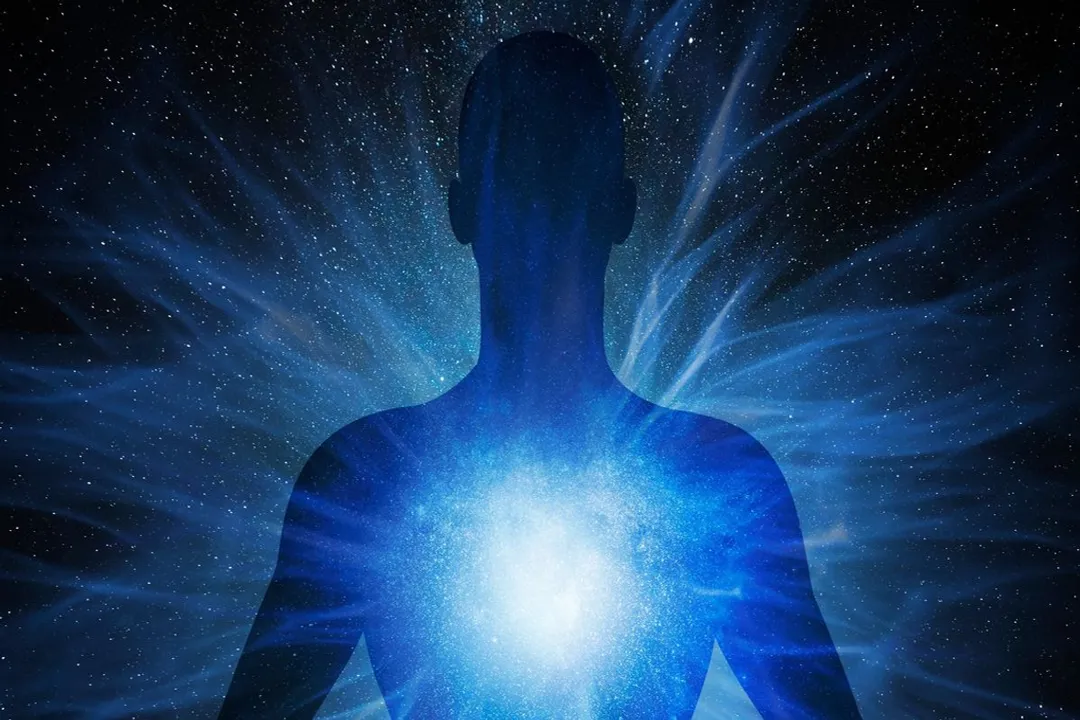
The full sentiment Sagan shared was: "The Cosmos is within us. We are made of star stuff. We are a way for the Universe to know itself". [2][3] This idea suggests that our very existence is part of a grand, ongoing cosmic cycle, where the material history of the stars is imprinted upon every living being. [2] The concept, while popularized by Sagan, builds upon centuries of scientific inquiry regarding the composition of the heavens. Before the 19th century, the dominant view, dating back to Aristotle, held a sharp distinction between the "terrestrial" realm of Earth and the "heavenly" realm of the stars, suggesting different materials governed each. This separation was first challenged when thinkers like Galileo and Francis Bacon proved that the physical laws applied universally, suggesting the matter itself might be shared.
# Big Bang Basics
The story of this universal matter begins approximately 13.8 billion years ago with the Big Bang. [6] In the immediate, intense moments following this beginning, the universe cooled enough for the very first atomic nuclei to form in a process called Big Bang nucleosynthesis. [5][6] This early cosmic alchemy was surprisingly limited; it only managed to produce the two lightest elements, Hydrogen and Helium, along with a trace amount of Lithium. [2][5][6] If this were the end of the story, the universe would remain a vast expanse composed almost entirely of these two simple gases, an environment far too simple to cook up something as complex as the human body, which requires dozens of different elements. [2]
# Stellar Furnaces
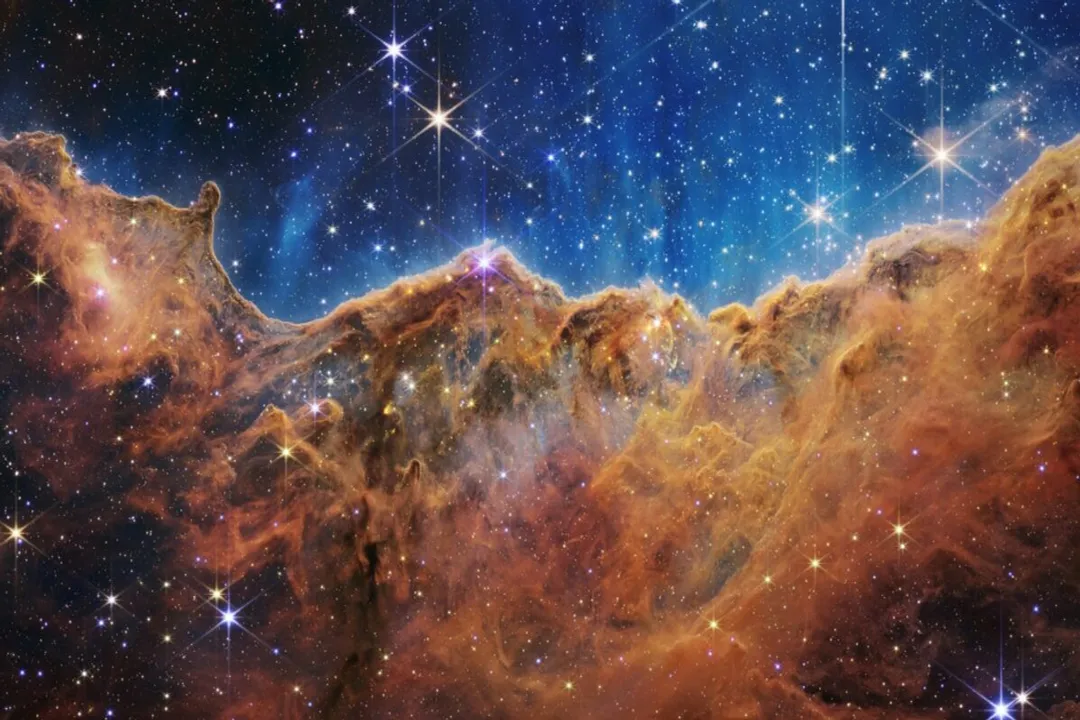
The diversification of elements, what scientists sometimes collectively refer to as "metals," required the next generation of cosmic structures: stars. [2] About a hundred million years after the Big Bang, massive clouds of Hydrogen and Helium began collapsing under their own gravity, birthing the first stars. [2][6] Within the cores of these nascent stars, intense pressure and heat initiated nuclear fusion. [6] This is the process where lighter nuclei combine to form heavier ones. Initially, this involves fusing Hydrogen into Helium, a process that still powers our Sun today. [2][3]
When a star exhausts the Hydrogen fuel in its core, it enters a new, dramatic phase. [2] For stars significantly more massive than our Sun, the core contracts until the conditions become hot and dense enough to ignite the fusion of Helium into heavier elements, specifically Carbon and Oxygen. [2][6] These two elements are cosmically vital for life, as they account for approximately 84% of the mass of the human body. [2] As stars continue to evolve, particularly those over roughly eight solar masses, they can continue fusing heavier and heavier elements in their cores, building up the atomic table all the way to Iron. [2][5] Fusion stops yielding energy at Iron, signaling the star's imminent demise. [5]
# Explosive Births
Elements heavier than Iron cannot be created through standard fusion, as that process would consume energy rather than release it. [5] These heavier, more exotic constituents of the universe require much more violent environments to form. [6]
Massive stars (greater than about eight solar masses) meet their end in a spectacular core-collapse supernova explosion. [2][6] During this cataclysm, immense energy drives the creation of elements heavier than Iron through the rapid neutron-capture process, or r-process. [6] In these fleeting moments, an Iron nucleus can capture a massive surge of free neutrons in less than a second, transforming into heavier isotopes which may then decay into entirely new elements. [6]
Scientists have confirmed that supernovae are critical for dispensing this forged material, flinging all the elements created during the star's life out into the cosmos. [2] Furthermore, the creation of the very heaviest elements, such as Gold, Platinum, and Iodine, is now often attributed to the universe's most extreme engine: the collision of two stellar corpses known as neutron stars. [2][5][6] These kilonova events, though rarer than supernovae, are thought to be the primary source for the rarest elements on the periodic table. [6]
# Recycling Cosmos
The explosion scatters these newly created heavy elements—the Carbon, Oxygen, Iron, and even the trace amounts of Gold—into vast clouds of gas and dust known as nebulas, often called "stellar nurseries". [2][3] This process enriches subsequent generations of stars. A star like our Sun, which is considered a "third generation" star, formed from a nebula already seeded with this stellar detritus. [2] The material that did not form the Sun remained in a rotating protoplanetary disk, from which our Earth and the rest of the Solar System accreted. [2][3] Thus, the iron in our machinery, the calcium in our architecture, and the minerals in our soil are all recycled cosmic ash. [3]
While we consider the distinction between the original cosmic elements and the elements forged later, it is fascinating to consider the sheer difference in atomic mass versus count. If we strictly assess the mass, over 90% of what we weigh—Oxygen (65%), Carbon (18.5%), Hydrogen (9.5%), Nitrogen, Calcium, and Phosphorus—originates from stellar processes, with the exception of the extremely light Hydrogen, which dominated the Big Bang. [5] This means we are overwhelmingly composed of stellar fusion products, yet if we count every single atom, Hydrogen makes up nearly 90% of the total number of atoms in our bodies, simply because it is the lightest possible nucleus. [5] This blend beautifully demonstrates that we are not only star stuff, but a precise mixture of the very earliest moments of the universe combined with the massive nuclear furnaces that followed. [5]
# Historical Confirmation
Sagan was standing on firm scientific ground when he declared this connection. [3] The intellectual path to this realization was long. While 19th-century advancements in spectroscopy—the analysis of light to determine chemical makeup—allowed scientists like Margaret and William Huggins to prove that stars contained the same elements found on Earth. In 1882, Jules Janssen made the claim that stars were made of the same stuff as us. However, the mechanism for how the heavier elements formed remained elusive until the mid-20th century. [6] It was the work of astronomer Fred Hoyle in the 1940s and 1950s that decisively exposed how the elements necessary for life were cooked inside dying stars through fusion and supernova explosions. Hoyle revealed this "evolutionary ancestry of all matter," solidifying our "umbilical link to some of the most powerful energetic events in the cosmos".

# Knowing Self
The scientific truth underpins a deep philosophical connection. As one expert noted, it is the "wondrous nature of the fact that elements fused in stars can come together to form a person who can then contemplate those very stars". [3] We are, quite literally, the universe gaining self-awareness through our own consciousness. [1][4]
This realization can serve as a profound check on human ego. As one astrophysicist pointed out, before getting too excited about our celestial origins, one should remember that cockroaches are also made of star stuff. [2] The material itself is common; what is magical is what life does with those basic chemical building blocks. [3] This shared heritage implies a deep kinship not just between all humans, but between all life and the entire cosmos. [3][4]
When confronting the enormity of cosmic time—13.8 billion years required to forge the elements that constitute us—it shifts one's perspective on immediate action. Considering that the iron atom in a vital enzyme required a star to live, then explode, and that explosion's remnants to be incorporated into our solar system's dust cloud, recontextualizes concepts like scarcity and waste. Every atom is the product of an almost unimaginable expenditure of time and thermonuclear energy; therefore, the stewardship of these ancient, irreplaceable components, whether they are locked in a landfill or circulating through our bodies, becomes an immediate, deep moral concern rather than a peripheral political issue. [4] The story of the universe is intrinsically our story, and knowing this origin demands that we strive to be worthy of the materials we are composed of. [4] This new cosmology offers a secular, evidence-based narrative that grounds our values in the reality of the natural world, suggesting a path toward reciprocal existence with the planet that housed this ancient alchemy. [4]
#Videos
Carl Sagan's Quote “We Are Made of Star-Stuff” Explained - YouTube
Related Questions
#Citations
“We're made of starstuff.” What does that mean?
Are we really made of 'star stuff?' And what does that even mean ...
The Story of the Universe: We are Made of Star Stuff - The Humanist
Carl Sagan Was Right When He Said "We Are All Made Of Star Stuff"
Cosmic ingredients: How the universe forges elements
Carl Sagan's Quote “We Are Made of Star-Stuff” Explained - YouTube
How humanity discovered we're all made of "star stuff" - Big Think
How Are We Made of Star Stuff? We Asked a NASA Expert: Episode ...