What is the primary meaning of weather?
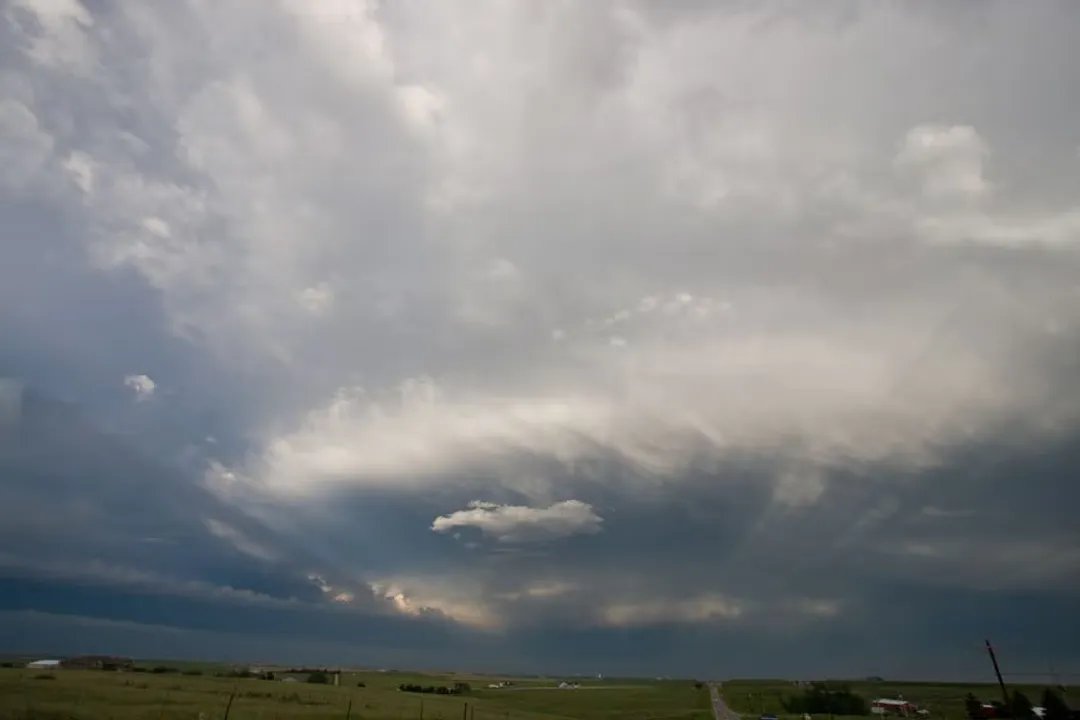
The immediate state of the atmosphere—what is happening right now or over a short period in a specific location—is the primary meaning of weather. It describes the conditions we experience daily, encompassing elements like sunshine, rain, wind, and temperature swings happening over minutes, hours, or days. [2][6] This observable reality is distinct from long-term atmospheric patterns; weather is the event, while climate is the expectation based on decades of those events. [9] When you step outside and decide whether to take an umbrella or put on a coat, you are assessing the current weather. [7]
This condition is defined by a host of continuously changing variables within the Earth's atmosphere, a thin layer of gases surrounding the planet. [4] Weather is fundamentally about movement, energy transfer, and the resulting state of the air around us at any given moment. [8] The World Meteorological Organization (WMO) frames weather as the state of the atmosphere at a particular place and time, which is a simple yet powerful distillation of a complex physical system. [5]
# Defining State

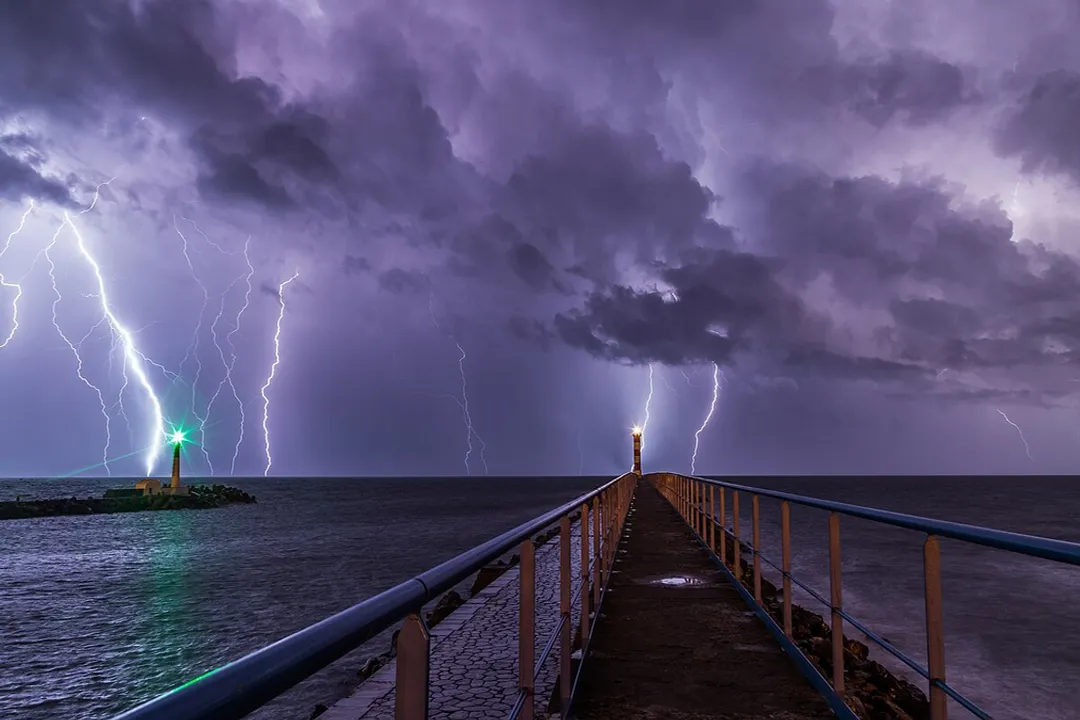
To pin down the meaning, one can look to formal definitions. Merriam-Webster defines weather simply as the state of the atmosphere with respect to wind, temperature, cloudiness, moisture, pressure, etc.. [1] Generation Genius elaborates, describing it as the condition of the atmosphere at any given time and place. [7] This focus on condition and immediacy is central. Weather is inherently temporary and localized. For example, a sudden, intense thunderstorm passing over a town is a weather event; the fact that this town experiences many thunderstorms in the spring is a climate trend. [2]
The National Center for Atmospheric Science (NCAS) highlights that weather arises from the constant movement and mixing of air masses, driven by the Sun's uneven heating of the Earth. [3] When we discuss the meaning of weather, we are discussing the symptoms of this ongoing atmospheric dance: where the heat is going, how the air is responding, and what the resulting moisture content is. [8] The phenomena we observe—a blizzard, a heatwave, a light drizzle—are all specific manifestations of the current atmospheric state. [6]
# Climate Contrast

A crucial aspect of understanding the meaning of weather is understanding what it is not: climate. While people often use the terms interchangeably in casual conversation, their technical meanings diverge based strictly on time scale. [9] Climate is often described as what you expect, while weather is what you actually get. [7]
The distinction is clearly articulated by experts. Climate is the long-term average of weather conditions in a region, usually calculated over a period of 30 years or more. [9] Weather, in contrast, refers to the atmospheric conditions at a specific place over a short period, ranging from minutes to days. [2][9]
Consider this breakdown of the temporal difference:
| Condition | Time Scale | Primary Measurement | Example |
|---|---|---|---|
| Weather | Minutes to Weeks | Current observation | Today’s high of and rain showers [1][2] |
| Climate | Decades (30+ years) | Statistical average | The average July high temperature for this region is [9] |
If you live in a region where the average annual rainfall is 40 inches (the climate), and you experience 45 inches of rain this year, that single year's total is a weather anomaly, not a climate change itself. [9] The WMO confirms that weather involves the short-term atmospheric state, whereas climate involves the synthesis of those states over extended durations. [5] Trying to gauge climate based on a single week's temperature fluctuation is akin to judging a person's lifelong health based on one afternoon's fatigue—it misses the necessary long-term data set. [9] The primary meaning remains anchored in the immediate, transient atmospheric condition.
# Primary Drivers
If weather is the atmospheric state, then understanding its meaning requires knowing why that state exists. The fundamental engine driving all weather phenomena is the Sun. [3][8] Solar energy heats the Earth's surface unevenly—land heats and cools faster than water, and the equator receives more direct sunlight than the poles. [3] This differential heating creates imbalances in energy across the globe, which the atmosphere constantly works to correct. [8]
This attempt at energy balance manifests in several key ways that define our weather:
- Air Pressure Differences: Warm air is less dense and rises, creating areas of lower pressure near the surface. Cooler, denser air sinks, creating high pressure. [3][8] The air naturally flows from high pressure to low pressure, and this horizontal movement is wind. [3][8]
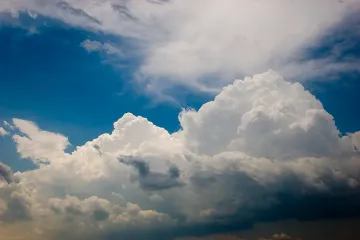
- Moisture Movement: Solar energy causes evaporation, putting water vapor into the air. As this air rises and cools, the vapor condenses, forming clouds and eventually precipitation—rain, snow, or hail. [3]
- Atmospheric Circulation: On a larger scale, the Earth's rotation, known as the Coriolis effect, deflects these moving air masses, creating the vast, predictable circulation patterns that dictate regional weather systems, such as jet streams and high/low-pressure cells. [8]
The interplay between these factors—uneven solar input, resulting pressure gradients, and the distribution of moisture—constantly generates the specific weather we observe. [3] A sudden influx of cold, dry air from the north interacting with warm, moist air from the Gulf of Mexico creates the conditions for severe weather outbreaks; the resulting tornado or hailstorm is the weather outcome of that specific interaction. [8]
# Measurable Constituents
The actual meaning of weather is best understood through its measurable components. Since weather is the state of the atmosphere, we define that state by quantifying specific properties. These observations form the backbone of meteorological reporting. [1]
The core set of variables tracked globally by organizations like the WMO includes:
- Temperature: How hot or cold the air is, essentially a measure of the kinetic energy of the air molecules. [4]
- Atmospheric Pressure: The weight of the air pressing down on the surface. Drops in pressure often signal approaching storms or unsettled conditions. [1][4]
- Humidity: The amount of water vapor present in the air, which dictates the potential for cloud formation and precipitation. [4]
- Wind: Both speed and direction, driven by pressure differences. [3]
- Precipitation: Any form of water falling from the atmosphere, including rain, snow, sleet, or hail. [6]
- Clouds: The visible masses of water droplets or ice crystals suspended in the atmosphere. [4]
These variables are not static; they are constantly changing, which is why weather is so dynamic. For instance, a high-pressure system might bring clear skies and light winds (a stable weather state), but if a low-pressure trough approaches, the pressure drops rapidly, the wind picks up, and the moisture content increases, leading to a complete change in the observed weather state within hours. [8]
It is interesting to consider how the combination of these factors creates localized experiences that defy simple averages. In the high deserts of the Western United States, for example, the climate might suggest overall aridity, but a specific day can feature a flash flood because the combination of intense summer heating (high temperature) and a sudden, localized influx of tropical moisture (high humidity) occurred when the pressure gradient favored a sharp storm cell. [2] This immediate, multi-variable snapshot is the definition of weather in action.

# Observing the Present
The ability to define and predict weather relies entirely on intensive, real-time observation. To understand the primary meaning of weather, we must acknowledge that it is an ongoing measurement activity. [5] Meteorologists rely on a vast, interconnected system of ground stations, weather balloons, radar, and satellites to sample the atmosphere at various altitudes and locations continuously. [4]
This data collection allows us to define the weather at any moment. If a sensor reports a barometric pressure of at noon, a dew point of , and the wind blowing from the northwest at , that is the weather at that precise coordinate. [1] When forecasts are issued, they are simply extrapolations of these current readings into the very near future. [8]
A helpful, practical tip for appreciating the dynamism of weather is to track how one element influences another over a few hours. Set a recurring alarm on your phone for three specific times during a day—say, 8 AM, 1 PM, and 6 PM—and record the current temperature, cloud cover, and wind direction from a reliable local source. By comparing these three distinct snapshots from the same location, you will physically observe the short-term atmospheric state changing in response to the Sun's position and any larger system moving through. This short-term data logging demonstrates concretely that weather is a continuous series of present conditions rather than a fixed state. [2]
# Weather Versus Phenomena
While the state of the atmosphere is the primary meaning, the term "weather" is also used to categorize the specific events that constitute that state. It encompasses everything from benign conditions to severe hazards. [6]
Weather phenomena can be broadly categorized by their scale and intensity:
- Fair Weather: Characterized by high pressure, light winds, and clear skies.
- Storms: Low-pressure systems generating significant wind, cloudiness, and precipitation.
- Severe Weather: Events involving extreme conditions, such as hurricanes, tornadoes, blizzards, or derechos, which pose threats to life and property. [5]
The WMO notes that the study of weather is essential precisely because of this spectrum of possibility—from the gentle conditions that affect agriculture to the intense events that demand emergency responses. [5] The scientific field devoted to this study, meteorology, is essentially the science dedicated to describing and predicting the current state and its immediate evolution. [4]
To further refine the concept, we can use an analogy based on the concept of atmospheric stability. Imagine the atmosphere as a giant liquid. Weather is the current state of that liquid—is it still, slightly rippling, or rapidly churning? A stable, calm day is a form of weather; a day where massive convection cells are building up due to strong solar heating means the atmosphere is unstable, leading to more dynamic and potentially hazardous weather events like thunderstorms. [8] The potential for change is always inherent in the definition of weather, distinguishing it from the fixed expectation of climate. The primary meaning remains rooted in the here and now of the Earth's atmospheric envelope.
# Conclusion
In summary, the primary meaning of weather is the short-term, highly localized condition of the atmosphere at any given moment. [2][7] It is the immediate result of solar energy interacting with the Earth's surface, creating imbalances in temperature and pressure that drive air movement and moisture circulation. [3][8] While we track elements like temperature, pressure, and wind to quantify this state, [1][4] the key distinguishing feature that separates it from climate is its time frame—it is the fleeting reality we observe from one hour to the next, or one day to the next. [9] It is the reason we check the forecast before leaving the house, knowing that what is happening outside right now is subject to change quite rapidly. [5]
Related Questions
#Citations
WEATHER Definition & Meaning - Merriam-Webster
Weather - Wikipedia
What causes weather? - NCAS
Weather and atmosphere | National Oceanic and ... - NOAA
Weather - World Meteorological Organization WMO
Weather - National Geographic Education
Weather Definition | K-8 Science | Fun Videos & Lessons
What Is Weather? - UCAR Center for Science Education
Definition of weather and climate - Freie Universität Berlin