What does it mean when the sky goes black?
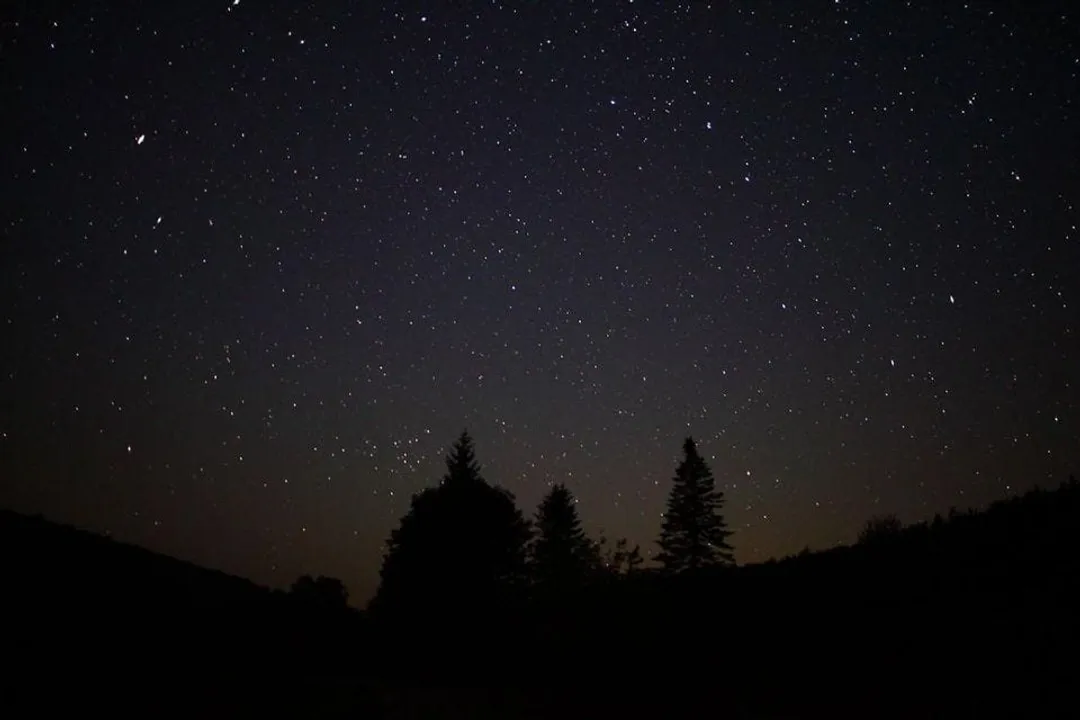
The sudden descent of darkness during the bright part of the day is an experience that immediately triggers a primal sense of alarm. When the sky, minutes before a vibrant blue, snaps to black—even if only for the blink of an eye—it feels profoundly wrong, often accompanied by a sharp, unnatural sound, perhaps like a switch being flipped off. [1][3][6] For those who have witnessed this momentary eclipse, the shared, simultaneous nature of the event with nearby companions, while others remain unaffected, adds a layer of mystery to the inexplicable dimming. [1] Understanding what causes the sky to be blue in the first place helps contextualize why its sudden absence is so jarring.
# Daylight Blue

The familiar daytime sky owes its color entirely to the way sunlight interacts with our planet's atmosphere. [2][8] When sunlight, which appears white, travels through the atmosphere, it encounters tiny molecules of nitrogen and oxygen. [2][8] These molecules are very effective at scattering shorter wavelengths of light, such as blue and violet, in all directions across the sky. [2][8] This process is scientifically known as Rayleigh scattering. [2]
Because our eyes are more sensitive to blue light than violet light, the sky appears predominantly blue to us when we look away from the sun. [8] This scattering effect is why, even when the sun is low on the horizon during sunrise or sunset, the light has to travel through more atmosphere, scattering away most of the blue and allowing the longer wavelengths—reds and oranges—to reach our eyes. [2] If the Earth had no atmosphere, like the Moon, the sky would always appear black, even when the sun was shining directly overhead. [5] This reliance on atmospheric particles for color is the baseline condition for daytime visibility.
# Night Darkness
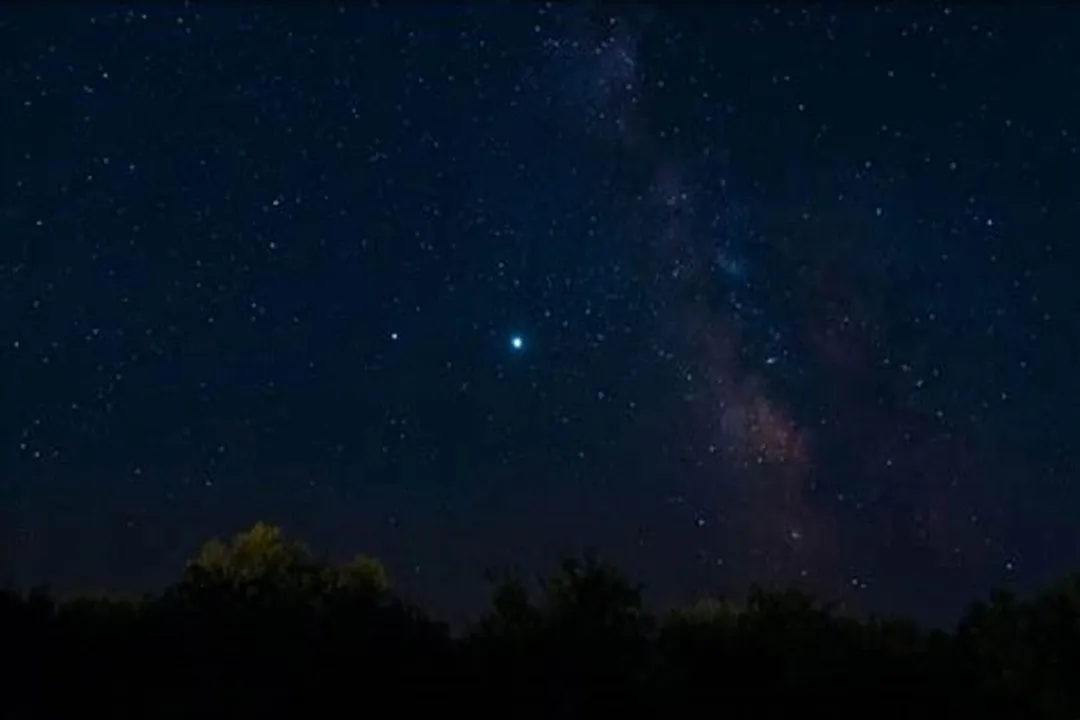
The stark contrast between the blue day and the black night is a direct consequence of our planet’s rotation. [9] When a location faces away from the Sun, it enters its nighttime period, and the primary source of illumination for the atmosphere is removed. [9][10] Without that intense solar light to scatter, the atmosphere becomes effectively invisible, revealing the background of space. [9][10]
The reason space itself appears black, despite being filled with countless stars, is a matter of immense scale and perspective. [9][7] While starlight does travel across the cosmos, the distances between stars are so vast that the light reaching us is too diluted to illuminate the intervening emptiness. [9][10] The darkness we perceive at night is the cumulative result of this immense spatial separation; the sky is dark because there is nothing nearby to constantly scatter light across the entire visible expanse. [9] Think of it like standing in a large, unlit stadium: even if there are thousands of small, distant flashlights on the far walls, the air between you and those walls remains dark unless a very bright, nearby light source is turned on to illuminate the dust and air molecules. [9]
| Condition | Primary Light Source | Atmospheric Interaction | Perceived Color |
|---|---|---|---|
| Day | Direct Sunlight | Strong Rayleigh Scattering (Blue) | Blue/Bright |
| Night | Distant Stars | Negligible Scattering | Black/Dark |
| Event | Localized Absence | Sudden Scattering Interruption | Black/Momentary |

# Brief Blackout

The experience of the daytime sky turning completely black for a short period is not easily explained by routine atmospheric phenomena like a cloud passing over the sun. [6] Reports describe an instantaneous, total loss of light, sometimes accompanied by an auditory cue, like a sharp click or thwump. [1][3] This suggests an extremely rapid interruption of the scattering process, far quicker than any conventional weather event could cause. [6]
One analysis of such reports suggests that for the entire sky to go black, the mechanism would need to block or extinguish the light coming from every direction simultaneously, which points toward something related to the observation environment or a very localized, extreme atmospheric event. [1] The fact that witnesses noted simultaneous perception with someone standing very close, but not with people slightly further away, hints that the effect might be highly localized, perhaps related to a very specific, small-scale anomaly in light transmission or perception concentrated around the observers. [1] It is a sudden, uniform failure of the normal blue light signal reaching the eye.
When considering these rare reports, one interesting aspect is the psychological impact of perfect, instantaneous darkness during the day. Human perception is calibrated to a baseline level of ambient light; an abrupt drop to zero light triggers an immediate, high-alert response, which might exaggerate the perceived duration or intensity of the event. [3] The brain struggles to process such an extreme sensory deprivation when it expects full daylight, potentially making the memory feel more intense than a slower, gradual dimming.
# Investigating Phenomena
When assessing such unusual occurrences, one must systematically compare the known physics of light with the reported anomaly. The sky goes black at night because the Sun is absent, allowing us to see the dark void of space illuminated only by distant pinpricks of starlight. [5][9] The daytime sky is bright blue because the air is actively scattering the Sun's full spectrum. [8] A momentary blackout during the day would require a mechanism to temporarily remove the sunlight's ability to scatter or momentarily block the Sun itself from all angles.
A key analytical step often missing in anecdotal accounts is a firm measure of time. While it feels like a second, an event lasting even half a second is incredibly fast. [6] If the event were a phenomenon like a localized micro-meteor shower or a very fast-moving, dense object temporarily obscuring the sun's path and the ambient scattered light, it would have to be moving at incredible speed across the observer's field of view to produce a near-instantaneous blackout and then recovery. [6]
Given the reports mentioning the sound of a switch, it prompts a consideration of perception versus reality. While the sources don't confirm the cause, it is worth noting that unusual environmental noises, especially during a moment of intense visual shock, can become strongly associated with the visual event, sometimes creating a composite, more memorable "glitch" narrative. [1] If the atmospheric pressure changed rapidly due to a very localized, fast-moving disturbance—perhaps a rare form of atmospheric wave or shockwave—the resulting pressure change could be heard as a sudden sound, coincidentally accompanying the momentary dimming of light caused by a slight change in air density affecting scattering efficiency for a fleeting moment.

# Perception and Documentation
For anyone witnessing an event that defies immediate explanation, the best approach shifts from immediate categorization to careful documentation. Since these events appear to be rare and highly localized, establishing a pattern or cause requires precise data collection, which is difficult when the experience itself is disorienting. [1][3]
If you ever experience the sky turning black suddenly, try to immediately note a few key details:
- Direction: Where was the Sun in the sky when it happened? Was the darkness uniform, or was one part of the sky darker than another?
- Duration and Sound: Estimate the time in fractions of a second. Did the sound truly accompany the darkness, or did it follow immediately after?
- Witness Consensus: Immediately compare notes with anyone present. Were they looking in the same direction? Did they hear the same sound? This helps differentiate personal sensory anomalies from shared physical events. [1]
Recording the precise date, time, and GPS location is crucial, as correlation with known astronomical events (like solar flares, though unlikely to cause this effect) or meteorological phenomena can only be established with accurate location data. While the scientific explanations for the stable blue day sky and the black night sky are well-established through physics like Rayleigh scattering, [2][8] the phenomenon of a momentary, deep blackout during the day remains in the realm of rare, potentially localized atmospheric or perceptual anomalies that defy simple, single-source explanation based on the general principles of light interaction alone. [6]
Related Questions
#Citations
What does it mean when the sky goes black for a second ... - Quora
Blue or black sky? | Causes of Color - Webexhibits
The sky went completely black for a split second yesterday ... - Reddit
Why Is the Night Sky Black? - YouTube
Why is space black? - StarChild - NASA
7+ Weird: Sky Goes Black for a Second? Explained!
What causes space and the night sky to appear dark - Britannica
Why Is The Sky Blue? - National Weather Service
Why does the color of the sky appear black at night?
Why Is The Sky Dark At Night? - Medium